

You are using an out of date browser. It may not display this or other websites correctly.
You should upgrade or use an alternative browser.
You should upgrade or use an alternative browser.
Using piezo tweeters wisely: a "how to"
- Thread starter Paul C
- Start date


pmsummer
simul justus et peccator
How are you liking the sound of those Fraziers PM?
Scott
I still haven't put these "in system" yet, so I can't say. I'll have the terminals replaced by this weekend (one is broken), and I'll be A/B testing them against my AR-3a speakers, and maybe against my stacked Advents (which may have to find a new home soon).
I can say that 70% of my listening right now is through my Monte Carlos. Those things are just sweet.

Paul C
Super Member
Real CTS piezo tweeters are back in production:
http://www.piezosource.com/index.htm
"PiezoSource is proud to announce the acquisition of the CTS Piezoelectric Speaker product line, formerly announced as discontinued by CTS."
Here is a product list and data sheets for various CTS tweeters and horn drivers:
http://www.piezosource.com/general/Piezo_Products_list.htm
The KSN1142a horn driver is not listed. I have emailed them to find out if this will be available in the near future. They do list the KSN1165a and KSN1141a (same driver, differently shaped horn), as well as the large KSN1188a.
Another source is http://www.itcelectronics.com/store.php?cPath=1174_1288
Thanks to CuppaJoe for the above links.
And I have been buying genuine CTS piezos from Martin Sound Products.
http://www.martinsoundpro.com/item.asp?id=340
http://www.piezosource.com/index.htm
"PiezoSource is proud to announce the acquisition of the CTS Piezoelectric Speaker product line, formerly announced as discontinued by CTS."
Here is a product list and data sheets for various CTS tweeters and horn drivers:
http://www.piezosource.com/general/Piezo_Products_list.htm
The KSN1142a horn driver is not listed. I have emailed them to find out if this will be available in the near future. They do list the KSN1165a and KSN1141a (same driver, differently shaped horn), as well as the large KSN1188a.
Another source is http://www.itcelectronics.com/store.php?cPath=1174_1288
Thanks to CuppaJoe for the above links.
And I have been buying genuine CTS piezos from Martin Sound Products.
http://www.martinsoundpro.com/item.asp?id=340

fdrennen
Organist in Residence
Paul/Gordon:
I found an old PA/Speaker on a junk pile that had three piezo tweeters in the top the cabinet was ratty so I removed the tweeters and found that they were Motorolas. How do I identify the model # the only thing on them were Motorola and 206 stamped on the back.

I found an old PA/Speaker on a junk pile that had three piezo tweeters in the top the cabinet was ratty so I removed the tweeters and found that they were Motorolas. How do I identify the model # the only thing on them were Motorola and 206 stamped on the back.
Paul C
Super Member
Paul/Gordon:
I found an old PA/Speaker on a junk pile that had three piezo tweeters in the top the cabinet was ratty so I removed the tweeters and found that they were Motorolas. How do I identify the model # the only thing on them were Motorola and 206 stamped on the back.
Do your tweeters look like this?

KSN1005a's.

2pist
Member
I still haven't put these "in system" yet, so I can't say. I'll have the terminals replaced by this weekend (one is broken), and I'll be A/B testing them against my AR-3a speakers, and maybe against my stacked Advents (which may have to find a new home soon).
I can say that 70% of my listening right now is through my Monte Carlos. Those things are just sweet.
I suppose you have made the comparo by now? As a fellow Frazierholic I am interested in the results...
pmsummer
simul justus et peccator
I suppose you have made the comparo by now? As a fellow Frazierholic I am interested in the results...
The AR-3a and the Frazier Mark V are VERY close in sound and balance, with the Frazier being far more efficient, and therefore seemingly more dynamic.
I won't part with either.
fdrennen
Organist in Residence
Do your tweeters look like this?
KSN1005a's.
No the "horns" are white and they screw on from the back. Just saw your reply.

Yes, GordonW is correct about using a resistor in series with the KSN1005 (and its near twin, the rear mount version, KSN1001).
You will find the 1005's mostly in older PA gear.
I think I bought 4 of these a year or so ago. Do all that resemble this one apply?
fdrennen
Organist in Residence
Does the inside look the same? the fluting in the horn?
They made a rear mount version of the 1005, the KSN1001a.

And they made them in various colors and chromed, too.
Yes they do look the same.

MartinV56
Well-Known Member
Thanks Paul, excellent article, at the moment I am experimenting with piezo tweeters in a Altec 870B system (woofer 420y which he added a tweeter EV t-35) as the EV is not very good at high frequencies put a piezo tweeter with 2.2 MF for high frequencies, I go experiencing with the piezo tweeters, call my attention your excellent article, again thanks
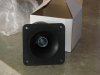

I think you are right, too much magnet for piezo.
bluewizard
Active Member
Some further thoughts on using Piezo Tweeters -
Using the KSN-1141A as an example, which is a 2x6 piezo horn.
Here is a link to the data sheet on this tweeter -
http://piezosource.com/general/datasheets/Piezo_1141_datasheet.pdf
First look at the Frequency Response Graph then scroll down to the Impedance Chart. Notice on the Freq Response graph, the peaks at about 8khz and 14khz.
This Tweeter appears as a 0.3uF load to the amp.
It's relative impedance according to the impedance chart at 2khz is about 210 ohms and at 20khz it is about 40 ohms. Though using 0.3uF and calculating the reactance, ignoring phase angle, gives us 256 ohm at 2khz, 26.5 ohms at 20khz, and a calculated 2.65 ohms at 200khz.
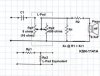
I would likely use a L-Pad to attenuate the Tweeter and stabilize the apparently load. But an L-Pad depends on having some resistance in parallel with it (R1 on the attached drawing). So, personally, I would likely use a 16 ohm L-Pad with a 15 to 20 ohm resistor(R1) in parallel (though a precisely 16 ohm resistor would be ideal). In this case, 16 ohms would be the value I would use to calculate the capacitor for my crossover.
However, many people suggest using a resistor in series (R2) with the Piezo to act as a frequency dependent attenuator, and to protect the circuit impedance from dropping too low at high harmonic frequencies. But you can see from the impedance chart for the KSN-1141A, that what we assume the impedance is can be very different from the actual apparent impedance. Consequently, you can only wisely chose a series resistor(R2), if you know or can calculate the impedance of the Piezo at various frequencies.
Now back to the Frequency Response chart and again, notice the peaks in the upper half of the chart. Some people think these peaks make the piezo sound a little harsh. By adding a series resistor, you can soften the high without reducing them too much.
For example, if we use a 5 ohm or 10 ohm resistor in series with this piezo, we have the following attenuation at various frequencies -
At 2khz, 5 ohm = 1.9%, 10 ohm = 3.6%
At 20khz, 5 ohm = 16%, 10 ohm = 27%
At 200khz, 5 ohm = 67%, 10 ohm = 79%
Note, that I based this on calculated impedances, rather than the impedance chart. Using the values from the chart, the attenuation at 20khz is going to be closer to 11% for the 5 ohm and 20% for the 10 ohm.
So, by adding a 5 ohm resistor we have created a gradual roll-off slope that goes from 1.9% at 2khz to 16% at 20khz. That should server to soften the high without wiping them out completely.
For this particular Piezo Tweeter, the perceived impedance seems to level off above 20khz, but adding a 5 or 10 ohm resistor can make sure that the impedance never drops below the value of the Resistor.
But to accurately pick a resistor for R2, you need to know the relative impedance of the actual tweeter you are using.
Steve/bluewizard
Using the KSN-1141A as an example, which is a 2x6 piezo horn.
Here is a link to the data sheet on this tweeter -
http://piezosource.com/general/datasheets/Piezo_1141_datasheet.pdf
First look at the Frequency Response Graph then scroll down to the Impedance Chart. Notice on the Freq Response graph, the peaks at about 8khz and 14khz.
This Tweeter appears as a 0.3uF load to the amp.
It's relative impedance according to the impedance chart at 2khz is about 210 ohms and at 20khz it is about 40 ohms. Though using 0.3uF and calculating the reactance, ignoring phase angle, gives us 256 ohm at 2khz, 26.5 ohms at 20khz, and a calculated 2.65 ohms at 200khz.
I would likely use a L-Pad to attenuate the Tweeter and stabilize the apparently load. But an L-Pad depends on having some resistance in parallel with it (R1 on the attached drawing). So, personally, I would likely use a 16 ohm L-Pad with a 15 to 20 ohm resistor(R1) in parallel (though a precisely 16 ohm resistor would be ideal). In this case, 16 ohms would be the value I would use to calculate the capacitor for my crossover.
However, many people suggest using a resistor in series (R2) with the Piezo to act as a frequency dependent attenuator, and to protect the circuit impedance from dropping too low at high harmonic frequencies. But you can see from the impedance chart for the KSN-1141A, that what we assume the impedance is can be very different from the actual apparent impedance. Consequently, you can only wisely chose a series resistor(R2), if you know or can calculate the impedance of the Piezo at various frequencies.
Now back to the Frequency Response chart and again, notice the peaks in the upper half of the chart. Some people think these peaks make the piezo sound a little harsh. By adding a series resistor, you can soften the high without reducing them too much.
For example, if we use a 5 ohm or 10 ohm resistor in series with this piezo, we have the following attenuation at various frequencies -
At 2khz, 5 ohm = 1.9%, 10 ohm = 3.6%
At 20khz, 5 ohm = 16%, 10 ohm = 27%
At 200khz, 5 ohm = 67%, 10 ohm = 79%
Note, that I based this on calculated impedances, rather than the impedance chart. Using the values from the chart, the attenuation at 20khz is going to be closer to 11% for the 5 ohm and 20% for the 10 ohm.
So, by adding a 5 ohm resistor we have created a gradual roll-off slope that goes from 1.9% at 2khz to 16% at 20khz. That should server to soften the high without wiping them out completely.
For this particular Piezo Tweeter, the perceived impedance seems to level off above 20khz, but adding a 5 or 10 ohm resistor can make sure that the impedance never drops below the value of the Resistor.
But to accurately pick a resistor for R2, you need to know the relative impedance of the actual tweeter you are using.
Steve/bluewizard
Attachments
Paul C
Super Member
Some further thoughts on using Piezo Tweeters -
Using the KSN-1141A as an example, which is a 2x6 piezo horn.
(snip)
Steve/bluewizard
:thmbsp: