• The move to the new server is done. There are some software and database maintenance updates in process. This has us passing the hat around to help out. We appreciate any donations. Seriously, even a dollar helps. The payment page may be found here - https://www.audiokarma.org/support.html

VU/Peak meter to save my speakers

JB1962

Well-Known Member
I read in an audio magazine years ago that if you never put the VU meters needle's into the red, you'll never blow a set of speakers. I don't really do any recording lately, however; I've been thinking about adding external VU meters to my various systems as an indicator of how hard I am pushing an amplifier. I however am not sure just how an external unit would integrate with current (pun intended) equipment?

My Fisher Studio Standard has meters on the integrated amplifier, the amp is rated at 35w pr ch, the meter scales range from zero to 35w. With this I know just exactly how hard I am pushing the amp, within the wattage range of that amp. Curiously, those meters do not have a 'red zone' to indicate when the amp is being pushed too hard and is about to lose control of the speakers.

In adding an external VU meter, how would any particular unit calibrate to different stereo receivers of varying wattage ratings? Would an external VU meter be a reliable mechanism to visually see where the system is in danger of clipping? How do volume units compare to watts being generated and could a random external unit give reliably accurate numbers below and above the red zone?
 
Register to hide this ad
If something doesn't sound right, turn it down, speakers saved.
Well this is obviously true but I wouldn't go so far as to call it the easy answer. I would like, if possible, to know when I am getting close to the point of clipping. The whole idea is to keep from reaching the point of clipping, you can push a speaker hard a thousand times, but you can only push too hard once.

Btw, love your username! Have yet to build an open baffle speaker system but have definitely been openly baffled
 
Last edited:
Its actually one of the easiest answers. :bigok:

Before reaching the point of clipping, it's probably too loud already. :rockon:

EDIT: I can certainly understand the want for a watt meter but it isn't really necessary.

Radio Shack had a watt meter for sale at one time but I am not sure if they would really tell you anything aside from looking cool when used. I don't remember them showing peaks before clipping though.:smoke:

Your best bet would probably be to find an amplifier with built in meters with a clipping detecting circuit with peak level indicators. :thumbsup:
 
Last edited:
Clipping an amplifier or over driving speakers doesn't automatically = blown drivers.
Everyone that listens loudly has some clipping, if something sounds off, turn it down, the speakers will be okay.

If you like music louder than your system can handle, you need a more capable system.

This is still all true, clipping doesn't necessarily mean 'too hard' in the sense of the finality of a blown speaker. It doesn't however answer any of my questions about how/if an external VU meter would be a visually reliable indicator of approaching clipping
 
"I read in an audio magazine years ago that if you never put the VU meters needle's into the red, you'll never blow a set of speakers"

whoever wrote that is a moron

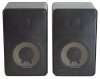
I guarantee you if you run this Yammy just short of the red (whatever that is) into the Minimus 7 speakers you'll blow them lol.

post-106386-0-68001800-1411949076.jpg
realistic_minimus_7_loudspeakers.jpg

but as others have already mentioned your ears are the best arbiter as you would hear the Minimus 7 complaining long before you pushed the amp far enough to damage them, if turning it up further after that........:dunno:
 
Last edited:
Well if you want to purposely damage speakers, then don't bother what your ears tell you. Except for high end amps with built in peak meters, most of the amps and receivers most of us own, don't come with that luxury and I really haven't known (yet) a single person on the forums that has worried about this topic before.
 
"I read in an audio magazine years ago that if you never put the VU meters needle's into the red, you'll never blow a set of speakers"

whoever wrote that is a moron

I guarantee you if you run this Yammy just short of the red into the Minimus 7 speakers you'll blow them lol.

View attachment 2345826
View attachment 2345827

That makes sense, clearly the power handling capacity of the speakers compared to the power source is an important consideration not mentioned by the author of said statement. Could there however be enough truth in his statement where, for example the amp is rated at 40w and the speakers at 90w?
 
That makes sense, clearly the power handling capacity of the speakers compared to the power source is an important consideration not mentioned by the author of said statement. Could there however be enough truth in his statement where, for example the amp is rated at 40w and the speakers at 90w?

no, the meters are typically just for show

some amps have clipping lights, they only let you know when the amp is clipping not when the speakers are clipping, only your ears or test equipment with mics will tell you that.
 
Last edited:
Now you are getting into speaker efficiency where a 10 watt amplifier will drive 90 watt speakers to ear splitting levels.
 
Your ears can tell you when you are pushing your system too hard, uncertain accuracy of VU meters not needed.

I am not disagreeing with your statement, I am however still curious if there is any truth to be found in the idea that a VU meter can be used as a visual indication of approaching clipping. I really don't mind reasons why I don't need it, that's fine and frankly expected. I would however like reasons why it would, or wouldn't work. The questions asked weren't whether I needed it or not, the questions were geared more towards, would it work?
 
I have a 400watt/channel amp connected to my Jamo C103's as mains in my multi-channel, another bridged for 300watts to the Jamo C-10 center, and another with 150watts/channel into the Deftech Monitor 350's as my rears. None of these are rated to handle the power available, most likely they're safer that way, and I've never used the VU or LED meters as gauges to set the volume.
 
I am not disagreeing with your statement, I am however still curious if there is any truth to be found in the idea that a VU meter can be used as a visual indication of approaching clipping. I really don't mind reasons why I don't need it, that's fine and frankly expected. I would however like reasons why it would, or wouldn't work. The questions asked weren't whether I needed it or not, the questions were geared more towards, would it work?

read post #14 for your answer
 
VU/Peak meter to save my speakers

Thread title seems to indicate otherwise.

All of my systems are capable of higher SPLs than I care to listen at = no worries about my speakers.
 
VU meters are different than the power output meters on amps -- they are indicators of sound pressure level or recording level and are calibrated in decibels, not watts.

On recording equipment they have a "red zone" -- either red paint behind the needles or red LEDs -- to indicate you are approaching saturation level on tape, beyond which you will get a variety of problems (distorted frequency response, compressed dynamic range, etc). Has nothing to do with blowing your speakers.

Amps driven into clipping can start to oscillate, usually at very high frequencies well above hearing range. Tweeters aren't designed to reproduce those signals, and the voice coils become resistors and heat up. Since it's the output that is oscillating, it will do so at full output. Smoked speakers indeed. This is independent of amp wattage other than that a big powerful amp will fry the speakers faster if it goes into oscillation simply due to more power, but a big amp is far less likely to be driven into clipping (except by teenagers) than a small one.

Never been a problem for me, I have efficient speakers and by the time I'm up to one watt or so it's too loud. Nowhere near clipping, and if there are high impact sounds in the recording, I'm likely to turn it down more and still never approach clipping.

output meters will indeed help you prevent clipping -- if they are dancing up to the upper end, turn it down. You have to watch them though, just having them on there isn't a magic cure....
 
Back
Top Bottom