• The move to the new server is done. There are some software and database maintenance updates in process. This has us passing the hat around to help out. We appreciate any donations. Seriously, even a dollar helps. The payment page may be found here - https://www.audiokarma.org/support.html

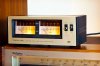
VU/Peak meter to save my speakers

VU meters are different than the power output meters on amps -- they are indicators of sound pressure level or recording level and are calibrated in decibels, not watts.

On recording equipment they have a "red zone" -- either red paint behind the needles or red LEDs -- to indicate you are approaching saturation level on tape, beyond which you will get a variety of problems (distorted frequency response, compressed dynamic range, etc). Has nothing to do with blowing your speakers.

Amps driven into clipping can start to oscillate, usually at very high frequencies well above hearing range. Tweeters aren't designed to reproduce those signals, and the voice coils become resistors and heat up. Since it's the output that is oscillating, it will do so at full output. Smoked speakers indeed. This is independent of amp wattage other than that a big powerful amp will fry the speakers faster if it goes into oscillation simply due to more power, but a big amp is far less likely to be driven into clipping (except by teenagers) than a small one.

Never been a problem for me, I have efficient speakers and by the time I'm up to one watt or so it's too loud. Nowhere near clipping, and if there are high impact sounds in the recording, I'm likely to turn it down more and still never approach clipping.

output meters will indeed help you prevent clipping -- if they are dancing up to the upper end, turn it down. You have to watch them though, just having them on there isn't a magic cure....

no difference in the meter only the printed scale
 
  • Like
Reactions: SKS
Now you are getting into speaker efficiency where a 10 watt amplifier will drive 90 watt speakers to ear splitting levels.

I know it's a Pandora's box, my Marantz 2215b (15w pr ch) will easily drive any of my 16 sets of speakers to 'normal' listening levels as the 80w pr ch Kenwood (and often sound better). However the Kenwood isn't working nearly as hard at the upper limits no matter what the efficiency of the speakers are.

Basically, any given set of speakers will play at the same level with 10w whether the amplifier is rated at 10w or 100w. Asking 10w from a 10w amp is more likely to damage a 15w speaker than pushing 15w into the same speaker with a 20w amp.
 
I know it's a Pandora's box, my Marantz 2215b (15w pr ch) will easily drive any of my 16 sets of speakers to 'normal' listening levels as the 80w pr ch Kenwood (and often sound better). However the Kenwood isn't working nearly as hard at the upper limits no matter what the efficiency of the speakers are.

Basically, any given set of speakers will play at the same level with 10w whether the amplifier is rated at 10w or 100w. Asking 10w from a 10w amp is more likely to damage a 15w speaker than pushing 15w into the same speaker with a 20w amp.

If none of your 16 pairs of speakers have blown yet then.......:dunno:
 
VU meters are different than the power output meters on amps -- they are indicators of sound pressure level or recording level and are calibrated in decibels, not watts.

On recording equipment they have a "red zone" -- either red paint behind the needles or red LEDs -- to indicate you are approaching saturation level on tape, beyond which you will get a variety of problems (distorted frequency response, compressed dynamic range, etc). Has nothing to do with blowing your speakers.

Amps driven into clipping can start to oscillate, usually at very high frequencies well above hearing range. Tweeters aren't designed to reproduce those signals, and the voice coils become resistors and heat up. Since it's the output that is oscillating, it will do so at full output. Smoked speakers indeed. This is independent of amp wattage other than that a big powerful amp will fry the speakers faster if it goes into oscillation simply due to more power, but a big amp is far less likely to be driven into clipping (except by teenagers) than a small one.

Never been a problem for me, I have efficient speakers and by the time I'm up to one watt or so it's too loud. Nowhere near clipping, and if there are high impact sounds in the recording, I'm likely to turn it down more and still never approach clipping.

output meters will indeed help you prevent clipping -- if they are dancing up to the upper end, turn it down. You have to watch them though, just having them on there isn't a magic cure....

So then what I should look for is an output meter, not a VU meter, thank you. Is that something that is available in an external unit and how would it integrate with varying wattage amps?
 
There are a ton of VU meters and driver boards available on ebay . Most people who hook up external VU meters do it because it looks cool to watch the needles dance, not because they are using them as a precision instrument. To accurately calibrate them, you could use an oscilloscope. Also, bear in mind that the red area on meters was also likely more of an aesthetic flourish, rather than an absolute indicator of clipping. Fisher Studio Standard gear is getting pretty old and if yours is still all original it is likely not performing to its original specs anyway. Speakers often blow because of the ugly transients and oscillations an amp outputs when pushed to its limits. For example, supposing a 100 watt rated speaker, you could use a signal generator to create and feed an artificially clipped signal into a healthy 150 watt amp and turn up the volume to reach 100 watts output and the speaker would survive. On the other hand, take a poor condition 100 watt amp and feed it a normal sinewave signal, turn the volume all the way up to reach a 100 watts output, and the speakers could blow. In this scenario, the clipping itself would not be the cause.
 
So then what I should look for is an output meter, not a VU meter, thank you. Is that something that is available in an external unit and how would it integrate with varying wattage amps?

same meter only the printed scale is different lol

Radio Shack used to sell an external unit, may be able to find one on eBay.
unnamed.jpg
 
Exactly right, Grenadeslio. VU and power meters are all electromagnetic devices that swing the needle according to the small voltage applied to their coil. Its just a matter of how its applied to a given circuit and what label gets glued on.
 
And the purpose. VU meter implies a calibrated output (radio station input for broadcast or tape recording level).

Amp output is just the wattage going out, SPL is dependent upon speaker efficiency.
 
If none of your 16 pairs of speakers have blown yet then.......:dunno:

Nope not yet! Thought I blew one if my Paradigm Titans a while back, the woofer just stopped making noise. I was playing them quite loudly during a particular passage of music on a video game intro, my roommate at the time walked in and asked "what speakers are those" because he was impressed by how they sounded. Of course I had to turn them up to show off.

After that, figuring I trashed them I put them on a shelf in the basement. After about 7 years I pulled them down and out of curiosity hooked them up, they both worked. I opened the back an saw that the surrounds were trashed, so I got them redone. Still using them today.

Best as I can figure, I must have overextended them. Perhaps the voice coil got caught up on the edge of the magnet? Then was later jarred loose moving them? Don't know, just happy they are fine
 
I read in an audio magazine years ago that if you never put the VU meters needle's into the red, you'll never blow a set of speakers. I don't really do any recording lately, however; I've been thinking about adding external VU meters to my various systems as an indicator of how hard I am pushing an amplifier.

Has anyone mentioned that many meters are not all that accurate (there must be some that are) and may not be true representations of the actual power being put out at any given moment?
In many (most?) cases they are more eye candy than indicative of true output power.*

I think I read that somewhere years ago....


*possibly due to the difference between VU meters and power output meters?
Or maybe both types may have shortcomings due to design or price?

I'm trying to learn here myself.
 
Last edited:
also should add not all 100watt amplifiers are created equal, see the example in my avatar

Perhaps I should say that any given speakers will play at the same volume with 10 watts whether the amp actually puts out 10w or 100w. Nevermind what they are 'rated' at, as those ratings are often quite arbitrary
 
Has anyone mentioned that many meters are not all that accurate (there must be some that are) and may not be true representations of the actual power being put out at any given moment?
In many (most?) cases they are more eye candy than indicative of true output power.

I think I read that somewhere years ago....

I'm sure that is true, then they also get old and out of calibration and need to be adjusted. I believe most can be calibrated, the down side there is knowing when they need adjustment
 
So basically, the impression I am getting is that I should just keep doing what I have been doing for decades, relying on my ears. Still might get a meter just to watch the needles dance to the music, and hey, never know when I might want to make a mix tape on the cassette deck. Although there's that output meter thing...
 
same meter only the printed scale is different lol

Radio Shack used to sell an external unit, may be able to find one on eBay.
View attachment 2345840

Does that say "Peak and RMS Power Meter"? It's hard to make out, being a bit blurry.

Edit: nevermind, I found the exact web page the image is from. That would be nice as it tells the wattage actually going to the speakers in real time, I like that. So far I found one on eBay not working, for parts, have to keep looking.

Thanks
 
Last edited:
I like power meters, so anytime I want them, I add them.

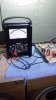
My power meter of choice = Simpson 260 set to the proper ac voltage setting.

Very accurate, very responsive. The best way to monitor amplifier output in real-time, short of a scope.

20210531_154927.jpg 20210531_154919.jpg
 
I like power meters, so anytime I want them, I add them.

My power meter of choice = Simpson 260 set to the proper ac voltage setting.

Very accurate, very responsive. The best way to monitor amplifier output in real-time, short of a scope.

View attachment 2345857 View attachment 2345858
Would it be safe to say that monitoring amplifier output to the speakers is probably a good start in avoiding clipping? Knowing the power rating of a speaker and seeing the power actually going to the speakers seems like a reasonable place to start. Of course there are variables but knowing those two things it seems must cover the basics
 
Back
Top Bottom