bce22
Active Member
Good Day AKers,
I have a very early pair of Wharfedale W90s from 1962. These have all AlNiCo drivers and dual ports. They also have 53 year old electronics! The W90s (and other "W" series Wharfedales) have attenuation dials on the rear of the speakers. In most cases (but I don't believe in all "W" variants) these dials are L-Pads and there are two of them. One controls the output of the midrange drivers and one controls the tweeters. L-Pads are passive devices that allow you to adjust the output level of the speaker without changing the impedance seen by the amp.
Picture of W90s placed in my small (12 X 12) listening room

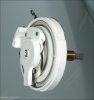
On my set of W90s there were two issues with the original L-Pads. A couple of the pads were pretty "scratchy" even after attempting to clean them with Deoxit. The L-Pads are sealed and it is really difficult to get Deoxit into them for cleaning. I have read that it is possible to open them up, however I couldn't find a good way to do this without probable destruction. Needless to say, using DeOxit on the L-Pads without opening them up didn't work out that great for me. The other issue was a slight distortion in one midrange driver. I hoped that the combination of a recap (still waiting for caps to arrive from Estonia and the Ukraine) and a change of the L-Pads would fix this problem.
Original L-Pads


____________________________________________________________________________
PUBLIC SERVICE ANNOUNCEMENT
The original L-Pads (and possibly other parts) are covered in white dust. This white dust is Cadmium. It's toxic so wear a mask and gloves! Breathing cadmium is worse than getting it on your skin.
More info about Cadmium poisoning: https://en.wikipedia.org/wiki/Cadmium_poisoning
Cadmium (audio): http://www.audiokarma.org/forums/in...-inside-some-vintage-speakers-cadmium.520981/
____________________________________________________________________________
Before deciding to replace the L-Pads, I read as much as I could on AK and other forums. There isn't much regarding Wharfedale "W" variant L-Pad replacement. I'm fortunate that at least some threads exist. Below are a few I came across:
http://www.audiokarma.org/forums/index.php?threads/wharfedale-w90-l-pad-replacement.568429/
http://www.audiokarma.org/forums/in...needs-what-resistor-to-bring-to-specs.620906/
http://www.audiokarma.org/forums/index.php?threads/replacing-tweeter-l-pads.169785/
I purchased L-Pads from Parts Express. They are 50 watt stereo L-Pads with a 1" shaft made by Dayton. Here is the link: http://www.parts-express.com/speaker-l-pad-attenuator-50w-stereo-1-shaft-8-ohm--260-260
EDIT: UPON FURTHER REVIEW THE L-PADS PURCHASED SHOULD BE MONO RATHER THAN STEREO. MORE INFO IN SUBSEQUENT POSTS.
There are definitely outstanding questions about replacing the original 50 ohm pad with an 8 ohm pad. After reading up on it, I am comfortable with the 8 ohm pad replacement. You'll ultimately need to make your own decision about whether or not you agree. It's worth mentioning that contemporary replacement 50 ohm L-Pads don't appear to exist. Therefore your choices are restricted when looking for replacements. If you are truly concerned you can add resistors to bring the pad up to 50 ohms.
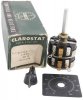
Without question the replacement L-Pads are HUGE compared to the originals. They are at least THREE TIMES THE SIZE!
New L-Pad vs Original

Wiring the L-Pads was about as straight forward as it gets. The stereo L-Pads have 3 tabs for each channel labeled 1, 2 and 3.
The #2 tabs are bridged together and the wire from the speaker (blue wire for tweeters and a black wire for midrange in my speakers) is soldered to one of the #2 bridged tabs (the top one in my speakers). The Ground wire is soldered to one of the number #1 tabs (the top one in my speakers) and the lead from the capacitor is soldered to one of the #3 tabs (the bottom one in my speakers). This matches exactly the original L-Pad wiring.
Midrange L-Pad wiring with Tweeter L-Pad in the background

Since these L-Pads are much larger than the original, it's a pretty tight squeeze to fit them in while re-attaching the panel to the cabinet. When I first attempted to place the completed panel into position, I had a moment of fear that the top L-Pad was too big. It hit the stop that the panel screws into (where the top center screw goes). Once I "smartened up" by angling it slightly it slipped into place without a problem.
Also, I had to turn the midrange L-Pad slightly to get the 24uF cap lead to fit without creating an extension.
In my opionion these are the largest L-Pads that will fit in this application. I can't imagine that the 100 Watt L-Pads would fit without major modifications!
New L-Pads placement orientation

After wiring them in, I glued the midrange and tweeter Min - Max dial plates to the rear of the speakers and press-fit the new dials onto the shafts. The plates fit with a gap of about 3/8 of an inch between them. The original dials are slightly wider and can't be press-fit onto the new L-Pad shafts. The original dials can absolutely be glued, which is my plan. I will probably use silicone so they can be removed if necessary.
Min-Max plates and dials

I find the new L-Pads provide a large sound improvement. Distortion in the midrange driver disappeared as well. I am glad that I made the change!!!
More pics below for your viewing pleasure.
New L-Pad vs original with boxes

Wired up!


Plates installed

Dials too


Regards,
Brad
I have a very early pair of Wharfedale W90s from 1962. These have all AlNiCo drivers and dual ports. They also have 53 year old electronics! The W90s (and other "W" series Wharfedales) have attenuation dials on the rear of the speakers. In most cases (but I don't believe in all "W" variants) these dials are L-Pads and there are two of them. One controls the output of the midrange drivers and one controls the tweeters. L-Pads are passive devices that allow you to adjust the output level of the speaker without changing the impedance seen by the amp.
Picture of W90s placed in my small (12 X 12) listening room

On my set of W90s there were two issues with the original L-Pads. A couple of the pads were pretty "scratchy" even after attempting to clean them with Deoxit. The L-Pads are sealed and it is really difficult to get Deoxit into them for cleaning. I have read that it is possible to open them up, however I couldn't find a good way to do this without probable destruction. Needless to say, using DeOxit on the L-Pads without opening them up didn't work out that great for me. The other issue was a slight distortion in one midrange driver. I hoped that the combination of a recap (still waiting for caps to arrive from Estonia and the Ukraine) and a change of the L-Pads would fix this problem.
Original L-Pads


____________________________________________________________________________
PUBLIC SERVICE ANNOUNCEMENT
The original L-Pads (and possibly other parts) are covered in white dust. This white dust is Cadmium. It's toxic so wear a mask and gloves! Breathing cadmium is worse than getting it on your skin.
More info about Cadmium poisoning: https://en.wikipedia.org/wiki/Cadmium_poisoning
Cadmium (audio): http://www.audiokarma.org/forums/in...-inside-some-vintage-speakers-cadmium.520981/
____________________________________________________________________________
Before deciding to replace the L-Pads, I read as much as I could on AK and other forums. There isn't much regarding Wharfedale "W" variant L-Pad replacement. I'm fortunate that at least some threads exist. Below are a few I came across:
http://www.audiokarma.org/forums/index.php?threads/wharfedale-w90-l-pad-replacement.568429/
http://www.audiokarma.org/forums/in...needs-what-resistor-to-bring-to-specs.620906/
http://www.audiokarma.org/forums/index.php?threads/replacing-tweeter-l-pads.169785/
I purchased L-Pads from Parts Express. They are 50 watt stereo L-Pads with a 1" shaft made by Dayton. Here is the link: http://www.parts-express.com/speaker-l-pad-attenuator-50w-stereo-1-shaft-8-ohm--260-260
EDIT: UPON FURTHER REVIEW THE L-PADS PURCHASED SHOULD BE MONO RATHER THAN STEREO. MORE INFO IN SUBSEQUENT POSTS.
There are definitely outstanding questions about replacing the original 50 ohm pad with an 8 ohm pad. After reading up on it, I am comfortable with the 8 ohm pad replacement. You'll ultimately need to make your own decision about whether or not you agree. It's worth mentioning that contemporary replacement 50 ohm L-Pads don't appear to exist. Therefore your choices are restricted when looking for replacements. If you are truly concerned you can add resistors to bring the pad up to 50 ohms.
Without question the replacement L-Pads are HUGE compared to the originals. They are at least THREE TIMES THE SIZE!
New L-Pad vs Original

Wiring the L-Pads was about as straight forward as it gets. The stereo L-Pads have 3 tabs for each channel labeled 1, 2 and 3.
The #2 tabs are bridged together and the wire from the speaker (blue wire for tweeters and a black wire for midrange in my speakers) is soldered to one of the #2 bridged tabs (the top one in my speakers). The Ground wire is soldered to one of the number #1 tabs (the top one in my speakers) and the lead from the capacitor is soldered to one of the #3 tabs (the bottom one in my speakers). This matches exactly the original L-Pad wiring.
Midrange L-Pad wiring with Tweeter L-Pad in the background

Since these L-Pads are much larger than the original, it's a pretty tight squeeze to fit them in while re-attaching the panel to the cabinet. When I first attempted to place the completed panel into position, I had a moment of fear that the top L-Pad was too big. It hit the stop that the panel screws into (where the top center screw goes). Once I "smartened up" by angling it slightly it slipped into place without a problem.
Also, I had to turn the midrange L-Pad slightly to get the 24uF cap lead to fit without creating an extension.
In my opionion these are the largest L-Pads that will fit in this application. I can't imagine that the 100 Watt L-Pads would fit without major modifications!
New L-Pads placement orientation

After wiring them in, I glued the midrange and tweeter Min - Max dial plates to the rear of the speakers and press-fit the new dials onto the shafts. The plates fit with a gap of about 3/8 of an inch between them. The original dials are slightly wider and can't be press-fit onto the new L-Pad shafts. The original dials can absolutely be glued, which is my plan. I will probably use silicone so they can be removed if necessary.
Min-Max plates and dials

I find the new L-Pads provide a large sound improvement. Distortion in the midrange driver disappeared as well. I am glad that I made the change!!!
More pics below for your viewing pleasure.
New L-Pad vs original with boxes

Wired up!


Plates installed

Dials too


Regards,
Brad
Last edited: