

You are using an out of date browser. It may not display this or other websites correctly.
You should upgrade or use an alternative browser.
You should upgrade or use an alternative browser.
What CD Are You Hearing Now?
- Thread starter Vlad Soare
- Start date


I said in this post that I had never really resonated with the Symphonie fantastique.
But after posting that message I watched an episode of Bernstein's Young People Concerts, which was specifically about this very symphony. The episode is called "Berlioz Takes a Trip" and explains in detail what to listen for, and how to understand what you're hearing. Much of the story behind the music was already known to me, but what really made a difference was hearing Bernstein's take on the music itself.
It occurred to me that what I was now hearing under Bernstein's baton sounded completely different from everything I had heard before, including Ozawa. Bernstein's music was lively, dynamic, with tempi that varied wildly from one second to the next. For the first time ever, it seemed to make sense to me. I could feel in the music the struggles of that poor disturbed mind of the protagonist. All the other performances I had heard before had been linear, uniform, just a plain series of notes. No wonder I didn't understand them and found them boring and messy.
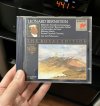
So, realizing that my struggle with Berlioz was most probably not caused by the music itself, but by simply not having heard the right performance of it, I searched online for one of Bernstein's recordings. I received it today and I'm listening to it as we speak. And boy, does it sound marvellous! It's so powerful, so alive, so everything my previous contacts with it weren't. I love it.
My only complaint is that Bernstein doesn't repeat the exposition in the first movement. Which is surprising, because in my experience he didn't use to take shortcuts. I've always regarded him as one of the few conductors whom you can generally trust not to skip the repeats. Oh well... I guess there's always an exception to anything. But it's OK, I can live with that, because it sounds fantastic. I'm now an official fan of this symphony.

But after posting that message I watched an episode of Bernstein's Young People Concerts, which was specifically about this very symphony. The episode is called "Berlioz Takes a Trip" and explains in detail what to listen for, and how to understand what you're hearing. Much of the story behind the music was already known to me, but what really made a difference was hearing Bernstein's take on the music itself.
It occurred to me that what I was now hearing under Bernstein's baton sounded completely different from everything I had heard before, including Ozawa. Bernstein's music was lively, dynamic, with tempi that varied wildly from one second to the next. For the first time ever, it seemed to make sense to me. I could feel in the music the struggles of that poor disturbed mind of the protagonist. All the other performances I had heard before had been linear, uniform, just a plain series of notes. No wonder I didn't understand them and found them boring and messy.
So, realizing that my struggle with Berlioz was most probably not caused by the music itself, but by simply not having heard the right performance of it, I searched online for one of Bernstein's recordings. I received it today and I'm listening to it as we speak. And boy, does it sound marvellous! It's so powerful, so alive, so everything my previous contacts with it weren't. I love it.
My only complaint is that Bernstein doesn't repeat the exposition in the first movement. Which is surprising, because in my experience he didn't use to take shortcuts. I've always regarded him as one of the few conductors whom you can generally trust not to skip the repeats. Oh well... I guess there's always an exception to anything. But it's OK, I can live with that, because it sounds fantastic. I'm now an official fan of this symphony.
Last edited:

I love the Leonard Bernstein lectures at Harvard (1973) and young people concerts.
EPIC~!
EPIC~!
Wow, that's quite a lot to watch. It will take some time. But I will watch them all.
I never tire of listening to Bernstein talk about music.
Thank you.
I never tire of listening to Bernstein talk about music.
Thank you.
He is So knowledgeable and passionate!
Such a joy to watch and listen.

Such a joy to watch and listen.
Oh, yes, you can say that again. His passion for music is really contagious.
And the way he can explain everything in such a nice, clear manner, his perfect command of the language, how he can talk for hours without a script without missing a beat, is incredible.
And the way he can explain everything in such a nice, clear manner, his perfect command of the language, how he can talk for hours without a script without missing a beat, is incredible.
Last edited:
The first piano concerto by Brahms has mesmerized me as soon as I heard it for the first time. But the second one wasn't exactly love at first sight. Even my favourite combination of pianist/orchestra/conductor in terms of the first concerto, i.e. Rudolf Serkin with George Szell and the Cleveland Orchestra, didn't click with me when it came to the second one, which baffled me for a while. But with the help of more knowledgeable people from a classical music forum, I managed to understand what was happening.
The second piano concerto is regarded as highly virtuosic, and most pianists tend to play quite aggressively, loudly, smashing the keys frantically, in order to show off their technical prowess. To me, this makes it sound more like a 20th century Russian piece than a German romantic one.
This recording, which was recommended to me on that forum, is not like that. András Schiff specifically wanted to avoid the usual approach and to play in a manner that allowed Brahms's trademark warmth and musicality to shine, as opposed to simply showing off his own virtuosity.
And it worked. When I heard the second piano concerto interpreted like this, it finally clicked. Now it finally made sense to me, and I started loving it as much as I loved the first.
Today I'm listening to this awesome performance of the second Brahms piano concerto.
Come to think of it, I'll give the first a spin, too.

The second piano concerto is regarded as highly virtuosic, and most pianists tend to play quite aggressively, loudly, smashing the keys frantically, in order to show off their technical prowess. To me, this makes it sound more like a 20th century Russian piece than a German romantic one.
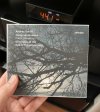
This recording, which was recommended to me on that forum, is not like that. András Schiff specifically wanted to avoid the usual approach and to play in a manner that allowed Brahms's trademark warmth and musicality to shine, as opposed to simply showing off his own virtuosity.
And it worked. When I heard the second piano concerto interpreted like this, it finally clicked. Now it finally made sense to me, and I started loving it as much as I loved the first.
Today I'm listening to this awesome performance of the second Brahms piano concerto.
Come to think of it, I'll give the first a spin, too.
Last edited:

Telecolor 3007
I love old stuff
Some Dance Hits. Mostly Euro-Dance. I grew up in that era.
But I will try another C.D. player, because the "Sony" C.D.P. 490 dosen't seem to like some tracks.
But I will try another C.D. player, because the "Sony" C.D.P. 490 dosen't seem to like some tracks.


Telecolor 3007
I love old stuff
Various – "Rock'N'Roll Classics - Raunchy"
"Pegasus" – PEG CD 022
Don't know where I put the cover.
I remember from where I bought this one: a big bazar complex called "Prisma" ("The Prism"), near the village of Corbeanca. That complex was so popular, that the 449 bus route operated by the Bucharest Autonomus Administration (R.A.T.B.) camed every around 10 minutes (even less during work days), which was very good for suburban bus route... not quite suburban, becase there are at least 9-12 kilometers from the edge of the city.
"Pegasus" – PEG CD 022
Don't know where I put the cover.
I remember from where I bought this one: a big bazar complex called "Prisma" ("The Prism"), near the village of Corbeanca. That complex was so popular, that the 449 bus route operated by the Bucharest Autonomus Administration (R.A.T.B.) camed every around 10 minutes (even less during work days), which was very good for suburban bus route... not quite suburban, becase there are at least 9-12 kilometers from the edge of the city.
Oh, I remember when Prisma was all the rage. Must have been more than twenty years ago. I think late nineties and perhaps early 2000s, if memory serves. I never went there, it was just too far away from Bucharest and too much trouble to reach. I was living relatively close to Europa, so driving all the way to Corbeanca didn't make much sense to me when I already had a similar bazaar quite close. But yeah, Prisma was indeed popular, I remember it.
Actually, come to think of it, I seem to remember going there once. I have some vague images of the stands inside Prisma in my mind. But I can't for the life of me remember when that was, and why. I think I was just accompanying someone. It's all very faint. I had completely forgotten about it.
Actually, come to think of it, I seem to remember going there once. I have some vague images of the stands inside Prisma in my mind. But I can't for the life of me remember when that was, and why. I think I was just accompanying someone. It's all very faint. I had completely forgotten about it.
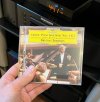
I'm not so versed in Chopin matters, so I can't comment on Zimerman's performance, because I have nothing to compare it with. I found this double CD in a local store, and since I had no Chopin at all in my CD collection (though I do have a couple of LPs), I thought I'd give it a chance.
So far I like it. I've just listened to the first piano concerto and really loved it.
Listening to the second as we speak.
So far I like it. I've just listened to the first piano concerto and really loved it.
Listening to the second as we speak.
Last edited:

Keith Jarrett - Jasmine.
Dear God, what a musician.
Also, recently re-discovered the debut from Third Eye Blind. 14 astoundingly solid tracks, and one of those albums/cds that I cannot listen to piecemeal, I have to digest the whole thing in one sitting. Too bad nothing afterwards is any good (though admittedly, I haven't listened).
That debut hit me right in the gut back in '97, as the situation in my life mirrored the situation in the protagonists' story. "Losing A Whole Year"?? Yeah, that's 1997 for me.
Dear God, what a musician.
Also, recently re-discovered the debut from Third Eye Blind. 14 astoundingly solid tracks, and one of those albums/cds that I cannot listen to piecemeal, I have to digest the whole thing in one sitting. Too bad nothing afterwards is any good (though admittedly, I haven't listened).
That debut hit me right in the gut back in '97, as the situation in my life mirrored the situation in the protagonists' story. "Losing A Whole Year"?? Yeah, that's 1997 for me.
Telecolor 3007
I love old stuff
"Selection of the '50's - Gold". There are 2 goly C.D.'s. "OSA-BEIM" produced 1997 by "Promo Sound" A.G. D.C.D.-780.
One of the 1st C.D.'s that I've bought. Played on my "Philips" C.D.-204, because the "Sony" C.D.P.-490 won't read it, at least the 1st C.D.
I will play now D.J. Bobo "Metrovinyl - Word" in motion. "GEMA" - "EAMS 4000-2" - LC 8812, produced in 1996. He camed in Bucharest in 1997 or 1998. Probably I knew some his songs, but back then, lacking musical culture, I thought he was a Rocker, as for many years I though Euro-Dance is.. American music...
One of the 1st C.D.'s that I've bought. Played on my "Philips" C.D.-204, because the "Sony" C.D.P.-490 won't read it, at least the 1st C.D.
I will play now D.J. Bobo "Metrovinyl - Word" in motion. "GEMA" - "EAMS 4000-2" - LC 8812, produced in 1996. He camed in Bucharest in 1997 or 1998. Probably I knew some his songs, but back then, lacking musical culture, I thought he was a Rocker, as for many years I though Euro-Dance is.. American music...
I am in the camp that thinks this symphony is absolutely perfect as it is, in only three movements. The end of the adagio is so sublime, and summarizes so well not only this symphony itself, but Bruckner's entire life and work, that I don't thnk anything else is necessary thereafter. I just couldn't listen to anything after the magnificent closure of the adagio. If I ever attend a concert where the conductor adds a fake fourth movement (sadly, there are some), I will get up and leave at that point.
Bruckner is said to have told to one of his close friends, "when they hear this, they will be furious. But I shall not care, because I shall be in my grave". Whether that's true or not, I don't know. He is supposed to have referred to the scherzo, which is indeed very unconventional for its time. I love that scherzo. It's so mean, so infernal, so demonic... Not only was I not furious when I heard it for the first time, but quite the contrary, I could barey refrain myself from laughing. I was picturing a cohort of demons dancing around the cauldron where sinners' souls were boiling. A demonic scherzo. You don't see this too often.
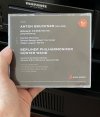
It goes without saying that Günter Wand is fantastic. I'm not exactly a fan of his early Bruckner recordings, with the Cologne radio orchestra, but his late ones are gorgeous.

Bruckner is said to have told to one of his close friends, "when they hear this, they will be furious. But I shall not care, because I shall be in my grave". Whether that's true or not, I don't know. He is supposed to have referred to the scherzo, which is indeed very unconventional for its time. I love that scherzo. It's so mean, so infernal, so demonic... Not only was I not furious when I heard it for the first time, but quite the contrary, I could barey refrain myself from laughing. I was picturing a cohort of demons dancing around the cauldron where sinners' souls were boiling. A demonic scherzo. You don't see this too often.
It goes without saying that Günter Wand is fantastic. I'm not exactly a fan of his early Bruckner recordings, with the Cologne radio orchestra, but his late ones are gorgeous.
When I received this CD as a gift from my uncle, I didn't know what to expect. At that time my favourite recording of no. 27 was that of Christian Zacharias with the Lausanne Chamber Orchestra conducted by himself. I loved that performance and couldn't imagine enjoying any other. So, naturally, I was a bit suspicious of this one and approached it with a bit of reluctance. But as no. 24 unfolded, my jaw started dropping, and by the time no. 27 was over I was in complete awe. Géza Anda is simply marvellous here.
Despite my initial hesitation, this CD is now one of my favourites.

Despite my initial hesitation, this CD is now one of my favourites.
Last edited:
Bernstein made studio recordings of Symphonie Fantastique with the NY Phil twice, in 1963 and in 1968 or '69. Which is this?I said in this post that I had never really resonated with the Symphonie fantastique.
But after posting that message I watched an episode of Bernstein's Young People Concerts, which was specifically about this very symphony. The episode is called "Berlioz Takes a Trip" and explains in detail what to listen for, and how to understand what you're hearing. Much of the story behind the music was already known to me, but what really made a difference was hearing Bernstein's take on the music itself.
It occurred to me that what I was now hearing under Bernstein's baton sounded completely different from everything I had heard before, including Ozawa. Bernstein's music was lively, dynamic, with tempi that varied wildly from one second to the next. For the first time ever, it seemed to make sense to me. I could feel in the music the struggles of that poor disturbed mind of the protagonist. All the other performances I had heard before had been linear, uniform, just a plain series of notes. No wonder I didn't understand them and found them boring and messy.
So, realizing that my struggle with Berlioz was most probably not caused by the music itself, but by simply not having heard the right performance of it, I searched online for one of Bernstein's recordings. I received it today and I'm listening to it as we speak. And boy, does it sound marvellous! It's so powerful, so alive, so everything my previous contacts with it weren't. I love it.
My only complaint is that Bernstein doesn't repeat the exposition in the first movement. Which is surprising, because in my experience he didn't use to take shortcuts. I've always regarded him as one of the few conductors whom you can generally trust not to skip the repeats. Oh well... I guess there's always an exception to anything. But it's OK, I can live with that, because it sounds fantastic. I'm now an official fan of this symphony.
View attachment 3696332
View attachment 3696333
It's the second one. March 5, 1968.Bernstein made studio recordings of Symphonie Fantastique with the NY Phil twice, in 1963 and in 1968 or '69. Which is this?
Thanks. I've loved this piece since I was in high school in the 1970s, and I'll offer a few observations about performing options and notable recordings.It's the second one. March 5, 1968.
Berlioz specified low-pitched bells in the last movement. The score shows the bells playing at middle C and two octaves below, far into the bass range. Many performances use tubular chimes, which cannot reach that low, some even playing an octave too high. In his own performances when on tour, Berlioz substituted at least one piano if suitable bells were not available, and that option is noted in the score. I'm perplexed that someone making a recording in our era, with so many competing versions available and evidence both in the score and in historical documents, would use tinny-sounding chimes. Musical malfeasance, I say, or at least, misfeasance.
One of the first SF LPs I owned features Dimitri Mitropoulos and the New York Phil from 1957, a great performance. Mitropoulos appears to have used one bell or chime doubled by piano(s), and its a wonderful effect. Of more recent recordings, Jos van Immerseel with Anima Eterna Brugge employs apparently two pianos, sounding fantastically ominous. While the finale is particularly effective, earlier sections aren't played with much intensity, though the recording is blessed with other virtues as noted below, and anyone who loves SF should hear it.
Berlioz also added an obbligato cornet part to "Un bal" in his manuscript copy, though it wasn't included in a published version during his lifetime. In recent years it's become common to include it, Berlioz stalwart Colin Davis included it in his 1974 Amsterdam and 1990 Vienna recordings, and quite possibly in the numerous others he made.
Of "classic" recordings, Paul Paray and the Detroit Symphony and Ormandy/Philadelphia are particularly effective. Neither includes the reapeats in I and IV or the cornet in II. Ormandy in particular was a surprise to me, hearing it again after many years, because it's extraordinarily well characterized and even includes respectable bells. Another great one is Georges Prêtre with the Boston Symphony, a performance of great verve and energy, though with a few quirks, such as a bass drum roll on the last note.
Both the Immerseel recording and Daniel Harding with the Swedish Radio Symphony check all the boxes: Both repeats, cornet, and effective bells (Harding) or pianos. Further, both seat the low strings on the left and divide the violin sections on opposite sides of the stage. Both also seat the harps on opposite sides, though the (marvelous) effect is more pronounced in Immerseel. In some passages Berlioz tosses swirlling figures back and forth between the violin sections and it is hard to believe that he didn't intend the sections to be seated antiphonally. Note that Bernstein, at least in 1963, also divided the harps.
Harding is my favorite among modern recordings, not only because it checks all those boxes but is a spirited performance besides. It may seem odd that it's coupled with music by Rameau from a century earlier, but that performance too is outstanding and the booklet notes explain the commonalities.
Last edited:
Fantastic info. Thank you so much. I will check these out.