• The move to the new server is done. There are some software and database maintenance updates in process. This has us passing the hat around to help out. We appreciate any donations. Seriously, even a dollar helps. The payment page may be found here - https://www.audiokarma.org/support.html

What makes LEDS fail? How do they fail?

c.coyle

Fighting the Dunning-Kruger effect.
Most of us nowadays encounter LEDs, not only in electronic equipment, but in our homes and vehicles. This article discusses failure modes and causes, plus what separates cheap LEDs from better quality, longer lasting ones. Not surprisingly, construction and components associated with a LED have a big effect on longevity.
 
Last edited:
Register to hide this ad
How do they fail? - Going dim or going open is what I've seen, but I've not seen enough dead ones to say any more. :)

The article at least implies that heat can cause failure of the associated electronics, and that more expensive bulbs are designed to minimize this. That's what caught my eye.

I have had two LED 120 VAC bulbs fail, and I just chucked them. If it happens again, I'll open it up and check the capacitor and semiconductors.
 
Just like fluorescent bulbs as I had 3 Noma brand fail in less than a year each, so I figured the electronics are the weak spot as the bulb should last for years.
 
The article at least implies that heat can cause failure of the associated electronics, and that more expensive bulbs are designed to minimize this. That's what caught my eye.

I have had two LED 120 VAC bulbs fail, and I just chucked them. If it happens again, I'll open it up and check the capacitor and semiconductors.

I've had a number of them fail, a couple in unfortunately difficult locations. Not sure if simply paying more gets you better quality. It's not always as simple as that. Even brand names can't necessarily be trusted.
 
The electrical components driving the LED in a household lamp are allowed to fail at a rate similar to incandescent failure. If anyone thinks this is not on purpose, they need to wake up.

Otherwise one should be able to send them back for warranty replacements as long as the LED is still functional.
 
The issue is not with the LEDs themselves, it is the miniature SMPS inside each LED fitting that fails. I have bags of dead ones here. I pull out the LEDs themselves and run them off a DC supply. Often they are a fantastic source of multiple high intensity SMD LEDs for nothing. They fail regularly in electrical storms as they have little or no ability to take even a small surge without killing the electronics.

Basically, if we are to be serious about LED lights, the inverter/SMPS needs to be removable from the LED fitting itself, like a two piece construction to enable low cost replacement. LEDs are going into landfill prematurely and certainly do not live up to their touted lives.

Next time you have one fail, open up the base and have a look at the miniature SMPS, complete with chinese caps that fail and leak...
 
My LED lighting flickered throughout the house last night. Power flashed on/off three times over about four hours until finally going out. Woke up this morning to power and no flickering LED's. I'm guessing LED's are sensitive to line noise and / or instability.
 
Basically, if we are to be serious about LED lights, the inverter/SMPS needs to be removable from the LED fitting itself, like a two piece construction to enable low cost replacement. LEDs are going into landfill prematurely and certainly do not live up to their touted lives.

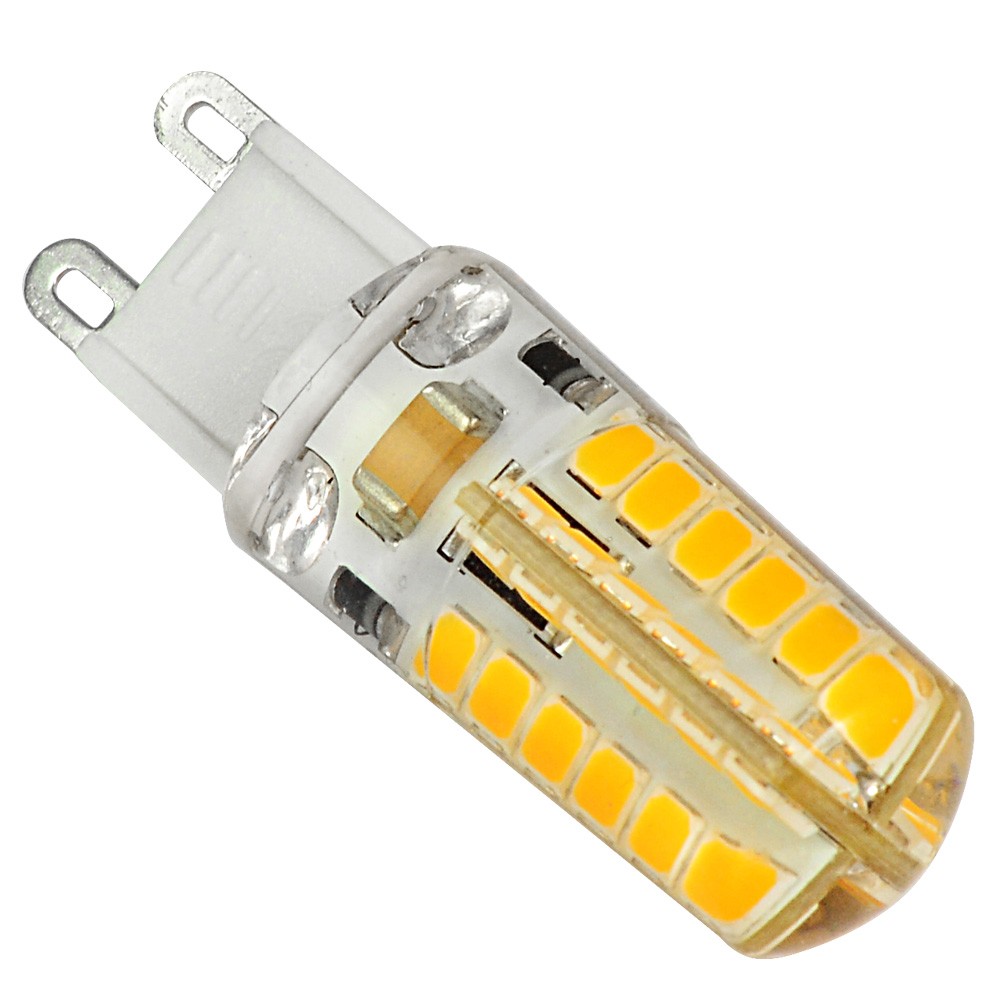
Couldn't agree more. I installed new lighting fixtures which require these G9 base LEDs so I bought a large quantity of them, which turned out to be foresight since they all fail within a few months. And (as you say) as they're failing you can see that the LEDs themselves are not the problem. Trouble with separating the power supplies is that it takes the product out of the realm of the mass market, since 'simplicity of use' sells, even if it goes to the landfill (way) before its time.

3-9.jpg
 
With over 40 LED house hold bulbs & fixtures of various brands/types installed throughout my house for over 9 years, and some even run for 27/7.
I have had 1 screw in bulb fail, and 1 melt the gluing between bulb and screw base, and after regluing, it`s back in service. :thumbsup:

I attribute their longevity in my situation, is due to my house`s multitiered surge & spike protection at (meter, load center, and end point outlet surge/spike plug ins for the plug in LED fixtures, table/floor lamps, and electronic digital clocks, etc... :deal:

And all this protection seems to protect all my multi room A/V electronics & appliances from surges/spikes as well, even during violent NE.FL. lightning storms ! :bigok:
I never turn off or up plug any device prior because of a thunder storm. :eek: + :yikes:= :crazy:

And with all the spikes and surges common to my area, it seemed like a good idea, especially back when I was using CFL`s throughout the house, where possible, prior to converting over to LED.. ;)

Oh well, this method works for me.. :blah:

And YMMV/D.
As you folks see fit..

Kind regards, Billy Ferris

 
Many of the better LED fixtures now incorporate surge protection.
No surprise to hear that Grenadesilio, as sometimes several small MOV`s were found in some of my burned out CFL bulbs when I was using them in 2003 time frame before converting over to LED in 2008..

One thing I noticed when I went over to LED bulbs, was that they seem to be very sensitive to minor/subtle blips in the power by their speed and would mildly flicker and when watching my fast response VIZ 120 volt line monitors needle`s movement/dance coincided with the LED bulb flicker.

I really like the LED lights, especially when my house is all boarded up during a hurricane and I`m on my LP gas fed 25 kw whole house generator, for sometimes many days.

And because it`s pitch black in the hurricane panel boarded up house, I have to run more "general" lighting than otherwise would be needed, and when I was still using incandescent lighting before converting over to CFL`s all those regular bulbs running could/did heat up my house, thus making my HVAC suck more juice from the expensive LP gas to remain comfortable..
 
I installed two XMLT6 LED chips out in the attic years ago. I slapped together a power supply board and use a constant current module to drive them.

They are usually only on for a short time daily, but I expect them to outlast me :)

resized_20190208_200601.jpg resized_20190208_200617.jpg
 
Last edited:
Back
Top Bottom