• The move to the new server is done. There are some software and database maintenance updates in process. This has us passing the hat around to help out. We appreciate any donations. Seriously, even a dollar helps. The payment page may be found here - https://www.audiokarma.org/support.html

Which sansui can sound superior to 907x ?

Its good to keep in mind that the amp itself cant magically transform mediocre speakers into sounding like great ones, and ditto a poorly recorded/mastered source recording.

In other words, and to use as an example, switching from an AU-717 to (whichever) 1990's Alpha amp, is Not going to provide audio nirvana when listening to a very plain Capitol records Beatles album. Instead of spending whatever the 'upgrade' cost would be to go from a 70's Sansui amp to a 90's unit, lets just say, you could instead spend 50 or 100 bucks give or take for a UK Parlophone pressing, or a remastered CD (if cd's are your preference) and for alot less money than an amp, you are more likely to hear improved sound in such a way that you would think someone removed blankets from your speakers.
 
What is the difference between an AU907x and an AU907x Decade?

Or are all AU907x's the Decade models?
 
Thanks!

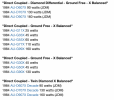
1984 was a busy year

907x = toroidal power transformer, copper chassis
907x decade = big EI power transformer

They mention "alpha capacitors" in the 907x. I wonder if that's where the name started out?

I observed the output transistors weren't mounted directly onto heatsinks. They say it was to avoid vibration. Around that time I bet was when ppl started pouring concrete & liquid weld stuff into their amps.
 
Thanks!

1984 was a busy year

907x = toroidal power transformer, copper chassis
907x decade = big EI power transformer

They mention "alpha capacitors" in the 907x. I wonder if that's where the name started out?

I observed the output transistors weren't mounted directly onto heatsinks. They say it was to avoid vibration. Around that time I bet was when ppl started pouring concrete & liquid weld stuff into their amps.

Pictures of those isolated outputs?

Interesting point about the Alpha caps. That’s the earliest reference to the name I’ve seen. 1986 AU-a907 being the first Alpha branded complete product I know of.
 
Sorry, they are attached to heatsinks, but those are plates on the circuit board. The black anodized aluminum heatsinks we can see are actually suspended above them & not attached.
 
Credit to the amp8 website for these. I hope it's ok to post them here?

Maybe this is normal, I am used to seeing them mounted directly on the vanes.

A. missing 1/2 the vanes, transistors at center are not attached to the left vane. Just flat on the PCB with plates


d907xd8l.jpg

B. The other 1/2 of the vanes are suspended over the transistors, and attached to the A vanes which dissipates the heat.

d907xd61t.jpg
 
So. After reading fojica's Alpha circuit evolution analysis in that other thread, this thread by @quadklipsh is starting to make sense:

The AU-D907x ( decade, I haven't seen the non-decade schems & decade are what he references ) IS an Alpha. It's the first version of the Alpha circuits, with an advantage over most of the subsequent alpha's: stock, it has a true dual mono PSU. After the AU-D907xD, the alpha's didn't use a dual mono PSU.

Indeed, there are plans afoot to mod later alpha's to match the AU-D907xD desired PSU circuit.

So quadklipsh's tech intuitions can be explained.
 
Last edited:
I observed the output transistors weren't mounted directly onto heatsinks. They say it was to avoid vibration.
That's impossible. If they are not attached to the heatsnk, then how are they cooled ? Since BJT have inherent thermal runaway, what's the mechanism then which ensure thermal stability without having a heatsink on their back ?
Maybe would be better to check the facts first ? Just sayin'
 
Yes, I wrote

"Sorry, they are attached to heatsinks, but those are plates on the circuit board. The black anodized aluminum heatsinks we can see are actually suspended above them & not attached." in the next post. I didn't bother editing the 1st, should have.

All those amp series ( 707x, 907x, D11? ) have that heatsink setup, I had just not seen it before
 
Last edited:
Back to the dual mono PSU, maybe that explains why they put that huge power transformer in there?

I mean it may not have been necessary. The regular toroidal probably would do the job? But that is the only amp with that PT, and it's the only one that's dual mono.

Why would they go to all that trouble
 
Back
Top Bottom