• The move to the new server is done. There are some software and database maintenance updates in process. This has us passing the hat around to help out. We appreciate any donations. Seriously, even a dollar helps. The payment page may be found here - https://www.audiokarma.org/support.html

Why choose LOMC cartridges?

My selection of a LOMC cartridge was simple... I listened, I liked, I bought.

I think we all tend to over-think this (being techies and audio nuts.) It's one thing being scientifically curious about the technicalities of differing methodologies and just kicking back and getting into the tunes.

If I had heard a MM cart that had better magic for the same price, I would have bought that one.

I am generally "techno-agnostic"; if I need it, and it sounds good, it's reliable, and I can afford it, I'll get it. Simple!

DeeCee
 
Sorry, Nailer.

Here is the rest, to get it all in one place. As before, asterisk indicates a paper of especial interest, in my opinion.

From Volume 2:

Barlow, "Notes on Pickup Design and Response", 1971, pp 226-232;

*White, "Mechanical Playback Losses and the Design of Wideband Phonograph Pickups", 1971, pp 233-238;

From Volume 1:

Bauer, "On the Damping of Phonograph Styli", 1963, pp 293-296;

*Barlow, "Comments on "Biradial and Spherical Stylus Performance in a Broadcast Disc reproducer"", 1971, pp 322-323;

White, "An Experimental Study of Groove Deformation in Phonograph Records", 1969, pp 324-333;

and last but definitely not least,

*Happ, "Dynamic Modeling and Analysis of a Phonograph Stylus", 1978, pp 338-347;
(He predicts, and measures, two peaks, but it's not one being cantilever and the other groove; they're both cantilever - different bending modes - but modified by the presence of groove elasticity.)
 
Those papers are pretty old.... 50s, 60s and 70s.

While the principles of operations may remain the same, is there any chance the current latest generation of cartridges (MM, MI, LOMC and HOMC) offer benefits over their ancestral predecessors?
 
Those papers are pretty old.... 50s, 60s and 70s.

While the principles of operations may remain the same, is there any chance the current latest generation of cartridges (MM, MI, LOMC and HOMC) offer benefits over their ancestral predecessors?

I too was thinking Grampa's papers are somewhat vintage. Then it dawned on me that research costs money, R&D funding is limited, and vinyls death bell was tolling as the 70s came to a close. Vinyls eventually responded, I ain't dead yet.
 
*Happ, "Dynamic Modeling and Analysis of a Phonograph Stylus", 1978, pp 338-347;
(He predicts, and measures, two peaks, but it's not one being cantilever and the other groove; they're both cantilever - different bending modes - but modified by the presence of groove elasticity.)
Thanks everso, GD. This one is the closest I'm aware of to describing what I think really goes on. However, as you say, some constants have to be empirically derived and an extra spring/damping element introduced to fit observations. I think this is partly because it uses Euler bending maths, and partly because of ideal assumptions. Whereas if one approaches it from a transverse travelling wave perspective, I find maths reveals the model to be somewhat dispersive ie different frequencies travel at different velocities along the cantilever. Or in transmission line terms, the cantilever exhibits group delay. And, using this model, I can closely obtain Happ's results/observations without needing an extra spring such as vinyl elasticity!

Maybe this is an example of how tools and analysis moved on since 1979? Now we can run such simulations in quick time on a laptop, and take it for granted. Also that transmission line and travelling wave theory is far more prolific, and widely understood I think.

Nevertheless I really like this paper, and mostly agree with it and its conclusions. Such work led to the development of tapered cantilevers, which in my terms is a transmission line with variable impedance. It's all about impedance IMO.

I think this is relevant to LOMC/MM discussion because in my terms the armature is a 'termination impedance' to the transmission line. Unfortunately, I'm not sure there is a common sense version, but I'll try : 'the cantilever is flexible, so it wiggles like a taught rope, yet the aim is make a certain point along it have exactly the same movement as one end (albeit a bit later in time), despite there being a heavy lump at that location, and the other end must stay in contact with the groove'. Then maybe it's common sense that the nature of the heavy lump can be relevant, as can the nature of the rope.

Just how I see things :pawprint:

Ne
 
Yes, out of all the papers I've skimmed in the Anthology and elsewhere (Roys), not a single one treats the cantilever as a transmission line, not even the ones that work with impedance. It's always just the impedance as seen by the groove looking at the tip, or vice versa, and the model is lumped. Nobody distributes. (Except the 1925 Maxfield & Harrison, and only the rubber termination itself, not the cantilever.) There may be newer papers, but I don't know where to look. It's time - way past time - for one using transmission line theory.
 
LOMC cartridges sound more like (my limited experience with) analog master tapes in the studio, while a good MM sounds like a ramped up on steroids version of the sound of record players and turntables of my youth. Both are enjoyable, but I consider LOMC better in general.
 
LOMC cartridges sound more like (my limited experience with) analog master tapes in the studio, while a good MM sounds like a ramped up on steroids version of the sound of record players and turntables of my youth. Both are enjoyable, but I consider LOMC better in general.

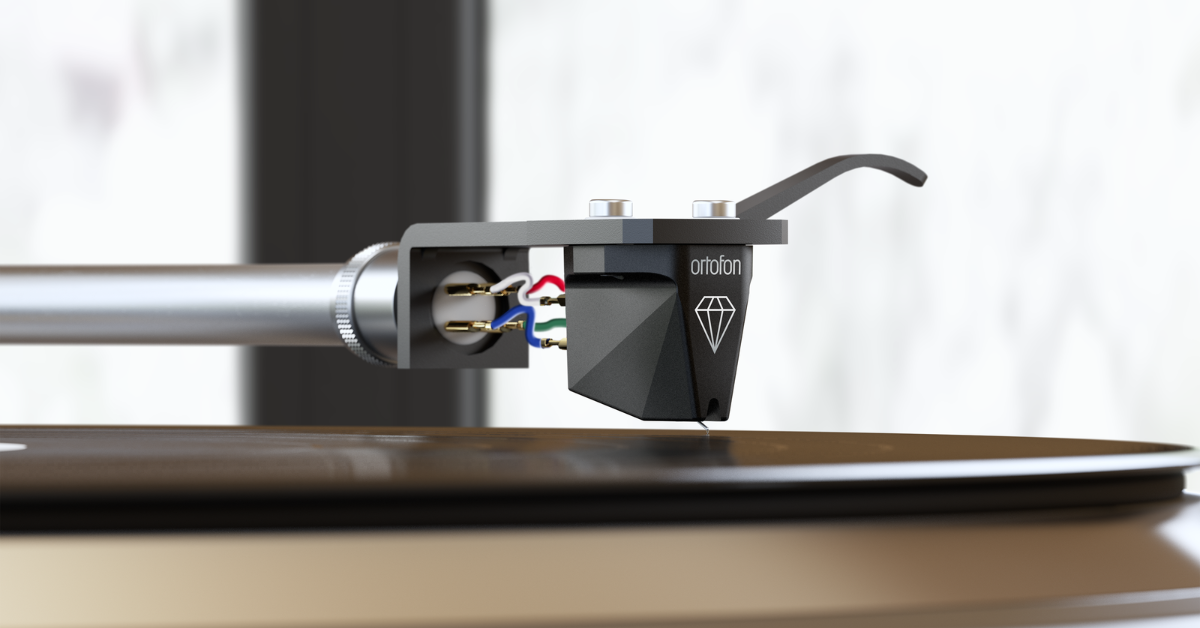
Which MM cartridges are "good MM cartridges" to you?
 
I believe answer you can get here:


Article 8 about MC and 7 why SUT
 
Back
Top Bottom
