• The move to the new server is done. There are some software and database maintenance updates in process. This has us passing the hat around to help out. We appreciate any donations. Seriously, even a dollar helps. The payment page may be found here - https://www.audiokarma.org/support.html

Why the disdain towards direct-drive TTs from some audiophiles?

I agree. Phono pre-amps make a huge difference. In my opinion, perhaps as much as the cartridge.
Not to get too off topic here, but now you have me starting down another audio rabbit hole...

How do external preamps compare to the built in ones on vintage (70's) SS amps or receivers? Assume everything is in spec/recapped, and quality upper range models. I always assumed inexpensive ones in the $100-200 range wouldn't be worth it, so I never bothered to try one. That, and I'm crazy enough to use the "tape" inputs on my gear for their original intended purpose :p

And back on topic...I am curious about what I've read referred to as "suspended" DD tables. Does this mean they use a spring suspension like that of suspended belt-drives (i.e - AR/Thorens/Linn)? My only experience w/DD is with a "fixed" platter type.
 
How do external preamps compare to the built in ones on vintage (70's) SS amps or receivers? Assume everything is in spec/recapped, and quality upper range models. I always assumed inexpensive ones in the $100-200 range wouldn't be worth it, so I never bothered to try one.

It depends on the amp or receiver. If we are talking early 70s mid-fi receivers, the new preamp will likely be substantially better. If you mean an ultra high end late 70s integrated or preamp which has been serviced, the new one may or not be better. Transistors are quieter now than then, ICs are much better, and passive parts are better too.. resistors are quieter and more accurate, and capacitors have better tolerances too. There's a lot of technical reasons why a newer preamp should be better than one from the 1970s. Of course, if this matter or not is subjective and depends on the rest of your system as well as your records, room, and ears.
 
Not to get too off topic here, but now you have me starting down another audio rabbit hole...

How do external preamps compare to the built in ones on vintage (70's) SS amps or receivers? Assume everything is in spec/recapped, and quality upper range models. I always assumed inexpensive ones in the $100-200 range wouldn't be worth it, so I never bothered to try one. That, and I'm crazy enough to use the "tape" inputs on my gear for their original intended purpose :p

And back on topic...I am curious about what I've read referred to as "suspended" DD tables. Does this mean they use a spring suspension like that of suspended belt-drives (i.e - AR/Thorens/Linn)? My only experience w/DD is with a "fixed" platter type.

At risk of furthering the topic drift, I'll add that my cheap Pro-Ject phono box S is a noticable step up from the phono stage in my re-capped Marantz 2240. Haven't tried it against any of my other receivers yet.
 
I find that the Technics DL 1200 is not a table I appreciate. Nothing in terms of cogging, but rather that it does not present the finest of low level detail such as ambiance and decay, but sounds rather dead and lifeless. It has other strengths, but its not a table I have interest in owning.

In terms of belt drive I am finding I am not a VPI fan. I prefer other belt drives such as Well Tempered or Sota.
Did you mean the $4K SL1200G? I've heard it under good circumstances and quite liked it, and based on the conditions, I had no issues with it sounding dead. (This is all so cartridge-dependent as well.) Its motor design does eliminate most of the cogging issues that other DDs have, and speed stability is rock solid, which is most important for me. Don't like the looks of it, but as long as it sounds good, I'm happy. My current turdtable is wavering all over the place even with a brand new belt. Tired of playing that game.

I'm over the VPI thing myself--I don't like their looks, can't stand those flaky unipivot arms (gimbals for me, thank you), and performance-wise they're really not too much different from other tables in their price range or at least, don't stand out enough to sway me. If anything, the couple I've heard in depth, in person, have sounded slightly hard and metallic. It's become a status symbol more than anything, IMHO.

As I arrange to get rid of the turdtable I have now, I'm looking into the Technics 1200G or one of the Clearaudio turntables (Performance DC at bare minimum, or maybe an Innovation Compact). Or something similar if the (previously owned) price is right. It's just hard finding used Clearaudios here in the US. Plenty in the EU (they're made in Germany). Can order a new one but I'd rather someone else take the hit on depreciation.
 
The differences people claim to hear from exotic tonearms, 6" 40lb platters, etc... are largely imagined, IMHO.
I've owned a TT with a thick, heavy platter and I distinctly hear a difference. The heavier platter acts as a flywheel, which not only stabilizes minor speed variations, the momentum of the flywheel also gives the turntable the ability to plow right through heavy bass passages without slowing the pitch every so slightly. The added mass and damping of the thick platter draws the resonances from the vinyl/stylus interface into the platter and dissipates them, especially when the record is pressed down onto the platter with a weight. Backgrounds are quieter, blacker, the music clearer. I'm not imagining it, and neither are the others here who invest in these. Needle drops from my 80s era Denon direct drive sound distinctly downgraded from what this turntable was capable of.

As for arms, they are very complex. It's how the mass is distributed, and how it reacts to the record surface. My feeling is that it's not about sound, it's about physics. I don't get too exotic on arms, but if the mass of the arm is compatible with the compliance of the cartridge, and the counterweight is positioned properly (its center should be level with the record playing surface to minimize the audibility of warpage), that's half the battle. Aligning the cartridge and setting up the arm (mass, anti-skating, SRA, etc.) also make differences in sound. As long as an arm isn't contributing negatively to the sound (with resonances of its own, or from flexing), it's all good.
 
Did you mean the $4K SL1200G? I've heard it under good circumstances and quite liked it, and based on the conditions, I had no issues with it sounding dead. (This is all so cartridge-dependent as well.) Its motor design does eliminate most of the cogging issues that other DDs have, and speed stability is rock solid, which is most important for me. Don't like the looks of it, but as long as it sounds good, I'm happy. My current turdtable is wavering all over the place even with a brand new belt. Tired of playing that game.

I'm over the VPI thing myself--I don't like their looks, can't stand those flaky unipivot arms (gimbals for me, thank you), and performance-wise they're really not too much different from other tables in their price range or at least, don't stand out enough to sway me. If anything, the couple I've heard in depth, in person, have sounded slightly hard and metallic. It's become a status symbol more than anything, IMHO.

As I arrange to get rid of the turdtable I have now, I'm looking into the Technics 1200G or one of the Clearaudio turntables (Performance DC at bare minimum, or maybe an Innovation Compact). Or something similar if the (previously owned) price is right. It's just hard finding used Clearaudios here in the US. Plenty in the EU (they're made in Germany). Can order a new one but I'd rather someone else take the hit on depreciation.

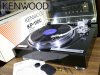
Kenwood was using slotless coreless motors 35 yrs ago, about time Technics stepped up to 1985 lol.

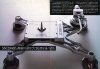
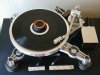
If looking for the liquid smooth operation of a DD table with one of these no need to purchase an ugly table eh. And when you see what's really under these upper tier Kennys you'll understand just how special they really are.

img5a6d790c895a4_l.jpg

What's hiding under that beautiful exterior
958653-ultra-rare-kenwoodseiko-kp1100-and-reson-reca-mm-cartridge.jpg

Some like to run them nude and with multiple arms
93038983ed708b9329787bc981539713 (1).jpg
kenwood-kd-990-naked (1).jpg
 
For me, it was never a question of *distain* but eventually performance over aesthetics. In 1974, I purchased a Technics SL110 and put an SME 3009 tone arm on it using first an Ortofon M15 and later an SL15. I couldn't think of a cooler looking combination especially at age 17!

sl110.jpg


In the coming year, I had the chance to listen to the same cartridge/arm combination on a Linn Sondek LP-12. It simply sounded better. Soon after, I was given the opportunity to purchase a demo Ariston RD-11 turntable at a good price so I migrated to it. Only last year did I give it away to our preacher. It had served me well for over forty years.

I have always been a tonearm guy and used to do installation and setup when I worked for a hi-fi dealer in college. About fifteen years ago, I decided to upgrade and there really were no DD tables without arms to be found. I purchased a VPI Scout and put the Souther TQ-1 previously mounted on the Ariston on it. Over the years, I've upgraded to the 300 RPM motor and purchased an Eagle power supply. I just don't find the need to replace it. If someone were to give me the VPI DD, however, I'd be all smiles. :)

scout2019.jpg
 
Kenwood was using slotless coreless motors 35 yrs ago, about time Technics stepped up to 1985 lol.

If looking for the liquid smooth operation of a DD table with one of these no need to purchase an ugly table eh. And when you see what's really under these upper tier Kennys you'll understand just how special they really are.

View attachment 1747637

What's hiding under that beautiful exterior
View attachment 1747639

Some like to run them nude and with multiple arms
View attachment 1747638
View attachment 1747640
The new Technics is coreless and those who measured it measure better than 0.2% wow and flutter. Kenwood is nice but anyone getting a 35 year old Kenwood needs to understand it will need a big service as,it won't be running to spec for sure. My SP10mk2 performs flawlessly but it has been striped and rebuilt with new caps and then recalibrated.
Chris
 
Hearing wow & flutter is not hard. George Winston's December is a beautifully recorded all piano album from Windham Hill.
I've been a long term fan of many WH artists. I have that album, but my favorite is Autumn and in particular the "Woods" and "Moon" tracks. Another favorite WH artist is Liz Story. I love it when wifey plays some of her stuff at home.

DD tables do this best IMHO.
My experience differs, but that's ok. My VPI Scout/Souther/Dynavector/Eagle combo sounds identical to the digital version when level matched. I confess that hearing HP's Clearaudio Statement on several occasions established my reference as to how good vinyl could sound.
 
For me, it was never a question of *distain* but eventually performance over aesthetics. In 1974, I purchased a Technics SL110 and put an SME 3009 tone arm on it using first an Ortofon M15 and later an SL15. I couldn't think of a cooler looking combination especially at age 17!

sl110.jpg


In the coming year, I had the chance to listen to the same cartridge/arm combination on a Linn Sondek LP-12. It simply sounded better. Soon after, I was given the opportunity to purchase a demo Ariston RD-11 turntable at a good price so I migrated to it. Only last year did I give it away to our preacher. It had served me well for over forty years.

I have always been a tonearm guy and used to do installation and setup when I worked for a hi-fi dealer in college. About fifteen years ago, I decided to upgrade and there really were no DD tables without arms to be found. I purchased a VPI Scout and put the Souther TQ-1 previously mounted on the Ariston on it. Over the years, I've upgraded to the 300 RPM motor and purchased an Eagle power supply. I just don't find the need to replace it. If someone were to give me the VPI DD, however, I'd be all smiles. :)

scout2019.jpg
So you have both turntables to compare to each other now or is this audio memory?
Chris
 
I've owned a TT with a thick, heavy platter and I distinctly hear a difference. The heavier platter acts as a flywheel, which not only stabilizes minor speed variations, the momentum of the flywheel also gives the turntable the ability to plow right through heavy bass passages without slowing the pitch every so slightly. The added mass and damping of the thick platter draws the resonances from the vinyl/stylus interface into the platter and dissipates them, especially when the record is pressed down onto the platter with a weight. Backgrounds are quieter, blacker, the music clearer. I'm not imagining it, and neither are the others here who invest in these. Needle drops from my 80s era Denon direct drive sound distinctly downgraded from what this turntable was capable of.

As for arms, they are very complex. It's how the mass is distributed, and how it reacts to the record surface. My feeling is that it's not about sound, it's about physics. I don't get too exotic on arms, but if the mass of the arm is compatible with the compliance of the cartridge, and the counterweight is positioned properly (its center should be level with the record playing surface to minimize the audibility of warpage), that's half the battle. Aligning the cartridge and setting up the arm (mass, anti-skating, SRA, etc.) also make differences in sound. As long as an arm isn't contributing negatively to the sound (with resonances of its own, or from flexing), it's all good.


I simply could not agree more...extremely well said..most recently I've had a VPI ( with controller), Analogue Engineering 2008 (a Mike Pachetto luxury rebuild of an Empire 298), both a Technics 1200 II and 1210 with KAB mods including a rewire and damping trough, an AR The Turntable, Empire 698, and now an AMG Viella 12 Turbo (which is one of the heavy platter, low torque concepts).

In my direct experience I'd rank

AMG by far..
AE 2008
Technics w/ mods
VPI w/ controller
Empire 698
AR the Turntable

The AMG simply shreds everything else cited here using the same pre, and in the case of the VPI the same cart and pre. What you have described in terms of quiet, and I will add, drive, texture and bass response, is exactly what I hear and it allows for a much more expansive soundstage in every direction. The arm is extremely well machined/designed to work synergistically. One more thing...the motor on the AMG (and on many other top end belt drive tables) is speed controlled.

Unfortunately, it takes either the money to buy this kind of table or alternately, the effort to actually audition one to understand this experience. Moreover, it is only rational that if you haven't actually heard a piece of equipment or type of design directly, your opinion is simply conjecture. If in fact one has had direct experience then they are entitled to their option.
 
Last edited:
I simply could not agree more...extremely well said..most recently I've had a VPI ( with controller), Analogue Engineering 2008 (a Mike Pachetto luxury rebuild of an Empire 298), both a Technics 1200 II and 1210 with KAB mods including a rewire and damping trough, an AR The Turntable, Empire 698, and now an AMG Viella 12 Turbo (which is one of the heavy platter, low torque concepts).

In my direct experience I'd rank

AMG by far..
AE 2008
Technics w/ mods
VPI w/ controller
Empire 698
AR the Turntable

The AMG simply shreds everything else using the same pre, and in the case of the VPI the same cart and pre. What you have described in terms of quiet, and I will add, drive, texture and bass response, is exactly what I hear and it allows for a much more expansive soundstage in every direction. The arm is extremely well machined/designed to work synergistically. One more thing...the motor on the AMG (and on many other top end belt drive tables) is speed controlled.

Unfortunately, it takes either the money to buy this kind of table or alternately, the effort to actually audition one to understand this experience. Moreover, it is only rational that if you haven't actually heard a piece of equipment or type of design directly, your opinion is simply conjecture. If in fact one has had direct experience then they are entitled to their option.
So have you heard the new sl1200G?
Chris
 
Yes I heard it at the New York Hi-Fi show but that was no environment in which to ascertain anything. I did take the time to drive about 2 hours to audition the new Technics Sp-10r in an Oswald's Mill plinth with a Schroeder arm and Miyajima cartridge as well as in the same room, a refurbished SP-10 and a Verdier belt-drive turntable. For me they all performed well, but I found that the belt drive provided a significant amount of air and depth of image that I did not get from the direct drive tables. That was simply my experience.

Please note I didn't mention the 1200G or disparage it in any way whatsoever, simply responded with support for a high-mass platter low torque motor system that had been disparaged on a generalized basis by a poster previously in this thread. Note also, I was very clear in discussing only the tables I had compared directly in my listening room.

That is my point..if you haven't heard it and cannot describe the circumstances, you should not disparage. I have also stated before that the very nature of tables and the variables therein make it very hard to draw absolute conclusions. But please don't talk about tables you have never heard and without specifics of how your opinion is formed, or foster absolutist opinions based on concepts without regard for direct listening experience. Can't we at least agree that's rational.

If you've heard the 1200G and liked it...great, go buy one! I'm sure it's a wonderful table and I know from my direct ownership of the other 1200s in upgraded form that they are easy to use and flexible tools built to an excellent standard. It's really so simple, don't talk smack about equipment you've never heard, or if you have, ante up and be specific.

This should be a discussion in which we provide information to each other not attack each other over general concepts. I could have easily purchased the new SP10r and I chose not to after audition ...it was at the top of my list until I heard it under quite favorable circumstances... So again, if there's a table you like and have heard go buy it, but don't knock other choices without audition experience of some kind.
 
Last edited:
So you have both turntables to compare to each other now or is this audio memory?
Chris
As indicated, I migrated to using the Ariston in 1975. Rather than parking money in a spare armless turntable, next funds were invested in acquiring Magnepan MG-IIs driven by an Audire One amplifier. I was working part time at age 18, but not exactly flush with cash. :)

The comparison was done at a hi-fi shop using Tympani IIIs tri-amped with Audio Research D76s on mid/top, Crown DC-300a on woofers, EC-3 crossover and SP-3a preamp.
 
Last edited:
I've owned a TT with a thick, heavy platter and I distinctly hear a difference. The heavier platter acts as a flywheel, which not only stabilizes minor speed variations, the momentum of the flywheel also gives the turntable the ability to plow right through heavy bass passages without slowing the pitch every so slightly. The added mass and damping of the thick platter draws the resonances from the vinyl/stylus interface into the platter and dissipates them, especially when the record is pressed down onto the platter with a weight. Backgrounds are quieter, blacker, the music clearer. I'm not imagining it, and neither are the others here who invest in these. Needle drops from my 80s era Denon direct drive sound distinctly downgraded from what this turntable was capable of.

As for arms, they are very complex. It's how the mass is distributed, and how it reacts to the record surface. My feeling is that it's not about sound, it's about physics. I don't get too exotic on arms, but if the mass of the arm is compatible with the compliance of the cartridge, and the counterweight is positioned properly (its center should be level with the record playing surface to minimize the audibility of warpage), that's half the battle. Aligning the cartridge and setting up the arm (mass, anti-skating, SRA, etc.) also make differences in sound. As long as an arm isn't contributing negatively to the sound (with resonances of its own, or from flexing), it's all good.


I've owned a TT with a thick, heavy platter and I distinctly hear a difference. The heavier platter acts as a flywheel, which not only stabilizes minor speed variations, the momentum of the flywheel also gives the turntable the ability to plow right through heavy bass passages without slowing the pitch every so slightly.

Last year I would have agreed with this wholeheartedly. Then I decided to purchase a Well Tempered Reference and the black platter on this table is not very massive, I cant find the spec but I would wager it weighs about 3 pounds, certainly less than 5.

Yet there are no speed variations, the bass response is deep and taught, the sound overall it detailed and textured, the noise floor of the record is extremely low.

The Sota I have has a platter mass of 9 pounds. The VPI I have is 20 pounds. The Sota is the best sounding of the three tables, the WTR is just a tick behind, and the VPI is last.

Bearing design and motors, and suspension and or mass seem to make as much a difference to sound quality than platter mass. Of course the composition of the platter seems to be a contributing factor also as both the WTR and Sota have platters that are extensively damped and made from a mixture of materials.

It is so hard to nail down a single attribute of what separates a great turntable from a good one.

Cheers
Mister Pig
 
The new Technics is coreless and those who measured it measure better than 0.2% wow and flutter. Kenwood is nice but anyone getting a 35 year old Kenwood needs to understand it will need a big service as,it won't be running to spec for sure. My SP10mk2 performs flawlessly but it has been striped and rebuilt with new caps and then recalibrated.
Chris

I think you mean 0.02%

I have a 40 year old JVC. It has a coreless motor and measures 0.02-0.03%, which is basically factory spec.

Phone apps can be iffy for measuring because they rely on the accuracy of the phone's gyroscope function, plus the user centering them exactly over the spindle. Most people don't even attempt to center their phone which leads to inaccurate results not withstanding problems with the phone itself and how well the app was designed in the first place.
 
My Pioneer PLX-1000 measured 0.14% - 0.19% W&F over and over again, using the RPM app.

The Hanpin et. al TTs will never measure as well as the better DD systems from 30-40 years ago. That is because Hanpin uses a different type of motor control system than the best Japanese designs did.

From KAB:

There are two kinds of direct drive systems out there:
1. those that use positional updating systems.
2. those that use linear frequency generators.

The 'tables that use the update technique will make a correction to the platter speed once, maybe twice per revolution. These designs will appear to hunt and search for speed because the corrections are large and tend to overshoot. They also will exhibit high Wow and Flutter Test results, usually over 0.2%. You know them as the DJ variety, Stanton, Gemini, Numark, etc.

Linear frequency generators like those used by Technics, Denon, JVC and Kenwood to name a few, have a constant read on the platter speed and do not need to make any corrections unless it is truly neccessary. And since these systems know the precise instant that the speed has changed, they can make a correction that is timed properly without overshoot and, as a result, is imperceptable. These systems acheive Wow and Flutter results of 0.025% and that is really nearing the resolution of the test equipment. These drive systems were born in the discrete quad period 1972-78 where the need to lock onto a 30Khz carrier signal and trace modulations to 50Khz at the inside groove were a requirement.
 
Back
Top Bottom