


I got my lovely Pioneer SA-500A with two of the knobs having their shiny tops missing. Fortunately, this was already many years ago, I could get replacement tops on Feebay. However, they were brass and their color a pale yellow. Over time this darkened and it became ugly. So I decided I would nickel plate them.
I did a brief stint in chemistry so I embarked enthousiastically on this journey. All internet howtos I found used acetic acid (vinegar) as electrolyte. I decided to use hydrochloric acid instead because I am not a fan of organic acids. The priming of the solution using nickel coins (Dutch guilders) went great and produced a deep green clear solution. After I polished and cleaned the brass discs I hung one in the solution with a coin as anode and the brass disc as cathode. Nothing deposited. Only after I prepared a new solution with vinegar I got results. My chemistry is too rusty. I suspect the HCl is way too acid for the electrolysis to be successful but I fail to understand (read: am too lazy to investigate) why it fails.
Eventually I managed to produce acceptable results after I treated the polished brass discs with NaOH (sodium lye solution), again with electrolysis with the discs as kathode and (why not) a nickel coin as anode. Pro tip: use distilled water to clean a disc into the solution before going to the next step.
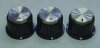
I did a brief stint in chemistry so I embarked enthousiastically on this journey. All internet howtos I found used acetic acid (vinegar) as electrolyte. I decided to use hydrochloric acid instead because I am not a fan of organic acids. The priming of the solution using nickel coins (Dutch guilders) went great and produced a deep green clear solution. After I polished and cleaned the brass discs I hung one in the solution with a coin as anode and the brass disc as cathode. Nothing deposited. Only after I prepared a new solution with vinegar I got results. My chemistry is too rusty. I suspect the HCl is way too acid for the electrolysis to be successful but I fail to understand (read: am too lazy to investigate) why it fails.
Eventually I managed to produce acceptable results after I treated the polished brass discs with NaOH (sodium lye solution), again with electrolysis with the discs as kathode and (why not) a nickel coin as anode. Pro tip: use distilled water to clean a disc into the solution before going to the next step.
