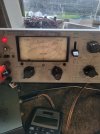
20 watts at under half a percent is pretty good.
Yes, this is quite a bit more encouraging. ;-)


20 watts at under half a percent is pretty good.
20 watts at .17% is quite good with the 807s. The amp seems to like them. What's the distortion at 15 watts? I think most Williamsons only hit their .1% spec at 15 watts, not 20.
20 watts at .17% is quite good with the 807s. The amp seems to like them. What's the distortion at 15 watts? I think most Williamsons only hit their .1% spec at 15 watts, not 20.

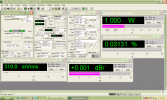
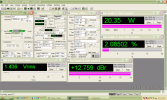
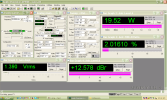
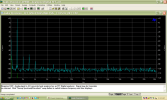

You should not have to lower anything for 807's. I'm running my 1625's at "normal" voltage levels as found in the original Williamson circuit.Okay, check this out. This is with slightly lower B+ to accommodate the 807s.
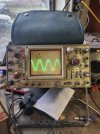
807's at 20 watts, .17% THD:

You should not have to lower anything for 807's. I'm running my 1625's at "normal" voltage levels as found in the original Williamson circuit.
@zackthedog
Have you read DaveG's article about his update for the W5's? He solved the distortion issue at higher frequencies at higher power by ditching the 50% screen tap connections, adding a fixed bias supply and using the secondary as a cathode feedback winding. I just finished doing this for a pair of W5's owned by a friend. Subjectively they have very high detail resolution, the treble at all volumes is possibly the cleanest I have every heard and they maintain composure right up to the higher power end of things.
If the Heyboer clones have a well balanced secondary you should be able to experiment with the cathode feedback on your amps.
John
Does anyone know if Heyboer has ever been asked to reverse engineer the Peerless 16309 or 16458 outputs from the W5's? Just curious. Seems like there should be some failed 309's out there that could be offered up if someone wants to pay the fees. I might be willing.
There have been many articles over the years that have validated using 807 or 1625's in a Williamson circuit even though the screen voltage is exceeded in the Williamson design.I guess I was just being a little cautious. ;-) I'll try them at the regular voltage.
There have been many articles over the years that have validated using 807 or 1625's in a Williamson circuit even though the screen voltage is exceeded in the Williamson design.