• The move to the new server is done. There are some software and database maintenance updates in process. This has us passing the hat around to help out. We appreciate any donations. Seriously, even a dollar helps. The payment page may be found here - https://www.audiokarma.org/support.html

Wood Glue as Vinyl Cleaner

AFAICT the key is to get it on thin enough to really seep down into the grooves as it dries. Then make SURE to wait long enough for the glue sheet to dry completely, being that thin it is easy for some of it to tear and get left behind, if down in the grooves means you have to start all over again.
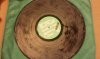
Here's a picture of it drying on the next album:
20190115_222521.jpg

You can see how it really works down into the grooves, IMO this is essential to dig the crud out. I'll wait until tomorrow morning to pull the film sheet off and see how it does. If it fixes this record, I'll consider it somewhat of a minor miracle.
 
Being a liquid, gravity will pull it into the grooves through thick or thin. You do want a one pull peel. If you have to reglue due to too thin, it wastes time and material. Use a playing card, business card, or something stiff but flexible like that, for spreading the glue, and you'll soon see satisfaction, even if the Stones couldn't get none.
 
It works. And I mean it WORKS.
That Third Stage album above had all sorts of popping and crackling previously. My method:
I applied a spray of a mixture of water and ISO Alcohol, then dabbed it to where the record was damp but not wet.
Applied the Elmer's School Glue straight out of the bottle (no dilution.) Application procedure same as others: one small ring around the center label, one ring around the perimeter (lead in), then a flower pattern around the middle. Then spread as evenly as possible with a regular 2" paint brush around the record, starting at the center and working outward groove-wise. Then wait and let COMPLETELY dry. The first attempt above I didn't wait quite long enough, most of it came off in one sheet but there were a few areas left over that were not completely dry, trying to remove those areas proved futile so I applied a second coat and waited to dry fully this time (about 6 hours.) If done right, as it dries it becomes a very thin film of glue that "sinks" into the grooves and makes a very cool groove pattern impression in the glue sheet. When I peeled it this time it came off in one solid sheet. I did not apply any other cleaning solution afterward, just took it straight to the record player, and holy crap. It's not just that the pops and crackles are mostly gone, but the music actually does sound richer and fuller (especially in the lower end.) It did not completely eradicate the pops, there are still a few-- but the difference is still quite amazing. Very impressed. I have not tried this with the wood glue, it may be a bit more effective- but for now I'm just going to use up the remainder of the school glue I have since it has proven to me that it works well enough. Trying it again with another few records as we speak--specifically my Yes Big Generator album which is almost unlistenable.

Might I suggest some packing tape folded in on itself to gently lift up those chunks left behind??

And plain old Elmer's Glue with a premix of water and IPA is something I haven't tried as of yet. I always thought that perhaps the titebond wood glue was a bit too thick to really get to the lower parts of the record.

Thank you for your writeup, this method isn't for ALL records, but for some, it is a godsend. Don't know why some want to lampoon a technique that could save rare finds (My Zoot Sims album was saved, and that is rare as hen's teeth).
 
Well, it didn't help my Big Generator album at least on the first application. But then it may have been the two separate applications that did it for the Boston album as well. Plus I was running out of glue so I spread it pretty thin. I'll try another application when I get home.
It would have had to have been a miracle worker to clean up that yes album-- I think someone tried some stupid cleaner or scratch remover idea on that record before I got it, it actually had white residue in the grooves when I picked it up but was only $2 at the local record shop so i figured why not. I've tried every cleaning solution on that thing so far with not much luck. If the second go-round with school glue doesn't do anything I'll give the wood glue a shot.
 
Well I am a believer! I picked up copies of a 1st and 2nd Canadian pressing of Abbey Road, with the same old thought to myself! Self...oh yes; you can clean these! Sadly, they had a very hard life and looked like they had been used as frisbees. I dropped the needle on side 1 of the 1st pressing after an ultrasonic cleaning and I had to stop it about 8 bars into Come Together, the pops and very loud crackles were unbearable! There were also 2 skips on "I want you". So last night on my way home I grabbed some Elmers, I have a Lowes, Home Depot and a Rona/Home Hardware within 10 minutes of my house and no Titebond anywhere. Anyhow, I setup the album on my old fisher cleaning tt, took a deep breath and put the glue to it. I think for my first try, I laid it on a little thick and it was hard to get a clean smooth layer, so I got it best I could and let it flow....about 15 minutes in it was a nice smooth even layer just a little thick at the run in area. It took from 6pm last evening until about 2am to have that nice clear dried look. It came off very easily in one pull with no mess. I am very pleased to report, that I have a very clean (although a few little noises here and there) quiet first side and one of the skips was gone as well, the other I spent about 2 minutes with a wooden tooth-pick and magnifying glass and that skip is now history as well. So what I would rate as poor is now a VG- at minimum 1st Canadian pressing Abbey Road. I am going to repeat the process again with Titebond, another home hardware location is supposed to have it. Then I will get to copy #2 and try it, I have about 50 albums that I got from my chum's collection that are mostly in poor to fair condition. I am hoping I can save some of those as well. Great thread!!! was awesome to read through some of the adventures here.
 
Well I am a believer! I picked up copies of a 1st and 2nd Canadian pressing of Abbey Road, with the same old thought to myself! Self...oh yes; you can clean these! Sadly, they had a very hard life and looked like they had been used as frisbees. I dropped the needle on side 1 of the 1st pressing after an ultrasonic cleaning and I had to stop it about 8 bars into Come Together, the pops and very loud crackles were unbearable! There were also 2 skips on "I want you". So last night on my way home I grabbed some Elmers, I have a Lowes, Home Depot and a Rona/Home Hardware within 10 minutes of my house and no Titebond anywhere. Anyhow, I setup the album on my old fisher cleaning tt, took a deep breath and put the glue to it. I think for my first try, I laid it on a little thick and it was hard to get a clean smooth layer, so I got it best I could and let it flow....about 15 minutes in it was a nice smooth even layer just a little thick at the run in area. It took from 6pm last evening until about 2am to have that nice clear dried look. It came off very easily in one pull with no mess. I am very pleased to report, that I have a very clean (although a few little noises here and there) quiet first side and one of the skips was gone as well, the other I spent about 2 minutes with a wooden tooth-pick and magnifying glass and that skip is now history as well. So what I would rate as poor is now a VG- at minimum 1st Canadian pressing Abbey Road. I am going to repeat the process again with Titebond, another home hardware location is supposed to have it. Then I will get to copy #2 and try it, I have about 50 albums that I got from my chum's collection that are mostly in poor to fair condition. I am hoping I can save some of those as well. Great thread!!! was awesome to read through some of the adventures here.

Welcome to AUDIOKARMA !!! Also, I know this has been 5 months or so, but I hope you used Titebond Wood II. Not 1, and no reason really for 3. Use II. Glad to hear the results for your Abbey Road.

It really works when nothing else will.
 
It is important to know to use the proper tool for the job. A clean but dusty LP doesn't really need this "beauty mask" process. However, there are LPs with dirt trapped in the grooves that doesn't want to get out, even in an ultrasound bath or repeated treatment with an RCM.
One important parameter, apart from the glue itself, is the viscosity of the mix. When applying wood glue, it's not gravity that puts it inside the grooves, rather it's surface tension. If the glue is thick and has a low viscosity, it will not penetrate the grooves and although you will get a clean, shiny looking LP surface, nothing will improve inside the grooves.
Diluting the glue with some water improves things a lot. What's more effective though is to spray wet the LP with some water or IPA that will attract the glue liquid down the grooves.
With some more effort, I've found that the best results come when you apply glue with a small flat paintbrush on a rotating platter and have the brush push the glue against the grooves. This "primes" the grooves with material prior to pouring a layer on top. That's really the most important parameter of this treatment because the glue needs to get into the grooves to make a difference.

With the availability of low cost ultrasound and RCM solutions, this method is not a viable "cleaning" method but rather an LP restoration process. It takes time and effort but it performs where other methods fall short.
 
Well, I've read this entire thread over the last two days (there should be a t-shirt for people that can pass a test).

I buy a lot of used albums and sometimes I'm surprised at the disparity between appearances, and sound.

My normal cleaning regimen involves pads like the (newer) Audio Technica AT6012 and (vintage) Discwasher. My fluid is 80% distilled water + 20% iso alcohol. I have a small bottle of 100% iso alcohol for challenging vinyl. I've gotten to the point where I don't use any detergents in my fluids at all.

The Audio Technica is very soft while the Discwasher is stiffer. Between the two of them and some fluid, I've been able to clean records to the point where treating them with Elmer's Glue-All or Titebond II shows little to no improvement, but i keep trying. I think my normal cleaning regimen works well enough (some of my decades-old albums that were wrecks when I got them are nearly dead silent) that whatever is left, isn't going to be lifted with Elmer's/Titebond.

For stubborn albums, a $15 pocket microscope (100x to 250x, used mostly at 100x) shows stuff clinging to the groove wall. Likely embedded/scratched-in grit.

The microscope was invaluable in allowing me to inspect albums immediately after cleaning, and after a play or two. It is amazing how much household dust can accumulate on the vinyl during just a couple of plays. Furthermore, the carbon fiber brush I have seems to just move the dust around on the album. So the microscope taught me to clean albums with a pad + fluid before each play. For albums that already sound good, I just grab either pad, use a little bit of fluid, wait for everything to dry, and I drop the needle.

For albums that have that embedded grit, I'll typically wet the album with the Audio Technica brush, and then use the Discwasher brush as a bit of a scrubber. Sometimes I left/angle the Discwasher so I'm applying pressure to a smaller (maybe 1-1/4") area, repeating this across the album. [I should state I'm doing this all on my direct-drive table under power, so I'm trying not to bog the thing down too much.] I follow-up with the Audio Technica to dry the album, and then I listen. It seems with each cleaning/scrubbing/playing cycle, a little more grit is released and the album is quieter.

There appear to be no negative audible consequences of scrubbing the albums like this, they generally just keep getting better. Heck, on occasion I'll use a stylus brush or the little nylon cleaning brush that came with the Discwasher, to clean the vinyl, such as when I find a bolder stuck in a groove. That doesn't seem to have any negative consequences, either.

BUT, I got to this thread because I've been thinking about different glues. I've read about Aleene's Tacky and I'm going to pick some up and see if it grabs some of the embedded stuff a little better than the Elmer's/Titebond glues. Perhaps the stretchy aspect will help. I've always thought the glue effectiveness would be improved if it seemed to grab (the vinyl) a little better. Just a tiny bit.

OH, and BTW, to share something, when I do use glue, I use a silicone roller, this exact one:

https://www.amazon.com/WOODRIVER-Silcone-Glue-Roller/dp/B00H2B73E6

I do this on a bench in the basement with a puck under the record label. It does a good job of distributing the glue evenly and not overly thick. You just let the glue set on the roller and then it peels right off. I'll have to try it with the Aleene's, I'm not sure if it will work well with thicker glue.

That is my story and I'm (mostly) sticking to it.

 
Well the Aleene's Tacky glue didn't do anything the Elmer's Glue-All didn't.

I guess the plus side is, I know that my Audio Technica/Discwasher + homebrew fluid is getting albums about as clean as they're going to get. And additional cleaning/playing cycles result in further improvement, although at a slowing rate.
 
I have been picking up a lot of vinyl during the recent months of the pandemic and started using the wood glue method on some older beat up jazz records to great effect. However after perusing this thread it seems there is some split on whether or not to use wood glue on 78s. After several tests on thrown away 78s that worked without a hitch I almost destroyed a $50 12" Glen Miller 78 by using too thin a layer of glue and letting it cure a touch too long. I was able to rescue it eventually by reapplying a thicker layer of Tightbond II. If you do take the risky plunge of using this method on 78s, use a thicker layer of glue and watch it closely so you dont let it sit longer than you need.

Of course YMMV.
 
I gave this method a try on an LP I bought that I found had skips in the first quarter of it. Tried other cleaning methods, nothing worked. I read through this thread and found people saying to use Titebond II. My bottle doesn't say anything other than Titebond, so I assume that's wrong.

Another mistake that I have only seen somewhat mentioned: it was chilly in my house. Stat set to 72F, but parts of room likely colder than that. I spread the glue pretty evenly, but it took almost two days to dry. When I tried to peel it off, the tabs I put in it tore right off. The glue was impossible to pry up. I had to use a utility knife (I know, terrifying) to get under it only to find out it was also brittle like glass with a tendency to shatter into fine dust. I think the cold might have played a part in that, not sure.

Anyway, there are glue bits stuck in the grooves, but actually the playback is not AS bad as I expected. No loud pops but lots of static. As careful as I tried to be, the utility knife left lots of hairline scratches, but nothing that affects playback.

So what about the skips? They're still there, in the exact spots.

I might try this again with some titebond II, but honestly, wouldn't recommend this on any LP someone cares about. There's too many variables that can go wrong, and when they do go wrong, it could go VERY wrong.
 
It sounds like you used the wrong product and the wrong method. How could it not go wrong?

Am I missing something?
 
72 is low...?

you would be cold in my house....

I avoid buying records that would need this much attention....every record new or used gets a spin on my record doctor and there you go....no doubt this seems to work, I’ve come around, was a skeptic....
 
How about a bump.

Two cleaning methods collide.

I have a couple of carbon fiber brushes and frankly was never impressed. Like many others have discovered, I found they mostly created a line of dust and pushed it around the vinyl. Furthermore, they were more likely to impart a static charge to my records, than eliminate any.

This last summer I tried misting one with distilled water from a decent atomizer. Just a few pumps aimed at the tips of the bristles. And what I discovered was threefold: (1) The brush now hung onto any dust it found on the vinyl. And there was no need to swipe towards the spindle or rim of the platter, just drop the brush on the vinyl, leave it there for 1.5 spins, lift straight up, done. (2) The brush effectively eliminated static. (3) Interestingly, the brush stayed clean. I had figured I'd be making a mess of the brush, but nothing of the sort happened. So little water is used that there is no muddy mess made. Apparently the time it takes to play a side is just enough for any moisture to evaporate, and then I just knock the bristles a few times (with an old credit card) before I mist it again and use it on the next side.

The carbon fiber brush + distilled water has worked so well and is so quickly done, I now clean each side before and after play. I simply rotate brushes, so I always have a dry one ready to knock/re-mist for use. Cleaning a side after play allows me to sleeve clean vinyl when I'm done playing it, which prevents anything that may have landed on the vinyl during play from creating any fine scratches.

Now, I had previously had good luck with glue masking, but ultimately stopped due to the enormous static charge imparted to the vinyl. That static sucked all sorts of dust right back into the groove, it was a giant Achilles heel for me.

Realizing how well the carbon brush + water worked, I decided to try the glue masking again. So I now glue mask an album, peel, then clean it with the carbon fiber brush + distilled water.

And this is working very well indeed. I had some concerns that maybe during the very dry heating season, the brush + water may lose the ability to work, but that hasn't been the case.

If you try this, you will be SHOCKED at how much stuff the misted carbon fiber brush collects from a peeled album, primarily the side opposite of the peeling.
 
Last edited:
How about a bump.

Two cleaning methods collide.

I have a couple of carbon fiber brushes and frankly was never impressed. Like many others have discovered, I found they mostly created a line of dust and pushed it around the vinyl. Furthermore, they were more likely to impart a static charge to my records, than eliminate any.

This last summer I tried misting one with distilled water from a decent atomizer. Just a few pumps aimed at the tips of the bristles. And what I discovered was threefold: (1) The brush now hung onto any dust it found on the vinyl. And there was no need to swipe towards the spindle or rim of the platter, just drop the brush on the vinyl, leave it there for 1.5 spins, lift straight up, done. (2) The brush effectively eliminated static. (3) Interestingly, the brush stayed clean. I had figured I'd be making a mess of the brush, but nothing of the sort happened. So little water is used that there is no muddy mess made. Apparently the time it takes to play a side is just enough for any moisture to evaporate, and then I just knock the bristles a few times (with an old credit card) before I mist it again and use it on the next side.

The carbon fiber brush + distilled water has worked so well and is so quickly done, I now clean each side before and after play. I simply rotate brushes, so I always have a dry one ready to knock/re-mist for use. Cleaning a side after play allows me to sleeve clean vinyl when I'm done playing it, which prevents anything that may have landed on the vinyl during play from creating any fine scratches.

Now, I had previously had good luck with glue masking, but ultimately stopped due to the enormous static charge imparted to the vinyl. That static sucked all sorts of dust right back into the groove, it was a giant Achilles heel for me.

Realizing how well the carbon brush + water worked, I decided to try the glue masking again. So I now glue mask an album, peel, then clean it with the carbon fiber brush + distilled water.

And this is working very well indeed. I had some concerns that maybe during the very dry heating season, the brush + water may lose the ability to work, but that hasn't been the case.

If you try this, you will be SHOCKED at how much stuff the misted carbon fiber brush collects from a peeled album, primarily the side opposite of the peeling.

I have all but stopped using my carbon fiber brush.

I will try this method.
 
Wood glue on vinyl. Where do you people come up with this stuff? This is so crazy it just might work. I am going to give it a try.
 
Just tried a side with TBII. I have a beater deck I used to apply and even out the glue. I did a trial on one side of a 38 Special album. No big loss if I ruined it. Actually it was easy peasy, not messy at all. I let it dry for about an hour and a half, peeled off completely. Any one see a minimum dry time needed to insure all the gunk is pulled out? I just now did one side each of two good LPs now and put them aside. Do they really need overnight?
 
Back
Top Bottom