How does one measure the wow and flutter on a belt drive without using a test album?
Well, some manufacturer’s belt drive turntables, such as the Philips Direct Control models (e.g. AF-977), monitored the speed of the platter directly, and adjusted the speed via servo electronics if it wasn’t correct. See below for a picture of how they did it.
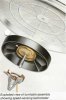
So they could (but they didn't

) have measured wow and flutter directly from the platter the same as some direct drive manufacturers did. Specifically Denon, Sansui (with some top-end models – their XR and XP-series) and Sony used tape heads to monitor the speed of magnetic marks on the inside of the outer rim of the platter – with Philips it was done using a tachometer near the centre spindle.
How many DD tables are measured off a test album, and not motor electrical readings?
Well, the majority are specified using that method, with some also using motor or platter direct readings, although some just used the direct reading method, which is perfectly valid, as long as it's compared only with readings taken the same way.
They (usually) tell you in the specifications when it's measured directly, although some just include abbreviations such as ‘FG’ or ‘servo’ to indicate it was measured from the motor or platter. The better manufacturers, such as Sony and Technics, stated in clear language for laymen how the motor/platter measuring method differed.
For instance, from Sony (PS-X600), “This new measuring method concerns only the turntable assembly, including the platter. It excludes wow and flutter caused by the tonearm, the cartridge, or the record. Measured by obtaining signal from magnetic pickup head.” The magnetic pickup (tape) head they’re referring to is the one which measures the speed of the magnetic marks on the inside of the outer rim of their platters. From Technics (SL-1200Mk2), “This rating refers to turntable assembly alone, excluding effects of record, cartridge or tonearm, but including platter. Measured by obtaining signal from built-in frequency generator of motor assembly.”
Some manufacturers used to provide both sets of specifications – measured from the motor or platter, and also measured playing a record, occasionally using several different measuring standards, such as both DIN (peak weighted) and Weighted RMS (WRMS). The figures using a record are typically much higher, as they’re measuring any inherent wow and flutter on the record, as well as caused by stylus drag. Here are some typical specification figures:
Denon DP-47F: 0.01% WRMS (measured from inside of platter outer rim, via tape head), 0.02% WRMS (using a record)
Pioneer PL-640: 0.012% WRMS (from motor), 0.025% WRMS (using a record),
Sony PS-X600: 0.015% WRMS (from platter), 0.025% WRMS (using a record)
Technics SL-1200Mk2: 0.01% WRMS (from motor), 0.025% WRMS (using a record)