• The move to the new server is done. There are some software and database maintenance updates in process. This has us passing the hat around to help out. We appreciate any donations. Seriously, even a dollar helps. The payment page may be found here - https://www.audiokarma.org/support.html

Yamaha A-1000 Repair and restore

minimatt

New Member
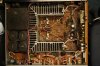
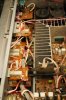
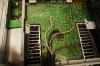
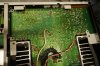
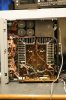
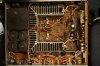
Hi all, I have found this forum hunting around for info on this amp. After reading through the various A-1000 threads here, I have a bundle of tips and advice to follow and feel like the brains trust here is going to be life saving in my quest to restore this amp. A little back story.... I owned this silver A-1000 a little over 20 years ago, but had to part with it for much needed cash when I was a young father starting a family. I recently found the guy still owned it and it was sitting in his shed. I have bought it back from him hoping for the best (it worked last time he used it), but fearing the worst. Alas, it was pretty grubby inside and does not work. No relay click. Yes, I have powered it through a DBT which dims after a few seconds. None of the internal fuses are blown. None of the main transistors seem to be shorted after poking around with a meter on diode test. The board needs some serious TLC though. I was going to start with the caps and replace anything else that shows signs of corrosion. So far, the only thing of note I can mention is that the ceramic resistors on the input board all had dry joints to the point the resistors were loose. After resoldering they get a whole lot warmer than I would expect them to be. I would sincerely appreciate assistance guys, and I promise to follow advice :)

DSC03291 (Large).JPG
 
Register to hide this ad
Correcting any/all the glue damage ( corrosion ) may be all that's needed.:thumbsup:
 
OK, I'll hook in to that area first. On another note, should the ceramic resistors be too hot to touch in this unit?
 
It's completely normal for the 4 cement resistors to be hot (3x on phono board, 1x on "BBQ" board next to volume pot), they are part of a voltage divider.

Also normal to have many cracked solder joints, generally re-doing them all (along with glue/corrosion clean) will bring the amp out of protection (i.e. relay click). It is difficult to troubleshoot until this is done. Work slow and be very careful not to create any shorts / solder bridges while re-soldering.

Read the other A-1000 thread posted here recently, it will answer most of your questions.
 
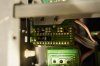
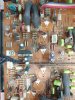
Google "dry solder joints" for some pix of what to look for. Your third pic/attachment show 2 rows of 12 pins, most look suspect.
Worthwhile also checking solder joints on voltage regulators, typically fitted with heatsinks.
 
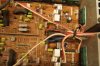
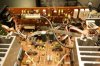
ok, looking good so far.... After cleaning up the mess left from the 6 caps and reflowing both the main board and the phono board, we have a working amp that sounds nice :) Every cap I've checked so far is reading a fair amount below what they should so I think I might proceed with a full re-cap. Any suggestions or advice on selection? 343547795_223638090280577_9218215256934404011_n.jpg
 
I hope you corrected all that corrosion on component leads and jumper wires. I see a bunch of jumper wires that need to be replaced in that photo.
 
No guys, at this stage I just corrected the parts that had failed. I poked around all of the nasty looking jumpers and nothing had failed yet. My goal was to get it out of protection first before going shotgun on it. What's your suggestion for correcting corrosion on component leads and jumper wires?
 
No guys, at this stage I just corrected the parts that had failed. I poked around all of the nasty looking jumpers and nothing had failed yet. My goal was to get it out of protection first before going shotgun on it. What's your suggestion for correcting corrosion on component leads and jumper wires?
Replace them..
 
Jumper leads I use capacitor or resistor lead clippings.
Resistors , diodes , transistors I just replace them.

Get all that dried glue off the board.Scrub the component side of the board in the " debris field " with alcohol.
 
As above, need to clean glue and replace corroded jumpers + components.
Acetone softens the glue, don't get it on other components. Use a plastic or wooden scraper to preserve the board.
When the glue is dark like yours it comes off easily, isopropyl alcohol may be enough.

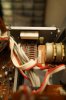
I recommend replacing jumpers with resistor leads of equal cross section (tinned solid copper like factory, many modern capacitor leads are not).

A-1000 jumpers.jpg
 
Back
Top Bottom