• The move to the new server is done. There are some software and database maintenance updates in process. This has us passing the hat around to help out. We appreciate any donations. Seriously, even a dollar helps. The payment page may be found here - https://www.audiokarma.org/support.html

Yamaha C-70 Project

I have two C-70's as well as a C-80. I LOVE the C-70's, but they keep blowing HB2E-DC24V relays. Has anyone found a good source to replace them all with so they will stop blowing? My repair guy just kept replacing them one at a time. Next time I just want to do ALL of them and be done with it once and for all.

Help???
 
I have two C-70's as well as a C-80. I LOVE the C-70's, but they keep blowing HB2E-DC24V relays. Has anyone found a good source to replace them all with so they will stop blowing? My repair guy just kept replacing them one at a time. Next time I just want to do ALL of them and be done with it once and for all.

Help???
PM sent.
 
Okay so right after I posted my last reply, i switched the interconnect back to the normal pre out, and the right channel came back to life. I have no idea what changed but it's working perfectly now! Ha.
I just got a C-70 with this issue even though when I got it in the mail I cleaned the hell out of every corner with the deoxit. Did this fix it? Did your specific C-70 ever get recapped or did Deoxit save the day?
 
I just got a C-70 with this issue even though when I got it in the mail I cleaned the hell out of every corner with the deoxit. Did this fix it? Did your specific C-70 ever get recapped or did Deoxit save the day?

Not exactly. After deoxit it worked for a day or two but then the problem came back - so I switched back to my trusty C-50. In the mean time I've recapped the entire C-70, which also didn't fix the issue, so my next task is to replace the two green film caps that tend to go bad. Think those are the last two caps I'll replace. Aside from that im worried it could be a transistor issue. But there are a ton of those on the C-70 and I really dont want to replace all of them. Sort of at a loss at the moment.
 
Not exactly. After deoxit it worked for a day or two but then the problem came back - so I switched back to my trusty C-50. In the mean time I've recapped the entire C-70, which also didn't fix the issue, so my next task is to replace the two green film caps that tend to go bad. Think those are the last two caps I'll replace. Aside from that im worried it could be a transistor issue. But there are a ton of those on the C-70 and I really dont want to replace all of them. Sort of at a loss at the moment.
HB2E-DC24V relays.
 
Ok so now my sound is cutting out completely. I got it off eBay and the only complaint posted at time of purchase WAS that it would crackle when volume was raised and was promised to be a fully functional unit. The buyer does not accept returns but the e-bay protection should cover me at the least. It definitely needs a major re-haul on it so now comes the question. Since I don't have a lot of free time or money being in grad school, is this worth holding on to and recapping down the road? Or can I sell this as is with the issues at $130 dollars to break even? This was my first pre-amp and I know it's a gamble and rabbit hole when it comes to used pre-amps but I just bought a nice turntable (Fluance RT-81) and I'm wanting to get the most out of my system now.
 
UPDATE

Wow...it has been over two years since I restored my Yamaha C-70. It still plays great and I use it almost everyday as it is in my main work office. It is paired with a Yamaha M-85 power amp and a pair of NS-500M monitors. I change out the source equipment fairly often but my turntables are all Bang & Olufsen linear types. Either the BG400x series or the BG800x series since I primarily restore those types on the Beolover Blog.

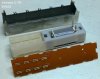
yamaha_c70_sw503_solenoid_switch_001.jpg

After about a year my C-70 started developing a switching issue with the Parametric Tone Control (P.T.C.) selector. Sometimes one of the channels would drop out. After exercising the switch control a few times it would always start working so a minor nuisance.

A short while ago another Yamaha C-70 owner contacted me and had the same problem. I told him I thought the problem was probably one of the yellow, 24VDC relays inside the preamp. Luckily I dug in to check that and to my surprise I had missed during my original restoration the fact that the P.T.C. controls are a solenoid operated switch (SW503) made by ALPS. Several of the C-70 manual operated switch are ALPS devices and look similar. However, SW503 is solenoid operated and controlled by the Tone Control front panel switch.
yamaha_c70_sw503_solenoid_switch_002.jpg

Looking at the schematics then inside the C-70 I located the SW503 switch that is causing the problem.
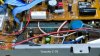
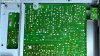
yamaha_c70_sw503_solenoid_switch_003.jpg

yamaha_c70_sw503_solenoid_switch_004.jpg

I removed the ALPS solenoid switch so I could take it apart and clean it.
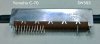
yamaha_c70_sw503_solenoid_switch_005.jpg
yamaha_c70_sw503_solenoid_switch_006.jpg

You can see visible oxidation on the contacts. Nothing a brush and Deoxit can't cure.
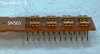
yamaha_c70_sw503_solenoid_switch_007.jpg

After removing the moving pieces of the contacts though I saw how flimsy they are. I'm sure my cleaning and reassembly will fix the switching problem but how long will it last? I don't want to come back and repeat this process.

I decided to search for replacement switches or possibly better contacts. To my surprise I came upon a post on a reel-to-reel, Teac repair web site. The repairer had a similar problem to me with his Teac tape deck and the faulty switch was an ALPS switch that looked identical to mine.

The really cool part though was that the restorer had built a drop in replacement part for the ALPS solenoid switch. The replacement part uses individual, sealed relays instead of a solenoid driving a set of mechanical contacts. The replacement part should be more reliable and a heck of a lot more durable.

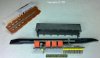
Here is the replacement switch next to the original ALPS switch.
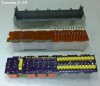
yamaha_c70_sw503_solenoid_switch_008.jpg

yamaha_c70_sw503_solenoid_switch_009.jpg

The replacement switch is designed so the original ALPS metal cover can be re-used. However, the cover is not necessary as everything on the new part is sealed.

I preferred to not put the original cover on and just go with the part as I received it.
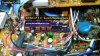
yamaha_c70_sw503_solenoid_switch_010.jpg

There is the part in place in my C-70. You can order your own replacement SW503 part from Kurt Jacobs via the email address shown above in the photo.

I am happy to report that this replacement switch works great and my C-70 is back to full operation with no problems whatsoever.

 
Last edited:
The cost I paid for the replacement part was $79.95 USD. Kurt sells it on Ebay but it is better to email him and buy it directly from him. It sounded high to me at first but having created some new replacement devices for other equipment it seems reasonable. I could build one myself for less but then there is the amount of time. I think Mr. Jacobs did a nice job in solving this solenoid switch problem for TEAC X2000R owners and I am pleased with having a good long term solution for my C-70 :-).

If one doesn't want to go this route though, I was able to do a decent job cleaning the corrosion off the fixed contacts that the moving contacts slide on. I removed the eight sliding contacts first, then used a brass pen and some Deoxit on the fixed contacts. That worked well and I was able to carefully reinstall the sliding contacts after the cleaning. That was also when I realized how flimsy they are and when I started to question how long the fix would last. But if someone is in a pinch it is a viable option.

To me it is worth spending the money on the new replacement part. Especially as part of a full C-70 restoration. This is really a great Yamaha preamp. I have the C-2a, C-2X, C-80 and C-85 preamps as well. Yamaha knew what they were doing as they all are good units. I feel the C-70 is built better than the C-80 and C-85 though. Yamaha went to a lot of plastic in their cabinet frame on those while the C-2a, C-2X and C-70 are all metal. Electrically I think they are all very good. A nice feature of the C-80 and C-85 preamps are the variable loudness control but that isn't a big enough selling point to sway me from solid build of the others.
 
Hi guys, very informative topic, thank you for all the info!
There's something I need to bring to attention though. I just started working on my C-70 (plagued with all the problems listed above), and I was unpleasantly surprised with one peculiarity: the two D716 space heaters in the PS section were not insulated from their heat sinks. I was lucky enough to have touched only one, so the zap was mild, but I imagine touching both at the same time would have been much more unpleasant. I'm pretty much sure my unit came from the factory this way, which is a bit disappointing. Please be safe, and add some padding (if it's not there): it can't be good to have a hot (pun intended) exposed chunk of aluminum of that size under the hood.
 
Hi guys, very informative topic, thank you for all the info!
There's something I need to bring to attention though. I just started working on my C-70 (plagued with all the problems listed above), and I was unpleasantly surprised with one peculiarity: the two D716 space heaters in the PS section were not insulated from their heat sinks. I was lucky enough to have touched only one, so the zap was mild, but I imagine touching both at the same time would have been much more unpleasant. I'm pretty much sure my unit came from the factory this way, which is a bit disappointing. Please be safe, and add some padding (if it's not there): it can't be good to have a hot (pun intended) exposed chunk of aluminum of that size under the hood.
Welcome to AK.. Insulators not needed. Those two heatsinks are isolated from ground and each other.
 
it can't be good to have a hot (pun intended) exposed chunk of aluminum of that size under the hood.
Most all of Yamaha control amplifiers are the same in regards to the pass transistors in the regulated power supply. ie.. "hot' heatsinks..
 
Last edited:
Dear avionic, thank you for the welcome, and of course you're right (as always, from what I can tell), but I, for instance, had no idea! I just think it's too easy to accidentally touch the heat sinks while poking around, and the fix is super easy and cheap. My apologies if I'm flooding the thread.
 
Dear avionic, thank you for the welcome, and of course you're right (as always, from what I can tell), but I, for instance, had no idea! I just think it's too easy to accidentally touch the heat sinks while poking around, and the fix is super easy and cheap. My apologies if I'm flooding the thread.
Well. You do now..:biggrin: :thumbsup:
 
Stay out of a C-1...;) Those two heatsinks Have a 300v (+ 150/-150) potential across those heatsinks.
 
Better thermal transfer to the heatsinks with no insulators. Guess they figured better to keep those hot transistors a little less hot since people shouldn’t be poking the heatsinks anyways!
 
Well, if better thermal transfer and dissipation was ever the goal, then well polished mating surfaces and matt black heat sink would've done the trick. Marantz, back in the 70-ies, for instance, didn't have a problem with such details (yet cutting corners left and right elsewhere). Anyway, with modern materials it's possible to get a much safer and efficient solution.
 
Just did the LED power lamp mod. Wow, what a difference in temperature. That 390 kohm resistor is now dead cold which will probably save wear and tear on the large cap that sits right beside it. Heat is the enemy...
 
Thanks to sonavor for sharing his restoration tale.

I got my beaten and abused C70 sometime in the early 1990s missing the cover, volume pot/knob and the relay switch. It was purchased at a local shop's "junk pile sale" for $20. Most likely the original owner brought it into the shop and when confronted with the estimate decided it was a lost cause. It was definitely in need of a full restoration but my skills were not up to the challenge so it went into long-term storage.

A few weeks ago I was in my storage locker and decided to bring it home to see if I could get it running. Its not going to be a quick deoxit/caps job but I'd love to cross this someday project off my bucket list.
 
Last edited:
Back
Top Bottom