• The move to the new server is done. There are some software and database maintenance updates in process. This has us passing the hat around to help out. We appreciate any donations. Seriously, even a dollar helps. The payment page may be found here - https://www.audiokarma.org/support.html

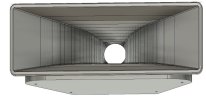
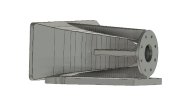
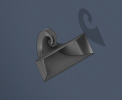
A horn design using Fusion 360

As an aside here before things got crazy I was on good speaking terms with Roy. I went to the first class years ago in Hope and he told me to bring my five 1132 drivers with broken phase plugs and he would fix them. It was an off white plastic and not the black like the originals. So I get them home and stick a pair in my Super MWM's. I soon made a call to Roy to tell him what an improvement they were. He was using a depositor to make phase plugs with a tractrix curve and not the straight wall guides which was what he had been limited to. I had to laugh when he said glad you noticed and it would have been impossible not to. There was another plastic guide he made around that time for the Celestion driver that went between the driver and snout or horn lens whichever the case may be. They were no where near the increase in sound quality that the phase plugs were. I would imagine these were patented too and if so when that expires the item to look into doing.

I miss those old days and the old Roy before buyouts ruined things.
 
One of the things I enjoy about this hobby is seeing what other builders are creating. Mike B has been doing some really nice work lately, and seeing his ideas has reminded me and inspired me to keep refining my designs and building techniques.

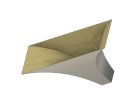
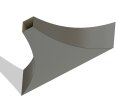
This is a few samples of refined work.
 

Attachments

  • Screenshot 2026-07-05 202416.jpg
    Screenshot 2026-07-05 202416.jpg
    24.5 KB · Views: 6
  • Screenshot 2026-07-05 202525.jpg
    Screenshot 2026-07-05 202525.jpg
    25 KB · Views: 6
  • Screenshot 2026-07-05 202610.jpg
    Screenshot 2026-07-05 202610.jpg
    27.6 KB · Views: 6
Liquid-n-lasers style. Maybe one of the smaller 18Sound drivers would fit.

With that curve to it, I bet the sound is a little messed up. Might be a real vintage "warm" 1920’s tone.

 
Maybe, but I would modify the rate of expansion to create more clearance. I have no idea how I would even print this :dunno:
I would think a few flanges would work. Keep the angles less than 45 degrees.

Sllice it up, print 1/4 scale and look for the issues.
 
Last edited:
Liquid-n-lasers style. Maybe one of the smaller 18Sound drivers would fit.

With that curve to it, I bet the sound is a little messed up. Might be a real vintage "warm" 1920’s tone.
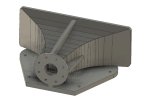
Speaking of messed up, this would be an attempt to print a time aligned tweeter horn. The thought behind the curled-up squawker horn was to make room for this behind and underneath. This splits a 1" exit tweeter into two mouths.

Thinking that having half the tweeter horn on either side of the squawker horn would be both visually pleasing and physically time aligned. I've never liked the look of a side mounted tweeter.

Again, just trying to show what's possible with CAD and 3D printing.

Untitled Split Tweeter.png
 
Have a little look at what's presented here: Lab — JW Sound

Especially these tools:

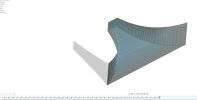
"Boundary Lab is a GUI-based Boundary Element Method (BEM) tool for loudspeaker design. It uses Ath to generate loudspeaker surface meshes, runs BEM solves, and shows SPL, directivity, radiation impedance, spinorama-style curves, and 3D balloon plots inside the desktop application."

"Autodesk Fusion script for exporting visible bodies to configurable Gmsh .msh meshes for downstream BEM/FEM workflows.
The script adds an Export to MSH command in Fusion, exports each selected body as temporary STEP geometry, and generates a 2D mesh in Gmsh with per-body sizing controls and optional seam-aware blending for connected bodies."


Cool stuff imho.
The free DIY plans on the 'Systems' part of his website are pretty damn good too.
 
Have a little look at what's presented here: Lab — JW Sound

Especially these tools:

"Boundary Lab is a GUI-based Boundary Element Method (BEM) tool for loudspeaker design. It uses Ath to generate loudspeaker surface meshes, runs BEM solves, and shows SPL, directivity, radiation impedance, spinorama-style curves, and 3D balloon plots inside the desktop application."

"Autodesk Fusion script for exporting visible bodies to configurable Gmsh .msh meshes for downstream BEM/FEM workflows.
The script adds an Export to MSH command in Fusion, exports each selected body as temporary STEP geometry, and generates a 2D mesh in Gmsh with per-body sizing controls and optional seam-aware blending for connected bodies."


Cool stuff imho.
The free DIY plans on the 'Systems' part of his website are pretty damn good too.

I'm using his Fusion 360 MSHExport tool, but not smart enough to learn how to use Boundary Lab.
 
I'm using his Fusion 360 MSHExport tool, but not smart enough to learn how to use Boundary Lab.
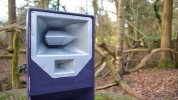
Just wanted to share this for your awareness of the available tools, and in the case others might want to dig deeper.

For good measure: I'm at a much lower level of the 'horn development' ladder! Can read build plans, execute them and take measurements of the built thing. :biggrin:
Also don't want to climb the ladder, would take away the fun out of the simple physical engagement of building stuff for me!
 
Back
Top Bottom