• The move to the new server is done. There are some software and database maintenance updates in process. This has us passing the hat around to help out. We appreciate any donations. Seriously, even a dollar helps. The payment page may be found here - https://www.audiokarma.org/support.html

2325 mystery problem

klamsoss

Be willing to fail and try again.
Oh boy am I glad there's some folks active on one of these. @catrafter @Steven Tate @pga7602 @MBuras I'm looking at you guys... :D

I am like 99% done with the rebuild on my buddy's receiver and it has worked wonderfully so far. I worked my way through each board and tested periodically to make sure everything was still working. No issues. The last thing I did was the power amp modules and replacing the lamps with LEDs. All good... right up until the other day when I went to do all the final voltage adjustments.

For some reason it blew the fuse on the power supply board. I could detect no other issues and it wasn't drawing excess current (started it up initially on the DBT, but typically the relay wouldn't click for me until I used the AC amp-metered outlets on my home built DBT/Voltage/Current unit). Both prior to, and after the fuse blew, it was drawing around 0.75 amps according to my meter, and that is commensurate with other low-volume testing I did while going through the rebuild.

Anyway, I ordered some new fuses of the appropriate amperage rating (although I couldn't get the same voltage rating, so I went with something higher... fuses are for current, not voltage, right? original was a 0.2A 250V and new is 0.2A 600V... only one I could find on digikey that was the right size with the current rating I needed). The old fuse looked like it was mechanically broken... not smoked, burnt or melted like other fuse filaments I have seen when they blow.
So, last night I popped in the new fuse, turned the thing on, and everything seemed fine. The FM sounded normal and the volume worked normally so I started hooking up my DMM grabber probes to adjust the power supply voltage when I saw smoke start coming out of the left side power amplifier. The current meter wasn't showing anything weird but I shut it off anyway. I unplugged, discharged all the caps, pulled that amp module and inspected it but I couldn't find anything wrong with it.

Okay, reassemble, try again, I'm thinking maybe it was just some flux? cat hair? my hair? or something else silly that was providing some sort of low-level short... (even though I'm good about cleaning that stuff off, and the smoke didn't really smell like solder/flux/hair).

NOPE! About 25ish seconds after I powered back on, I got a POP and a spark coming from the vicinity of the inductor on the driver board (couldn't tell exactly) and also a pop from the little test speakers I use. Shut off immediately (though I did double check the current and I had the power supply voltage metered as well... current was still normal, around 0.75 amps A/C and the power supply voltage was maybe 36VDC, so slightly high, but not crazy). Not wanting to destroy anything, it's been shut off and unplugged for the last 18 hours. I took a look back just now and I don't see anything obvious. no popped capacitors, no blown resistors, no signs of anything really burnt either. The only hint of ANYTHING is the pins on the power jack for the driver board do look tarnished in a way that makes me think it was heat. Also, the plastic connector that fits on those pins smells like the smoke I got the first time.

Any ideas?
 
Last edited:
Register to hide this ad
You got my attention, but I'm stuck here.
"I could detect no other issues and it wasn't drawing excess current (started it up initially on the DBT, but typically the relay wouldn't click for me until I used the AC amp-metered outlets on my home built DBT/Voltage/Current unit)."

This doesn't sound right because I can play music with my 2325 plugged into my DBT no problem. I am running a 100Watt Incandescent builb and when the amp comes on.. it will go full brightness for 1 second and dims down. Let's wait on others to chime in, but I think there may be an issue with your relay (Was this changed during your restoration?). Regardless, I don't think you should move any further without figuring how to get the DBT working again.

My hunch is that you may have blown an output transistor. Once you get a DBT back online, maybe you can unhook the amp boards (P700) and see if the short goes away.
 
Last edited:
From my limited knowledge, I will suggest you disconnect the amps module, put on DBT, and power it up. Use a 100-125W bulb if everything ok on all other boards you should hear the relay is clicking. If the relay doesn't click check the voltages at all checkpoints in power supply board according to the schematic.
 
Are you sure you didn't have your meter leads connected to the current inputs on the DMM?
Smoke in the area of the inductor could indicate the amp was oscillating. Check for shorted transistors and burnt resistors on that channel, especially in the Zoebel network (components associated with the inductor.)
Once you are sure it's ok, bring it up again with a scope connected to the output. Watch for oscillation.
 
I agree with all of the above. Pull the left amp out, fire up on DBT and see if the relay clicks. If it does, you are going to have to pull a bunch of parts and test, probably starting with the output transistors and components around the inductor on that left amp. Did you replace R746, the big green 22 ohm, 3W resistor next to the inductor? If so, with what? My 2325 had a component failure in this same area, and part of the damage was cooked diodes at H720 and H721. Pull one end of them and test them as well as R746. Just a few things to check based on a smoke situation in the same area on mine.
 
Additional data:
According to my notes, the relay clicked with the DBT at least some of the time. I seem to remember it NOT clicking more than once, so that's what I was thinking with my original post, but I do have in my notes that it DID click the last time. My bad... I should have double checked. Sorry guys...
I have my leads hooked up right. J804 and J805, and I have my Fluke 87V set up as normal (i.e. V/Ohm/diode/temp rather than A/mA)
In several areas, power supply cap ratings were increased somewhat when replaced (with low ESR and/or audio specific types) based on guidance from our own @hirscwi

The last time everything DEFINITELY worked perfectly for a listening session: I did everything except the power amps and the phono stage and everything worked flawlessly.

The fuse on the power supply board blew whenever the thing went pop, or at least it did VERY shortly after. This leads me to believe that my prior statement that after the pop the power supply was 36V is wrong. I don't think I am, but I could very well be remembering it wrong. Anyway, I got 0V between J804 and J805 when I tried with both amps disconnected.
The relay clicks when both amps are disconnected and with the fuse blown.
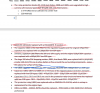
I've attached a screenshot of the power supply board modifications/replacements.
I put new thermal paste on all the main output transistors (cleaned and reused the silica)
The spark/pop appeared actually to maybe have come form anywhere on the inductor side of the driver board...Maybe the double resistor R748 maybe R753, maybe H708... hard to tell. I didn't wait for it to happen a 2nd time.
I did not remove any of the TO220 (or similar) case transistors on the driver board. In fact, you can see everything I DID replace below.

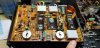
Here's what I think is the relevant work done on the amps and related components:
Main filter caps are now 18,000uF nippon chemicon parts. they fit nicely in the original clamps and the boost in capacity shouldn't hurt, theoretically...?
no resistors were replaced on the driver boards.
Capacitor C701 replaced with a poly film cap
C703 replaced with 33uF MUSE bipolar
H701/702 replaced with matched pair of KSA992FBU (thermal paste between them and heat shrinked together)
C706, 707 replaced with 10uF nichicon FG
H718 replaced with 1N4148
H719 replaced with 1N4148
H703 replaced with KSA992FBU


I will pull R746 and the H720/721 tomorrow and test. None of them are visually toasted, though, and in-situ /circuit the R746 is a perfect 22 ohms (though I know there can be sneak circuits that screw in-situ measurements up).
Questions:
Would the increased capacities in the power supplies be likely to have blown these if they had been "close to the edge"?
Is it possible the phono stage work is the culprit? I'm doubtful.... can't possibly imagine why it would be.

I can also pull the output transistors and test them with my atlas DCA55... that's the best I got for transistor testing (I started out with tube stuff... what can I say...)

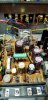
I'll attach some pics shortly. Including the list of what I did to the power supply board.
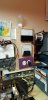
And my DBT rig. Switch on the side you can't see for the DBT to be on or off. DBT is hooked to top outlet. Metered for AC volts on both outlets, metered for AC amps on bottom outlet.

Power supply mod list
Amp module
DBT
Power supply
 

Attachments

  • 20201001_223951.jpg
    20201001_223951.jpg
    90.4 KB · Views: 31
  • 20201001_223919.jpg
    20201001_223919.jpg
    82.3 KB · Views: 32
  • 20201001_224002.jpg
    20201001_224002.jpg
    94.2 KB · Views: 27
  • Annotation 2020-10-01 222007.png
    Annotation 2020-10-01 222007.png
    189.2 KB · Views: 31
Last edited:
Aaaand another piece of the puzzle:
I replaced the 2nd blown fuse on the power supply, amp modules unhooked, started it up.

It blew the fuse again right as I got the voltage dialed in to 34.97V (spec is 35). So it would appear the problem is in the power supply? Or... there are 2 problems....

Also, just for fun, some additional pictures:
1 Replaced the push jacks for the speakers with real 5-way posts
2 new thermal paste for the output transistors
3 big new main filters in the chassis, power modules OUT
 

Attachments

  • 20200729_000918.jpg
    20200729_000918.jpg
    78.2 KB · Views: 31
  • 20200823_124439.jpg
    20200823_124439.jpg
    75.8 KB · Views: 29
  • 20200823_125833.jpg
    20200823_125833.jpg
    114.7 KB · Views: 29
Last edited:
Aaaand another piece of the puzzle:
I replaced the 2nd blown fuse on the power supply, amp modules unhooked, started it up.

It blew the fuse again. So it would appear the problem is in the power supply? Or... there are 2 problems....

Check them power supply voltages. May be separate issues, or one issue cascading...
 
Let's invite @rBuckner to the party.

"In several areas, power supply cap ratings were increased somewhat when replaced (with low ESR and/or audio specific types) based on guidance from our own "

Can you provide details on what you meant by increase in ratings? Just voltage and not capacitance right?
 
@pga7602 see the attached screenshot of the power supply upgrade list. Some uF ratings were increased where appropriate and space permitted
 
Party? What party?? :D

With both amps unplugged and that fuse blowing it's in the power supply OR whatever is connected to it still. I'm just up and still fuzzy headed and have an errand to run in a couple of hours so will look at it all again.

I can tell you that I have conferred with @catrafter before on this fuse blowing for what seems to be no reason but yours seem to go a lot faster than my experience as the couple of times I've run across this it lasted weeks or months even. What I use now is a slow blow 0.375A part and here is a link to the Mouser part I use:
https://www.mouser.com/Search/Refine?Keyword=576-0313.375MXP
 
If you are talking about F801, the 200MA 250V fuse on the power supply board blowing randomly for no reason, I have experience the exact same problem repeatedly.
After replacing F801 with a 200MA 250V slow-blow fuse, the problem has never occurred again.

Tom
 
@sanjib
H802 was replaced with an MJE 15030 as indicated on the power supply rebuild/mod list attached to post 6 above.
I have not replaced H803.

The replacement fuse I used IS a fast-blow type, so maybe using a slo-blow is the answer there. It does seem odd that the fuse would blow when it previously had not, even after all the power supply board modifications were completed. I had this thing running for upwards of 15 minutes at times, AFTER the power supply board was done. I feel like this indicates that the problem is almost certainly with the power amp module, and not the power supply (and that the original fuse in the power supply was likely a slow-blow type).

I haven't yet had a chance to test any of the other components.

Side question:
I know caps need to be discharged before they are tested. I also understand that transistors should be "discharged" so to speak, correct?
How does one go about doing that?
 
I think you first replace that fuse with a slow blow version as suggested and then check it is not blowing anymore (on DBT obviously). If it blows again I would check H803. If the fuse does not blow, you installed the amp and check whether it is passing DBT or not. If not passing DBT move on to the amp board for troubleshooting.
Sorry, regarding discharging transistors I have no idea!
 
Transistors don’t hold a charge. Nothing to discharge. Mainly, it’s the large can caps that might have a charge that could hurt you if it was recently powered up. The little electrolytics and films don’t need special treatment.
 
I didn't think transistors would hold a charge... okay, so I wasn't crazy. I just remember reading somewhere about being careful about testing transistors because they may blow the tester.
And, yeah... I have little fear of solid state stuff. Once all the caps larger than a AA battery are discharged, no issues. Caps in tube gear that runs up to 550v on the other hand... I ALWAYS play ALL of that extra safe.

I'll try and test everything tonight and tomorrow and report back.
 
The caution that might be needed with semiconductors is the avoidance of static charges. In winter, when the air is dry, I always discharge myself by touching metal before picking up a transistor. Probably not needed because transistors are relatively robust, but I worked on computers long before I worked on vintage audio gear, and all of those integrated circuits are definitely sensitive to static discharge.
 
^^^ and FET transistors. The original fuses were fast blow as far as I know, either that or every one I've come across has been replaced! Double check on the rating, I was thinking 3/8 amp and Tom says .2 amp. I may be thinking about the model 4400's fuse.
 
Back
Top Bottom