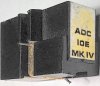
• The move to the new server is done. There are some software and database maintenance updates in process. This has us passing the hat around to help out. We appreciate any donations. Seriously, even a dollar helps. The payment page may be found here - https://www.audiokarma.org/support.html

ADC's Bricks

I still have a 25 body but, not stylus assembly. I used it until converting to the XLM series but could not bring myself to chucking the body as the sound was so smooth and wonderful. More like a very refined Shure V15 than the XLM. I looked for an assembly a few years ago but could not find any. Maybe time to start the search again.
 
All Brick bodies are NOT the same
..but the differences differ from the differences I expected.

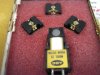
Here's what the set of 3 styli looked like (not mine, sadly; and tsk, will you look at the lack of cantilever tapering):
ADC 25 SYSTEM 1 419188079_o-a.jpg
As I said in the beginning, I provisionally guessed that all the Brick bodies are the same, so I grabbed an old 240XE body to slip the R-253 stylus onto-- whereupon I found that my 10E MkIV is not quite the same as the earlier Bricks... But leave that for later. Tomorrow, photos after I figure out which of my tonearms has the lowest mass.
 
Last edited:
$T791B~1.JPG
In acquiring (almost by accident) a stylus for the 25, another example of ADC history, a Point Four, the daddy of ADC's induced-magnet models, fell into my lap. The Point Four is from a line that preceded the Bricks; it was available with a conical or elliptical stylus. I was very curious about the obviously delicate long tapered cantilever and wondered how long ADC had been making such a thing.

I then came across another article from a 1964 Gramophone describing what the late Peter Pritchard was up to at the time. Turns out that in the Point Four he was taking a step toward to what eight years later he'd call the XLM, by reducing cartridge body weight from the previous ADC moving-magnet models. Looking toward the future, the major differences between the P4 and the gen-1 XLM are cartridge body weight (~8g vs ~6g) and body inductance (~800mH vs ~300mH) and important refinements to the suspension.

Needless to say, in 1964 this cartridge was well ahead of its time, but had requirements beyond the capabilities of nearly all commercially-available arms, including Pritchard's own. It's not a big stretch to see the XLM as a logical refinement of the Point Four.
 
Last edited:
I had a 220 when they first came out. I remember it as a pretty impressive cartridge. Light tracking and good sound. Threw it away a few years ago after I failed to ever get around to getting a replacement stylus for it.
 
ADC 25 conical nude diamond, tapered,  on a 240XE body (mine) P1020416.jpg
That's the first iteration of the conical stylus from the ADC 25 "set" (collect all three!), the R-253. Under magnification, the diamond looks like a splinter of glass punched through the cantilever by someone who hated cantilevers. Notice the funny dull bluish color of the cantilever in the photo below. Notice also that it doesn't look like the cantilever in the photo I posted a few days ago. Wuzzup wit dat? Did ADC make a running change, or does that photo show aftermarket replacements? [SPOILER:] Running change.
ADC 25 cartridge, tapered,  bottom-c.jpg
ADC 25 WITH TAPERED NUDE R-253 CONICAL

Take another look at the cantilever. See the longitudinal ribs? Why, you may be asking yourself, didn't these appear down the entire length of the tube? Differential stiffening to keep cantilever resonances and antiresonances under control ? Or were the ribs merely an unintended side effect of tapering the tube?

A very interesting story about a 1976 visit Pritchard made to the Boston Audio Society [probably to promote his new company, Sonus] can be read in the BAS's newsletter, available as a .pdf here. Pritchard addresses the question of alternatives to the tapered cantilever and wipes his hands of the Super XLM Mk II (apparently the Super Mk I never made it off Pritchard's bench). He also says nude mounting of a diamond to obtain lower effective tip mass is self-defeating and explains why. Good reading, whether you buy his arguments or not.
 
Last edited:
On their way from England:
ADC 25 styli (mine)-b.jpg
The reason I'm now suspecting that there was a running change at ADC and that these are original styli, not aftermarket jobs, is that I can see bits of the familiar, ancient and crumbling red foam stuck to the stylus grips. I admit, not much to go on. But this is the second instance of this type of nontapered cantilever 25 stylus to show up, and as we saw in the report cited above, Pritchard was not above a pentimento or two.
 
Last edited:
$(KGrHqF,!ksE+7KpF5EfBQJ9-M,!rw~~60_57.jpg 22a.jpg adc 10 e mk iv c105-38a (mine).jpg
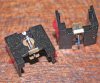
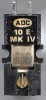
Meanwhile, in a stunning demonstration that all Bricks are NOT the same internally, the coil inductance on my old beloved 10E MkIV measures a well-balanced [>sarcasm<] 414 mH on the left channel and 515 mH on the right (!), while the 240XE I picked up last week for a fiver to take the 25 styli measures a cool 246 mH and 254 mH, respectively. I repeated the measurements three times to be sure. Interesting. Calls for some beard-stroking...
 
Last edited:
The styli from England present a bit of a puzzle but offer one or two little Brick revelations. They are nude mounted stones, all right, and the stones are about the same size and shape overall as the stylus I've got, though the shank of the stone is shorter on the new arrivals, because they're cemented in, which as we know became the normal practice for just about all mfrs.

As Pritchard mentioned in his BAS speech, true nude mounting is a pain. You can see this pain in the method of mounting on that tapered-cantilever job: a spike of diamond is punched through the end of a tapered aluminum tube. No glue, no nuthin'. You can see the triangular bits of torn aluminum peeled back from the shaft of the spike. A careless owner who likes to really scrub his stylus clean could conceivably loosen and then lose the stone. So apparently ADC did make a running change in production. The tapered, ribbed cantilever was gone, replaced by a delicate but otherwise very humdrum-looking ADC style cantilever. My guess is that on 99.9% of the systems available ca. 1970, the improvements of the more advanced cantilever were inaudible, so they gave it up.

Turns out I've had the 25's dot color scheme all wrong. I know this because the England styli came with the instruction leaflet. White is the R-253 .0006 conical designed to ride low in the groove. Blue is the R-252 wide .0003 by .0009 elliptical, meant to ride high in the groove. Red is the still-missing R-251 .0003 by .0007 elliptical. Which means my "Point Four" with the red dot is the elliptical version.

Tomorrow I'll compare the two whites and see if letting go of the tweaky fussiness of strict nude mounting, not to mention the ribbing and the tapering, really did make no difference or whether it was a step backward.
 
Last edited:
Red Dot arrives, but first...
$(KGrHqF,!rEFJ!zmuzHIBSRfB+dWT!~~60_3.JPG
Whew. Finally came across a NOS Pfanstiehl-packaged later-production (ie, cemented) made-by-ADC R-251 stylus, the one with the red dot, the "normal" elliptical. But first I had to get everything ready:

Fussed and fretted over which of my tables has the absolute lowest-mass arm (they're not called Bricks for nothing-- with its stylus, a Brick can weigh between 7.75 and 8.25g), repaired the leads on the chosen ADC-style straight arm headshell, mounted the 240XE, and with great trepidation fitted the later-style conical, deeming the original tapered-true-nude one likely too fragile until I install damping on this arm. Got out the torture test, an indifferently cared for copy of the Sheffield King James Version with Harry James. This one has audible wear when played with a conventional stylus, but the 0.6 mil conical was supposed to fly below the damage, plus trace better than a 0.7 conical.

Why trepidation? Because in my 10E MkIV's heyday, the best arm I could afford to put it in belonged to a Technics SL-1500. It was an arm with excellent bearings but overbearing mass, and the 10E was wonderful when the record surface was perfect but quickly became unhappy any other time, which was, of course, much of the time. Wonderful sweet sound punctuated-- punctured-- by unpredictable mistracking and a wobbly soundstage. ..Until I made a damping trough for that arm. Much better, but still there were cringe moments. The 10E was set aside for a Shure Type III, then a Pickering XSV3000, but they just didn't have that ADC magic. It came out to play once in awhile with its grandson, the Sonus Gold Blue. The Shure Type V finally put it in storage.

So I wanted to make sure the current arm wasn't going to get in the way. Turns out the R-253 conical did very well, though compared to other cartridges, a Brick feels like a, well, brick, glued to the end of a long pole. There was slight mistracking of James' trumpet at 1 gram, but there was also a significant amount of groove-crud. A quick Basotect swipe, and a second play sounded better. Progress..
 
Last edited:
wualta, thanks for writing up your continuing adventures with the bricks.

They are very cool cartridges and sound good too.

Doug
 
Bricks. A Sentimental Favorite. Thanks for following along. More misadventures to come.

I don't know what the body inductance of the ADC 25 was [SPOILER- see post 83], but probably not a lot lower [ah, but who says it has to be lower? wasn't the clue provided by the Point Four obvious enough?] than the 220XE you have. If you ever run across one of the nude-mount styli, I'd be interested to know if it would play one of your CD-4 discs. If the arm were damped, I'd give it better than even odds that it could.
 
Last edited:
I will look at all of mine to see if, just by chance, one of them is a nudie.

Heck, maybe I'll try it with CD-4 even if one isn't.

Doug
 
OK, I just had to find out and all my Brick styli are bonded so I took my 250XE and put it on my CD-4 turntable.

It worked surprisingly well even with just the regular old elliptical stylus on it.

There was some break up on a record that isn't pristine but it played fine on my Gordon Lightfoot "Sundown" CD-4 disc (one of the greatest CD-4 discs, by the way). Separation of the four channels was excellent.

The sound quality just isn't up there with my XUV-4500Q though so it won't stay in CD-4 service.

Still amazing it works as well as it does considering a bonded, elliptical stylus.

Most stereo cartridges are just bllllaaaattttt, blllaaaaaattt with CD-4. :D

Doug
 
BTW, that .0003 X .0009 stylus sounds interesting because it was just so unusual for any manufacturer to deviate from the .0007 side-to-side dimension.

Doug
 
BTW, that .0003 X .0009 stylus sounds interesting because it was just so unusual for any manufacturer to deviate from the .0007 side-to-side dimension.

Doug

Pickering used to have that dimension as standard elliptical on the XV15/750E, then they reduced the major radius to .7 mil. Also they changed the 750E stylus from nude to bushed (i have two examples, one is nude the other bushed!)
 
A very interesting story about a 1976 visit Pritchard made to the Boston Audio Society can be read in the BAS's newsletter, available as a .pdf here. Pritchard addresses the question of alternatives to the tapered cantilever and wipes his hands of the Super XLM Mk II (apparently the Mk I never made it off Pritchard's bench). He also says nude mounting of a diamond is self-defeating and explains why. Good reading.

I disagree on it's nude mounting of the diamond claims, you need to apply glue in both cases (nude and bushed) anyway... But yes, moving mass is more determined by the cantilever and magnet mass than stylus mass.

RIP Peter Pritchard, heartfelt thanks for your superb ADC XLM, wherever you are.
 
f81, if you can find the glue on the early-production ADC 25 styli, I'll eat this chickpea. But maybe you have a real stylus microscope, which I don't. Yet.

I think the change in production shows that Pritchard did come around and decide that the cantilever and how it's pivoted was the important thing, which is why the Sonus cantilevers are so short. The Bricks' cantilevers are pretty short too. Makes the Audio-Technica ones look downright whippy.

Doug, thanks for doing that quickie test with your 250XE.

UPDATE: I just got a 550XE (orange label, orange dot on stylus) and though the channels' inductances match about as badly as those of my10E Mk IV, the average is 270mH, about what I've come to expect from the beige Bricks, so not so surprising that they can play CD-4 discs.

I'm curious about that 3x9 elliptical too, as was the reviewer at Gramophone. Puzzled. Flummoxed. I'll try it tomorrow even without the damper. I'll bet it's been used very little, so it should be a fair test. I finally brought over one of the digital scales-- it reads 0.94g of VTF. Let the swarf fall where it may.
 
Last edited:
f81, if you can find the glue on the early-production ADC 25 styli, I'll eat this chickpea. But maybe you have a real stylus microscope, which I don't. Yet.

I think the change in production shows that Pritchard did come around and decide that the cantilever and how it's pivoted was the important thing, which is why the Sonus cantilevers are so short and not pierced by the stylus. The Bricks' cantilevers are pretty short too. Makes the Audio-Technica ones look downright whippy.

Doug, thanks for doing that quickie test with your 250xe. Not bad for an affordable cart from more than 40 years ago. Are the 220xe and 250xe similar in cantilever diameter and recommended VTF?

I'm curious about that 3x9 elliptical too, as was the reviewer at Gramophone. Puzzled. Flummoxed. I'll try it tomorrow even without the damper. I'll bet it's been used very little, so it should be a fair test. I finally brought over one of the digital scales-- it reads 0.94g of VTF. Let the swarf fall where it may.
.
Note, i agree with most of what Peter Pritchard says. Shortening the cantilever is the best way. His XLM pickups are sublime, i owe him a lot.
 
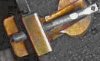
ADC 25 metal suspension box.jpg
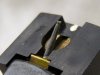
In passing let me make note of another running change. See the brass-colored tab or blade that sticks out to the left of the pivot block's brass-colored frame? This appears to have been intended to make the stylus seat tightly and not slip off, belt and suspenders since the body magnet holds the stylus in place anyway.

On other Brick styli this was replaced by a simple wedge molded into the plastic grip or carrier, and you can glimpse this in the photos I've posted. This springy metal blade can make inserting the stylus a little fussy-- you can't just slide it straight on as you can with other Brick styli. Start at an angle and all is well. UPDATE: Some ADC 25 styli I have don't have this little metal blade at all, and no wedge either! Does this mean it really didn't help anything?

The 3x9 ages out

Anyway, at .94g the 3x9 stylus was barely making sound, and with styli this old that've been stored who knows how, a suspension whose rubber has lost some plasticizer and gone hard is always a possibility. I once bought a mint 1982 V15 Type 5 which did the same thing the 3x9 stylus did today: it made a sound like it was riding between grooves.

So I did a scientific test for compliance: I used my fingernail. Sure enough, the suspension didn't have the friendly floppiness typical of ADC TOTL styli, but it wasn't glass-hard like my Shure's was. I bumped the ADC's VTF up to 1.5 g and played the Harry James disc. Not bad. Something wasn't quite right, but it wasn't bad-bad. Tracking was fine, but everything seemed tight and constricted, as if someone had turned on an AGC. The sparkle was gone too. I did an experiment on it I've always wanted to try: Caig rubber restorer. This helped, but not enough, so I retired the stylus.

This R-251's suspension is nice and supple, so it should perform more closely to design spec.

Thanks to everyone for hanging in there as I try to find the Brick body+stylus that has the ADC magic but is the most future-proof, ie, could be used today. If only our arms were all massless, infinitely rigid and critically damped.

The few I've heard so far all sound at least good, but for tracking modern LPs, all other factors being equal, the lowest effective tip mass (ETM) at both low and high frequencies is what we seek, and of the Bricks this points to the 25, 26, 27 and 10E Mk IV.

If any of you have LCR (inductance, capacitance, resistance) meters like the $18 one Howard Kaplan (AK's hakaplan) recommended, please measure your Bricks (use the 2H range) and let us know what you find.
 
Last edited:
Back
Top Bottom