

You are using an out of date browser. It may not display this or other websites correctly.
You should upgrade or use an alternative browser.
You should upgrade or use an alternative browser.
ADC's Bricks
- Thread starter wualta
- Start date

flavio81
Turntable technician
Haha! I use the same scientific test for compliance as you.
After so many years, it is actually a pretty reliable one as I can tell if a given stylus for a given cartridge "feels" right or not.
Doug
Me too. And a low compliance ADC is actually something interesting to have.

Yes, it is. It's fun-- no, it's a relief to play a TOTL ADC cartridge and not have to worry about the inertia of your tonearm. But a dried-out suspension doesn't damp very well. And then there's the issue of cartridge body mass. Watching a Brick wave around on the end of a skinny tonearm makes you see why Pritchard wanted his next line to be XLM. Even then, they weren't particularly light, which of course messes up even the lightest arm. Was Pritchard one of those infuriating types? I wonder sometimes..
Finally, I ran the NOS R-251 red-dot 3x7 elliptical at ~0.8g. Aaaaahhhhh. That's the stuff. Assuming you have a high-inductance (~750mH) Brick, that, or the R-26 or the heavier-tracking R-27, are the styli to get, although if you find a NOS R-252 blue-dot 3x9 that's been stored properly, that'd be okay too. Heck, even the conical sounds good, but if you're set up for 0.8g tracking, why not go for the elliptical. But do damp the motion of your arm if you can. This is less urgent if your arm approaches the effective mass of, say, Infinity's Black Widow or SME's 3009 III, but it's still a good idea.
Side note: Not all Japanese turntables have dead-accurate markings on their counterweights. If you're tracking around 1 gram, use one of those cheap electronic 0-5g scales. Trust but verify.
Footnote: Grammar-Nazi says: "You can damp your arm or you can dampen your arm. I know which arm I'd rather use afterward." [/Nazi]
Finally, I ran the NOS R-251 red-dot 3x7 elliptical at ~0.8g. Aaaaahhhhh. That's the stuff. Assuming you have a high-inductance (~750mH) Brick, that, or the R-26 or the heavier-tracking R-27, are the styli to get, although if you find a NOS R-252 blue-dot 3x9 that's been stored properly, that'd be okay too. Heck, even the conical sounds good, but if you're set up for 0.8g tracking, why not go for the elliptical. But do damp the motion of your arm if you can. This is less urgent if your arm approaches the effective mass of, say, Infinity's Black Widow or SME's 3009 III, but it's still a good idea.
Side note: Not all Japanese turntables have dead-accurate markings on their counterweights. If you're tracking around 1 gram, use one of those cheap electronic 0-5g scales. Trust but verify.
Footnote: Grammar-Nazi says: "You can damp your arm or you can dampen your arm. I know which arm I'd rather use afterward." [/Nazi]
Last edited:
Postscript: the pre-Brick Point Four from 1964:
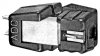
You know the old pre-Bricks strictly by shape and color-- there are no model labels except some tiny gold stickers, and few of those survived. The Point Four, as I pointed out earlier, is constructed more like an XLM than the Bricks are. Seen in this context, the Brick design stands out as anomalous, or maybe the better description would be puzzling. What problem were the Bricks meant to solve, and why was their approach abandoned as quickly as it was taken up? Maybe that porky 8.25g mass is a clue. Or they were having trouble getting the cost of the milled magnets down, but then found a way to do it cheaply. One thing the Bricks do that other Pritchard ADCs don't: the magnet actually sucks the stylus to the body. This doesn't happen again until the made-in-Japan PSX series, which is obviously Brick-inspired.
My Point Four's magnet had come unglued, a problem some XLM owners are familiar with, so I glued it. Very compliant stylus. High inductance when I was finally able to measure it: ~800mH. The rubber suspension block's metal frame has a round hole (unlike the later square hole) and is contained in a round bushing that looks very like the circular one on the Sonuses. Cantilever appears to be glued to the rubber grommet, unlike later models. Looks like the grommet has almost collapsed on this one-- but the rubber is actually torn. About 4 times as much nude cylindrical diamond slug sticks out the back of the cantilever as meets the record. Compared to what we're used to, it's bizarre looking. Footnote: the diamond on the contemporary Empire 880P looked like this too.
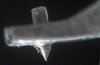
POINT FOUR NUDE DIAMOND
You know the old pre-Bricks strictly by shape and color-- there are no model labels except some tiny gold stickers, and few of those survived. The Point Four, as I pointed out earlier, is constructed more like an XLM than the Bricks are. Seen in this context, the Brick design stands out as anomalous, or maybe the better description would be puzzling. What problem were the Bricks meant to solve, and why was their approach abandoned as quickly as it was taken up? Maybe that porky 8.25g mass is a clue. Or they were having trouble getting the cost of the milled magnets down, but then found a way to do it cheaply. One thing the Bricks do that other Pritchard ADCs don't: the magnet actually sucks the stylus to the body. This doesn't happen again until the made-in-Japan PSX series, which is obviously Brick-inspired.
My Point Four's magnet had come unglued, a problem some XLM owners are familiar with, so I glued it. Very compliant stylus. High inductance when I was finally able to measure it: ~800mH. The rubber suspension block's metal frame has a round hole (unlike the later square hole) and is contained in a round bushing that looks very like the circular one on the Sonuses. Cantilever appears to be glued to the rubber grommet, unlike later models. Looks like the grommet has almost collapsed on this one-- but the rubber is actually torn. About 4 times as much nude cylindrical diamond slug sticks out the back of the cantilever as meets the record. Compared to what we're used to, it's bizarre looking. Footnote: the diamond on the contemporary Empire 880P looked like this too.
POINT FOUR NUDE DIAMOND
Last edited:
Epilog: My 10E Mk IV, the Last Brick, comes in from the cold:

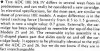
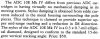
The excerpts are from Julian Hirsch's test in the Dec 1971 issue of Stereo Review. This was ADC's last thought on Brickitude. It's almost a nose-thumbing at all the things previously thought necessary for ultrahigh performance: ultra-low (or high) inductance, nude stylus, tapered cantilever, high cost. It just shouldn't work. Was Pritchard trying to prove a point, maybe throw down a challenge?
* * * * *
My second serious cartridge (after a Shure M91E), the 10E Mk IV had its moments introducing me to music of the '70s, but by 1978 it was showing signs of wear. Replacement styli were always a disaster. Despite Stereo Review's rave review, the stylus was after all just a typical clumsy bonded 3x7 elliptical looking increasingly foolish in a world of nude-mount Hyperellipticals and Stereohedrons. Wasn't it?
But then recently I got an Onkyo turntable with a light carbon-fiber ADC-type straight arm. Figuring the Mk IV deserved one last chance on its own terms, I ordered a NOS stylus. When it arrived, the stylus was tested for compliance in the scientific manner. Felt good. Examination with the loupe showed familiar shapes and construction methods. Looked good. Big ugly bushing. Couldn't possibly sound good. Must have an effective moving mass of over a milligram. Faugh. Obsolete.
Racking the Onkyo's counterweight all the way back, I got the IV to balance at 0.75g VTF. You've long ago guessed the ending: Given an arm more agreeable to its nature, it sounds better than it has in 35 years. Welcome home, Brick. That'll do. Iris out, fade to black, The End.
Geeknotes to 10E Mk IV: (1) When Julian Hirsch tested it, the response rose steeply from 10 kHz up [see the text mentioning virtually no mechanical damping]. When Gramophone tested it, it rolled off above 10 kHz. Bizarre. Running change? Capacitance load? Who knows. (2) 10E Mk IV Number Two [used, from online auction site] arrived and has better-matching channels but still high inductance compared to the 200 series: 435 mH average, about the same as an Audio-Technica AT95. The IV was different by design. (3) Unpacking Number Two, the cantilever pulled almost all the way out of its rubber bushing, backwards! Pushed it back in, rotated it, took note of the "coined" part meant to engage the square-holed suspension bushing; had an idea: Pulled cantilever all the way out (easy), slathered the bushing with rubber cleaner (mostly xylene). Wiped down the cantilever with the stuff too, let it sit for 30 sec., then slid it back in until I felt it "click", in a rubbery way, back into place. Do I dare play it like this? Will groove friction just yank it right out?...What fun! (4) It works! Channel balance is slightly off, but it tracks well. Just try pulling this trick on any other type of cartridge. (5) Did ADC ever try putting a very thin layer of glue on this joint? In later brochures they boasted that no adhesives were required in the ADC moving system. I think they did use adhesives before the 10E Mk II. (6) The reason I had such good luck using non-10E/4 styli in the 10E/4 body is its inductance is midway between the beige Bricks (270mH) and the 25/26 (750mH). The 10E Mk IV is the Universal Brick.
The excerpts are from Julian Hirsch's test in the Dec 1971 issue of Stereo Review. This was ADC's last thought on Brickitude. It's almost a nose-thumbing at all the things previously thought necessary for ultrahigh performance: ultra-low (or high) inductance, nude stylus, tapered cantilever, high cost. It just shouldn't work. Was Pritchard trying to prove a point, maybe throw down a challenge?
* * * * *
My second serious cartridge (after a Shure M91E), the 10E Mk IV had its moments introducing me to music of the '70s, but by 1978 it was showing signs of wear. Replacement styli were always a disaster. Despite Stereo Review's rave review, the stylus was after all just a typical clumsy bonded 3x7 elliptical looking increasingly foolish in a world of nude-mount Hyperellipticals and Stereohedrons. Wasn't it?
But then recently I got an Onkyo turntable with a light carbon-fiber ADC-type straight arm. Figuring the Mk IV deserved one last chance on its own terms, I ordered a NOS stylus. When it arrived, the stylus was tested for compliance in the scientific manner. Felt good. Examination with the loupe showed familiar shapes and construction methods. Looked good. Big ugly bushing. Couldn't possibly sound good. Must have an effective moving mass of over a milligram. Faugh. Obsolete.
Racking the Onkyo's counterweight all the way back, I got the IV to balance at 0.75g VTF. You've long ago guessed the ending: Given an arm more agreeable to its nature, it sounds better than it has in 35 years. Welcome home, Brick. That'll do. Iris out, fade to black, The End.
Geeknotes to 10E Mk IV: (1) When Julian Hirsch tested it, the response rose steeply from 10 kHz up [see the text mentioning virtually no mechanical damping]. When Gramophone tested it, it rolled off above 10 kHz. Bizarre. Running change? Capacitance load? Who knows. (2) 10E Mk IV Number Two [used, from online auction site] arrived and has better-matching channels but still high inductance compared to the 200 series: 435 mH average, about the same as an Audio-Technica AT95. The IV was different by design. (3) Unpacking Number Two, the cantilever pulled almost all the way out of its rubber bushing, backwards! Pushed it back in, rotated it, took note of the "coined" part meant to engage the square-holed suspension bushing; had an idea: Pulled cantilever all the way out (easy), slathered the bushing with rubber cleaner (mostly xylene). Wiped down the cantilever with the stuff too, let it sit for 30 sec., then slid it back in until I felt it "click", in a rubbery way, back into place. Do I dare play it like this? Will groove friction just yank it right out?...What fun! (4) It works! Channel balance is slightly off, but it tracks well. Just try pulling this trick on any other type of cartridge. (5) Did ADC ever try putting a very thin layer of glue on this joint? In later brochures they boasted that no adhesives were required in the ADC moving system. I think they did use adhesives before the 10E Mk II. (6) The reason I had such good luck using non-10E/4 styli in the 10E/4 body is its inductance is midway between the beige Bricks (270mH) and the 25/26 (750mH). The 10E Mk IV is the Universal Brick.
Last edited:

Doug G.
Lunatic Member
Garage-A-Records is a great place. I have bought several things from them over the years and one of them was a NOS stylus for an Empire 2000 E/III for 35 bucks, I believe. It was either that or 25 bucks.
It was an eBay auction and I don't think anybody believed them that it was a genuine Empire stylus.
I'm glad you got good results with the Brick Stylus.
Doug
It was an eBay auction and I don't think anybody believed them that it was a genuine Empire stylus.
I'm glad you got good results with the Brick Stylus.
Doug
Again, thanks for coming along for the ride. I hope we get people measuring the inductance of their Brick bodies and reporting back.
I'm going to make a dangerous prediction that the inductance of the 25 will turn out to be no lower than the 230XE I just acquired, so Project Futureproof Brick won't require the hard-to-get 25 body. (HA!)
There are a couple of online vendors selling ADC-made 25 styli for as low as $18 shipped. As of this writing in 2012, that is.
UPDATE: Jul 2012: Here's a closeup of the 25 without its stylus. You can see two of the four pole pieces looking like crooked teeth inside the mouth. Notice that there's no hole in the body, just a little alcove, if you will, for the back of the cantilever to do its wiggle work in. Everything is made of sheet metal, including the pole pieces themselves.
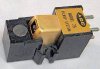
This is the same style of "mouth" seen in the pre-Bricks and also in many early Bricks.
The later style, pre-XLM, as seen in the 10E Mk IV, looks like this 550XE:

The 550XE's pole pieces are encased in what looks like cast zinc (a guess-- it's slightly bluish), and, as with the 10E Mk IV, there's a hole let into the body. If you look at your XLM (you DO own one, don't you?), you'll see a very similar configuration, but the XLMs and later ADC cartridges line the hole with a thin-wall metal tube. This was later called CED, Controlled Electrodynamic Damping, but according to ADC (as reported by Julian Hirsch in his 10E Mk IV test), this was already happening in the 10E Mk IV, which lacks this tube. Only a guess, but the tube might have been added to produce stronger and/or more consistent eddy currents. Hirsch did note that the 10E Mk IV's high frequency resonance was underdamped.
I have one 250XE with the cast (call it CED style) mouth. My 230XE, however, has the old sheet-metal mouth. Hm?
UPDATE, Feb 2012: I just acquired a second 230XE, which has the later CED design. Hm!
EDIT: Other Bricks have since shown up with the CED mouth. It turns out that ADC made many Bricks both ways, incorporating the innovation of the 10E Mk IV into the "lesser" Bricks (ADC called them the "X Series") as a running change. Here are the early and later versions of the Model 26 (far left) plus two X Series Bricks:

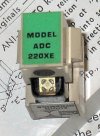
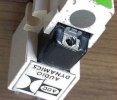
I have not seen CED mouths on models 25 or 27, nor have I found photos showing the 272, 550XE and 990XE with the earlier type mouth.
I'm going to make a dangerous prediction that the inductance of the 25 will turn out to be no lower than the 230XE I just acquired, so Project Futureproof Brick won't require the hard-to-get 25 body. (HA!)
There are a couple of online vendors selling ADC-made 25 styli for as low as $18 shipped. As of this writing in 2012, that is.
UPDATE: Jul 2012: Here's a closeup of the 25 without its stylus. You can see two of the four pole pieces looking like crooked teeth inside the mouth. Notice that there's no hole in the body, just a little alcove, if you will, for the back of the cantilever to do its wiggle work in. Everything is made of sheet metal, including the pole pieces themselves.
This is the same style of "mouth" seen in the pre-Bricks and also in many early Bricks.
The later style, pre-XLM, as seen in the 10E Mk IV, looks like this 550XE:
The 550XE's pole pieces are encased in what looks like cast zinc (a guess-- it's slightly bluish), and, as with the 10E Mk IV, there's a hole let into the body. If you look at your XLM (you DO own one, don't you?), you'll see a very similar configuration, but the XLMs and later ADC cartridges line the hole with a thin-wall metal tube. This was later called CED, Controlled Electrodynamic Damping, but according to ADC (as reported by Julian Hirsch in his 10E Mk IV test), this was already happening in the 10E Mk IV, which lacks this tube. Only a guess, but the tube might have been added to produce stronger and/or more consistent eddy currents. Hirsch did note that the 10E Mk IV's high frequency resonance was underdamped.
I have one 250XE with the cast (call it CED style) mouth. My 230XE, however, has the old sheet-metal mouth. Hm?
UPDATE, Feb 2012: I just acquired a second 230XE, which has the later CED design. Hm!
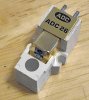
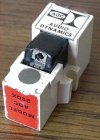
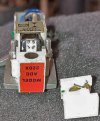
EDIT: Other Bricks have since shown up with the CED mouth. It turns out that ADC made many Bricks both ways, incorporating the innovation of the 10E Mk IV into the "lesser" Bricks (ADC called them the "X Series") as a running change. Here are the early and later versions of the Model 26 (far left) plus two X Series Bricks:
I have not seen CED mouths on models 25 or 27, nor have I found photos showing the 272, 550XE and 990XE with the earlier type mouth.
Last edited:

chicks
Lunatic Member
Postscript: the all-black pre-Brick Point Four...

(you know the old pre-Bricks strictly by color-- there are no model labels) dates back to 1964 and, as I pointed out
That looks exactly like the cartridge on the ELAC Miracord 10 I picked up yesterday, except that it's all gray. No model number anywhere, just the moulded ADC, and printed on the other side. What model do I have, and where can I get a replacement stylus? It has a red dot. Thanks.

That's the 1964 body style, so it's either a Point Four, 660 or 770. Both the 660 and 770 had gray cladding, but the 770 had a black body and only the 660 had an "E" version with the red-dotted elliptical stylus (that would be the equivalent of a Micro-Ridge today, and it was priced accordingly). So I'm going to say 660E, tracking at around 3g.
Sadly, my go-to source for prehistoric NOS ADC styli was reportedly overrun by buyers from Europe last week and he's out of the R-6E stylus you seek, so now your guess is as good as mine where you'll find a NOS stylus. I have no experience with the aftermarket's attempts at the R-6E, but the Pfanstiehl index for it is 4100-DE (100-DE for genuine/original).
Sadly, my go-to source for prehistoric NOS ADC styli was reportedly overrun by buyers from Europe last week and he's out of the R-6E stylus you seek, so now your guess is as good as mine where you'll find a NOS stylus. I have no experience with the aftermarket's attempts at the R-6E, but the Pfanstiehl index for it is 4100-DE (100-DE for genuine/original).
Last edited:
chicks
Lunatic Member
I was guessing 660 after some googling, didn't find anything on the red dot, thanks! The stylus actually looks like it has very low hours, and came set to 2.5gm VTF.
If I can't find a good replacement stylus, might stick on a Shure Prestige or 97xe. The ADC sounds pretty darn good on the Studio 10 arm, though... :scratch2:
If I can't find a good replacement stylus, might stick on a Shure Prestige or 97xe. The ADC sounds pretty darn good on the Studio 10 arm, though... :scratch2:
Back in the day you could get a 660 with a conical stylus or a 660E, and the only way to tell without a microscope was that red dot. VTF range was originally given as 1.5g to 4g.
If that stylus looks good under magnification and it still sounds good, I say use it. It's not often you get a chance to see tech from the Kennedy administration still going about its business. My Polaroid model 100 agrees.
Things to watch out for: sometimes the magnet comes loose:
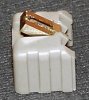
If it does, it can take the cantilever out or mangle it badly. Two of my Point Fours had this problem.
Often, the magnet makes a clean getaway:
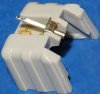
If this happens, a junked QLM/VLM/XLM stylus magnet is nearly the same size and works beautifully. Never throw away a busted genuine-ADC stylus.
If that stylus looks good under magnification and it still sounds good, I say use it. It's not often you get a chance to see tech from the Kennedy administration still going about its business. My Polaroid model 100 agrees.
Things to watch out for: sometimes the magnet comes loose:
If it does, it can take the cantilever out or mangle it badly. Two of my Point Fours had this problem.
Often, the magnet makes a clean getaway:
If this happens, a junked QLM/VLM/XLM stylus magnet is nearly the same size and works beautifully. Never throw away a busted genuine-ADC stylus.
Last edited:

Thanks! it was fun, thrashing about until I finally learned something.
I forgot to link to that old Gramophone review of the Point Four and 660 by Percy Wilson. It makes fascinating reading:
http://www.gramophone.net/Issue/Page/November 1964/107/805510/TECHNICAL+REPORTS
UPDATE: All our links to old Gramophone articles are dead now. The magazine has new owners.
I forgot to link to that old Gramophone review of the Point Four and 660 by Percy Wilson. It makes fascinating reading:
http://www.gramophone.net/Issue/Page/November 1964/107/805510/TECHNICAL+REPORTS
UPDATE: All our links to old Gramophone articles are dead now. The magazine has new owners.
Last edited:
Chicks, glad to see the 660 in the environment it was designed for. Who knew it would be playing 1958 discs on a 1961 turntable nearly 50 years later.
Gah rooo vee!Doug G. said:I have to go to work but will write some when I get back.Doug
Last edited:

Northman
Active Member
Will read the linked article after work, thanks! Meanwhile, here it is in operation. A trip back in time.Sounds as good as it looks, too.

I'm not typically into turntables of that era, but MAN that's beautiful!
chicks
Lunatic Member
I'm not typically into turntables of that era, but MAN that's beautiful!
Yeah, hard to imagine a nearly fifty year old turntable in this condition. A very lucky find, I'm quite pleased.
chicks
Lunatic Member
I have to go to work but will write some when I get back.
Doug
Loooong day at work?