• The move to the new server is done. There are some software and database maintenance updates in process. This has us passing the hat around to help out. We appreciate any donations. Seriously, even a dollar helps. The payment page may be found here - https://www.audiokarma.org/support.html

Adjusting Tonearm Height

Judasentinel

New Member
Hello,

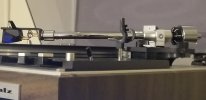
I have two turntables and both have tonearms that sit slightly higher at the back. One is the Marantz 6200 and the other is the Technics SL-1400 Mk1. Does anyone know how to adjust the tonearm height on these turntables? I have the service manual for the Marantz 6200 but the instructions are vague and the reference picture does not make sense to me. FOr the SL-1400, I have no clue. Searched the web and the forums but no luck.20231231_222522.jpg20231231_222551.jpg

If someone can help guide, I'd appreciate it.

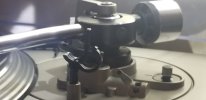
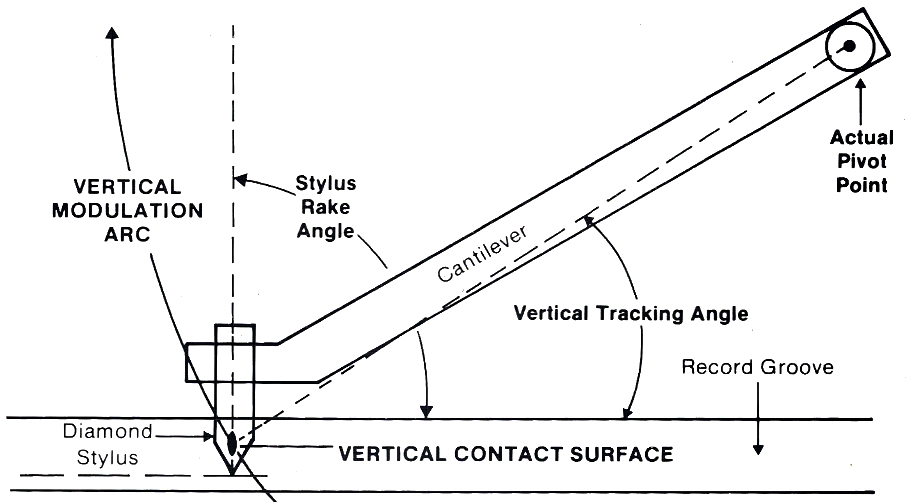
The following pic is of the Ortofon 2M Blue on the Technics SL-1400. Seems that the rake angle is less than 90 degrees on it. Sounds great as it is, but I am wondering if this is going to cause undue wear and if the sound cna be ev en better by making a change to the VTA and the SRA in any way.

20231231_210346.jpg

Thanks.
 
Register to hide this ad
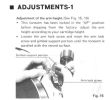
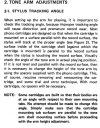
For the Technics, I found this in the service manual. Looks like a locking screw on the left side of the gimbal.
1704087488325.png

For the Marantz, it looks like you're supposed to shim the cartridge between it and the headshell.
1704087804538.png
 
Thanks, Mike. My turntable doesnt seem to thave that mechanism. Pls see the picsView attachment 3076759View attachment 3076760 below:

Height is subjective, a bit tail up results in a more forward presentation while tail down more laid back, it's really a matter of preference to the listener.

Many will start with the arm level for a baseline, listen for a good bit to get acclimated, then adjust up and down to see what their preference is
 
Try different mat thicknesses as this will change the angle. But the mat may make a sonic difference, too. This varies by table in my experience.

Arm height seems to be all the rage this season. Worth experimenting with but from my experience it’s hand grenades, close can be good enough.

Your 2M looks to be riding a bit tucked away into the stylus grip. I would expect the cantilever to be easily visible under normal tracking force While playing a record. Maybe it’s the photos, maybe the stylus is tracking too heavy, maybe it’s supposed to look like that. IDK, no 2M here to compare.
 
Try different mat thicknesses as this will change the angle. But the mat may make a sonic difference, too. This varies by table in my experience.

Arm height seems to be all the rage this season. Worth experimenting with but from my experience it’s hand grenades, close can be good enough.

Your 2M looks to be riding a bit tucked away into the stylus grip. I would expect the cantilever to be easily visible under normal tracking force While playing a record. Maybe it’s the photos, maybe the stylus is tracking too heavy, maybe it’s supposed to look like that. IDK, no 2M here to compare.

Cantilever is OK I believe. In 2M blue it is hidden:


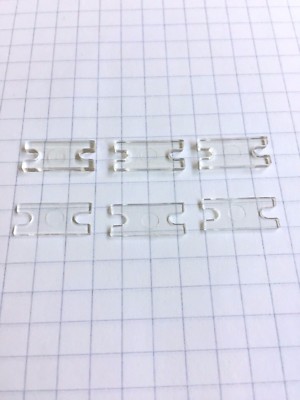
On head shell you can use spacers like those:


If you need to lower cartridge, try thinner mat.
 
Hope this helps... Buck

SRA.PNG
 
Hope this helps... Buck

SRA.PNG

Good article, and good program (however only for MAC but works on emulation too):


"Stereo Lab provides an easy way to isolate the vertical stylus movement from the lateral information. Hill and Dale discs are historical, pre-electric gramophone records, they are characterised by having ONLY vertical modulation. We can use this filter (which is accessed in the PHONO preferences dialogue) to isolate the vertical-only component in a stereo recording. This is incredibly useful in diagnosing possible issues due to vertical tracking error."

KAB Souvenir EQS 12 preamp has this option too.
 
Thank you all. After reading through this thread and others, wathcng videos of Fremer and Lederman, and a few others, I have realized that this whole thing is a rabbithole. It depends on how deep you want to go down it. And honestly, getting bogged down by and being obsessed with the minutest of details of setting these things up, forever chasing that last micro millimeter of accuracy, robs one of the experience of enjoying the music.

I have, with my limited intelligence and experience, concluded the following:

1. A rake angle of more than 90 degress results in a bassier sound; conversely, anything less than 90 degrees enhances the treble. As a listener of metal and classical music, I would go with the former, so a 91-92 degree angle is what I would need
2. Since my turntable tonearms are both tail high, it means that in order for me to achieve a rake angle of more than 90 degrees, I do need to increase the distance UNDER the tonearm between the stylus and the record so the needle sits a little inwards, to achieve 91-92 degrees. Therefore, a thinner platter (cork) was the way to go
3. I am not getting bogged down by not being able to clear all 6 of the torture tracks on my Ortofon test record. The Ortofon 2M blue is supposed to be able to track well up to 80 um, which is the fourth torture track. Mine tracked well up to the 90um mark, so I believe I am ok in the tracking ability
4. I have used the Stevenson protractor and the stylus seems to be parallel and aligned at both null points. It also did line up well with the Baerwald null points. Maybe it doesnt matter a lot which protractor you use, even though people say Japanese turntables work best with Stevenson
5. My greatest tools have to be my ears. If it sounds great and does not cause distortion, I should leave it be
6. I am ensuring that the overhang and the effective tonearm length are correct on both tables
7. The only other tools I will have is an VTA/Azimuth acrylic block to ensure that the fundamentals are right

I hope the above makes sense.....the insecurity of knowing my own ignorance seems to be creeping in, but I will get over it in time.

Thanks, all. I appreciate all your feedback and guidance.
 
A rake angle of more than 90 degress results in a bassier sound; conversely, anything less than 90 degrees enhances the treble. As a listener of metal and classical music, I would go with the former, so a 91-92 degree angle is what I would need

I believe you should read psspatialaudio.com article carefully. There are no adjustments "more bass" and "more treble". There is only correct adjustment or incorrect. So, if rake angle is incorrect you will hear less high frequencies and more distortion. As they wrote (about tuning "by ear"): "Note however that tuning for correct SRA should always produce maximum treble. The intermediate position recommended above results in mistuned SRA."
 
Thank you all. After reading through this thread and others, wathcng videos of Fremer and Lederman, and a few others, I have realized that this whole thing is a rabbithole. It depends on how deep you want to go down it. And honestly, getting bogged down by and being obsessed with the minutest of details of setting these things up, forever chasing that last micro millimeter of accuracy, robs one of the experience of enjoying the music.

I have, with my limited intelligence and experience, concluded the following:

1. A rake angle of more than 90 degress results in a bassier sound; conversely, anything less than 90 degrees enhances the treble. As a listener of metal and classical music, I would go with the former, so a 91-92 degree angle is what I would need
2. Since my turntable tonearms are both tail high, it means that in order for me to achieve a rake angle of more than 90 degrees, I do need to increase the distance UNDER the tonearm between the stylus and the record so the needle sits a little inwards, to achieve 91-92 degrees. Therefore, a thinner platter (cork) was the way to go
3. I am not getting bogged down by not being able to clear all 6 of the torture tracks on my Ortofon test record. The Ortofon 2M blue is supposed to be able to track well up to 80 um, which is the fourth torture track. Mine tracked well up to the 90um mark, so I believe I am ok in the tracking ability
4. I have used the Stevenson protractor and the stylus seems to be parallel and aligned at both null points. It also did line up well with the Baerwald null points. Maybe it doesnt matter a lot which protractor you use, even though people say Japanese turntables work best with Stevenson
5. My greatest tools have to be my ears. If it sounds great and does not cause distortion, I should leave it be
6. I am ensuring that the overhang and the effective tonearm length are correct on both tables
7. The only other tools I will have is an VTA/Azimuth acrylic block to ensure that the fundamentals are right

I hope the above makes sense.....the insecurity of knowing my own ignorance seems to be creeping in, but I will get over it in time.

Thanks, all. I appreciate all your feedback and guidance.
A thinner mat will increase the arm tail height, If I am reading this right, in that you want to see if you can increase the bass response.
 
Thank you all. After reading through this thread and others, wathcng videos of Fremer and Lederman, and a few others, I have realized that this whole thing is a rabbithole. It depends on how deep you want to go down it. And honestly, getting bogged down by and being obsessed with the minutest of details of setting these things up, forever chasing that last micro millimeter of accuracy, robs one of the experience of enjoying the music.
A system "works" for me when I can put on a record and enjoy the music, not giving any thought to the equipment. If I'm thinking about the sound or the setup instead of simply appreciating what the musicians are doing, then, yes, I'm missing "the experience of enjoying the music."

About half of the ten turntables I've owned had VTA adjustment. I adjusted those that had it according to the manual and just didn't think about it at all for those that didn't. As a child, the hifi in our home had a record changer, so VTA was constantly changing as each record dropped from the stack. My first two turntables (a BIC, then a Garrard) were also record changers, and I don't recall being aware of any distracting sonic differences from the first album to the last. With cartridges other than Rega's own, which I didn't like, my RP3 was slightly tail down; my AT-LP120XUSB, with the stock cartridge or my preferred Sumiko Oyster, was slightly tail up. Neither condition affected my enjoyment of the music.
 
Digital microscope, the round kind. Something to keep it steady and protractor software of some kind and of corse a pc to download the scope pictures & protractor app.
 
With non adjustable VTA, put a very thin mat on top or underneath of mat. That will give rise the the front (headshell) of the arm, pivot side lower. For higher VTA, use thinner platter mat.
 
Mats and shims are easy to deal with. Which microscope and protractor is the bigger question? There is no other way for the millions of turntable owners?
 
There is no other way for the millions of turntable owners?
On-the-fly tonearm height adjustment offered by a few arms can allow sonically dialing in the best sound. Whether that exactly matches the 92 degrees or whatever number is the hippest today, I don’t care cause the better sound wins that contest every time. Well except against those that need actual test results.

they make a number of different clear plastic devices that allow you to visualize the tracking angle maybe one of these would be something you would be interested in getting. I had one here but it was a bit difficult to use needing the camera to magnify and since I have adjustable on the fly vertical tracking angle, I didn’t need to have the plastic gauge.
 
Back
Top Bottom