

You are using an out of date browser. It may not display this or other websites correctly.
You should upgrade or use an alternative browser.
You should upgrade or use an alternative browser.
Are DAC chips internally shielded?
- Thread starter John3655
- Start date
Register to hide this ad

pete_mac
Super Member
Wondering if anyone knows if dac chips are internally shielded, and if not are they likely to benefit from applying some foil to the top of the chip?
If the measurable performance of DAC chips benefitted from either internal or external shielding, rest assured that the chip manufacturers would do this from the factory.


RVT1K
Super Member
Wondering if anyone knows if dac chips are internally shielded, and if not are they likely to benefit from applying some foil to the top of the chip?
If you have the part number of the chip, you may be able to find that info on the datasheet.
But I'm going to guess "no". Shielding is typically from the enclosure.
I see a piece of foil having the potential to create more problems than solving them.
Thank you for the replies, I suspect in this case I'd have to dissect the chip to find out for sure.
This one is an ES9023 which was a mass market cheap chip intended for dvd players etc, it was never top of the range, still sounds very good though with the added capacitors on AVCC. I have been through the datasheet thanks for the suggestion, it doesn't mention shielding or rfi/emr at all.
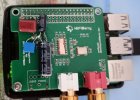
It's on a Raspberry Pi hat, the rfi protection is a ground plane under the board, being a pdip package this dac sits a bit higher than a lot of the more compactly packaged recent dac chips, so I wonder how much shielding its getting, hence the added copper tape.
I'm going to move on from this and get a more recent hat. Thanks again.
This one is an ES9023 which was a mass market cheap chip intended for dvd players etc, it was never top of the range, still sounds very good though with the added capacitors on AVCC. I have been through the datasheet thanks for the suggestion, it doesn't mention shielding or rfi/emr at all.
It's on a Raspberry Pi hat, the rfi protection is a ground plane under the board, being a pdip package this dac sits a bit higher than a lot of the more compactly packaged recent dac chips, so I wonder how much shielding its getting, hence the added copper tape.
I'm going to move on from this and get a more recent hat. Thanks again.

pete_mac
Super Member
Thank you for the replies, I suspect in this case I'd have to dissect the chip to find out for sure.
This one is an ES9023 which was a mass market cheap chip intended for dvd players etc, it was never top of the range, still sounds very good though with the added capacitors on AVCC. I have been through the datasheet thanks for the suggestion, it doesn't mention shielding or rfi/emr at all.
It's on a Raspberry Pi hat, the rfi protection is a ground plane under the board, being a pdip package this dac sits a bit higher than a lot of the more compactly packaged recent dac chips, so I wonder how much shielding its getting, hence the added copper tape.
I'm going to move on from this and get a more recent hat. Thanks again.
I reiterate my earlier point... if any chips needed shielding to achieve the stated performance in the datasheet, this would be implemented during either the manufacture of the chips, or clearly articulated in the technical/implementation spec sheets to ensure that it was implemented during the design if the recipient equipment.
I get the urge to tweak and improve, but something as simple as shielding would have been implemented by manufacturers across the board if it actually made a measurable difference to DAC chip performance.
Thanks Pete, I'm guessing you have experience of the chip industry to know that it would be done?I reiterate my earlier point... if any chips needed shielding to achieve the stated performance in the datasheet, this would be implemented during either the manufacture of the chips, or clearly articulated in the technical/implementation spec sheets to ensure that it was implemented during the design if the recipient equipment.
I get the urge to tweak and improve, but something as simple as shielding would have been implemented by manufacturers across the board if it actually made a measurable difference to DAC chip performance.
RVT1K
Super Member
I reiterate my earlier point... if any chips needed shielding to achieve the stated performance in the datasheet, this would be implemented during either the manufacture of the chips, or clearly articulated in the technical/implementation spec sheets to ensure that it was implemented during the design if the recipient equipment.
I get the urge to tweak and improve, but something as simple as shielding would have been implemented by manufacturers across the board if it actually made a measurable difference to DAC chip performance.
I'm not going to affirm or reject any of that.
But I will point out that there are many, many chips that need external heatsinks and don't have them added by the manufacturer. So it is entirely possible that the chip is made with expectation that it will be shielded. Datasheets will often specify, or at least recommend, things like layout, grounding, cooling and a whole host of other parameters deemed critical in the application notes.
In this particular case, there were no application notes specifying anything like that on the datasheet that I found.
pete_mac
Super Member
Thanks Pete, I'm guessing you have experience of the chip industry to know that it would be done?
Let's look at this logically... do you really think that you (and other hobbyist/DIYers) know better than all of the DAC chip manufacturers?
They aren't chumps. Optimising performance is their bread and butter.
If adding shielding was required to achieve the stated performance in the datasheets, it would be stated as such.
If shielding could achieve an improvement in performance, for absolutely minimal additional cost when deployed at scale during the manufacturing process, it would have been done across the board by all manufacturers.
Last edited:
pete_mac
Super Member
I'm not going to affirm or reject any of that.
But I will point out that there are many, many chips that need external heatsinks and don't have them added by the manufacturer. So it is entirely possible that the chip is made with expectation that it will be shielded. Datasheets will often specify, or at least recommend, things like layout, grounding, cooling and a whole host of other parameters deemed critical in the application notes.
In this particular case, there were no application notes specifying anything like that on the datasheet that I found.
Indeed, nothing mentioned in the datasheet whatsoever.
Let's not conflate heatsinks and shielding - two very different things.
do you really think that you (and other hobbyist/DIYers) know better than all of the DAC chip manufacturers?
Since when has it ever been knowing better, the question was simply is it shielded and could it be shielded more.
I have some answers (no and yes), to be getting on with, thanks all.
The copper foil is actually self adhesive anti slug tape available at garden centres at non hifi prices.
(As allegedly i think i know better, i will be setting up my own unquestionable authoritarian chip industry quite independently from The chip industry, to make properly shielded dac chips!)
Last edited:
pete_mac
Super Member
Since when has it ever been knowing better, the question was simply is it shielded and could it be shielded more.
I wish you well with your endeavours!
Don't forget the most important question of all... "should it be shielded more"... or shielded at all for that matter.
I'm pretty confident that question has been answered too.

It only gets luke warm and the copper is a conductor so will spread the heat. It'll be fine, cheers though.If you are sticking stuff on the chip, you could shorten It's life due to increased heat.
I would not do it, like Pete, I see no advantage.

ProudArmyBra
Active Member
I would recomend you read up on EMI/RFI/Common Mode Current/ and Farraday Cages before you attempt some half cocked bro-science shielding. It is far easier to build an antenna than it is to build a properly working shield. You are more likely to make things worse than better.
CUrrent based DAC's seldom have issues it is the cheaper voltage based designs like Saber and CIrrus. Yes they attempt to shield digital from analog portions by using multi-layer boards and seperating the already short runs by alternating layers.
If you want a better DAC just buy a better DAC. Notice you do not see many DACs with steel cages soldered over them. These not two way radio's with RF floating around them. Some propritary nose bleed designs do shield their various modules but I suspect that is more about hiding what's inside kind of like sanding off part numbers and or encasing parts in epoxy. I think the Cyan DAC has it's magic smoke encased in metal!
CUrrent based DAC's seldom have issues it is the cheaper voltage based designs like Saber and CIrrus. Yes they attempt to shield digital from analog portions by using multi-layer boards and seperating the already short runs by alternating layers.
If you want a better DAC just buy a better DAC. Notice you do not see many DACs with steel cages soldered over them. These not two way radio's with RF floating around them. Some propritary nose bleed designs do shield their various modules but I suspect that is more about hiding what's inside kind of like sanding off part numbers and or encasing parts in epoxy. I think the Cyan DAC has it's magic smoke encased in metal!
Similar threads
- Replies
- 10
- Views
- 4K

- Replies
- 51
- Views
- 4K

