• Please note that Audiokarma will be offline briefly for updates early on Monday morning, September 28th.

Are You Kidding Me !!!!!!!!!! Forte Upgrade

Another comparison

Thinking about this upgrade, another way to explain it is this.

The Fisher 400 has a very good sounding FM tuner. And, I owned a lot of SS & tube type tuners- mostly higher-end. NYC has some fine audio quality FM stations. I would rather listen to FM on these modified speakers vs my TT with MC cartridge on the original Forte. That is how much of an upgrade the SET12 crossover provides on Forte speakers. I believe this base Forte design with the carefully selected components should be spec'ed for all higher-end Klipsch speakers including Cornwall & Klipschorn.

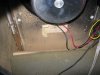
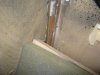
BTW- my Forte speakers have that mysterious angled brace at the bottom inside the cabinet. Not all Forte speakers have this brace. My speakers were built around March 1988. I believe the brace tunes the woofer response.
 
Last edited:
Quote: " I believe the brace tunes the woofer response."

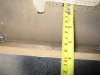
I would still be interested to see this board if you could post a snap shot of it (the next time you are inside). As I mentioned neither my Forte or Forte ll have this. Without seeing it I can't imagine how the board would impact the tuning of the cabinet. Do you have an idea how/why the tuning would be changed? What are the overall dimensions of the board? Thanks and best regards Moray James.
 
Quote: " I believe the brace tunes the woofer response."

I would still be interested to see this board if you could post a snap shot of it (the next time you are inside). As I mentioned neither my Forte or Forte ll have this. Without seeing it I can't imagine how the board would impact the tuning of the cabinet. Do you have an idea how/why the tuning would be changed? What are the overall dimensions of the board? Thanks and best regards Moray James.

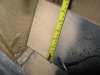
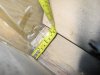
I can only assume the brace redirects the back wave from the woofer perhaps creating less standing waves in the enclosure. This should create a smoothing effect on the bass IMO. Klipsch likely would not spend money for nothing, but A vs B listening is not known. Another benefit is the brace stiffens the sides of the enclosure. What percent is more attributed to back wave vs better cabinet bracing? I have no idea. Date code on tag inside is March 10, 1988. These Forte has the square plastic speaker termination insert.


Pictures below
 

Attachments

  • IMG_1257.jpg
    IMG_1257.jpg
    91.8 KB · Views: 152
  • IMG_1258.jpg
    IMG_1258.jpg
    106.7 KB · Views: 141
  • IMG_1259.jpg
    IMG_1259.jpg
    78 KB · Views: 132
Last edited:
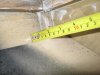
More pictures of brace

More pix. The open gap at bottom is approximately .75 inch. The gap is normally covered with the foam.
 

Attachments

  • IMG_1260.jpg
    IMG_1260.jpg
    80 KB · Views: 98
  • IMG_1262.jpg
    IMG_1262.jpg
    69 KB · Views: 89
  • IMG_1263.jpg
    IMG_1263.jpg
    89.7 KB · Views: 92
  • IMG_1264.jpg
    IMG_1264.jpg
    75.5 KB · Views: 90
Thanks for posting> I agree now that I see the board that this well could have an impact upon the performance of the cabinet. Best regards Moray James.
 
Is the sound what matters or is it not a factor? I don't get it. You are always going to run into hype. Do you buy then on the quality of the sound or on technical specifications? If we can agree that a reasonable level of quality is present in both cases which is more important to you? Best regards Moray James.

I have to agree with Moray here, I took a chance and bought them on intuition and I wasn't disappointed.

Even if the voice coil heats up the Duelunds allow more voltage over the rest of the network and the Duelunds allow more current flow. Or in the case of the tweeter being shunted sink the current instead of allowing the tweeter use more current. This makes it smoother and I heard it very easily

I have heard DaveC's RF25's which use the Duelund in series with his tweeters and I found his RF25's to be one of the most musical Klipsch's I have ever heard, not to mention the explosive qualities I heard as well. The Duelund enhances current flow is the way I like visualize it.

Hype or not, the company is thriving and supplying many high end speaker lines. I can't afford many of their products but I use their Copper VSF caps while expensive at $300 a pair they are far and above most caps I have heard. I stand with the late Steen Duelund who was dedicated to the pursuit of better materials for our hobby.
 
Quote: " I believe the brace tunes the woofer response."

I would still be interested to see this board if you could post a snap shot of it (the next time you are inside). As I mentioned neither my Forte or Forte ll have this. Without seeing it I can't imagine how the board would impact the tuning of the cabinet. Do you have an idea how/why the tuning would be changed? What are the overall dimensions of the board? Thanks and best regards Moray James.

Count me among those WITH the angled board on the bottom inside of my Forte enclosure... I always assumed they all had this feature. My Crites xover boards are attached to the boards, with the gray foam re-stapled over them.

I always assumed it had something to do with the bass tuning, as well, but am not sure how exactly that would work...
 
I have to agree with Moray here, I took a chance and bought them on intuition and I wasn't disappointed.

Even if the voice coil heats up the Duelunds allow more voltage over the rest of the network and the Duelunds allow more current flow. Or in the case of the tweeter being shunted sink the current instead of allowing the tweeter use more current. This makes it smoother and I heard it very easily

I have heard DaveC's RF25's which use the Duelund in series with his tweeters and I found his RF25's to be one of the most musical Klipsch's I have ever heard, not to mention the explosive qualities I heard as well. The Duelund enhances current flow is the way I like visualize it.

Hype or not, the company is thriving and supplying many high end speaker lines. I can't afford many of their products but I use their Copper VSF caps while expensive at $300 a pair they are far and above most caps I have heard. I stand with the late Steen Duelund who was dedicated to the pursuit of better materials for our hobby.

How about putting things back to the original content and context which I posted?
Despite Moray's projection of what I said, I think sonics is the only solid reason to buy the graphite resistors.

The graphite link has a muted reference to an early Duelund claim of a woofer circuit:
"to claim that any graphite resistor in front of this will "read" the voice coil and counteract fluctuations in impedance is obviously nonsense. I many cases the attenuation resistor(s) is/are not directly in front of the driver, rather in front of the crossover components, thus the crossover still sees a fluctuating impedance and we're nowhere. If we have a problem with over-heated voice coils, we should build bigger speakers."
SET12:
"Even if the voice coil heats up the Duelunds allow more voltage over the rest of the network and the Duelunds allow more current flow. Or in the case of the tweeter being shunted sink the current instead of allowing the tweeter use more current. This makes it smoother and I heard it very easily"
OK, this assumes your ears can tell the difference, between the co-efficient and the sonic signature of the resistor. Nothing measurable, indeed attenuator resistors in parallel with tweeters do tend to smooth out the HF.

"The special feature of a graphite resistor, except for being non-inductive, is that it displays a negative temperature coefficient (a = -0.5*10^-3, (1/°C), thus when the voice coil heats up - and increase impedance - the graphite resistor will counteract this by lowering impedance. In practice this is most likely rubbish as the graphite resistor would have to act as an exact mirror of what is going on in the voice coil. This is a very unlikely scenario, but that's how the story goes and as always, no measurements have ever - to my knowledge - been published that supports the claim. Voice coils come in all forms with regard to former (alu, kapton, etc.), wire material, wire diameter and length, and to claim that any graphite resistor in front of this will "read" the voice coil and counteract fluctuations in impedance is obviously nonsense. I many cases the attenuation resistor(s) is/are not directly in front of the driver, rather in front of the crossover components, thus the crossover still sees a fluctuating impedance and we're nowhere."

SET12:
" The Duelund enhances current flow is the way I like visualize it."
Yeah, but..that's not measuring, either! more facts/ less wank needed. Maybe it does/ maybe it doesn't.

So...if you put a Dueland graphite resistor shunt wound to a woofer, also...what is the crossover to do with all this extra current? Overheated voice coils certainly don't need it. It's still not going to respond to the woofer's voice coil impedance/ demands. As stated in the graphite resistor link
Yeah, I don't "stand with Duelund on this." Still could be one of the finest resistors made, though...I don't think the link detracted from it's sonics.
 
I've listened, I've heard and I'm a Dueland guy. I have also used the Kiwami resistors exclusively in my amps, they make a very fine product. In the speakers though the Duelands redefine smooooooooth.
 
How about putting things back to the original content and context which I posted?
Despite Moray's projection of what I said, I think sonics is the only solid reason to buy the graphite resistors.

The graphite link has a muted reference to an early Duelund claim of a woofer circuit:
"to claim that any graphite resistor in front of this will "read" the voice coil and counteract fluctuations in impedance is obviously nonsense. I many cases the attenuation resistor(s) is/are not directly in front of the driver, rather in front of the crossover components, thus the crossover still sees a fluctuating impedance and we're nowhere. If we have a problem with over-heated voice coils, we should build bigger speakers."
SET12:
"Even if the voice coil heats up the Duelunds allow more voltage over the rest of the network and the Duelunds allow more current flow. Or in the case of the tweeter being shunted sink the current instead of allowing the tweeter use more current. This makes it smoother and I heard it very easily"
OK, this assumes your ears can tell the difference, between the co-efficient and the sonic signature of the resistor. Nothing measurable, indeed attenuator resistors in parallel with tweeters do tend to smooth out the HF.

"The special feature of a graphite resistor, except for being non-inductive, is that it displays a negative temperature coefficient (a = -0.5*10^-3, (1/°C), thus when the voice coil heats up - and increase impedance - the graphite resistor will counteract this by lowering impedance. In practice this is most likely rubbish as the graphite resistor would have to act as an exact mirror of what is going on in the voice coil. This is a very unlikely scenario, but that's how the story goes and as always, no measurements have ever - to my knowledge - been published that supports the claim. Voice coils come in all forms with regard to former (alu, kapton, etc.), wire material, wire diameter and length, and to claim that any graphite resistor in front of this will "read" the voice coil and counteract fluctuations in impedance is obviously nonsense. I many cases the attenuation resistor(s) is/are not directly in front of the driver, rather in front of the crossover components, thus the crossover still sees a fluctuating impedance and we're nowhere."

SET12:
" The Duelund enhances current flow is the way I like visualize it."
Yeah, but..that's not measuring, either! more facts/ less wank needed. Maybe it does/ maybe it doesn't.

So...if you put a Dueland graphite resistor shunt wound to a woofer, also...what is the crossover to do with all this extra current? Overheated voice coils certainly don't need it. It's still not going to respond to the woofer's voice coil impedance/ demands. As stated in the graphite resistor link
Yeah, I don't "stand with Duelund on this." Still could be one of the finest resistors made, though...I don't think the link detracted from it's sonics.

I think I can say with some certainty there is something to be said for the Duelund resistors here http://www.duelundaudio.com/downloads/Resistorsvol5no3HIFICriticHiRes.pdf

In this little comparison done by Martin Collom's a very well respected reviewer and he does say something about the negative temperature coefficient needing the same time constants to be of any use. Really everything can be effected by heat. I work in an electronics factory where many boards that I test have to be powered up for 10 minutes before tests can be run.

hotrody:

" I think sonics is the only solid reason to buy the graphite resistors."


I agree with this, its the only reason to buy!

hotroady:

"The graphite link has a muted reference to an early Duelund claim of a woofer circuit:
"to claim that any graphite resistor in front of this will "read" the voice coil and counteract fluctuations in impedance is obviously nonsense. I many cases the attenuation resistor(s) is/are not directly in front of the driver, rather in front of the crossover components, thus the crossover still sees a fluctuating impedance and we're nowhere. If we have a problem with over-heated voice coils, we should build bigger speakers.""


I don't know about all this, Nor do I really care whether the statement is perfectly stated. Its not a perfect world. As far as the negative effect, the degree of the negative temperature effect is of no real consequence to me. I purely bought the product to try out and it was so hugely successful that I nearly threw the North Creek Ohmites I was using in the garbage and these were their pick out of a 20 resistor line up for evaluation which BTW had the lowest temp coefficient which they were concern with some 10yrs ago.

I certainly don't need bigger speakers when my system can create a sound stage floor to ceiling and up to 30 feet wide siting 10 feet away with speakers 9ft apart.

Now the stock Forte's with my electronics is like watching a 8mm home movie with a small screen set up between the speakers.

Hotroady:

"OK, this assumes your ears can tell the difference, between the co-efficient and the sonic signature of the resistor. Nothing measurable, indeed attenuator resistors in parallel with tweeters do tend to smooth out the HF."

I think that the fact that Martin Collom's heard a large subjective difference validates my own experience. Yes Inductance can be measured as most drivers have inductance as do woofers and mids a voice coil is an inductor, it has DC resistance and Inductance so its ACR will always be higher than the DCR this of course varies from driver to driver but when your talking 10khz it can be significant. Again I have no real concern over the the temp coefficient claims. But just the sonics. I am concern with temperature when it can cause a part to drift significantly like carbon resistors, just measure one in circuit and remove it then solder one back in and typically they are often change a lot. I do like the sound of carbon resistors no doubt. And these have a positive temp coefficent. But these have a different application in an amplifier.

hotroady:

"The special feature of a graphite resistor, except for being non-inductive, is that it displays a negative temperature coefficient (a = -0.5*10^-3, (1/°C), thus when the voice coil heats up - and increase impedance - the graphite resistor will counteract this by lowering impedance. In practice this is most likely rubbish as the graphite resistor would have to act as an exact mirror of what is going on in the voice coil."

Again I'm not concern over this statement, as I said its not a perfect world. But the fact of graphite not having a positive temp coefficient means more voltage is over the voice coil or network plus the voice coil that is in a series network.

hotroady:

"Voice coils come in all forms with regard to former (alu, kapton, etc.), wire material, wire diameter and length, and to claim that any graphite resistor in front of this will "read" the voice coil and counteract fluctuations in impedance is obviously nonsense."

"Read" no! of course not. I don't beleive in everything, if I did I'd be a SS guy :D my ears are more important.

"SET12:
" The Duelund enhances current flow is the way I like visualize it."
Yeah, but..that's not measuring, either! more facts/ less wank needed. Maybe it does/ maybe it doesn't.

So...if you put a Dueland graphite resistor shunt wound to a woofer, also...what is the crossover to do with all this extra current? Overheated voice coils certainly don't need it. It's still not going to respond to the woofer's voice coil impedance/ demands. As stated in the graphite resistor link
Yeah, I don't "stand with Duelund on this." Still could be one of the finest resistors made, though...I don't think the link detracted from it's sonics."


I don't need it proven to me one way or the other, the wank is working for me :D

You mean use a graphite resistor in shunt with a woofer?

You typically don't see this with woofers although a resistor can be used in a zobel network which is an RC series combo that is in parallel with a woofer and that resistor is going to see heat if the frequency is high enough as the cap starts to be seen like a short this will take some of the energy away from the woofer keeping its voice coil cooler but you can see resistors in parallel with networks of mids and tweeters as well. An ALK Forte network is an example of allthis, all the components have heat, some less some more. We use thermo cams at work to see when something is out of wack :D

In the case of the tweeter its dissipated by the Duelund resistor or what ever resistor is used for the Forte network. I was greatly surprised at the sonics when used shunting the tweeter.


I'm not about measurements in particular. I go after sonics I know very well a part with the same specs does not necessarily sound the same, it goes with amplifiers as well as anything else.

Yes I don't think the link detracted from the sonics either. He was concern over the statements he came across, I didn't see much on the Duelund site or Though at Parts Connextion I did see the statement "When the voice coil of a speaker heats up, it's impedance rises. The DUELUND Graphite Resistor counteracts this by means of a decreasing impedance."

There is no way of matching the two but if one doesn't rise then the other see's the voltage increase over itself, how much it any can certainly be debated. I just simply like the sonic's and I'm willing to pay what their asking for them.

Cheers

SET12

 
Last edited:
I think I can say with some certainty there is something to be said for the Duelund resistors here http://www.duelundaudio.com/downloads/Resistorsvol5no3HIFICriticHiRes.pdf

In this little comparison done by Martin Collom's a very well respected reviewer and he does say something about the negative temperature coefficient needing the same time constants to be of any use. Really everything can be effected by heat. I work in an electronics factory where many boards that I test have to be powered up for 10 minutes before tests can be run.

hotrody:

" I think sonics is the only solid reason to buy the graphite resistors."


I agree with this, its the only reason to buy!

hotroady:

"The graphite link has a muted reference to an early Duelund claim of a woofer circuit:
"to claim that any graphite resistor in front of this will "read" the voice coil and counteract fluctuations in impedance is obviously nonsense. I many cases the attenuation resistor(s) is/are not directly in front of the driver, rather in front of the crossover components, thus the crossover still sees a fluctuating impedance and we're nowhere. If we have a problem with over-heated voice coils, we should build bigger speakers.""


I don't know about all this, Nor do I really care whether the statement is perfectly stated. Its not a perfect world. As far as the negative effect, the degree of the negative temperature effect is of no real consequence to me. I purely bought the product to try out and it was so hugely successful that I nearly threw the North Creek Ohmites I was using in the garbage and these were their pick out of a 20 resistor line up for evaluation which BTW had the lowest temp coefficient which they were concern with some 10yrs ago.

I certainly don't need bigger speakers when my system can create a sound stage floor to ceiling and up to 30 feet wide siting 10 feet away with speakers 9ft apart.

Now the stock Forte's with my electronics is like watching a 8mm home movie with a small screen set up between the speakers.

Hotroady:

"OK, this assumes your ears can tell the difference, between the co-efficient and the sonic signature of the resistor. Nothing measurable, indeed attenuator resistors in parallel with tweeters do tend to smooth out the HF."

I think that the fact that Martin Collom's heard a large subjective difference validates my own experience. Yes Inductance can be measured as most drivers have inductance as do woofers and mids a voice coil is an inductor, it has DC resistance and Inductance so its ACR will always be higher than the DCR this of course varies from driver to driver but when your talking 10khz it can be significant. Again I have no real concern over the the temp coefficient claims. But just the sonics. I am concern with temperature when it can cause a part to drift significantly like carbon resistors, just measure one in circuit and remove it then solder one back in and typically they are often change a lot. I do like the sound of carbon resistors no doubt. And these have a positive temp coefficent. But these have a different application in an amplifier.

hotroady:

"The special feature of a graphite resistor, except for being non-inductive, is that it displays a negative temperature coefficient (a = -0.5*10^-3, (1/°C), thus when the voice coil heats up - and increase impedance - the graphite resistor will counteract this by lowering impedance. In practice this is most likely rubbish as the graphite resistor would have to act as an exact mirror of what is going on in the voice coil."

Again I'm not concern over this statement, as I said its not a perfect world. But the fact of graphite not having a positive temp coefficient means more voltage is over the voice coil or network plus the voice coil that is in a series network.


hotroady:

"Voice coils come in all forms with regard to former (alu, kapton, etc.), wire material, wire diameter and length, and to claim that any graphite resistor in front of this will "read" the voice coil and counteract fluctuations in impedance is obviously nonsense."

"Read" no! of course not. I don't beleive in everything, if I did I'd be a SS guy :D my ears are more important.

"SET12:
" The Duelund enhances current flow is the way I like visualize it."
Yeah, but..that's not measuring, either! more facts/ less wank needed. Maybe it does/ maybe it doesn't.

So...if you put a Dueland graphite resistor shunt wound to a woofer, also...what is the crossover to do with all this extra current? Overheated voice coils certainly don't need it. It's still not going to respond to the woofer's voice coil impedance/ demands. As stated in the graphite resistor link
Yeah, I don't "stand with Duelund on this." Still could be one of the finest resistors made, though...I don't think the link detracted from it's sonics."


I don't need it proven to me one way or the other, the wank is working for me :D

You mean use a graphite resistor in shunt with a woofer?

You typically don't see this with woofers although a resistor can be used in a zobel network which is an RC series combo that is in parallel with a woofer and that resistor is going to see heat if the frequency is high enough as the cap starts to be seen like a short this will take some of the energy away from the woofer keeping its voice coil cooler but you can see resistors in parallel with networks of mids and tweeters as well. An ALK Forte network is an example of allthis, all the components have heat, some less some more. We use thermo cams at work to see when something is out of wack :D

In the case of the tweeter its dissipated by the Duelund resistor or what ever resistor is used for the Forte network. I was greatly surprised at the sonics when used shunting the tweeter.


I'm not about measurements in particular. I go after sonics I know very well a part with the same specs does not necessarily sound the same, it goes with amplifiers as well as anything else.

Yes I don't think the link detracted from the sonics either. He was concern over the statements he came across, I didn't see much on the Duelund site or Though at Parts Connextion I did see the statement "When the voice coil of a speaker heats up, it's impedance rises. The DUELUND Graphite Resistor counteracts this by means of a decreasing impedance."

There is no way of matching the two but if one doesn't rise then the other see's the voltage increase over itself, how much it any can certainly be debated. I just simply like the sonic's and I'm willing to pay what their asking for them.

Cheers

SET12

All in all, here is what I know- these Forte speakers are sonic goddesses compared to original Forte. If this or that sounds better I could care less if I can measure it or not, although fun to discuss why. I just followed the crossover design less those Duelund resistors. I had Kiwame resistors in my parts bin. I ordered the Duelund resistors. :yes:
 
All in all, here is what I know- these Forte speakers are sonic goddesses compared to original Forte. If this or that sounds better I could care less if I can measure it or not, although fun to discuss why. I just followed the crossover design less those Duelund resistors. I had Kiwame resistors in my parts bin. I ordered the Duelund resistors. :yes:

I can't see you going wrong, of the people I know using them I have heard no complaints just :music:

They are darn expensive :scratch2:, at $25.78 for the standard and $51.54 for the Cast. I suspect the Kiwame resistors are very sweet and probably less subjectively different then the wire wounds I was using but never the less the Duelund are worth every penny I paid for them.
 
I can't see you going wrong, of the people I know using them I have heard no complaints just :music:

They are darn expensive :scratch2:, at $25.78 for the standard and $51.54 for the Cast. I suspect the Kiwame resistors are very sweet and probably less subjectively different then the wire wounds I was using but never the less the Duelund are worth every penny I paid for them.

Expensive- so are four cocktails in Manhattan, the resistors stay around forever.
 
You are killing me

You guys are killing me!:nono: Just when my music room floor gets cleaned up of speaker parts, I read a great post like this and presto! Speakers and parts all over the floor again!:tears::nono: My girlfriend just collects all the UPS and Fed X boxes and puts them in the corner.

Great post, I am learning a lot of new stuff. :yes::thmbsp: Spending money to keep the economy going as well!:thmbsp:
 
You guys are killing me!:nono: Just when my music room floor gets cleaned up of speaker parts, I read a great post like this and presto! Speakers and parts all over the floor again!:tears::nono: My girlfriend just collects all the UPS and Fed X boxes and puts them in the corner.

Great post, I am learning a lot of new stuff. :yes::thmbsp: Spending money to keep the economy going as well!:thmbsp:

Its worth it. It takes a lot to 'wow' me- wow!
 
congrats!
i'd love to hear them.

been wanting to upgrade my xovers on either my chorus or forte ii.
but probably can't go the air core route.
way over budget.
though i bet the sound is amazing

Some food for thought!

Judging by your Avatar your networks are likely the weakest link in your system IMO.

Myself I'd rather give up the purchase of some new music in favor of a new exhilarating ride with the music I have.

In contrast to sony6060 its like your in the family car and he's in a Ferrari.

If you can't afford North Creek, Solen's are you next best bet. I wouldn't waste my efforts with anything but air cores and not tiny ones 12 AWG is where things happen. IMO iron cores are to damaging to the sound even large ones, crude at best for my needs.
 
I think I can say with some certainty there is something to be said for the Duelund resistors here http://www.duelundaudio.com/downloads/Resistorsvol5no3HIFICriticHiRes.pdf

In this little comparison done by Martin Collom's a very well respected reviewer and he does say something about the negative temperature coefficient needing the same time constants to be of any use. Really everything can be effected by heat. I work in an electronics factory where many boards that I test have to be powered up for 10 minutes before tests can be run.

hotrody:

" I think sonics is the only solid reason to buy the graphite resistors."


I agree with this, its the only reason to buy!

hotroady:

"The graphite link has a muted reference to an early Duelund claim of a woofer circuit:
"to claim that any graphite resistor in front of this will "read" the voice coil and counteract fluctuations in impedance is obviously nonsense. I many cases the attenuation resistor(s) is/are not directly in front of the driver, rather in front of the crossover components, thus the crossover still sees a fluctuating impedance and we're nowhere. If we have a problem with over-heated voice coils, we should build bigger speakers.""


I don't know about all this, Nor do I really care whether the statement is perfectly stated. Its not a perfect world. As far as the negative effect, the degree of the negative temperature effect is of no real consequence to me. I purely bought the product to try out and it was so hugely successful that I nearly threw the North Creek Ohmites I was using in the garbage and these were their pick out of a 20 resistor line up for evaluation which BTW had the lowest temp coefficient which they were concern with some 10yrs ago.

I certainly don't need bigger speakers when my system can create a sound stage floor to ceiling and up to 30 feet wide siting 10 feet away with speakers 9ft apart.

Now the stock Forte's with my electronics is like watching a 8mm home movie with a small screen set up between the speakers.

Hotroady:

"OK, this assumes your ears can tell the difference, between the co-efficient and the sonic signature of the resistor. Nothing measurable, indeed attenuator resistors in parallel with tweeters do tend to smooth out the HF."

I think that the fact that Martin Collom's heard a large subjective difference validates my own experience. Yes Inductance can be measured as most drivers have inductance as do woofers and mids a voice coil is an inductor, it has DC resistance and Inductance so its ACR will always be higher than the DCR this of course varies from driver to driver but when your talking 10khz it can be significant. Again I have no real concern over the the temp coefficient claims. But just the sonics. I am concern with temperature when it can cause a part to drift significantly like carbon resistors, just measure one in circuit and remove it then solder one back in and typically they are often change a lot. I do like the sound of carbon resistors no doubt. And these have a positive temp coefficent. But these have a different application in an amplifier.

hotroady:

"The special feature of a graphite resistor, except for being non-inductive, is that it displays a negative temperature coefficient (a = -0.5*10^-3, (1/°C), thus when the voice coil heats up - and increase impedance - the graphite resistor will counteract this by lowering impedance. In practice this is most likely rubbish as the graphite resistor would have to act as an exact mirror of what is going on in the voice coil."

Again I'm not concern over this statement, as I said its not a perfect world. But the fact of graphite not having a positive temp coefficient means more voltage is over the voice coil or network plus the voice coil that is in a series network.

hotroady:

"Voice coils come in all forms with regard to former (alu, kapton, etc.), wire material, wire diameter and length, and to claim that any graphite resistor in front of this will "read" the voice coil and counteract fluctuations in impedance is obviously nonsense."

"Read" no! of course not. I don't beleive in everything, if I did I'd be a SS guy :D my ears are more important.

"SET12:
" The Duelund enhances current flow is the way I like visualize it."
Yeah, but..that's not measuring, either! more facts/ less wank needed. Maybe it does/ maybe it doesn't.

So...if you put a Dueland graphite resistor shunt wound to a woofer, also...what is the crossover to do with all this extra current? Overheated voice coils certainly don't need it. It's still not going to respond to the woofer's voice coil impedance/ demands. As stated in the graphite resistor link
Yeah, I don't "stand with Duelund on this." Still could be one of the finest resistors made, though...I don't think the link detracted from it's sonics."


I don't need it proven to me one way or the other, the wank is working for me :D

You mean use a graphite resistor in shunt with a woofer?

You typically don't see this with woofers although a resistor can be used in a zobel network which is an RC series combo that is in parallel with a woofer and that resistor is going to see heat if the frequency is high enough as the cap starts to be seen like a short this will take some of the energy away from the woofer keeping its voice coil cooler but you can see resistors in parallel with networks of mids and tweeters as well. An ALK Forte network is an example of allthis, all the components have heat, some less some more. We use thermo cams at work to see when something is out of wack :D

In the case of the tweeter its dissipated by the Duelund resistor or what ever resistor is used for the Forte network. I was greatly surprised at the sonics when used shunting the tweeter.


I'm not about measurements in particular. I go after sonics I know very well a part with the same specs does not necessarily sound the same, it goes with amplifiers as well as anything else.

Yes I don't think the link detracted from the sonics either. He was concern over the statements he came across, I didn't see much on the Duelund site or Though at Parts Connextion I did see the statement "When the voice coil of a speaker heats up, it's impedance rises. The DUELUND Graphite Resistor counteracts this by means of a decreasing impedance."

There is no way of matching the two but if one doesn't rise then the other see's the voltage increase over itself, how much it any can certainly be debated. I just simply like the sonic's and I'm willing to pay what their asking for them.

Cheers

SET12

Great resistor link SET12!
"a negative temperature coefficient (a = -0.5*10^-3, (1/°C"
What?? So like this is below 40 degrees F, when it starts to change resistance value? Maybe of some value...if you live inside of an iglo or perhaps if you prefer to listen inside a walk-in cooler...WTH do you with this knowledge? I :dunno:

"The non-CAST
construction Duelunds at half the price will clearly be
also worth trying despite (or because of ) their negative
temperature coefficient, which is claimed to compensate
to some degree for medium term compression due to
voice coil heating. (For this to work properly, the two
time constants would need to be matched, which seems unlikely"

Sure does!

Anyway..you are a scholar an a gentlemen, SET12.:thmbsp:
 
Great resistor link SET12!
"a negative temperature coefficient (a = -0.5*10^-3, (1/°C"
What?? So like this is below 40 degrees F, when it starts to change resistance value? Maybe of some value...if you live inside of an iglo or perhaps if you prefer to listen inside a walk-in cooler...WTH do you with this knowledge? I :dunno:

"The non-CAST
construction Duelunds at half the price will clearly be
also worth trying despite (or because of ) their negative
temperature coefficient, which is claimed to compensate
to some degree for medium term compression due to
voice coil heating. (For this to work properly, the two
time constants would need to be matched, which seems unlikely"

Sure does!

Anyway..you are a scholar an a gentlemen, SET12.:thmbsp:

Thanks :smoke:


:scratch2: I think you got the formula a little mixed up, I don't think the formula is a reference to 40 degrees F. :scratch2: I think its a reference to per degree Celsius.

Take a look at this link http://www.allaboutcircuits.com/vol_1/chpt_12/6.html

Notice the circuit with the 15 ohm resistors, IMO the .9 ohm increase can be significant in a crossover depending on how it is used.

I'm still sold on the sonics, way ahead of anything I have :music: heard

Cheers

SET12
 
Back
Top Bottom