

You are using an out of date browser. It may not display this or other websites correctly.
You should upgrade or use an alternative browser.
You should upgrade or use an alternative browser.
AU-317 running warm?
- Thread starter h3ll0
- Start date

Register to hide this ad

epifanatic
acoustically suspended
Yes, there's a transformer under that spot and it will get warm.


I believe the transformer is on the other side.
Without temperature readings at specific locations I think it will be difficult for anyone to give you solid advice.
FYI, if this was my amp and I thought there might be a cause for concern here is what I would do:
-remove all the screws attaching the top cover
-keep the cover in place but unattached
-run the amp until it reaches the temperature that is concerning you
-turn off then UNPLUG the amp
-immediately remove the already loosened cover
-gently feel around with fingertips to identify the actual components that are the hottest (avoid touching the main filter caps' underside connections)
-report back here, the Sansui experts here will give you excellent guidance
my .02¢
EDIT: yes I agree with the other post, keep the vents clear. Make sure the amp has open space underneath (i.e. has feet, is on a hard surface, not carpet etc.)
Without temperature readings at specific locations I think it will be difficult for anyone to give you solid advice.
FYI, if this was my amp and I thought there might be a cause for concern here is what I would do:
-remove all the screws attaching the top cover
-keep the cover in place but unattached
-run the amp until it reaches the temperature that is concerning you
-turn off then UNPLUG the amp
-immediately remove the already loosened cover
-gently feel around with fingertips to identify the actual components that are the hottest (avoid touching the main filter caps' underside connections)
-report back here, the Sansui experts here will give you excellent guidance
my .02¢
EDIT: yes I agree with the other post, keep the vents clear. Make sure the amp has open space underneath (i.e. has feet, is on a hard surface, not carpet etc.)
Last edited:
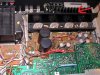

Yes, there's a transformer under that spot and it will get warm.
The transformer is left side rear not right side rear, it is immediately below that connector box resting on the top cover, it shouldn't get hot enough to be concerned.

The area pointed to is above the output transistor heatsink, but this runs almost all the way across the back - as the arrow only points to one side of it, this possibly indicates a bias issue with one channel.
Last edited:

h3ll0
Active Member
I don't think it's a bias issue because both channels sound equally loud when I listen to sound in stereo and when I change the balance from left to right.The area pointed to is above the output transistor heatsink, but this runs almost all the way across the back - as the arrow only points to one side of it, this possibly indicates a bias issue with one channel.
I was just wondering if receivers especially older ones are suppose to get warm.
I asked this question cause I have panasonic home theater in a box receiver that gets warm sometimes.
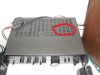
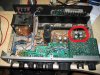
The area I circled in this photo is where the warmth is. Like I said its not hot, its just warm.
Attachments
Last edited:

I don't think it's a bias issue because both channels sound equally loud when I listen to sound in stereo and when I change the balance from left to right.
You wouldn't notice much if the bias had drifted high - except the heat.
I was just wondering if receivers especially older ones are suppose to get warm.
I asked this question cause I have panasonic home theater in a box receiver that gets warm sometimes.
Some do, some don't but I would be a bit surprised if you say that your HT box 'sometimes gets warm' - unless this represents times when you are 'cranking it'

The area I circled in this photo is where the warmth is. Like I said its not hot, its just warm.
'Warm' is fine for this amplifier, it looks entirely original in there - it is a nice amplifier, underestimated and good sounding, look after it.
EDIT: whoops sorry Pete - our posts crossed I think
Last edited:

vigman
SUBSCRIBER
If the bias is set incorrectly it will cause MORE ( typically ) or less current to flow through the output devices, it has very little to do with "level" or loudness … Bias sets where the transistors " turn on " so it affects distortion… With the power off and the unit un plugged are the screws tight for the 4 transistors? ( and you don't need an impact driver ) Is the white " GOO" still gooey? Are both pairs about the same temp or is one side warmer ?
vigman
SUBSCRIBER
Schematic here.. checking bias is CAKE http://www.hifiengine.com/manual_library/sansui/au-317.shtml
( If you have a GOOD AMP meter and good easy hook probes )
( If you have a GOOD AMP meter and good easy hook probes )
h3ll0
Active Member
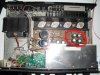
The thermal paste is still gooey and that picture of the inside of a AU-317 were not mine but the one on this post is.
The guy I bought it from kept it real clean and the transistors were tight.
Like I said in the post before I don't think its the output transistors its the ones circled.
Also since this is my first HIFI system I don't have any tools (soldering gun, voltage tester, etc.)
The guy I bought it from kept it real clean and the transistors were tight.
Like I said in the post before I don't think its the output transistors its the ones circled.
Also since this is my first HIFI system I don't have any tools (soldering gun, voltage tester, etc.)
Attachments
h3ll0
Active Member
If thats the case should I take the cover off, turn the unit on and wave my hand over the components for heat? Then if the caps are hot I should replace them.Those components which you have circled are capacitors. They do not shed heat as such (unless something is seriously awry, in which case get ready for a POP!

Karl vd Berg
Super Member
h3ll0, chances are that you have a bias issue here. Normally the transformer also gets a bit warmer and warmer (if not a bit HOT!).
Could you take some measurements?
Could you take some measurements?
h3ll0
Active Member
As said on the other posts that the transformer is on the other side and that I'm a noob at this and I don't have any equipment I would have to take it into a shop.h3ll0, chances are that you have a bias issue here. Normally the transformer also gets a bit warmer and warmer (if not a bit HOT!).
Could you take some measurements?
vigman
SUBSCRIBER
If one or more of those caps are getting warm ( and need a number in C or F ) and it's not heat from the adjacent heat sink, then a cap is getting ready to vent. 1978 to today yeah it could happen, easy fix though.those are for the " pre amp/ pre driver " power supply section.. they will start to bulge or leak out the bottom of the can when going...
Karl vd Berg
Super Member
I'd also check if there's any broken traces in the circuit or broken solder points. Can hapen sometimes in a specific part of circuit gets warmer than normal due to broken points.
Similar threads

- Replies
- 3
- Views
- 3K

- Replies
- 6
- Views
- 2K

- Replies
- 0
- Views
- 1K

