• The move to the new server is done. There are some software and database maintenance updates in process. This has us passing the hat around to help out. We appreciate any donations. Seriously, even a dollar helps. The payment page may be found here - https://www.audiokarma.org/support.html

Audiophile Router?

Nice attempt to dodge the facts clearly demonstrated via the photos in the post....which you just so happen to not include when you quoted my response.
You're welcome to harp on your tangential side show.

My commentary was about the quoted product. Which, unlike the Audioquest cable, uses a gigabit compliant isolation transformer.

Similarly, you failed to acknowledge other points I made about using quieter power supplies in the network infrastructure and what I think to be the ultimate answer, optical ethernet as used by the broadcast industry. It just happens to be moderately priced as well. :)
 
There are real technical reasons why Ethernet may impact audio system quality. But with this stuff going on it’s hard to have a conversation about it.

Very simply, gig-e transfers data at 125MB/s. Even if you're streaming and account for protocol overhead, there's no way you're going to saturate that. It's even possible to do HDMI 2.0 over ethernet.

My house has CAT6 to every room. I'm terrible at terminating the ends, yet bandwidth tests show despite this, I still get full bandwidth from one end of the house to the other. So this means my crappy terminations, going through a cheap Netgear switch and I'm still getting gig-e. Remember also that any application level protocol has to go over TCP.

Now if you said there's very real technical reasons why ethernet may cause problems with streaming video, I might buy into that. Audio is simply far less data and even 100base-t has plenty of bandwidth for it.
 
Last edited:
You're welcome to harp on your tangential side show.

My commentary was about the quoted product. Which, unlike the Audioquest cable, uses a gigabit compliant isolation transformer.

Similarly, you failed to acknowledge other points I made about using quieter power supplies in the network infrastructure and what I think to be the ultimate answer, optical ethernet as used by the broadcast industry. It just happens to be moderately priced as well. :)

There was simply no need to comment on the optical cable. It is well known that optical cables are immune to interference.

You failed to notice that I was brand agnostic from the beginning with the MIT cable pictures. That's a very key point that you elected to omit.

It's possible I simply struck a never with an AudioQuest fanboy. Before you take a different path of attack, Yes, I have owned their cables.
 
Very simply, gig-e transfers data at 125MB/s. Even if you're streaming and account for protocol overhead, there's no way you're going to saturate that. It's even possible to do HDMI 2.0 over ethernet.

My CAT6 to every room. I'm terrible at terminating the ends, yet bandwidth tests show despite this, I still get full bandwidth from one end of the house to the other. So this means my crappy terminations, going through a cheap Netgear switch and I'm still getting gig-e. Remember also that any application level protocol has to go over TCP.

Now if you said there's very real technical reasons why ethernet may cause problems with streaming video, I might buy into that. Audio is simply far less data and even 100base-t has plenty of bandwidth for it.

Quoted for the truth.
 
Sorry, thought you had read my posts.

I did. Those concerns don't apply to digital like they do to analog signals. The DA converter is going to disregard that when it produces the analog signal from the bits it took in.
 
The DA converter is going to disregard that when it produces the analog signal from the bits it took in.
That is most certainly not my experience. Noise in any part of an audio signal, whether in analog or digital form is a concern for the highest quality results.
 
Last edited:
Will I notice any difference in streaming 9216kbps Hi-Res audio by replacing my CAT 5e lines with quality shielded CAT 8 Ethernet lines?

Hans apparently heard a small difference by adding a “filter” to his setup.

722BECBC-EB35-4EDF-AA0B-36FA9A44C1FE.jpeg
 
Will I notice any difference in streaming 9216kbps Hi-Res audio by replacing my CAT 5e lines with quality shielded CAT 8 Ethernet lines?

Hans apparently heard a small difference by adding a “filter” to his setup.

View attachment 1495602
I have not validated any of his findings, but do enjoy his YT channel and the way he presents the subjects.
 
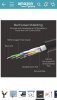
Let’s talk about the Ethernet Physical later. It is always transformer isolated twisted pairs. Additional shielding may be added in higher bitrate systems. This additional shielding was added to the Cat 6e and Cat 7 specs to alleviate near end cable to cable interference in high density switching systems.

Copper to fiber systems are of course available but at some point you still have a copper phy layer.

I am unaware of anyone using Cat 7 or Cat 8 cabling in an IT context - this is a solution looking for a problem.

The problem for audio is that this shielding can also transmit digital noise from every device upstream of where it ultimately connects to your audio system. By using shielded Ethernet cables, you are actually degrading a properly designed digital transmission system.

In addition, while Ethernet is transformer coupled, high frequency noise is capacitovely coupled through the transformer windings into downstream gear.

In addition to that, ground noise and power supply noise can be coupled from these components directly into your audio gear.

The problem is simply that EMI is part of an Ethernet system and you need to mitigate it by your choice and implementation of digital system components.

Using unshielded Ethernet cable, avoiding crazy high bitrate systems, using quiet power supplies and potentially employing filters and isolation and other mitigation techniques are all technically appropriate solutions to achieving the highest possible audio quality.

Tom
 
You're welcome to read my posts. - or not. All of my comments pertain to the topic of the thread.

Thanks....this was the response I was expecting.

So, you're suggesting my comments are not valid and relevant to the discussion? :blah:
 
A Somewhat high bitrate of 9216kbps is part of Hi-Res Internet streaming, so avoiding high bitrate streaming isn’t an option.

Assuming the developer of the CAT 8 shielded cable has eliminated any grounding issues (metal ends) with their cable; IMO eliminating any EMI with proper shielding would have to be beneficial, especially transmitting data for Hi-Res audio where femtosecond timing errors caused by EMI in the data chain going to the PC then to the DAC's circuitry resulting in distorted audio.
 
Last edited:
Let’s talk about the Ethernet Physical later. It is always transformer isolated twisted pairs. Additional shielding may be added in higher bitrate systems. This additional shielding was added to the Cat 6e and Cat 7 specs to alleviate near end cable to cable interference in high density switching systems.

Copper to fiber systems are of course available but at some point you still have a copper phy layer.

I am unaware of anyone using Cat 7 or Cat 8 cabling in an IT context - this is a solution looking for a problem.

The problem for audio is that this shielding can also transmit digital noise from every device upstream of where it ultimately connects to your audio system. By using shielded Ethernet cables, you are actually degrading a properly designed digital transmission system.

In addition, while Ethernet is transformer coupled, high frequency noise is capacitovely coupled through the transformer windings into downstream gear.

In addition to that, ground noise and power supply noise can be coupled from these components directly into your audio gear.

The problem is simply that EMI is part of an Ethernet system and you need to mitigate it by your choice and implementation of digital system components.

Using unshielded Ethernet cable, avoiding crazy high bitrate systems, using quiet power supplies and potentially employing filters and isolation and other mitigation techniques are all technically appropriate solutions to achieving the highest possible audio quality.

Tom

So on one end, you have a PC or NAS serving digital music files and on the other end you have a device with a DAC, reading those files (or digital stream) and then converting it to an analog signal to go to your amp. You're saying that noise generated up stream and carried by that ethernet cable is going to traverse the DAC and get to your amp? Does the noise jump around the DAC or does the noise get read and converted by the DAC into a form of distortion?

Finally, if this truly your concern, why not just get a DAC device with onboard storage so the digital files don't traverse the network while being read?
 
So on one end, you have a PC or NAS serving digital music files and on the other end you have a device with a DAC, reading those files (or digital stream) and then converting it to an analog signal to go to your amp. You're saying that noise generated up stream and carried by that ethernet cable is going to traverse the DAC and get to your amp? Does the noise jump around the DAC or does the noise get read and converted by the DAC into a form of distortion?

Finally, if this truly your concern, why not just get a DAC device with onboard storage so the digital files don't traverse the network while being read?

Both could happen. The noise could impact how the DAC internals decode the data, and more likely the noise could be conducted through the DAC into your analog electronics. The latter is my biggest concern actually, since packet switched Ethernet already has robust error correction schemes built in.

A device with onboard storage and no active Ethernet or WiFi connection would eliminate these EMI concerns.
 
Last edited:
A Somewhat high bitrate of 9216kbps is part of Hi-Res streaming, so avoiding high bitrate streaming isn’t an option.

Assuming the developer of CAT 8 shielded cable has eliminated any grounding issues (metal ends) with their cable; IMO eliminating any EMI with proper shielding would have to be beneficial, especially transmitting data for Hi-Res audio where femtosecond timing errors caused by EMI in the data chain could distort the final analog audio output from the DAC.

If you are talking about using a Cat 8 cable for Ethernet, timing is not an issue since it is packet switched all the timing will be handled by the DAC anyway. Again, shielding is a detriment to audio applications in that induced EMI from the grounds will impact downstream components, including the DAC. This is one case in audio where increasing the spec of the cabling used can actually degrade audio performance for reasons I've already mentioned.
 
Back
Top Bottom