• The move to the new server is done. There are some software and database maintenance updates in process. This has us passing the hat around to help out. We appreciate any donations. Seriously, even a dollar helps. The payment page may be found here - https://www.audiokarma.org/support.html

Azimuth Adjustment for the rest of us?

nniemiec

Active Member
Short of investing in a microscope, does anyone have tried & trued techniques for minimizing crosstalk w/out spending more $$$ on more ****? Even if I invest in a headshell that has the adjustment controls, how do you really "dial it in?" absent precision instruments ala - microscope & test records or is that where this is going ? (technics 1200 / Shure97xe)

thanks!
 
Last edited:
Register to hide this ad
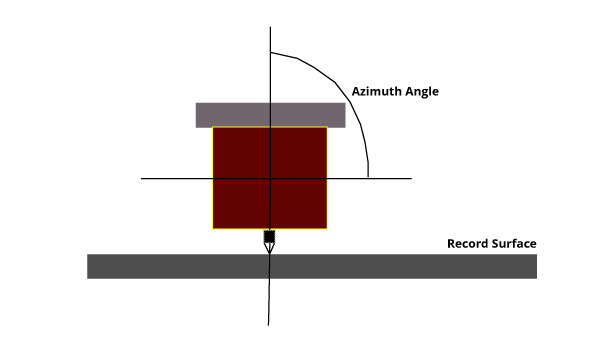
I use a 5mm bubble level gauge, you can get them on EBay. I have a Fonzgometer and the level comes very close. Take into consideration the coils may not be a perfect 45/45, it's never easy to get a "perfect set up". A mirror can work well also to back up the level gauge. The consideration your willing to spend some time to preserve your stylus and grooves is commendable. Just get it as close as you can, it's far better than just discounting that angle.
 
I use the most expensive equipment money can buy....eyes and ears
I use a 5mm bubble level gauge, you can get them on EBay. I have a Fonzgometer and the level comes very close. Take into consideration the coils may not be a perfect 45/45, it's never easy to get a "perfect set up". A mirror can work well also to back up the level gauge. The consideration your willing to spend some time to preserve your stylus and grooves is commendable. Just get it as close as you can, it's far better than just discounting that angle.

Thanks, i'm also inferring that an elliptical stylus makes for more margin of error vs. more exotic ****?
 
Look at the reflection of the stylus from the front. Stylus and mirror image should form a perfectly straight line. Some people place a small mirror on the platter instead of a record, but I prefer deadwax.
 
interesting - pardon my nerd thought - wouldn't taking an image of it w. a camera only truly work if your image plane was precise as well? distortion is visual too!
 
interesting - pardon my nerd thought - wouldn't taking an image of it w. a camera only truly work if your image plane was precise as well? distortion is visual too!

Yes its difficult but then again so is looking at it with your eyes. I usually take a bunch of pics and try to get as parallel with the front as possible as well. This was a quick shot I just took for the thread. Bob
 
http://www.audiokarma.org/forums/showthread.php?t=517731

I guess this is a dead link.:(
Maybe not if the A'gon link opens.

Here is the Agon Text

The word 'azimuth' is kind of a giveaway that you're asking about a phono cartridge. :-)

I use the Wally Analog Shop to do this, and it is a great tool, but kinda pricey. Michael Fremer covers how to do this in the .PDF document that comes with his video, which I haven't seen. But in a nutshell...

You need a voltmeter and a test record with a band that plays a 1kHz tone into the Left channel and a band playing the tone into the Right channel. I use the Cardas Frequency Sweep test record - you can buy this wherever fine test records are sold.

Set the meter to low AC volts, 5V or less. Place the meter probes into your amp's left channel output terminals. Play the Left channel tone with the volume up enough to register around 2V. Get an average reading and write it down. Next, swap the probes to the amp's Right output terminals. Play the same Left channel tone and take an average reading and write it down - this is the 'bleedthrough' channel, the crosstalk.

Next, repeat the above procedure, but using the Right channel test tone.

You've got 4 readings in Volts. Convert the volts to decibels. The Wally tool includes a conversion chart to make this simple, or you can google for the formula. I believe the chart is available with the documentation that Wally has on his Web site. Look for Analog Shop and a .PDF file.

Once you've converted to dB, take the difference between the readings made with the Left channel test tone to give a number, then the difference for the Right channel test tone readings to give a number. Now you have two numbers. Adjust your cartridge's azimuth to get these two numbers within ... Here the relative difference depends on who you listen to, and how close you want your channel balance to be. I vaguely recall Fremer says within 10%. Wally says within 2-3dB is good, under 1.0dB is very good. I shoot for under 1.0dB because proper azimuth makes a big difference with my cartridge.

Basically you're aligning the stylus to maximize channel separation or minimize crosstalk. Keep an eye on the alignment of the stylus/cartridge. To get the proper numbers if it looks like the cartridge is really tilted, then something is wrong with the readings or the cartridge itself.

It also helps to equalize the output of your preamp before taking the crosstalk measurements. I probably shoulda written this first. You need a track with the 1kHz tone playing in *both* channels at the same time. (Cardas record has this.) Put the meter probes in the amp's left terminals, playing the 'both channels' track, and take a reading. Do the same for the right channel terminals. Then, adjust your preamp's balance control to get the same reading from both L and R amp terminals.

No doubt some golden-eared folks will come along and say you (they) can set azimuth by ear. Listen to a female vocalist who sings center stage. Adjust azimuth to get her mouth/voice as small/narrow as you can. Incorrect azimuth tends to splay sounds horizontally, making instruments and voices larger (spread wider) than they will be when azimuth is correct. This method can work too, though you need good sonic memory to make fine adjustments. I prefer the measured approach, if for no other reason that it is repeatable with accuracy.

The Wally Tool includes some low and high pass filters to smooth out the meter readings which tend to jump around as the needle traverses the groove.

Hope this makes sense. There are probably other methods, but this is the one I'm familiar with. Good Luck - proper azimuth can make a huge difference especially on more sensitive cartridges.

Tim


And here is the image of the voltage conversion


40797415131_0608a4fe44_o.png


Athanasios
 
I don't mean to take this thread off track but, I've been into stereo gear since my teens but, I haven't a clue what your all talking about.
The cartridge attaches to the head with 2 screws (on my Pioneer PL-12D) and only can be adjusted horizontally that I can see for tracking purposes.
Maybe someone can enlighten me a little, I know I've got a lot to learn going through many of the posts here and understanding very little of them.
 
I don't mean to take this thread off track but, I've been into stereo gear since my teens but, I haven't a clue what your all talking about.
The cartridge attaches to the head with 2 screws (on my Pioneer PL-12D) and only can be adjusted horizontally that I can see for tracking purposes.
Maybe someone can enlighten me a little, I know I've got a lot to learn going through many of the posts here and understanding very little of them.


Azimuth%20Reflection.jpg


coolStuff3_lg.jpg
 
Okay, I think I understand now. Even though there is a pin that the head engages when mounted, the tiny bit of slop in it can put it at an angle that will not only damage the stylus after time but also the record playing and not give you, for the lack of a better word, the performance you should have. Thank you sir!LiftHat.gif
 
Shimming between the cartridge and the headshell with a thin, tiny washer (which my phat fingers, or my patience, can't handle too well anymore ;) ) is also a good way to bring azimuth into proper adjustment. With the original Shure V15 Type V, the mounting kit included a set of thin plastic spacers with self-adhesive you could stick onto the mounting nuts (hard to describe, as they were mounted onto a clip that wrapped around to the top of the cartridge).

I've read that there is a way to do this with an oscilloscope. I have used a digital microscope to check it--tricky, but doable. If I can find one of the images, I'll upload one here.
 
Thanks guys LiftHat.gif And here I thought you just stuck it on and spun a disk all this time. It's just amazing what one should know about something
that has been so common in our lives for so long that the normal disk spinning Joe doesn't know.
Hope that made sense.
 
does anyone have tried & trued techniques for minimizing crosstalk w/out spending more $$$ on more ****?
The HFN analog test LP has a good azimuth setting track, which is kinda nifty and involves your output disappearing on mono when azimuth is set. It ain't s*%t and it doesn't cost $$$ and it sure has lots more very useful tracks, like anti-skate setup, phase test, RF and more.
 
The HFN analog test LP has a good azimuth setting track, which is kinda nifty and involves your output disappearing on mono when azimuth is set. It ain't s*%t and it doesn't cost $$$ and it sure has lots more very useful tracks, like anti-skate setup, phase test, RF and more.

Thank you sir LiftHat.gif , I'll check into one.
 
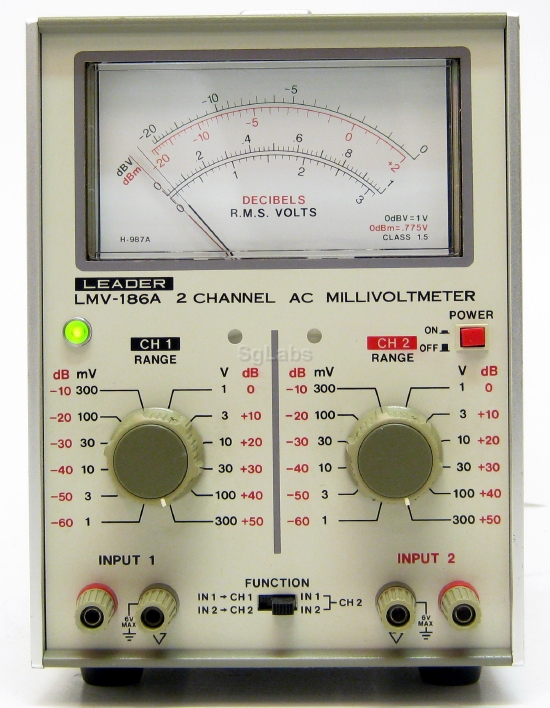
It is easier to use one of these to read L/R mV and dB simultaneously (and relatively not too expensive to buy used):

SgLabs_m_Leader_LMV_186A_1.JPG

Yes, It probably would be but, you see I was only a CET and for a very short time and just don't have the knowledge to do so I'm afraid.
At my age sometimes it's just easier for me to do things the mechanical way instead of trying to learn something technical, specially
when I've forgotten just about everything I learned almost 20 years ago.But, I do appreciate your wanting to help sir. LiftHat.gif
 
Back
Top Bottom