Thank you so much You’ve been a great help. I’m fairly sure the problem is in the transistors.It looks like MJ21194G is not available now both on mouser or Digikey but you can check on Newark Electronics or Bdent.
2SD388 (NPN) - MJ21194G, (or MJ21196G)
2SB541 (PNP) - MJ21193G (or MJ21195G)
2SD382 (NPN) - MJE15030
2SB537 - MJE15031
All of the fuse resistors are mentioned on the parts list in the service manual.


You are using an out of date browser. It may not display this or other websites correctly.
You should upgrade or use an alternative browser.
You should upgrade or use an alternative browser.
Barn find Sansui AU-7900
- Thread starter Kylek1443
- Start date

GrisPato
Super Member
If I were you I would hold back on ordering anything yet.
Solving a problem like this is not done by replacing components. First find out what is happening. The two fuses that blow are at the beginning of the powersupply. Nothing to do with the relay except being in the proximity.
You have a.short for sure. This can be caused by shorted rectifiers, shorted filter capacitors, shorted transistors or something totally unrelated to any component like a wire insulation being broken ( mice ).
You can measure the rectifiers and transistors to rule them out or find the culprit with a DMM. Even the capacitors can be checked for a full short like that. Also check the wiring/ connections between boards and the output transistors. Measure for shorts on output transistors to the heatsink.
The rust on the output transistors is no problem, it's just a case.
Solving a problem like this is not done by replacing components. First find out what is happening. The two fuses that blow are at the beginning of the powersupply. Nothing to do with the relay except being in the proximity.
You have a.short for sure. This can be caused by shorted rectifiers, shorted filter capacitors, shorted transistors or something totally unrelated to any component like a wire insulation being broken ( mice ).
You can measure the rectifiers and transistors to rule them out or find the culprit with a DMM. Even the capacitors can be checked for a full short like that. Also check the wiring/ connections between boards and the output transistors. Measure for shorts on output transistors to the heatsink.
The rust on the output transistors is no problem, it's just a case.
If I were you I would hold back on ordering anything yet.
Solving a problem like this is not done by replacing components. First find out what is happening. The two fuses that blow are at the beginning of the powersupply. Nothing to do with the relay except being in the proximity.
You have a.short for sure. This can be caused by shorted rectifiers, shorted filter capacitors, shorted transistors or something totally unrelated to any component like a wire insulation being broken ( mice ).
You can measure the rectifiers and transistors to rule them out or find the culprit with a DMM. Even the capacitors can be checked for a full short like that. Also check the wiring/ connections between boards and the output transistors. Measure for shorts on output transistors to the heatsink.
The rust on the output transistors is no problem, it's just a case.
I assumed the fuses were to protect the relay and thus the amplifier board. Power to the board comes strait from the power supply. None of those wires were damaged by mice. Could the issue lie with the PSU itself? I don’t believe so because the main power fuse doesn’t blow and the unit stays on. There are 4 fuses on the amplifier board. The 2 that blow are the 8A 250V fuses that from what I can tell are the fuses that protect the relay. Im only assuming but pretty sure, the problem is on the amp board.
GrisPato
Super Member
Good luck.
Fuses are between transformer and rectifier so everything behind the fuses is suspect.
Two years ago I started to repair a Sansui AU-719 that blew it's fuses.
I read threads here on AudioKarma for up to three month's and learned the basics of discrete circuit design and discrete components and reading schematics. I was able to fully repair the amplifier ( and a few more) with the help of not only but mostly Hyperion who is always around to help newbies to fix there amplifiers.
So, you can spend close to a €/$ 100 on components and still be left with the same problem or you do some proper fault finding with the help.of AudioKarma and you will be enjoying this amplifier soon.
Fuses are between transformer and rectifier so everything behind the fuses is suspect.
Two years ago I started to repair a Sansui AU-719 that blew it's fuses.
I read threads here on AudioKarma for up to three month's and learned the basics of discrete circuit design and discrete components and reading schematics. I was able to fully repair the amplifier ( and a few more) with the help of not only but mostly Hyperion who is always around to help newbies to fix there amplifiers.
So, you can spend close to a €/$ 100 on components and still be left with the same problem or you do some proper fault finding with the help.of AudioKarma and you will be enjoying this amplifier soon.
Last edited:

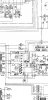
From the schematic, if these components are shorted it will blow 8A fuse, the bridge rectifier (unlikely, can't read the number of the components from schematic), next shorted filter capacitors (highly unlikely), next output transistors and driver transistors.I assumed the fuses were to protect the relay and thus the amplifier board. Power to the board comes strait from the power supply. None of those wires were damaged by mice. Could the issue lie with the PSU itself? I don’t believe so because the main power fuse doesn’t blow and the unit stays on. There are 4 fuses on the amplifier board. The 2 that blow are the 8A 250V fuses that from what I can tell are the fuses that protect the relay. Im only assuming but pretty sure, the problem is on the amp board.
From the schematic, if these components are shorted it will blow 8A fuse, the bridge rectifier (unlikely, can't read the number of the components from schematic), next shorted filter capacitors (highly unlikely), next output transistors and driver transistors.
sounds like it’s the output and driver transistors. Seems like they should be the next thing I replace. Age alone tells me I should replace them.
Can I ask hypothetically what would the harm be in replacing them with new ones? The current ones don’t even look like they have thermal grease of any kind under them. It looks like an original strip of something Sansui put under them 5 decades ago. What would be the harm in replacing them all? Just asking. I’m following everything you guys say.If all of the original output transistors tested good I would not recommend replacing those.
Not the functional reason but the original sound signature may change.Can I ask hypothetically what would the harm be in replacing them with new ones? The current ones don’t even look like they have thermal grease of any kind under them. It looks like an original strip of something Sansui put under them 5 decades ago. What would be the harm in replacing them all? Just asking. I’m following everything you guys say.

My first thought if outputs are good would be the rectifier bridge.
I’m pretty sure it’s the output transistors. Tested them with my MM. Of the 4, 3 all matched up with similar numbers and one was way off. I’m thinking that’s my issue.

It's probably best in this particular case to change all 8 (edited from 4), this amplifier does not require particularly 'fast' transistors so the already suggested MJ2119x replacements ('93, '94 preferred), will be fine here. Make a note of where the originals came from, and be sure to check and double check that you are installing the correct replacement in the correct position - also very important. Note that failed output transistors very often means failed driver transistors - these should be removed and checked just as you have done with the output transistors.I’m pretty sure it’s the output transistors. Tested them with my MM. Of the 4, 3 all matched up with similar numbers and one was way off. I’m thinking that’s my issue.
This era of Sansui amplifiers tended to use Silicone Grease as the heatsink compound, and it can be difficult to see if it was originally there or not. Suffice to say you should definitely use heatsink compound (the white stuff, not silicone grease), for the replacements, and also re-use the insulating 'Mica' washers in between the transistors and the heatsink - this is very important. If you have any washers that are damaged (usually cracked) these should be replaced with new. Also you should thoroughly clean any traces of previous heatsink compound from the heatsink/transistors/mica insulating washers, before refitting the new transistors.

Also could we see some pictures? - the initial report of damage by mice made me think this was going to be a real basket case, so I am curious to see what it really looks like.
Last edited:
It's probably best in this particular case to change all 4, this amplifier does not require particularly 'fast' transistors so the already suggested MJ2119x replacements ('93, '94 preferred), will be fine here. Make a note of where the originals came from, and be sure to check and double check that you are installing the correct replacement in the correct position - also very important. Note that failed output transistors very often means failed driver transistors - these should be removed and checked just as you have done with the output transistors.
This era of Sansui amplifiers tended to use Silicone Grease as the heatsink compound, and it can be difficult to see if it was originally there or not. Suffice to say you should definitely use heatsink compound (the white stuff, not silicone grease), for the replacements, and also re-use the insulating 'Mica' washers in between the transistors and the heatsink - this is very important. If you have any washers that are damaged (usually cracked) these should be replaced with new. Also you should thoroughly clean any traces of previous heatsink compound from the heatsink/transistors/mica insulating washers, before refitting the new transistors.
Also could we see some pictures? - the initial report of damage by mice made me think this was going to be a real basket case, so I am curious to see what it really looks like.
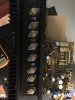
I have the amplifier board out while I work on it. Ignore the black electrical tape I placed, I’ll remove that before I completely put the amp back together. The black electrical tape over the wires are there because I wanted to mark them and write notes to myself to remember a few things. Im not finished completely with mouse damage repair, it’s just repaired enough to test. I didn’t want to change the original wires before I got the unit running. Also, the original jumpers were missing so until I find new ones I’m forced to use small audio cables as a temporary solution.
Attachments
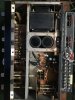
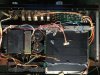
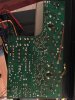
I really appreciate that. And again this really was a barn find, been neglected for years. When I found it both the top and bottom were already taken off. Like the old man who owned it maybe tried a repair at sometime. But that was obviously years ago, and that old man has been gone for a while so I can’t ask anyone. This was found in my friends grandpas barn, and I’m restoring it for him. Or trying my best anyway. He would be happy just to get it running if possible.Thank you for the pictures- not too bad, not bad at all.
Those hidden aptitudes, I think you have them after all.
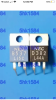
I may have missed it if it was in the reply’s but could you tell me what a good replacement for these would be? I don’t want to order them from China off eBay and I can’t find them in stock anywhere else.Thank you for the pictures
Those hidden aptitudes, I think you have them after all.
I may have missed it if it was in the reply’s but could you tell me what a good replacement for these would be? I don’t want to order them from China off eBay and I can’t find them in stock anywhere else.
Attachments

GrisPato
Super Member
Start here.Of the 4, 3 all matched up with similar numbers and one was way off
First you mention you measured four output transistors, there are eight, how are the other ones. You do not mention one of them is shorted, just measuring different, although this probably means it is faulty we don't know yet if this was causing the fuses to blow.
If none of your outputs is shorted and no resistors blew up it can be your driver transistors are good. Because they are really good transistors you just want to replace them when they are faulty. Replacement would be Onsemi mje15028/29-30/31.
Be sure to measure all transistors preferably out of circuit. Identify NPN and PNP types and record placement.