• The move to the new server is done. There are some software and database maintenance updates in process. This has us passing the hat around to help out. We appreciate any donations. Seriously, even a dollar helps. The payment page may be found here - https://www.audiokarma.org/support.html

Bi-Amping Altec Lansing Model 14 with Driverack PA2 - Project and Questions

Found the hum... Turned out to be the reel to reel tape machine. Turning it off eliminates the hum.

Now to get those highs cleaned up and I think I'll be a happy guy!

Horns have really been tamed. Miles Davis kind of blue used to be a bit harsh in some passages, but this seems to be much improved.

Rewarding myself with a sidecar for all that "hard work!"

sidecar.jpg
 
Last edited:
After playing around some more, I realized that I had my crossover points set incorrectly.

Set them at the right points and NOW I see what all the fuss is about.

Switched over to Butterworth 18 slopes and man does this sound good. A whole different set of speakers. The R-115s pre is bringing some hiss to the highs, so I'm thinking I'll disconnect and direct wire either a set of pre-outs or other unused jacks directly to the amp section. Looking at the schematics/board diagrams, I think this looks doable, as the Left and Right Amp boards receive their audio inputs via a cable and plug. I'm thinking I can disconnect these and wire directly from the jacks with the right type of connector, which I'm sure I have in an old PC board or receiver with these pin type connectors.

Still a little hum in the sub, but hoping the power conditioner will help with that. Level is low enough that it's not bothering me anymore, but hoping to eliminate it completely.
 
Good work!! Fun, ain't it? I have built up a 'set' of sections of 'problematic' test tracks - vibes can be challenging, for example - and still enjoy tweeking the dBX from my tablet whilst listening. Nirvana approaches, for sure!
FWIW, I spent a lot of time researching power filters, and ended up with one of these, which I later stumbled on for cheap on eb.
https://www.ametekesp.com/surgex/standalone/standalone-120-208v
Couldn't be happier - my 'el cheapo' best buy TV (not UL), let's in lots of noise from my powerline LAN devices, and this thing simple makes it 'go away'.
Heavy beast, though...
That, and moving slowly over to balanced feeds everywhere has put paid to noise issues.
Enjoy!!
 
Looks like you are on the right path. Active is the way to go for many reasons but mainly that the individual drivers have dedicated amps so there are no reactive components giving the amp (s) a hard time with all the phase shifts and so on. Most immediate is the tightening of the bass response , I'm sure you heard that. Having as much of you cabling balanced is also a major plus.
Enjoy , M
 
Thanks nedseg and Macaroonie,

I haven't played with the ipad app too much yet since the PA2 requires a ethernet cable connected in order to access via wifi and my router, unfortunately is on the other side of the house. I do plan on rectifying that with a wifi extender that has an ethernet jack. Since tweaking things is part of the fun for me too, this will be resolved in the very near future.

Thanks for the tip on the Surgex, recall seeing one on CL recently so will look for that. Definitely looking to evolve into separates as I sell off some gear and targeting those with balanced inputs.

The tightened bass response is, indeed, a big deal. On Sarah Mclauglin's song 'i love you' there is a very low frequency bass-line that for the first time I've realized is (now) actually 2 very clearly different tones in succession. This is one of those songs I use to test the low end because very few have such a clean, deep, low frequency tone.

Previously with the signal from the pre-going into the amp, was then sent to the sub which has it's own amp via 2nd speaker outs, so perhaps they got muddled together somehow. Previously I was using the Luxman's loudness setting to get that nice sweet sound, but now I'm getting the best of both worlds.

Looking forward to using the RTA feature more and perhaps driver time alignment features. Quite a powerful machine and well worth the effort/learning curve/cost. I'd read so much about miniDSP/active bi-amp devotees and now I understand why.
 
Congrats!
I prefer powerline LAN adaptors (if applicable) for most control devices, but also use it for accessing audio file shares.
dBX Venu 360 has wifi builtin- pretty much any tablet/phone/device will connect to it via the app...which is super handy as I usually have a pile of devices within reach. Funniest one is that a very old FIreHD tablet runs it just fine!
On the speaker EQ/tuning stuff, I'm barely a neophyte compared to Macroonie and Toddalin, but I DO love playing with the crossover settings, while repeatedly playing select track sections...I know I'm way past it being 'pretty dang good', but just can't resist it's so entertaining!
I'll be moving over to running EQ tests via REW to compare to the Venu's autoeq results...and time alignment, etc, etc.
But running RTA during playback is instructive, as are the sweeps...
rta.jpg
 
That powerline adaptor sounds good as our network guy at work recommended the same thing. Pretty cool how that works though the houses wiring. I'm guessing the wifi feature was likely left out intentionally for the PA2 as a 'step up' feature to the 360, among the the other features like better processors, etc. There was a Venu360 locally on CL for about what I paid for the PA2, but at the time I didn't know enough about these systems to jump on it.

Btw, meant to say thanks for the tip about setting the gain at the crossover as that let's me use the preamps volume knob all the way at - 14db and solves the problem of someone not knowing what they're dong juicing the volume. At 0db, a 5 degree turn of the knob is bleeding ears territory. I have it set at -10db as suggested earlier and that's a great compromise. Re-eq'd as the balance seemed to shift a bit, or perhaps that was in my head. So much easier and faster to do for 2 channels vs. the 9, soon to be 11 on the home theatre (7.2 and adding atmos front speakers) due to the sweep tone needed 3x for each speaker and repeat 3x for each listening position followed by about 3 minutes of 'calculating'). I have to wait until the wife's out to do this, since I haven't found a way to make her not talk for 15 whole minutes, lol. :blah: Once, I was on the last round of sweeps and she started vaacuming in the other room :eek:

One other item, the Harman tech said that any threshold adjustment should be done after the auto leveling and auto eq process, as they may interfere. Since I can adjust gain in the PA2, I've removed these entirely.

I've been reading up on REW. Looks like I'll need a different mic. Wondering if my Audessy mic will work or if I need a usb mic/other mic.

As an aside, the Veoldyne tech I had spoken to about a mic for the sub stated that the audessy mic works just fine with their subs, so just a tidbit for anyone who's lost theirs.
 
Finding that the orientation/height of the RTA microphone plays a big part in the EQ/leveling. I originally had the mic on a tripod pointing slightly up. Sounded great. Then I did horizontal at sitting ear height, a bit muted/rolled off on the high end. At about neck height, standing, microphone barrel parallel to the ground, outstanding.

Final settings:

2-Way Stereo with Stereo subs (as suggested by the gentleman from AN, kudos and thank you)
Crossovers remained at 80hz/1.5khz. Went back to 12db butterworth slopes for everything. (each allows a high pass and low pass setting, so subs were out/80hz, mids 80hz/1.5Khz, hights 1.5khz/out)
Gain settings at the crossover on highs were -2db, -10db for the mids, -10dbs for the lows.
Purposely made the highs hotter so I could temporarily get rid of the slight bit of hiss the 115's preamp brings until I modify it, as running it hotter allows me to turn down the volume knob. Worked a charm.
Rest was as simple as running the AutoEQ/Level Assist Wizard for 4 positions using their RTA Mic. For anyone getting this PA2, I'd say you're only getting 50% of the benefit without the microphone, unless you're a sound guy or can eq yourself manually.

Major thanks for AN publishing the article and those who suggested bi-amping.

Not sure how else to convey, but low end has that iron fist/velvet glove feel, horn is no longer shouty/honky, and top end isn't drowned out or muddled by the mids/lows. Don't get me wrong, the original, stock config. Model 14 sounded better to me for most music that I like (acoustic guitar, piano, blues) than my prevous Wharfedales (w60dmkii, w70a) and JBL (l100 t3 --- actually L100S, but had the t3 crossover) for most things, but the wharfedales did jazz better and the jbls did rock better. Now these sound superior to me for all types of music.

Really haven't touched but the surface of the power of the PA2. So just the crossover (enabled by or perhaps enabling bi-amping) and EQ functions have worked wonders. My system has never sounded better and I'm pulling out records and CDs and hearing things sound really good for the first time. Harsh horns are now smooth but detailed, muddy bass lines now sound like strings or drums as appropriate, not something in between and the full spectrum of piano and guitar are as "in the room" as the voices.

What it's done for the 12" woofers, which were previously asked to play bass and mids is amazing, but what it's done for the Mantaray horns is truly astounding.

 
Surgex Arrived, after local item fell through... Since delays can be set on the 3 banks, for power on and off, I'll be able to program in the pa2/amp sequence to have the amps turn on last and shut off first.

Hopefully this will allow me to use the RtR without the hum. Very heavy construction both on the metal thickness and the 20a cord gauge. Feel I got my hundred bucks worth as these are still available new for over $1k. Unit is from 2011 per the serial and came from a data center, which means it was always on but likely never experienced a surge. (these are usually secondary or even tertiary devices protection, as there's usually a lot of redundancy before power gets to the racks)

Having to run 12ga wire to the receptacle (and replace receptacle/breaker), but have wanted to do that and have all the parts on hand from previous projects. Should not be too bad as I can use the existing 14ga to pull the 12ga, but still always a PITA.

RCA jacks for the 115 direct to amp rewire are on the way. Decided to use some gold plated ones, since I'm going through the effort anyway.

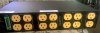
For those curious as to what's inside the surgex...

surgex.jpg
surgex back.jpg
surgex inside.jpg
 
Last edited:
So, tried to disconnect the preamp feeds to the amp boards from the preamp on the R-115 and this causes the speaker relays not to activate, so apparently it's looking for something at the outputs as a pre-condition to turn on. Wondering if I could put in a resistor or something to fool it.

Looking at the schematic, the pre-out is wired directly to the amp, so tried feeding the pre-outs and have effectively bypassed the tone controls and volume knob (that the cd direct feature did not) and I've put the signal processor on to disable all the inputs. I am still getting hiss, and this is apparently inherent to the amp (confirmed by muting the outputs on the pa2 and also disconnecting the inputs on the amp). It's very low but can be heard when I put my ear in front of the horn at idle and very faintly about 2' away. No one would ever notice, but it bothers me, that it's there. Funny that it was volume knob dependent prior, so perhaps I need to look at this more closely.

Should be done with the home's circuit wiring upgrade this evening, and will see if the power conditioner helps to silence things. Been reading up on driver time alignment so will give that a try but any advice appreciated.

Shouldn't need to check polarity, but going to double check with the shure v15v record for each set of drivers. (polarity along with the output gain can be controlled in the crossover section of the pa2 - so no having to swap cable ends or use attenuators!)
 
The power conditioner killed the bit of hum the RtR was causing in the sub, and I've programmed the sequence to have the amps come on last and turn off first. Nice to have everything at the touch of one button.

Quite a bit of voltage fluctuation, between 125-129V in the 1st 5 minutes..
voltage.jpg
Lovely blue display for the programming interface and shows the banks being powered up or down during startup/shutdown.
Here's the A (pre and pa2) & B (sources) banks, with the C (amps) caught blinking with a 7 sec delay to start the amps last.
sequence.jpg
Feel safer knowing my gear is protected as we've had 7-8 t-storms in the past 2 weeks.

Going to switch the r-115 back to the cd-direct inputs until I can figure out this hiss thing out, learn to live with it, continue the CD direct route, or sell it and buy a small balanced crown unit with the proceeds. Tried the 117 on highs duty... dead quiet, so know where the bar is.

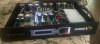
Anyone know if bundling these wires to neaten things up was a bad idea? Not sure if bundling the power cables with interconnects might cause EMI/RFI? Maybe run all interconnects out of one side and all power cables on the other?

rats.jpg

Will give the 115 a once over with a scope maybe but trying not to spend too much time going down the rabbit hole. Only other thing I noticed is that the places where this unit has been recapped there's corroded solder. This one I bought recapped and it looks like where the new caps were installed the solder is oxidized, covered with a white powdery substance. Not sure what might cause this? Cheap solder?

I
 
I’d cut all those ties loose and separate signal and power ... if they cross, should be at a 90.

If all signal lines were balanced, you’d have a much better chance at being noise free with that kind of proximity.
 
Gave that a go, all the power on the right and all the interconnects on the left, following the 90 degree rule for the couple of places they have to cross. Hiss still there, but I can sleep better knowing it's done right. One observation, the new rack mount/pro gear had the power cables on the right side and all the consumer gear and technics preamp on the left. Wonder if that's a new standard convention, or just happenstance.

Will check the 115 out this weekend or evenings this week as time permits.

Damacman, I think you're right, I'm headed to balanced separates as time/money/purging old equipment permits, but am certainly enjoying this along the way. Tilted the speakers up about 5 degrees and re leveled/eq'd. This made the hiss a bit more audible at perhaps 3', but the sweet spot is much taller now and was plenty wide before. Can hear the hiss just a tiny bit when sitting in the center of the sweet spot, but I'm learning to live with it for now and have 2 options for immediate gratification, either swap the mid/high duty or run via the cd inputs with tone controls disabled. Will have to see if I'm losing anything.

Listened to a 15ips 2-track studio master of an unknown 'honky tonk' singer (Clint Rimes) and some of the more complex passages that used to get a bit muddy are now nice and crisp.
 
Is it possible that you simply have too much gain at the high frequency amp? I’m not familiar with the processor you’re using but if it has adjustable input and output gains you’ll definitely want to set that up with the correct gear. Once that’s done, gain overlap can be added at the amps themselves. Finally, one can gain match to the amp with the lowest level in an effort to balance the system.

Gain structure can greatly affect the S/N of an active system.
 
After re-reading the thread, I’m willing to bet you have a gain structure issue. You’ve come this far - grab a CD with test tone tracks recorded at 0dB, -5dB, and -10dB (or I can email them to you - PM me) and a distortion detector. If you have an o-scope, that can get you really close.
 
Didn't get to get into the highs amp yet, but did play with the delays.

Using a tape measure, measured the distances (in order from closest to farthest) from the mids (at the cone), highs (at the throat of horn) and sub (at the cone) to the center listening position.

Set the delays to the mids @ 4', highs at 3.2' and lows at zero. Thinking that mids are closest, so need the most delay. (the screen reads out feet, milliseconds and meters simultaneously, so can be set by time or distance as turning the dial knob increments all three). Situation is that subs are 4' further than the mids from listening position, and compression drives for the horns are ~ 10" further back from the cone of the mids.

Not sure if that's the correct way to set, but a bit tighter sound and bass seems punchier. Not sure if that's in my head or supposed to happen, but neat feature to play with.

Is that an acceptable way to set the delays? Does anyone know if there is an automated way using the RTA microphone or a better way to set these?
 
So, I've certainly veered from the bi-amping topic with this hiss, but have isolated it to the amp itself. I did 3 things and his has come down a fair bit. Cleaned up the oxidized material on the solder. For the right side amp board, removed, removed old solder, new heat sink compound for the transistors/mica, etc. This is before I discovered, I could remove the oxidation by brushing with a toothbrush dipped in 91% iso, lol, so a bit of wasted effort, but did the left amp board and power supply boards the easy way. Next, some of the replaced power supply caps were larger than stock and almost touching the transformer, so used 2 layers of aluminum sandwiched between card stock as a shield. Finally, was able to simply disconnect the pre-section from the unit's parallel control board, so no more extraneous signal to the amp. Disconnecting the pre had the most impact. Also adjusted idle current closer to spec. (spec is 6mV +/- 2mv, set both to 5.88mV, where they were previously 7.9 and 6.7mV, so not a big change)

Side effect is the amp sounds sharper and the his is a lower/quieter pitch. The hiss is isolated to the amp and gain cannot be increased/decreased to my limited knowledge, so at a dead end there for now. Will call it a day on the hiss until I learn more about using a scope to trace out the noise sometime in the future.

Reading up on all the theories of time alignment as a final step.... At least for now! I am coming to understand the way the delays work in the PA2, I may need to recheck polarity due to shifting phase.

There's certainly learning curve to getting the bi-amping dialed in, but with each step, I am experiencing better and better sound. Tweakers dream (for those like me who are not all that educated on electronic theory, etc)
 
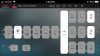
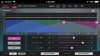
Finally got the powerline adapters and the ipad/iphone interface is pretty nice. The front dial works pretty well too, but it's much nicer to be able to make adjustments from the listening position, rather than standing in front of the rack and having to walk back and forth. Would definitely recommend an ipad vs phone as the controls are pretty small, even on the old iphone 7 plus. RTA feature is really cool too and it has a pink/white noise generator to go with that. Shots below are from the iphone, since I had that at hand in from of the computer. Only minor annoyance is you have to use the sliders and can't just enter values for the various settings.

home.jpg
cross.jpg

delay.jpg

autoeq.jpg

In other news, the remainder of the hiss turned out to be in the PA2 unit itself and the Lux 115 is now completely silent in 'amp only mode' . (easily accomplished from disconnecting the connection coming from the tone control to parallel control board and using pre-out as amp in) . Only noticed because the pa2 hung when connecting to wifi, and i unplugged it to reset (w/o shutting down amps) and I got silence from the horns, until the unit rebooted. It's entirely livable and I'm happy it's not the "amps" Will give it a hard reset to see if that helps and if not will exchange the unit.
 
Just picked up Bob Marley Legend (tuff gong 84) / G&R Appetite for Destruction (08 reissue) and holy cow, never sounded so crisp, melodic and just alive. Usually have to have a few drinks or other to really appreciate/enjoy music this much. So many sounds, tones and instruments I never heard before (or perhaps remembered/had the gear for)

Thought the bi-amping difference would be more subtle, but wow, so a bit surprised and pleased at the degree of difference in tightness, high end "sizzle" and tone. I just had to reconnect the old crossovers and try it, just to see if it was the effect of a remastered recording or in my head.

Was a pain in the neck to re-wire everything but only took about 20 minutes to undo, since it was just pulling woofers/crossovers (since the altecs don't have removable panels), replacing the tabs the tabs from the speaker taps/inputs for reconnecting the old crossovers and then disconnecting the pa2, rehooking the speaker wires/inputs. Listened to 3 albums, then re-connected in biamp config. Never going back to stock again!
 
Back
Top Bottom