• The move to the new server is done. There are some software and database maintenance updates in process. This has us passing the hat around to help out. We appreciate any donations. Seriously, even a dollar helps. The payment page may be found here - https://www.audiokarma.org/support.html

Biamping ADS L1230s?

This is correct.

The chief advantage of using the C2000 is it has crossover points and contouring picked specifically by ADS' design team for the L1230 and L1530 models. It can be modified to use with the L1290/L1590 as well but you lose some of the specificity in the process. Same for use with other speakers; it can be programmed for that but you aren't getting the custom-tailored application as you do with the L1230/L1530.

John

I'm pretty sure you need an active crossover to bi-amp these speakers as well. The switch on the back removes the woofers from the internal xover network, while the 4000Hz crossover point between the mids and highs remains internal to the speakers.
 
I'm quite certain that my bi-amplifiable L1290 and L1530s are bi-amplifiable without the use of an active crossover, in fact it would be redundant to introduce an active x/over.
 
Not only isn't it redundant, it's preferable. Read the manuals... flipping the switch to biamp mode removes the series LP inductor on the woofers, directly coupling the woofer to the LP amp. That's a key point in the biamping strategy as read directly from the L1230 manual. They aren't that specific in the L1290 manual but the diagram for biamping clearly shows an external active crossover.

If you just hook two amps to one of these systems, flip the biamp switch and go, you aren't lowpassing the woofers any more. It would produce sound, but not the kind I'm looking for.

John
 
There are two pair of speaker terminals on the L1290/1530.
The "bi-amp" switch cuts the low frequencies at 500 Hz and directs those frequencies to the left pair of speaker terminals(when switched to biamp).
In the "b-iamp" switch position, the right pair of speaker terminals cut frequencies below 500hz and emit frequencies at 500Hz and above.
I don't seem to have the need for an external amplifier and don't seem to have to look for "the kind of sound" someone else seems to be looking for with an external crossover.
Seems pretty basic?:)
 
There are two pair of speaker terminals on the L1290/1530.
The "bi-amp" switch cuts the low frequencies at 500 Hz and directs those frequencies to the left pair of speaker terminals(when switched to biamp).
In the "b-iamp" switch position, the right pair of speaker terminals cut frequencies below 500hz and emit frequencies at 500Hz and above.
I don't seem to have the need for an external amplifier and don't seem to have to look for "the kind of sound" someone else seems to be looking for with an external crossover.
Seems pretty basic?:)

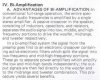
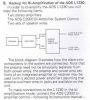
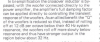
I don't want to start an argument, but I suggest you read the manuals, including the sections in the screen shots below that say: "In a bi-amplified system, the signal from the pre-amplifier first goes to an electronic crossover containing active filters which split the signal into low frequency and high frequency portions...", "In order to bi-amplify the ADS L1230 you need the following items: Two stereo amplifiers; The ADS C2000 Bi-Amplifier System Control; Two sets of speaker wires...." and "In bi-amplification the crossover inductor is by-passed; with the woofer connected directly to the amplifier..."

If the woofer is "connected directly to the amplifier" without an active crossover to split the low frequency then you would feeding the entire frequency spectrum to the woofer.
 

Attachments

  • Screen Shot 2013-09-05 at 1.51.37 PM.jpg
    Screen Shot 2013-09-05 at 1.51.37 PM.jpg
    26.7 KB · Views: 7
  • Screen Shot 2013-09-05 at 1.58.30 PM.jpg
    Screen Shot 2013-09-05 at 1.58.30 PM.jpg
    28 KB · Views: 8
  • Screen Shot 2013-09-05 at 2.08.20 PM.png
    Screen Shot 2013-09-05 at 2.08.20 PM.png
    97.1 KB · Views: 5
This is the first time I've had a chance to read the manual.
I can't imagine why ADS designed the bi amp switch in that manner other than to sell C2000 modules.
I hadn't noticed full frequency bass output because at the time I had low/high pass PLLXOs between the amp and preamp:)
I actually prefer the single amp approach with these ADS speakers, perhaps the passive line level crossover is the alternative to the rare and costly C2000 or any active unit?
 
I'm sure there are others that can explain why but I've always read that an active crossover (pre amped signal) is almost always superior to a passive crossover (post amp).
 
The way these biamp is actually very conventional. Eliminating the series resistance of the large LP inductor is a big part of the improvement in sound possible from biamping. Frankly, eliminating the series cap for the mid/hi section HP would also be desirable but those drivers are more vulnerable to damage from DC offset and that cap serves as partial protection for that condition.

I biamp (triamp actually, with sub/woofer/tweeter crossover points) the speakers in my 12V systems with no passive components whatsoever, and it can be stunningly effective when done well.

Having said all that, for sure these speakers do very well driven by a single amp. And, not using an active crossover for biamping them probably doesn't hurt anything, I just don't think you'd get the full benefit possible from that configuration.

John
 
The way these biamp is actually very conventional. Eliminating the series resistance of the large LP inductor is a big part of the improvement in sound possible from biamping. Frankly, eliminating the series cap for the mid/hi section HP would also be desirable but those drivers are more vulnerable to damage from DC offset and that cap serves as partial protection for that condition.

I biamp (triamp actually, with sub/woofer/tweeter crossover points) the speakers in my 12V systems with no passive components whatsoever, and it can be stunningly effective when done well.

Having said all that, for sure these speakers do very well driven by a single amp. And, not using an active crossover for biamping them probably doesn't hurt anything, I just don't think you'd get the full benefit possible from that configuration.

John

Hi John.
I understand the conventionality of removing passive crossover components to facilitate true active crossovers.
I don't think what ADS did was exactly conventional as most vintage speakers with "bi or tri-amp" capability did not completely remove inductor/crossover components by way of a switch or removing a "jumper".
But it is good to know, for those that have these speakers, that in "bi-amp mode", the woofers are running naked:)
 
The low frequency crossover point on the L1230 internal xover is 12dB/octave at 550Hz. I've seen some active crossovers that might work as an alternative to the C2000, but the closest selectable crossover point is 500Hz.

Should I use the exact same crossover frequency as the internal xover? Would 50Hz make a difference?

Thanks.
 
Probably not, but overall I think you need to be sensitive to what that crossover point does to the dome mids both from a power handling standpoint, but also because you don't want to end up driving them low enough to run into their resonant frequency.

John
 
Thanks John. That's what I was thinking, but I wasn't sure if 50Hz was enough to worry about.

So far the Marchand xover looks like the best alternative to the ADS C-2000, but it would be nice to find something cheaper to experiment with before making a big investment. Unfortunately, most of the lower priced crossovers I've found online use a 24dB slope instead of 12dB.

Cheers,

Andrew
 
Thanks John. That's what I was thinking, but I wasn't sure if 50Hz was enough to worry about.

So far the Marchand xover looks like the best alternative to the ADS C-2000, but it would be nice to find something cheaper to experiment with before making a big investment. Unfortunately, most of the lower priced crossovers I've found online use a 24dB slope instead of 12dB.

Cheers,

Andrew

Before paying the big bucks for the Marchand you might try the Ashly XR-1001 which is said to share many of the same components.

If for some reason it doesn't work for you, Parts Express has a no questions asked return policy.

The experts say my OB system should use a 12dB slope yet I can't imagine any improvement over what I'm getting with the steeper 24dB slope. Maybe it's because of the Ashly's response control that similates a gentle Butterworth slope.
 
Before paying the big bucks for the Marchand you might try the Ashly XR-1001 which is said to share many of the same components.

If for some reason it doesn't work for you, Parts Express has a no questions asked return policy.
Thanks for the tip. The XR-1001 is actually available locally here in Toronto for the same price as Parts Express. Prices are usually higher up here in Canada, so this a rare occasion. :thmbsp:

I was just checking the specs and it says the crossover frequency is "infinitely variable" between 400Hz-8kHz, (40Hz-800Hz using divide by 10 range switch), but the markings on the dial don't look very precise. Is it possible to dial in 550Hz exactly?

By the way, I just picked up two used Bryston 2B-LP amps. So now all I need is a preamp and a xover. ;)

Cheers.
 
I'm getting in here a bit late, but here is my experience.

I ran a set of 1530's in Bi-amp mode for years, using a JBL crossover in lieu of the ADS (I was a JBL rep at the time). I started with a standard JBL card 500hz xover point with a 16db slope and after about 3 months made my own custom card, still at 500hz crossover but lowered the slope to 12db. Just sounded better to me that way. Heathkit AA-1500 (heavily modified) on the low end and a Yamaha running the highs.


Kevin

The low frequency crossover point on the L1230 internal xover is 12dB/octave at 550Hz. I've seen some active crossovers that might work as an alternative to the C2000, but the closest selectable crossover point is 500Hz.

Should I use the exact same crossover frequency as the internal xover? Would 50Hz make a difference?

Thanks.
 
Before paying the big bucks for the Marchand you might try the Ashly XR-1001 which is said to share many of the same components.

I'm still considering the Ashly, but I'm not sure how to connect it to my other components since they have RCA terminals and the 1001 has XLR and 1/4" TRS inputs and outputs. I was looking online for cables and adapters, but got confused very quickly.

Any suggestions?

Thanks.
 
I'm still considering the Ashly, but I'm not sure how to connect it to my other components since they have RCA terminals and the 1001 has XLR and 1/4" TRS inputs and outputs. I was looking online for cables and adapters, but got confused very quickly.

Any suggestions?

Thanks.

Here's some for the outputs but they're cheaper on the bay ( 10 for $5 ).

http://www.amazon.com/Hosa-Cable-GP...=UTF8&qid=1379574580&sr=8-10&keywords=trs+1/4

For the inputs I use two XLR to RCA adaptors ( male XLR end ). I believe they're around $5 each.
 
Here's some for the outputs but they're cheaper on the bay ( 10 for $5 ).

http://www.amazon.com/Hosa-Cable-GP...=UTF8&qid=1379574580&sr=8-10&keywords=trs+1/4

For the inputs I use two XLR to RCA adaptors ( male XLR end ). I believe they're around $5 each.

I was looking at connectors like those, but wasn't sure if they would work. Here's a section from the manual that had me confused about what kind of connectors to use.

If you must use unbalanced connectors, the negative lead of the connector should be tied to the ground lead.
Using unbalanced connections could result in chassis ground-loop noise. Altering the signal/chassis ground relationship in equipment connected to your MQX unit may eliminate the noise.

I also found this page that shows several different variations of cables, but it just added to my confusion: http://www.rane.com/note110.html

If those connectors are working for you, maybe it's not as complicated as I think.
 
I believe that information is for those who make their own cables. Once you go from XLR adaptor to rca it's not balanced which is not a problem. I've used RCA adaptors with the Ashly and with a Behringer and never had any ground loop issues.

With the Behringer, which only accepts XLR's I bought XLR cables with RCA ends from monoprice and they are excellent. Very thick, flexible, high end looking for around $5 and up depending on length.
 
Back
Top Bottom