Way back
I doubt it. I've seen sales flyers or owner manuals that showed a cut away view. (I own many pairs). Basically, there is a long opening in the bottom all the way across, there is a baffle that runs from the front to almost to the back. The bigger ones may have some "forming" that smooths the actual turn in the back. It's just a giant square port, more or less. I have a set of 1958 Knight speakers with Jensen drivers that are built the same way. The cloth accordian surround on the woofers made them bass "capable" (so to speak, IMHO, whatever). Given the time period they are from (late 70s), they were some serious rock speakers. They can slam.
I have 2s, 4s, 5s, and an odd set of 6s that is different than the two typical styles I see online (!?!?!?!). I have seen them called "sonic garbage" but they are fun.
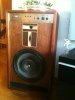
I'm highly impressed with the beautiful craftsmanship! and Thank you for sharing the pictures.
Does any one know of a web (site) that explains the inner working of the "BIC" venturi? Just curious.
Thanks in advance....
I doubt it. I've seen sales flyers or owner manuals that showed a cut away view. (I own many pairs). Basically, there is a long opening in the bottom all the way across, there is a baffle that runs from the front to almost to the back. The bigger ones may have some "forming" that smooths the actual turn in the back. It's just a giant square port, more or less. I have a set of 1958 Knight speakers with Jensen drivers that are built the same way. The cloth accordian surround on the woofers made them bass "capable" (so to speak, IMHO, whatever). Given the time period they are from (late 70s), they were some serious rock speakers. They can slam.
I have 2s, 4s, 5s, and an odd set of 6s that is different than the two typical styles I see online (!?!?!?!). I have seen them called "sonic garbage" but they are fun.