• The move to the new server is done. There are some software and database maintenance updates in process. This has us passing the hat around to help out. We appreciate any donations. Seriously, even a dollar helps. The payment page may be found here - https://www.audiokarma.org/support.html

Bozak 919 Pre/929 Amp

Well, putting the issue of what kind of amp it is aside has its design become outdated? I remember looking at a Chiro amplifier that was very cheap and offered great specs on paper, but had some negative opinions of its internal design:

potencia-chiro-c-200-9840-MLA20022047595_122013-F.jpg


I could have bought that Chiro for $160 but passed on it based on mixed opinions of Chiro and the company that made the amps for them - Kinergetic Research. The only amps I'm comfortable buying without knowing a lot about them would be Threshold, Krell, and Accuphase amplifiers. But all of these are so costly that they're out of reach for me for a good time, I was just hoping to find something a little better than my Denon AVR's internal amplification until such a time as I could buy one of those. Part of it is aesthetic appeal, especially with Accuphase and Threshold. I'll likely look into the McIntosh MA 6200 I mentioned earlier or the Accuphase E-202, both of which I'm far more comfortable considering than the Bozak stuff (It doesn't help that Bozak mostly made speakers - and normally when companies who make speakers make an amp it's nothing to write home about).
 
Something tells me the cache of owning an interesting piece of "vintage" gear
may not be your cup O tea.
 
Something tells me the cache of owning an interesting piece of "vintage" gear
may not be your cup O tea.

Yes :thmbsp:

This is exactly what I'm starting to get from this conversation too. There are always risks with any older gear, and the less common it is, the greater the chance of finding some proprietary components that just can't be replaced going bad. The only "sure thing", or at least the closest approximation of it, is to buy new, and take comfort in the warranty initially, and the expectation the company will be around for a while even after that.

There's NOTHING wrong with that!
 
That's a fair point. I'm not opposed to vintage (heck, the other amps I'm looking at are) but I just have hangups about the low production stuff. I guess I'd always second guess if there were so few because they were so good or because they found out they were awful and cut production quickly. New isn't a reasonable option for me given what I want at the price range I'm at, but I think a newer used piece might be the ticket. A nice amplifier from the '90s most likely.

I don't mind taking a risk on lesser known stuff at low prices, but that's where I hesitate when I'm spending a decent chunk of change. That Sansui B-2101 is a lesser known piece (not the brand of course) and I'm having issues with it right now. But for the price I paid for it and other components included I cannot complain. This reminds me of a time a year or two ago where someone offered me some of those low production Harman Kardon speakers that were supposed to be great. The price wasn't bargain price and I was too iffy about a low production speaker like that, so I ended up passing on them.

So the search goes on I suppose. Thanks for helping me figure this out everybody!
 
I don't know your amp requirements, but have you thought about a B&K, or Hafler? When I think about sweet sounding amps that deliver a lot of bang for the buck, those are two brands that pop up first in my mind.

If you're looking for something a little more esoteric, maybe a AVA (Audio by VanAlstine).
 
Haven't thought of B&K (Don't really see their gear too often used, so they manage to slip my mind). Hafler I've heard a lot of reliability issues, but opinions have been quite positive of their sound when they work. I personally have had issues with Adcom gear and as such don't really trust their gear, not to knock Hafler but they do seem to have too many issues for me to be willing to consider paying much for them. The AVA stuff looks cool, but quite expensive. I'd probably look at the used offerings from Threshold, etc. if I were getting the close in cost - even though they're used, there's just something special about them to me. The B&K stuff from what I see sure looks to go for low prices - nothing over $500 in the 2 channel category on that auction site. Quite interesting. I wonder how they stack up to something like the McIntosh MA-6100? Which I must admit is seducing me with its looks...

Of the integrated amps I was considering, funny that the McIntosh has the most inputs (Excluding the phonos): 6. The Accuphase has 5, and my Pioneer A-27 is the most disappointing at just 4. Considering the number of sources, I could make do with 5 and probably use all with 6 but 4 is just not enough. Is there a high quality option to allow you to use more sources on the same amp? Not sure if an audio switcher would be considered something that would just degrade the signal quality (Maybe I could use my lowest quality sources on it).

EDIT: And I've just scared myself off of B&K. A guy had a pair of the B&K Sonata M200 monoblock amps on that auction site for $450 - a great price from what I understand, but I saw some people who took them apart for servicing said they were very homemade looking on the inside and did some poor practices. I've also seen a good number of reports of these things breaking and schematics being basically impossible to find. There was another amp that I looked at the innards of and saw that compared to it's larger sibling it was the exact same chassis with literally one side of the output section gone, only 2 instead of 4 capacitors and a much smaller toroidal power supply. I don't like the idea of someone making an amplifier by just "halving" everything to make it cheaper/lower powered as that seems like a very poor approach to making an amp, as the original might have been designed well but just using half of the stuff to give half the power does not seem like it would necessarily translate as well as an amp engineered to be the specific power it was rated to be. So I take that as "Nice sounding when they work, but not built the best and not serviceable". No thanks. Guess I should just go with something like the McIntosh if not for the looks and sound quality, but for the good documentation still readily available for it in case servicing ever needs to be performed. This is a big reason why I don't like small brands, when they belly up you're SOL about servicing if they aren't nice and provide schematics when you buy it new.
 
Last edited:
You seem to obsess a LOT about things that matter not one iota. At the (relative) top end of commercial gear readily available for consumer sale, the two main criteria for pro gear were

1) it had to fit in a 19" rack mount
2) it had to be ruggedized enough to last its expected life on the road

Neither of these criteria have any impact WHATSOEVER on the sound quality. NONE.

The same limitations of the parts and components that went into commercial amps were also hindrances that effected home amps, and vice versa, except the commercial pro amps often were outfitted with larger heat sinks, better shock isolation, oversized transformers, and bolted together with more care.
 
You must not have many good techs in your neck of the woods. I've been in and around this hobby for a good many years now, and few companies have enjoyed better reputations for solid, reliable gear than Hafler, or B&K. I can't speak to any issues there may have been with late model B&K HT preamps & amps, but as far as build quality & serviceability of their older 2ch stuff, there don't seem to be any issues with parts or schematics.

I'd be much less worried about potential repair issues on a Hafler or B&K than I would a Threshold, Pass, Krell, or ML etc. For one thing, B&K will supply replacement parts to anyone who wishes to purchase them, many high end brands are NOT so willing to sell just parts... I've payed more than I should have to Krell & Spectral only because the wouldn't supply parts or schematics to "non-authorized repair personnel".

If you're looking for bang for the buck, and you're in the sub $500 range, I really think Hafler & B&K are two of the most likely candidates. Particularly if you tend to be nervous about reliability & service. I could suggest a number of great "under the radar" amps, like Audire, Amber, or Forte, but the more obscure you get, the harder service "might" become... the Bozak 929 does fall into that category IMO.

I mentioned AVA only because their bread & butter is in rebuilding & modding Dynaco & Hafler amps, so if I suggest Hafler, I tend to mention them as well. Also, if you ever needed service on a stock Hafler, they are fully capable of performing ANY repairs (up to & including building an all new amp) that you might need... so Hafler's are in affect still fully supported.


You might want to check out this source for manuals & schematics... it's free, and they have quite a few.
http://www.hifi-manuals.com/
 
Last edited:
You seem to obsess a LOT about things that matter not one iota. At the (relative) top end of commercial gear readily available for consumer sale, the two main criteria for pro gear were

1) it had to fit in a 19" rack mount
2) it had to be ruggedized enough to last its expected life on the road

Neither of these criteria have any impact WHATSOEVER on the sound quality. NONE.

The same limitations of the parts and components that went into commercial amps were also hindrances that effected home amps, and vice versa, except the commercial pro amps often were outfitted with larger heat sinks, better shock isolation, oversized transformers, and bolted together with more care.
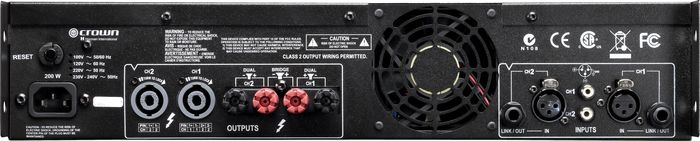
Well, from what I've seen pro audio gear very often has a lot more protection in place to keep as someone else put it "stupid humans" from destroying the amp. This includes multiple types of protection circuits (A purist would hate all these extra steps between the outputs and the speakers), large fans to keep them from overheating, and connections that are generally designed for pro audio use (Whatever those funny looking plugs are at the far left that I only see in pro audio gear)

DV016_Jpg_Large_485459_back.jpg


I don't believe for a second that pro audio gear is equal to home audio gear, look at any musician website that sells them. There are brand new pro audio amps rated at ridiculous power ratings that weigh nothing. This Crown XLS1000 for example says it's 210 watts at 8 ohms, yet weighs 9 lbs. The place I'm looking says this is a $499 new amplifier and they sell it for $299. There is no way I trust any part of this equation to get a 210 watt per channel power amp brand new for $300. And the 330 watt per channel version is only $350.

Pro audio amps seem made to play loud more than anything. I just have far too much cognitive dissonance to ever buy a pro audio amp. They might be fine, but I'm too suspicious of a lot of things about them. Too much protection circuitry, fans which make extra noise, visuals which look incredibly gaudy, and power ratings that seem ridiculous (If they weigh so little, how can they achieve quality power output? Power supply must be very small in them to only weigh a few pounds). Worth noting is that they use Class D amplification almost exclusively instead of class A/B or class A - which has its own set of issues and whatnot. Given the low cost of pro audio amps relative to home audio amps of the same caliber, I'm fairly certain if they were that good I'd hear of a ton more people using them - as people are quick to discover ways to get the same thing for less and will generally go to it if they can.
 
You are talking about modern amps that are four DECADES removed from the amp you are considering for purchase. Travel back in time to the land when Crown made exactly what you are looking for - the Straight Line I and Straight Line II. They might open your eyes to what Crown could do with a pro sound amp expressed as a home product.

Or look at the Bozak line, where everything they sank into the pro sound line also made it to the home version, with the only "real" difference being the cosmetics on the faceplate and rear, and your hated speakon/neutric connectors to keep putzes from shorting an amp and concert performance by dragging their feet at the wrong time.

I have plenty of pro sound gear at the house. Come on over and pick out any of the commercial gear a friend and I have assembled over the years from recording studios, radio stations, and sound engineers, and it might just remove the sneer from your throat, the green from your teeth, and the blinders from your eyes.

Besides playing loud, being cheap, and having too many protection circuits, pro gear also has been cutting edge and state of the art since the 1930s. Pick from our pile of JBL, Altec, Klipsch, Jensen, and EV speakers, our Lenco, Rek-o-kut, Fairchild, Garrard, EMT, and Thorens turntables, our Studer, Revox, Nakamichi, and Otari recorders, and Marantz, McIntosh, Fairchild, CM Labs, JBL, Hfler modded, and UREI amps/preamps, and you might change your tune.

You talk smack about a single amp that you have never used or heard, while some of us talk about gear we have used for decades, and found worthy to chase down, purchase, and use for decades in our homes.

It is hard to be a purist in the $300 range, and even harder to do it without having a willingness to source a tech to help through the years, so it will be interesting to see how you resolve your dilemna.:scratch2:
 
Actually my range is $800 or less, I was merely pointing out what I saw offered. Few stereo home audio amplifiers can be had for $300 (Pure power amps - also talking new). So then why is pro audio if it's better or as good, offered at such a discount compared to an equivalent home audio amp? There's far too much mixed opinion for me to honestly accept pro audio gear as equivalent to home audio without compromise (save for the fans on some units and the connectors being different requiring adapters). If you took a designer of a pro audio amplifier and a home audio amplifier and forced them to pick which was most important - reliability or sound quality - you know the pro audio would go for reliability. While this is a good thing, and very important as a musician shouldn't have to worry about their amp dying during a concert and disappointing fans - someone in home audio doesn't have as rigorous of requirement for reliability. That's not to say that the home audio gear is unreliable, but as you said the pro audio gear is more rugged, tough, and idiot proof.

Home audio amps are set up and installed generally once, and maybe sparsely moved afterwards. Pro audio amps are expected to be moved constantly - either from a rack to a table, or inside a rack into a truck and moved again. So they're subject to a lot of handling that normal amps aren't. I respect this, it's what they have to do for their use case. But if compromise has to be made, they're not going to make a pro audio amp that sounds wonderful but isn't as reliable because it makes no sense for them to do so. I know it's not true for all pro audio amps, many are great - but how in the world do I know that? Trial and error? There are few reviews with the home audio listener in mind for professional audio gear, again they focus on it being well made and long lasting because that's what matters most to them.

So going back to the Bozak - how do I know that it's a great sounding amp? I can find arguably no opinions on it, and the best praise for it I've seen is that Busch Gardens used a bunch of them back in the 80's (Sound reinforcement). Sound reinforcement use doesn't sound like a huge praise for something. The other problem I have is that in a typical pro audio setting they would actually use a lot of the power produced. In a home setting, I'm going to be <1 watt most of the time - something those amps weren't really engineered for. I've read more than a few people who have stated that they liked their pro audio amps, but these people like their music loud and drive inefficient speakers. I like my music moderate volume at most and I use relatively efficient (90dB on up) speakers in a small room. What on earth am I going to do with 150+ watts of power in a small room if it was made to play near its limit much of the time. This shows in their design since they even state the meters are within 15% accurate at 1 watt and under - so clearly their expectation was that you wouldn't mind this because you'll be bouncing the meters up pretty high playing it loud. I would never do this. I know this is most inconsequential as the meters are just for aesthetics but it reveals a bit more about their design philosophy.

I won't deny that some of the stuff you mentioned might be fine for my intended use, but without any other knowledge I have nothing to go on except musicians who say they used these amps and loved them. The same car that a mechanic might love because it's easy to work on and has a lot of easy mods to perform, might be awful for me since I have no desire to work on it or modify it and I just want something well made that will last and perform the way I want from the get go. A musician might praise an amp for saving the day in a rough spot and always trust the brand because of it, a home audio user will more likely remember how wonderful the sound of an amp was in a setup that was amazing. Different uses which warrant a different approach to evaluation.

On the price point, I have actually never paid more than $300 for any of the many many pieces of gear I own (Exception for a Definitive SuperCube which I bought brand new for around $400). I guess the problem I have is that I just like buying more audio gear even if I don't need it, as realistically some of the amps I own are probably quite nice and sufficient for what I'd like to do and I just am not giving them enough credit to do so for whatever reason.

A similar argument I could pose that I've experienced - why do people discredit surround AVRs as stuff that's only good for movies? My two most used systems right now both have high end AVRs that I have used to great effect. One serves in 4.1 duty and the other is strictly 2.1 duty - both perform well. I'm curious to upgrade the 2.1 system just to see if there really is a big difference, but it's rated at 125 watts a channel and has a large toroidal power supply - it weighs in at 45 lbs and is more hefty than most of the amps I own. Even on auction sites you can buy this AVR for low prices, but people poo poo the idea because surround AVRs are no good for music so it's said. The 4.1 AVR is an Integra and the 2.1 is a Denon FWIW.
 
Last edited:
I won't tell anyone they can't buy what they please, but pro audio isn't it for me and I'll happily pay more for consumer audio. Let's leave it at that and just wish everyone a good'un :).
 
I won't tell anyone they can't buy what they please, but pro audio isn't it for me and I'll happily pay more for consumer audio. Let's leave it at that and just wish everyone a good'un :).

I used to have the same school of thought until an FM Acoustics 600A opened up my mind. Absolutely blew my Threshold, McIntosh, and White Audio Labs apart in an A/B test!!! Could be synergy between components but nonetheless I sold my amps and have no desire for anything else.
 
Just think, if I hadn't mentioned Bozak made the 929 in a pro version (the CMA 1-50), you would have been blissfully ignorant, and might have bought & enjoyed it!

Well, for your piece of mind, don't bother considering the B&K stuff I'd mentioned earlier either... yep, they were also sold it in "pro" form, complete with balanced inputs & those "strange" circular speaker connectors, so they must not sound good after all. Bryston, Hafler, Perreaux, McIntosh, Perasound, SAE, and Accuphase can be crossed off the list as well, there are many more, but I suspect you're starting to get my drift. You're welcome to entertain any predigests you like, but this one's going to severely limit your options.

As I said before, there is no correlation between the sound quality of an amp sold for one market or the other, there are only varying degrease of quality amongst all audio amplifiers. The are some really great sounding amps that are marketed for both, I believe my Bryston is a good example, and there are mediocre sounding amps serving both as well.

I get the impression you hold the high end stereo magazine's opinions in high esteem... if so, you should be aware that both Absolute Sound, and Stereophile have given their highest recommendations to amps from several companies that make pro audio gear. Many of those amps being models that are sold for both applications with almost no alteration. Bryston, Perreaux, and Crown being three that come to mind.

BTW, you did get at least one positive review of the Bozak's performance from someone with first hand experience... ME. If you need a magazine review for reassurance on your next amp purchase, you have narrowed the field even farther.
Now, you're down to a pretty small pool of relatively common amps, something you didn't seem to interested in your OP, consisting mainly of Carvers, Adcoms, etc.
...Oh, wait, better cross Carver off the list too, they also sell pro audio!
 
Actually I had suspicions that the Bozak gear was pro gear before you said anything, based a lot on the preamplifier which straight up looks like a mixer. It totally doesn't help that the Yahoo Bozak group doesn't seem interested in adding any new members, so I can't ease my concerns of servicing on it at all since I'm positive it will need work before it can be safely used (I distrust this kind of big power amp that's sat unused for so many years - the high powered ones are the least reliable it seems).

I don't hold magazine reviewers in any regard, in fact they're not that helpful since they think everything sounds wonderful, sounds better than an amp costing x times as much, and so on. I base what I can on every bit of feedback I can from reviews on audiogon, audio review, blurbs from audio forums all over the place, I look at all sources carefully. The thing I just can't get myself to accept is this as a quality setup for home use. And I know there are people that are able to ignore what they look like and just listen. I can't.

c_Crown%20DSi-Series2.jpg


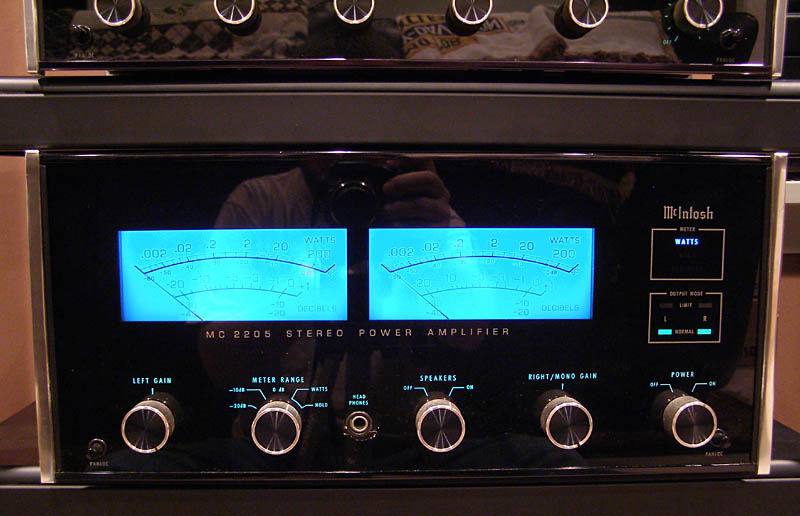
For me, quality audio has a look and a feel. Call it shallow or whatever else you want, but I like being able to enjoy looking at my stereo gear instead of stuffing it in a closet in the other room so I don't have to hear it while it plays. This is what I want amps to look like

mc2205_face.jpg


Not for anyone else but me. I like the way it looks. In the audiophile world people humor those who think expensive cables make a difference and those who don't, so I'd think the same is applicable to those who care about the looks and those who don't.

I have no objection to companies that have a pro line, I just don't want a company that makes almost nothing but pro audio - like Crown. I'm in full belief based on what I've read that Crown might be nice for home audio. But there's just no way. I can't do it, it's just ugly to me. I've been trained well enough that I like my amps to weigh something too, so the Crown XLS1500 which I heard praise for just isn't for me even at $400 new and 300 watts @ 8 ohms that weighs 10 lbs. I've seen some people who just love the looks of some of the old vintage Crown amps but I don't. Sorry, I just don't. If I want an amp to have no meters and just be a big slab of metal I'd prefer this kind of aesthetic:

Krell%20KSA-150%20Power%20Amplifier%20(800x437).preview.jpg


That FM Acoustics 600A that LPD mentioned doesn't look too bad, but so few pro amps look like that. They prefer the tacky handles, skinny profile, bright screens, and chinsey looking LEDs to show you when you've hit clipping. They don't inspire the slightest bit of build quality to me. The cognitive dissonance is so strong I just can't even think of doing it. It feels like saying the sun revolves around the earth to me, just can't picture myself doing it. There is no chance I will ever be using an amp that some rent a DJ would be using to play garbage music out of PA speakers in my home system on nice speakers. Based on a lot of what I've seen from those researching about "amplifiers all sounding the same" this has lead me to humor the idea that if they do, then looks are largely what vary along with power rating. In such a case, power rating is utterly unimportant to me - I've used a Marantz 2215b with 15 watts per channel to great effect so what good is 300 watts a channel going to do me? I'd rather a good quality 50-60 watts than some ridiculous 300 watt class D amplifier.

As far as the brands go, Carver was never on my list due to the weird quirky designs and their unreliability. I don't like Adcom or other amps that include no protection circuitry (Of note, I want a relay to protect the speakers - but I don't want the absurd level of protection pro audio amps introduce into the line). Bryston amps seem to be largely at the top end of my price range when available, and if I ever hear any amp that people say sounds bright and very "solid state" it's Bryston. Wouldn't have been opposed to them, but not a top choice for me. Don't much care for Sony (Even ES), Hafler (Too unreliable, all I ever hear is about them being broken everywhere), SAE (I like their industrial looks, but heard too much about them being a pain to fix and being unreliable), Yamaha (Unreliable and not the greatest sounding), Sansui (I think of all the brands I've bought, every Sansui has been broken or broken shortly after I bought it except for a 5050 receiver). Emotiva was a consideration at one point, but I'm soured off Chinese branded audio completely - I don't want to deal with the poor service provided when the amp finally has an issue. Before the inevitable "But those were all old unrestored amps!" - I've had many many other amps that were the same condition and worked fine. I have a Scott 480A that looks like hell that works wonderfully, no issues at all.

I guess this has lead me to know kind of what I want now, so it works out all the better for me at least. The negative to me again about pro audio is the looks. Ugly. And many of them are poor quality for home use. I don't want to have to gamble on which ones are good for it and which aren't. All home audio amps are at least held in the same usage so it's easier to compare them. I can actually find out what people think about an old Harman Kardon or McIntosh, but I'll be in the dark guessing if whatever random pro audio amp I'm looking at has been well reviewed for home use, and if the person who says it's great has tin ears or not. I won't mention the brands, but there are some cars that some people consider great quality that just cracks me up that they think they're even half as good as some other brands, based on actual experience and general observations. I take reviews lightly, only to help with my internal decision process since unfortunately (at least in the automotive world) some people either have no standards or convince themselves something is great after they've bought it so as not to get cognitive dissonance. I wouldn't doubt that this happens everywhere though.

 
Last edited:
Good god man, is there ANY amp you haven't heard horror stories about?!?

I have NO idea where you're getting your information from, but with the exception of Carver, I haven't heard anything even close to what you report, and I've owned a good number of the brands that have been brought up in this thread. That Brystons have some reputation for being bright is really news to me! Where the heck did you get THAT? I can tell you first hand that is complete bollix!

Haflers always breaking? that's another really left field suggestion. There are some who have claimed they were a bit "veiled", or even suffered from "mosfet mist" in the highs, but unreliable, never. Even their kits are generally a very safe second hand purchase because their designs are so straight forward & stable. Again, I have know idea where you're getting some of these ideas from, but obviously they aren't from first hand experience. It strikes me you have a significant number of very strong, and apparently unfounded, preconceived notions about many amplifiers. This must make your task quite a bit harder, as you only have a couple brands left to choose from, and they are all out of your budget.

I don't think there is anything left that I can add to this discussion, as you've obviously already made up your mind about the majority of the audio amplifier field without even having heard many (any?) of them yourself.

Good luck in your hunt!
 
This thread is most excellent! I just landed one of these 929 amps on BT- I'm going to repair it, listen to it then restore it if I have some spare cash. As soon as I saw the amp I jumped on it like a fat kid on a smarty. I have restored citation 16's and a bryston 4b- those old beat up "pro amps" sound fantastic.
 
Well good luck getting it fixed. That Yahoo Bozak group is useless and I didn't see a service manual anywhere on the web, not even one you could pay money for. Personally I'll stick to companies that actually make equipment, not speaker companies that randomly decide to make a few pieces of gear, regret doing it, and then make none ever again. Most of what I've seen seems to show that if a speaker or equipment company makes a crossover product they don't make it anyway, so you're never getting a top notch product when they didn't design it themselves.
 
Well good luck getting it fixed. That Yahoo Bozak group is useless and I didn't see a service manual anywhere on the web, not even one you could pay money for. Personally I'll stick to companies that actually make equipment, not speaker companies that randomly decide to make a few pieces of gear, regret doing it, and then make none ever again. Most of what I've seen seems to show that if a speaker or equipment company makes a crossover product they don't make it anyway, so you're never getting a top notch product when they didn't design it themselves.
:no:
 
Back
Top Bottom