

You are using an out of date browser. It may not display this or other websites correctly.
You should upgrade or use an alternative browser.
You should upgrade or use an alternative browser.
Bozak id by label?
- Thread starter Katalyst
- Start date

Register to hide this ad
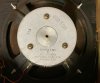
Can't tell from that pic. If you remove that center screw, the cap can be pulled off revealing a # stamped in ink on the magnet. That will tell you the age.New project in the works. Below is the label on the speaker. What year would this be?
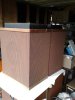

Thank you for input. I was hoping you would see this post. You are the Bozak guru.They’re 1950’s with the early B199 woofer, paper B200x tweeters. The woofer is a low excursion version for lower power tube amps. Be careful with solid state, easier to blow. My favorite cabinet design, mmmmm.

Thank you for input. I was hoping you would see this post. You are the Bozak guru.
Thank you. One of many here, thankfully.
I’ve not heard a properly updated pair from the 1950s, I’d like to. Of course, I’ve torn them to pieces and installed later drivers. But never the early ones. You could pretty much do anything with these, it’s up to you.
Biggles
These cabinets are the kit not the factory type. No midranges just the B-207A load. Looking in the Radio Shack archive to gain this information. The max wattage is 15 and 30 peak. I have other speakers to "Jam Out" with. I came across these and wanted to "taste" the Bozak sound. The person I received them from said they were paired with a Sansui tube amplifier. I have not had a chance to listen to them yet.
Kit, factory, DIY, Bozak doesn’t care. Just as long as the basic principles are properly applied. I think they’re gorgeous. You really need some mids and proper crossovers. If you replace the cap for the tweeters, you’ll get a taste. You should be able to find a pair of 1950s mids for dead cheap. The key is to unload the woofer from being used full range, the B199 sucks for that.
Biggles
Biggles
The paper ones correct? Not the spun aluminum mids. Found this document on the kit assembly. File too large to post. Link is to the web page. Page 22 1958 06 June issue. https://worldradiohistory.com/Archive-All-Audio/Audiocraft_Magazine.htmYou should be able to find a pair of 1950s mids for dead cheap.
Last edited:
The paper ones correct? Not the spun aluminum mids. Found this document on the kit assembly. File too large to post. Link is to the web page. Page 22 1958 06 June issue. https://worldradiohistory.com/Archive-All-Audio/Audiocraft_Magazine.htm
Yeah, paper ones. The later aluminum ones will cost you bank, I’d charge you $200 plus shipping. Paper ones should be almost free, or $50 a pair. They’ll do alright in a pinch. Besides, you’re so close to a proper Bozak 3 way. The Bozak N10102 crossovers will cost money too, but they’re worth it.
yes, the later mids and tweeters are superior. The tweeters are the lowest point in your chain of quality. They’re not much good over 8k. With music of the 50s and 60s, you’ll notice a lack of air, maybe cymbals won’t be as exciting. But you’ll have a nice setup to enjoy for a while, on a budget. As you find the later drivers, you can pop them into place. If you want to, of course. If you choose not to, your proper 1950s Bozak 3 way will sell.
Biggles
Second cabinet has the Kimsul insulation. The first had the cotton batting. Both have the curtain behind the woofer. This will be interesting when I get them playing. I will use REW and DATS to see the difference between the two.
Attachments
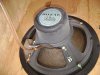
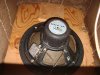

The one with the cotton should have a nice warm, tuneful bottom end. The Kimsul should have less of that. I cannot say for certain. My A/B testing was done with cotton, fiberglass, and that blue Jean cotton batting that simply ruins everything it touches. It’s an acoustic brake, even worse than fiberglass.
Biggles
Biggles

Retrovert
Addicted Member
If you decide to upgrade, I suggest being very, very careful about which B-209 variant you purchase.
Do not purchase a B-209A, as this requires a latex damping ring to eliminate ringing, and the ring has long since hardened or disintegrated, is not easily fabricated, is likely not included with the driver, and it would, in any event, be inferior to the later versions. The B, Bc, and C suffix drivers are the ONLY suitable versions to purchase. B is alnico (rear mount), Bc (front mount) and C (front or rear mount) are ferrite. Make sure you purchase 8 Ω. The 16 Ω driver is useless in an 8 Ω system. Unscrupulous dealers will conceal the impedance in listings.
My B-305 came with the Kimsul. Still has it because I lack the time to make it a five-way. Kimsul is horrible stuff. Must be replaced with cotton batting.
My statement that "The E-300 was discontinued by 1959." is incorrect, see my correction below set forth. It merely vanished from the catalogs at that point.
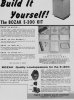
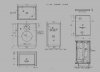
I have attached the only E-300 documentation I have, which are not my scans. I also have a brief entry in the 1958 catalog, but the scan is largely unreadable and the details scanty.
Edit: corrected year of discontinuance.
Do not purchase a B-209A, as this requires a latex damping ring to eliminate ringing, and the ring has long since hardened or disintegrated, is not easily fabricated, is likely not included with the driver, and it would, in any event, be inferior to the later versions. The B, Bc, and C suffix drivers are the ONLY suitable versions to purchase. B is alnico (rear mount), Bc (front mount) and C (front or rear mount) are ferrite. Make sure you purchase 8 Ω. The 16 Ω driver is useless in an 8 Ω system. Unscrupulous dealers will conceal the impedance in listings.
My B-305 came with the Kimsul. Still has it because I lack the time to make it a five-way. Kimsul is horrible stuff. Must be replaced with cotton batting.
My statement that "The E-300 was discontinued by 1959." is incorrect, see my correction below set forth. It merely vanished from the catalogs at that point.
I have attached the only E-300 documentation I have, which are not my scans. I also have a brief entry in the 1958 catalog, but the scan is largely unreadable and the details scanty.
Edit: corrected year of discontinuance.
Attachments

Last edited:
That will likely be the course of action.My B-305 came with the Kimsul. Still has it because I lack the time to make it a five-way. Kimsul is horrible stuff. Must be replaced with cotton batting.
That is an interesting piece of data. Thank you for the scans.The E-300 was discontinued by 1959.

Retrovert
Addicted Member
You're welcome.
I went digging through my literature to see if I had any E-300 documentation because I dimly remembered having paper regarding kits. Can't find that one.
What I did discover is that while the E-300 vanished from the Bozak catalogs as if it had never been made, it was, nonetheless, listed in a printed price list from 1968!
So it appears the E-300 was not discontinued, but, instead, merely dropped from the catalogs and available only by special factory order. How anyone would even know to place such an order is unclear. But, this is Bozak, you are not expected to understand.
I, therefore, cite Bozak Cult Rule 19.
Rule 19 of Bozak Cult: The glaring inconsistencies, continual revisions, and seemingly randomized assemblages present in Bozak's nomenclature, driver and crossover numbering, years of use, crossover points, cabinet designs, quality, and manufacturing techniques, and units found, all combine to make it perfectly natural to be routinely confused, if not outright baffled, and have evolving understanding, so do not sweat it if once in a while your assumptions prove incorrect or if it takes multiple attempts to understand any particular configuration.
I went digging through my literature to see if I had any E-300 documentation because I dimly remembered having paper regarding kits. Can't find that one.
What I did discover is that while the E-300 vanished from the Bozak catalogs as if it had never been made, it was, nonetheless, listed in a printed price list from 1968!
So it appears the E-300 was not discontinued, but, instead, merely dropped from the catalogs and available only by special factory order. How anyone would even know to place such an order is unclear. But, this is Bozak, you are not expected to understand.
I, therefore, cite Bozak Cult Rule 19.
Rule 19 of Bozak Cult: The glaring inconsistencies, continual revisions, and seemingly randomized assemblages present in Bozak's nomenclature, driver and crossover numbering, years of use, crossover points, cabinet designs, quality, and manufacturing techniques, and units found, all combine to make it perfectly natural to be routinely confused, if not outright baffled, and have evolving understanding, so do not sweat it if once in a while your assumptions prove incorrect or if it takes multiple attempts to understand any particular configuration.
Rule 19 of Bozak Cult: The glaring inconsistencies, continual revisions, and seemingly randomized assemblages present in Bozak's nomenclature, driver and crossover numbering, years of use, crossover points, cabinet designs, quality, and manufacturing techniques, and units found, all combine to make it perfectly natural to be routinely confused, if not outright baffled, and have evolving understanding, so do not sweat it if once in a while your assumptions prove incorrect or if it takes multiple attempts to understand any particular configuration.
Nailed it.
Biggles


