mr_petit, you got me wrong - which usually means I didn't explain well enough, sorry about that - and it's not a matter of semantics. I answered to you regarding the difference between a transcription turntable and a broadcast turntable. If you read Taketheflame's question, it was not at all about what turntables can be or have been used in a radio station (I've seen
any kind of turntables used in radio stations, although not all with the same success). It was about "broadcast turntables", ie. turntables
designed for use in radio stations. My answer is that those turntables have specific characteristics that don't bring anything useful for home listening, only more complexity and possible problems. Discussing offshore radios is interesting, but I don't think it adds anything useful to the current thread so I'll leave it at that. Thank you for pointing me to a photo of how the BBC used TD124's in their local stations.
So is buying a typical non-rebuilt example of a broadcast deck (over a gently used TOTL or close consumer deck) akin to buying a decommissioned cop car instead of a gently used garage queen?
That is a nice way of putting it, and unfortunately it is exactly true. You cannot even tell from the external appearance, as many pieces of equipment were used 24/7 for many years and hardly touched at all, so their internals are shot but they look mint.
What is there to look for besides the obvious like unusual noises or bearing play?
Several things cross my mind:
- Wow and flutter, speed accuracy if not adjustable. If you cannot measure, bring a record of piano: this is by far the best instrument to reveal speed fluctations - including cogging.
- Condition of the rubber and plastic parts, and of the springs - for instance the hinged lid, and the anti-skating if it is of the spring type. Belts can be changed, idlers can be rebuilt (usually), but at a cost. For some important plastic parts like cogwheels, any crack is a showstopper as you will probably not be able to fix it and spare parts are usually unavailable.
- Condition of the stylus (often more difficult to assess). Always take in consideration the cost of replacing it. This is even more important for many "true broadcast" cartridges (EMT, Clément, etc.) which are hard to find, and prohibitively expensive.
- Does the tonearm have a standard cartridge mount? If not, can you find an adaptor? This is particularly important if the stylus is shot. Again, assuming you are buying a broadcast turntable as several makers had their own standards.
- Does the platter spin freely? Is it flat? (it might have fallen)? does it wobble? (the spindle might have been bent)
- If the turntable has an internal preamplifier (commonplace in broadcast turntables), make sure that it is working properly, that the relay and connector contacts are good (no scratching noise, no buzz, no bad ground). It is a good thing if you can defeat it and connect the cartridge directly to an external preamplifier. Internal preamplifiers usually have balanced outputs with a "hotter" level than your unbalanced amplifier expects, so be prepared to add an attenuator if needed.
- If the turntable has a dual platter, does it make good contact? (otherwise it can slip when starting and stopping) What is the condition of the intermediate layer, if it uses one?
- Personally I also check the availabilty of a service manual, download it and read it before I go to check the turntable, in order to identify the possible critical points, but that's the engineer in me.
There are probably many more things to consider, I'm sure someone will join in to add points to the list.
1. Any distinctive advantage or sonic character that a rebuilt and modded idler deck offers over DD?
Why do you say modded? What kind of modification would you like to do?
Personally I find both technologies attractive, although idlers are definitely noisier, but usually not so much that it becomes noticeable. I too have heard about the cogging of direct drives, but that's a theoretical possibility if the design is badly flawed, in reality I have never heard a cogging DD motor, and I don't see how a manufacturer would botch the design of its turntables to the point of cogging. This is just Dual's sales pitch, it does not describe what the other manufacturers did IMHO.
Regarding the "sound" of idler drives, audiophiles came up with the concept of PRaT (Pace, Rythm and Timing) to account for a difference that they hear in the music rendered by some idler turntables. Other PRaT believers find it more in the Revox B790, a direct-drive turntable. Personally I have never noticed that. If I had to find a difference, it would probably be in the cartridge and in the serviceability, rather than in the sound of the spinning record.



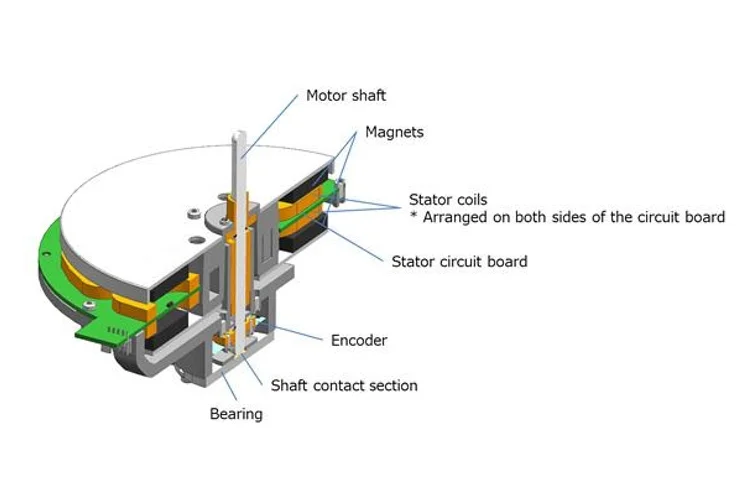


 If clogging was truly a phenomenon, it would show up when hooked up to a W&F meter, the speed would flutter thus being self evident.
 it will take several lifetimes to actually wear one of them out…