• The move to the new server is done. There are some software and database maintenance updates in process. This has us passing the hat around to help out. We appreciate any donations. Seriously, even a dollar helps. The payment page may be found here - https://www.audiokarma.org/support.html

Can Magnepan Aluminum wires be soldered? Edit: YES! With the right solder & flux.

Johnny_Law

o.O
Subscriber
Edit w/ answer: YES and my big Weller does it way faster than my smaller Hakko

I got away in my previous Magnepan repairs never to have to solder Aluminum, but those days are over. I have an MG-IIa with new wires glued on them which refuse to allow themselves to be soldered into place. I have spent the last few days searching for tips / clues.

http://www.integracoustics.com/MUG/MUG/tweaks/alex.html (mentions use of silver solder, while elsewhere I've found suggestions that silver solder does not work on Aluminum, e.g., https://www.practicalmachinist.com/...ng-and-fab/silver-soldering-aluminium-131405/)
http://www.integracoustics.com/MUG/MUG/tweaks/DavePride/ (mentions Al solder as if it's a breeze and easily available ... I have not found this to be true)
https://audiokarma.org/forums/index.php?threads/magapans.96835/ (ends w/ @pustelniakr summarizing how difficult it is, but not how to do it)
https://audiokarma.org/forums/index.php?threads/help-soldering-aluminum-magnet-wire.223629/ (the previous thread by @pustelniakr looking for advice on how to do it, and I imagine the genesis of his opinion on how difficult it is :p)
http://db.audioasylum.com/cgi/searc...wmessage=&sort=score&sortOrder=DESC&forum=mug
https://www.audioasylum.com/cgi/t.mpl?f=mug&m=41262
Etc etc

I cannot find a definitive answer to the question, how do I solder new Magnepan aluminum wires? Most threads end with a statement that it's difficult, or that Magnepan used to supply the solder in the kits but no longer does, or something non-definitive about how actually do it. :(

So I turned to the Internet, have searched online for a few days and cannot find any aluminum solder kits that work with a soldering iron (I have found various (e.g.) that require a torch ... and I don't want my propane torch anywhere near the mylar).

One option is to remove the solder terminal and use a screw-type strip (which is, from what I gather, akin to what Magnepan themselves have done with newer models). However, the tweeter wire on MG-IIs needs to be soldered in a different place on the panel so a screw-terminal wouldn't work.

Could I please ask that someone who has successfully soldered new aluminum wires into Magnepans chime in with how you did it?

Thank you in advance for any guidance!
 
Last edited:
Register to hide this ad
No help here, except that some early AR tweeters (I think it was tweeters) used
aluminum leads. Searching CSP might yield some answers, or PM RoyC.

Otherwise, talked to Magnepan?
800-474-1646 651-426-1645
 
So I turned to the Internet, have searched online for a few days and cannot find any aluminum solder kits that work with a soldering iron (I have found various (e.g.) that require a torch ... and I don't want my propane torch anywhere near the mylar).

The first bullet list feature for that kit is "Solder alloy for torch or iron."

The datasheet says it is liquid at 482f.

I would use my Weller WTCPT with an 800f tip (or the aftermarket 850f tip for lead-free solders).

I've been advised that i probably wouldn't want to use that tip for regular solders after that.
 
But i have to admit that i have basketcase maggies that have broken wires and torn mylar. I got some aluminum solder stuff but chickened out. I should call magnepan and see what the repair options are.
 
My impression is that aluminum requires very aggressive flux to solder it, and needs the flux neutralized and then washed off to be reliable long term. That's not a difficult thing to do, but it requires specific flux and neutralizer, so its a bit more complicated than the standard solder procedure. I'd look at Kester and Superior's sites to see what they suggest. I'm sure there are many other equally reliable makers/providers, but those are two of the best known, and for good reason.
 
My impression is that aluminum requires very aggressive flux to solder it, and needs the flux neutralized and then washed off to be reliable long term. That's not a difficult thing to do, but it requires specific flux and neutralizer, so its a bit more complicated than the standard solder procedure. I'd look at Kester and Superior's sites to see what they suggest. I'm sure there are many other equally reliable makers/providers, but those are two of the best known, and for good reason.

Aluminum builds up a couple microns of transparent oxide almost immediately upon exposure to air. If you can keep the air off it, you should be able to solder it.

 
The wires on the mylar, well, if corroded they need replacement. If they are just broken in a couple places, a conductive glue an some foil glued in place might work. Replacing the wiring is just tedious not hard, lining it up between the bar magnets when gluing it down exactly in the pattern of the wiring removed. Remember the hardest part of doing a Magnepan repair is pulling the staples.

The aluminum wires are soldered with aluminum solder supplied by Magnepan with wire in the kits. But this soldering is to the crossover tabs and the wires need to be completely cleaned to get things right.

Torn mylar can be repaired with tape depending on the size of the problem. After a certain size, I would think the work to do the repair and the inability to get the area stretched to correctness would be a problem and Magnepan would be able to rebuild the speaker for you. A decade ago the rebuild on a pair of IIIa speakers was about a grand all in, including two new ribbon tweeters which are 100 each exchange (plus shipping and handling both ways when done at your house instead of part of a rebuild in White Bear Lake).
 
The wires on the mylar, well, if corroded they need replacement. If they are just broken in a couple places, a conductive glue an some foil glued in place might work. Replacing the wiring is just tedious not hard, lining it up between the bar magnets when gluing it down exactly in the pattern of the wiring removed. Remember the hardest part of doing a Magnepan repair is pulling the staples.

The aluminum wires are soldered with aluminum solder supplied by Magnepan with wire in the kits. But this soldering is to the crossover tabs and the wires need to be completely cleaned to get things right.

Torn mylar can be repaired with tape depending on the size of the problem. After a certain size, I would think the work to do the repair and the inability to get the area stretched to correctness would be a problem and Magnepan would be able to rebuild the speaker for you. A decade ago the rebuild on a pair of IIIa speakers was about a grand all in, including two new ribbon tweeters which are 100 each exchange (plus shipping and handling both ways when done at your house instead of part of a rebuild in White Bear Lake).

I have a pair of SMGa (if i recall correctly) that look like someone knocked them over onto their faces, or they rode upright in the open back of a pickup truck down the freeway, or something.

Both have torn mylar. One of them has a break in the wire right where it goes past the button in the middle.

The wire is a little bit stretched as well.

My best guess is that maybe with a fair bit of slack from peeling it from the mylar i can apply extreme heat to tin the ends with either the aluminum flux and special solder i bought, or with the aluminum solder paste i bought.

Then i can line them up against the mylar, protect the mylar with some alumina ceramic fiber cloth i have, and maybe a 4" sample piece of hard titanium sheet I've got (extremely poor thermal transmission), slide a brass ferrule over the ends, crimp it a bit with pliers, and solder it in place.

If i can work up the nerve.

I've heard that the suggested tear repair is to stick some packing tape to some sticker release paper, put contact adhesive on both the non-sticky side of the tape and the mylar, and then stick it on and peel off the sticker backing.
 
It does not help at all, fwiw, that some people in this forum like to tell people that some things simply cannot be done.

Here's what I'm talking about.

gplus-903925876.jpg
 
Sorry all I was really hoping to limit the replies to people who have actually soldered aluminum Magnepan wires onto the terminals on the speaker.

There are tons of suggestions out there but very few if any confirmations of "yes, I successfully soldered mine, here's what I used, and here's how I did it." (Using something other than whatever materials are provided by Magnepan in the repair kits.)

Repairing mylar is also covered copiously elsewhere.

Really hoping for first-hand confirmation that soldering the wires back in is possible as well as a list of materials and a proven method.
 
Sorry. I guess it's a controversial subject?

Maybe I should go see what i can do with mine. New tips for my iron are only $3.80 at mouser, was gonna order some more parts soon anyway.
 
To illustrate, here is what I'm specifically referring to.

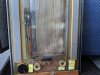
This is what naked MG-IIa looks like:

IMG_20190729_174536.jpg

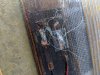
Here is the tweeter wire attachment point (visible on left in naked pic), and you can see I've attempted to solder with flux etc already, some success but not what I'd call permanent:

IMG_20190729_174448.jpg

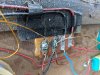
And similar results with the bass wire attachment point (visible below the bass wire above):

IMG_20190729_174456.jpg
 
Sorry. I guess it's a controversial subject?

Maybe I should go see what i can do with mine. New tips for my iron are only $3.80 at mouser, was gonna order some more parts soon anyway.

No not at all - there are endless pages of people asking for suggestions on how to do it, everyone throwing in some advice that might work, but nobody saying "yes, and here's exactly how I did it"

YouTube has some great videos on soldering to aluminum, such as using motor oil, etc. But again I really was hoping to avoid this being just another collection of suggestions.

(On the mylar repair - 3M tape works great. I've had to repair the Mylar on each of my previous pairs and can personally confirm. It should work great for your large tear.)
 
I replaced the tweeter wire in my Magnepan MGI Imp over 20 years ago. As I recall, I called Magnepan and they sent me a kit with everything I needed for the repair as well as instructions on how to do it and how to solder everything, including the aluminum wire to the terminals and at the time it was very reasonable maybe $50 or so. I would really suggest you call them, they have a really supportive group of people that have dealt with these type of issues for damn near half a century. And they DO care about their products. Give them a call. BTW, I'm listening to these same Maggies in my TV room right now. They sound wonderful, I bought them new in 1980. If I live that long I expect to be listening to them at the half century mark.
 
I would really suggest you call them, they have a really supportive group of people that have dealt with these type of issues for damn near half a century. And they DO care about their products. Give them a call.

Thanks - I did call them earlier today but got a voicemail. Will try again tomorrow!

Congrats on your original purchase, repair, and amazing that you still enjoy them!
 
No not at all - there are endless pages of people asking for suggestions on how to do it, everyone throwing in some advice that might work, but nobody saying "yes, and here's exactly how I did it"

YouTube has some great videos on soldering to aluminum, such as using motor oil, etc. But again I really was hoping to avoid this being just another collection of suggestions.

(On the mylar repair - 3M tape works great. I've had to repair the Mylar on each of my previous pairs and can personally confirm. It should work great for your large tear.)

Just now i decided - what the heck - if i would cost more than these are worth to fix them anyway, why not give it a try.

Turned my $40 chinese hot air station to 450c and turned the fan speed down to minimum, propped it up at an angle.

Gripped end of wire with pliers over a couple blue paper shop towels and dripped the flux onto it, scraped off the dross, repeated a couple times.

Used the hot air further to melt some of the solder onto the wires. Then applied more flux and more heat.

Then put the shop towels on the back of the speaker, put a sheet of 1mm titanium on the shop towel, used kapton tape to hold down the wires, tacked them together with soldering iron. And more flux.

20190729_193131.jpg

The joint _looks_ good. The tinning looked successful. i did two of the, turns out, four joints i have to make on this sorry old panel.

My records show that i bought an "Ultra Gold Flux Kit For Soldering Aluminum Voice Coils" for about $10 on ebay. There's a similar kit available now.

I have a friend who holds advanced degrees (and impressive resume) in both EET and chemistry and he recommends having a soldering tip for just the aluminum work. Basically a tip for each _kind_ of solder you use (I have some indium solder here too).
 
Cool, nice work! What do you mean by Chinese hot air station? I assume you mean a heat gun ... if so, you mean you used a heat gun to melt the flux?

And the flux you used was in that kit you got off ebay? Any idea what it's made from? (Edit: Bought one myself, woohoo)

Your results seem fantastic.
 
Cool, nice work! What do you mean by Chinese hot air station? I assume you mean a heat gun ... if so, you mean you used a heat gun to melt the flux?

And the flux you used was in that kit you got off ebay? Any idea what it's made from? (Edit: Bought one myself, woohoo)

Your results seem fantastic.

It's a hot air rework station for surface mount board repair. Probably not necessary. I just figured it would be a convenient way to heat the wire. It's one of the ubiquitous "858d" models. Wand with temperature setting from 100c to 450c. Adjustable fan speed.

No idea what is in this flux.
 
It's a hot air rework station for surface mount board repair. Probably not necessary. I just figured it would be a convenient way to heat the wire. It's one of the ubiquitous "858d" models. Wand with temperature setting from 100c to 450c. Adjustable fan speed.

No idea what is in this flux.

Fantastic. Thank you very much.
 
Back
Top Bottom