• The move to the new server is done. There are some software and database maintenance updates in process. This has us passing the hat around to help out. We appreciate any donations. Seriously, even a dollar helps. The payment page may be found here - https://www.audiokarma.org/support.html

Can you bridge SET amplifier just like you can any other amplifier?

Kreshna

...but I have to know.
Pardon the stupid question, but can you bridge SET amplifier the way you bridge any other amplifiers?

I have seen a lot of cheap DIY SET amp on ebay (like this). Okay, Chinese-made, but SET amp nevertheless. However, they are stereo amp. I haven't seen any cheap mono DIY SET amp kit.

So, can SET amp be bridged just like normal amp? Or are there caveats I should be aware of?
 
Register to hide this ad
I bridge mode, if the speaker is 8ohm, each half of the bridge amp is "seeing" 4 ohm speaker. This means the load impedance experienced by each amp is half the speaker impedance and has to drive that much harder. For SS amp with very low output impedance ( high damping factor), there is definitely advantage as it can drive. In the bridge amp, because the output of the two amps are opposite phase, so the speaker literally get double the voltage and 4 times the power.

My understanding is in tube amp, you have to adjust the output tap of the output transformer. You adjust to lower impedance, the output voltage becomes lower. This is like cancelling the advantage of bridging as you don't really increase the output voltage.
 
I don't know the exact power you can get as I am not sure how the output voltage exactly correspond to the impedance tap of the output transformer. I I am sure that going to lower impedance tap will lower the output voltage. There is no free lunch for tube amp as it has to match the plate resistance of the output tube. You can really get a free lunch with SS amp bridging. As long as the SS amp can drive the lower impedance of the bridge amp, you quadruple the output power by bridging. No such luck with tube amps.
 
SET amps without feedback sometimes leave the OPT secondary floating (not grounded at either end), so bridging is possible by simply connecting the two outputs of a stereo amp in series. As Alan says, bridging doubles voltage across the load, which would yield four times the power if amplifier output impedance was zero, but you get close to this result only with SS amps. With tube amps, you have to double the load impedance when bridging, so you end up simply summing the power output of the two channels.
 
SET amps without feedback sometimes leave the OPT secondary floating (not grounded at either end), so bridging is possible by simply connecting the two outputs of a stereo amp in series. As Alan says, bridging doubles voltage across the load, which would yield four times the power if amplifier output impedance was zero, but you get close to this result only with SS amps. With tube amps, you have to double the load impedance when bridging, so you end up simply summing the power output of the two channels.
You mean half? eg. If you have an 8ohm speaker, you have to set the 4ohm tap of the output transformer for bridging.

One thing also, Bridging cancel either the odd or even harmonics ( really don't remember), if it cancel the even harmonics, one might cancel out the sweetness of the SET.

I always confused how's the output voltage relates to the different output impedance tap. Is halving the output impedance tap result to half the voltage or 1/( square root of 2)= 0.707 of the voltage? That is comparing the 4ohm tap to 8ohm tap, is the voltage 1/2 or 1/(square root of 2).
 
With tube amps, you have to double the load impedance when bridging, so you end up simply summing the power output of the two channels.
Which is good enough for me.

I still wonder about some things:

(1) how do you bridge SET tube amp in serial? Is it like this?

R(+) ------- R(-) ------- L(+) ------- (-) speaker (+) ------- L(-)


(2) would you need a line-level bridge circuit before the amp, like you do when bridging solid-state amp?


(3) can you bridge any SET tube amp? Including cheap ones like this? Or perhaps there are certain kind of SET tube amps you just cannot bridge?


(4) How do you know whether it's the odd order harmonics or even-order harmonics will be eliminated by bridging? Perhaps it depends on topology? Type of tubes?
 
Before getting into the wiring, I looked at your amp, if I were you, I would spend a little more and buy this one that is higher power and forget bridging.http://www.ebay.com/itm/Douk-Audio-...e=STRK:MEBIDX:IT&_trksid=p2060353.m1438.l2649
http://www.ebay.com/itm/Douk-Audio-...e=STRK:MEBIDX:IT&_trksid=p2060353.m1438.l2649
It's 3 times the power, Yours might sound cheaper, but $92 shipping. The one I picked is free shipping, you pay $248 only.

You can hook it up as bridge, but bridge amp cancels out half of the harmonics, it might not sound the same. Go search on the characteristics of bridge amp regarding distortion cancellation. I read this before but I cannot find it again. Bridging cancels out either the odd or even harmonics. If it cancels the even harmonics, that might be REALLY bad as SET should be rich in even harmonics and that might be the reason people like it. If you cancels them out, you might ended up with a bad SS amp!!!!

Do the search before you decide what to do, at the mean time, check out the amp I linked. I am seriously thinking about buying that myself.
 
The series bridging connection works like this:

SET Bridge.png

As I said previously, this trick works only with amps that don't have internal ground connections on the OPT secondaries. No phase inversion is needed upstream --- the inputs should be simply parallelled. Amplifier distortion characteristics should be unaltered.
 
Last edited:
I always confused how's the output voltage relates to the different output impedance tap. Is halving the output impedance tap result to half the voltage or 1/( square root of 2)= 0.707 of the voltage? That is comparing the 4ohm tap to 8ohm tap, is the voltage 1/2 or 1/(square root of 2).
To get half the voltage, you must tap down to one quarter of the impedance. Ferinstance, the 4R tap is in the center, voltage-wise, of a 16R winding.
 
Hey BinaryMike

Do you have info on the harmonics cancellation in bridge amp, I really think it cancels out all the even harmonics and add odd harmonics. This is very important to know because that will negate all the goodness of the SET amp. I used to be able to find the info, now I cannot find it anymore. But I clearly remember it cancels out one of the harmonics.

For SS amp, cancelling out any harmonics is a good thing as SS are low THD and can drive. But tube amps rely on harmonics for the sweetness and I am pretty sure it's the even harmonics that give the sweetness. Cancelling out the even harmonics is a bad bad thing for tube amps.
 
Alan, you may be thinking of a more exotic single-ended push-pull hookup where two complete SE channels are operated out of phase and the outputs are combined at the load by parallelling OPT secondaries out of phase. I've seen this in the literature somewhere, but I don't recall any further details at the moment. I'll let you know if my aging brain coughs up the goods at some point.
 
Pardon the stupid question, but can you bridge SET amplifier the way you bridge any other amplifiers?

I have seen a lot of cheap DIY SET amp on ebay (like this). Okay, Chinese-made, but SET amp nevertheless. However, they are stereo amp. I haven't seen any cheap mono DIY SET amp kit.

So, can SET amp be bridged just like normal amp? Or are there caveats I should be aware of?


You can. But result will remind push-pull amplifier. Thus it will not be SE anymore. SET is for those who WANTS that special sound. If you value power over sound qualities, you should get regular push-pull amplifier.
 
I thought "strapping" of tube amps was more common than bridging, the latter more common for SS?

Strapping involves paralleling the two channel taps of twice the nominal impedance of the speaker.

For example, commons would be connected (often are anyway**) then for an 8 ohm speaker you'd parallel the two 16 ohm taps, connect speaker (+) there and (-) to common.

For a 4 ohm speaker you'd parallel the two 8 ohm taps, connect speaker (+) there and (-) to common.

The inputs are fed a common signal using a Y cable.

**Note some amps don't use one end of the OPT secondary as common. Know your amp before trying to strap (or bridge) it.
 
Many interesting points being made, thanks!

I thought "strapping" of tube amps was more common than bridging, the latter more common for SS?

Strapping involves paralleling the two channel taps of twice the nominal impedance of the speaker.

For example, commons would be connected (often are anyway**) then for an 8 ohm speaker you'd parallel the two 16 ohm taps, connect speaker (+) there and (-) to common.

For a 4 ohm speaker you'd parallel the two 8 ohm taps, connect speaker (+) there and (-) to common.

The inputs are fed a common signal using a Y cable.

**Note some amps don't use one end of the OPT secondary as common. Know your amp before trying to strap (or bridge) it.
Does strapping SET tube amp have the same disadvantages of bridging it? Like, losing the sweet even-order harmonics?
 
I would strap two SET amps ( parallel) instead of bridging. It is a lot simpler also. If you have 8 ohm speaker, you set your two amps into 16ohm setting and it will match. From understanding here, you get the same doubling of power as bridge.

But again, did you look at the amp kit I suggested? It's 13W, over 3 times the power of the one you are looking at and it's not much more. I am finishing up my amp, seriously looking at the kit to build my first ever SE tube amp. I believe 13W is when strap in ultra linear mode ( the screen grid connects to a tap on the primary of the output transformer). I think if you tap as triode, it will be lower power like 7W, but it's still almost double the power of the one you choose.

The one you choose is really too low power and you have to play games to increase the power. I would start with a higher power, then if you want more, parallel them to get 26W in ultra linear mode, or about 14W in triode mode.
 
Bridging SET amps shouldn't change harmonic structure. Why would it?

Strapping/paralleling SET amps is a dubious proposition. That type of amp often has zero feedback and therefore often has gain differences between the two channels, so you can end up with the two channels fighting one another instead of feeding the load, which boosts distortion. If you get the channel gains matched precisely, then strapping should work with very little difference in harmonic structure. That's a big IF though, because channel matching without feedback isn't stable over time.
 
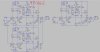
I bite the bullet and created a simulation program with LTSpice to see the result. Sadly, it's it even harmonics that are being cancelled. I post the simulation schematic using just a typical SS amp with distortion. In the schematic, the left side is two of the amps in bridge mode, the right side is the single amp. I made the output equal amplitude.
Bridge vs single schematic.JPG


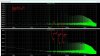
Here is the harmonic frequency spectrum. The top is from the bridge amp, the bottom is the single amp. Notice I point to the 2nd, 4th and 6th harmonics, they are either missing or greatly reduced in the bridge amp?

FFT bridge vs single.JPG


So the conclusion is BEYOND DOUBT, bridge amp cancels even harmonics. I would say it's very bad when using tube amps. Tubes amp always has much higher THD. Even harmonics is known to be musical, odd harmonics is known to be non musical.
 
Good work, Alan. But the situation is different with the simple bridging hookup I described above because the two channels operate in phase and their outputs are simply summed at the load. This will be true for parallel operation as well, if we can assume excellent channel gain matching.
 
Alan, you may be thinking of a more exotic single-ended push-pull hookup where two complete SE channels are operated out of phase and the outputs are combined at the load by parallelling OPT secondaries out of phase. I've seen this in the literature somewhere, but I don't recall any further details at the moment. I'll let you know if my aging brain coughs up the goods at some point.
I don't quite get what you are saying. Can you explain some more?

Yes, I did not even think of the gain difference can cause big problem in parallel two amps. I have to take that one back. I assume the gain will be the same, IF they don't..........problem!!!!!


If I were OP, I just buy the bigger SE amp like the one I linked. I am seriously thinking about buying that myself. It's 12W ultra-linear tap, must be like 6W triode tap. I got to get a SE to listen with my own ears, all the touting from so many people about the SE amps.
 
Last edited:
Back
Top Bottom