

You are using an out of date browser. It may not display this or other websites correctly.
You should upgrade or use an alternative browser.
You should upgrade or use an alternative browser.
Class G amps. Pros, cons, Class A?
- Thread starter odcics2
- Start date

Register to hide this ad

RVT1K
Super Member
I don't have any experience with a Class-G amp so I really don't have an opinion on the sound potential.
I suspect that I read the same Arcam .pdf and did see the reference to Class-A. I did a bit more poking around and didn't see any others.
I did find this and am in the process of going through it just for fun:
I suspect that I read the same Arcam .pdf and did see the reference to Class-A. I did a bit more poking around and didn't see any others.
I did find this and am in the process of going through it just for fun:

Actually quite a few watts in class A. Idle on the hot side.Do they run a few watts in Class A?

The Luxman R-117 receiver is class G and this is how they explain the switching in the SM. It has a 74v rail it runs on until it reaches a point then it switches on a 102v rail. But I'm not a tech so thats all I can give you.
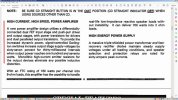
EDIT: Reread OP's question and this may not answer it as far as what class the 74v rail is operating on.
EDIT: Reread OP's question and this may not answer it as far as what class the 74v rail is operating on.

Chad Michael
Dissonant Rhino
(thread revival)
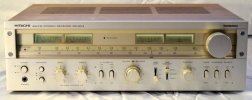
Recently bought two vintage receivers, a Hitachi SR-804 and a Sansui G4500. The Sansui is 'rated' 40 wpc, the Hitachi 50 wpc.
When I turn things up, they both sound great, but the class G Hitachi definitely has more headroom, and the sound just jumps into the room.
The Hitachi had something going with their class G, and I never would have known until I tried one. They might be a best - kept secret for those who like vintage receivers, and they don't have the 'PMS tax' which is nice on the wallet
Recently bought two vintage receivers, a Hitachi SR-804 and a Sansui G4500. The Sansui is 'rated' 40 wpc, the Hitachi 50 wpc.
When I turn things up, they both sound great, but the class G Hitachi definitely has more headroom, and the sound just jumps into the room.
The Hitachi had something going with their class G, and I never would have known until I tried one. They might be a best - kept secret for those who like vintage receivers, and they don't have the 'PMS tax' which is nice on the wallet


Lavane
Lunatic Member
SHHH! Now everyone knows. By posting that, the prices of Class G equipment just doubled. Once on the interwebs, it can't be taken back.(thread revival)
Recently bought two vintage receivers, a Hitachi SR-804 and a Sansui G4500. The Sansui is 'rated' 40 wpc, the Hitachi 50 wpc.
When I turn things up, they both sound great, but the class G Hitachi definitely has more headroom, and the sound just jumps into the room.
The Hitachi had something going with their class G, and I never would have known until I tried one. They might be a best - kept secret for those who like vintage receivers, and they don't have the 'PMS tax' which is nice on the wallet
View attachment 3316126


Mike_S
Well-Known Member
I own it, I love it, it's simply awesome.I wonder if the owner of the first class G amps ever claims to have the OG.
I'll see myself out now.
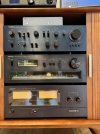
200wpc, 68lbs amp, it's huge, sounds sublime. MOSFET sound is almost perfect.

zenith2134
Lunatic Member
This is an incredibly impressive stack of gear, by any measure.I own it, I love it, it's simply awesome.
200wpc, 68lbs amp, it's huge, sounds sublime. MOSFET sound is almost perfect.
View attachment 3316438
The power amp, in addition to being high-efficiency Class G, utilizes 95v rails and contains totally separate supplies for the rail switching. It is also not a furnace and is quite reliable.
Hitachi gear is bar-none my favorite of the classic Japanese equipment. The caliber of their mosfets and other semis during this time is pretty much unparalleled.
AudioAvarice
Super Member
Hope your using Hitachi LC-OFC cables with that mighty stack?I own it, I love it, it's simply awesome.
200wpc, 68lbs amp, it's huge, sounds sublime. MOSFET sound is almost perfect.
View attachment 3316438

a.wayne
Well-Known Member
Its more than Class G , The Hitachi always had better sound than Sansui , never had a Sansui i could keep and i had many , same Dull Sound IMO but they always sucked you in with their beauty ..(thread revival)
Recently bought two vintage receivers, a Hitachi SR-804 and a Sansui G4500. The Sansui is 'rated' 40 wpc, the Hitachi 50 wpc.
When I turn things up, they both sound great, but the class G Hitachi definitely has more headroom, and the sound just jumps into the room.
The Hitachi had something going with their class G, and I never would have known until I tried one. They might be a best - kept secret for those who like vintage receivers, and they don't have the 'PMS tax' which is nice on the wallet
View attachment 3316126
Chad Michael
Dissonant Rhino
Seems to me that there is a bit of a difference in sound, with the phono stage in the Sansui vs. the Hitachi as well.....
Mike_S
Well-Known Member
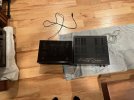
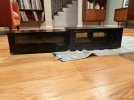
Thanks, it took a while to get there. Also have a 7500 stack, and 8500 stack. The 8300 stuff is by far the best. Got to see if I can find the pic of the 83000 and 8500 amp side by side. The 8300 is so much bigger. It runs so much cooler over the 7500/8500. When driving the 8300 hard, it does get warm, but not hot.This is an incredibly impressive stack of gear, by any measure.
The power amp, in addition to being high-efficiency Class G, utilizes 95v rails and contains totally separate supplies for the rail switching. It is also not a furnace and is quite reliable.
Hitachi gear is bar-none my favorite of the classic Japanese equipment. The caliber of their mosfets and other semis during this time is pretty much unparalleled.
Think the secondary rail is 127v? Or something like that would need to look at the schematic again.
The quality of it all is Wonderfull, vintage at its best, is's also so reliable. None of my gear has been touched at all, it's all 100% OEM. Just cleaning. However, I am about to recap my 8300 pre-amp in the signal path. MOSFET sounds so, so good!
No idea what you are talking about. Are there "special" cables for my unit? That would be so cool!Hope you're using Hitachi LC-OFC cables with that mighty stack?
The phone stages are very good with Hitachi, they use higher voltage, and some other thing I forgot. Tried a stand alone pre, and the one in the amp sounded better, so that is what I use. They also have a bunch of adjustments for different cart, either MM or MC.Seems to me that there is a bit of a difference in sound, with the phono stage in the Sansui vs. the Hitachi as well.....
AudioAvarice
Super Member
Dunno if they even marketed it overseas tbh, Long Crystal OFC copper was patented by Hitachi in the mid 70's, was hugely popular in Japan, they even sold it to all their Japanese competitors, Sony even held back the release of the TA-N902 amp because they were waiting for cable from Hitachi. It was superceded by PC-OCC copper by the end of the 80's.No idea what you are talking about. Are there "special" cables for my unit? That would be so cool!

I believe that many of the vintage NAD amplifiers were considered to be Class G amps.
I am not a technician so I cannot say whether any of them actually ran a few watts in Class A, but I am quite pleased with their capabilities vs cost over the years. Currently I own a 2400, 2 X 2700, and 2 X C270 amps.
I'm sure there are more than a few AK members and technicians with intimate knowledge of the vintage NAD amps that can provide more detailed technical specifics on the pros and cons.
I am not a technician so I cannot say whether any of them actually ran a few watts in Class A, but I am quite pleased with their capabilities vs cost over the years. Currently I own a 2400, 2 X 2700, and 2 X C270 amps.
I'm sure there are more than a few AK members and technicians with intimate knowledge of the vintage NAD amps that can provide more detailed technical specifics on the pros and cons.

SVI2004A
Synchro Bias
Class H switches voltage to output stage.Amps like Arcam are Class G.
“Switching rail” style.
Do they run a few watts in Class A?
(Saw that statement made in a site. True or false?)
What are your opinions?
My old Carver TFM-35x is a G and sounds pretty good!
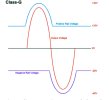
class G has one set of outputs on a lower voltage supply and another set on a high voltage supply… and it switches from one set to the other at a set point…



Nordfors
Member
Is this true? I would guess you're speaking of the Power Envelope models. I'm very curious. So far the NAD PE models I've heard so far have less than stellar sound stage. Someone mentioned it is due to the architecture of the PE system and the slight smearing of mids that necessarily takes place. Are NAD PE models class G?I believe that many of the vintage NAD amplifiers were considered to be Class G amps.
I am not a technician so I cannot say whether any of them actually ran a few watts in Class A, but I am quite pleased with their capabilities vs cost over the years. Currently I own a 2400, 2 X 2700, and 2 X C270 amps.
I'm sure there are more than a few AK members and technicians with intimate knowledge of the vintage NAD amps that can provide more detailed technical specifics on the pros and cons.