

You are using an out of date browser. It may not display this or other websites correctly.
You should upgrade or use an alternative browser.
You should upgrade or use an alternative browser.
Coffee. Anything coffee related.
- Thread starter rxonmymind
- Start date


OvenMaster
Baby, you're my winterblue
Over my lifetime, I tried a whole bunch of ways to get that perfect cup o' joe here at home. French press, Bodum manual drip, Farberware stovetop perk, Mr. Coffee auto drip.. and the best I've found so far is a simple Melitta "Ready Set Joe" single-cup #2 filter cone. For coffee, it's the World Classics breakfast blend supermarket stuff, coarsely ground.
Still, it doesn't beat Dunkin' Donuts, in my eyes.
Still, it doesn't beat Dunkin' Donuts, in my eyes.
OvenMaster
Baby, you're my winterblue
That has often been one of the most enjoyable of earworms over the years for me. Thanks!

IPADave
Turning a whiter shade of pale.
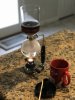
What is this device and how does it work?
-Dave

I used to hate coffee. But I wanted to like it. I liked the smell, I like hot drinks, I just couldn't get over the bitter (to my palate) taste. So I started with very sweet cappuccinos, and worked backwards getting stronger and less sweet until I could tolerate it, lol. I still can't handle a black coffee, but I'm getting there.
I was out with some friends and we went to a coffee shop, and I got some fancy hipster-style coffee. This was my first "coffee shop" coffee. I must say, it was VERY good.
I wish I could switch to coffee altogether (from soda). It's gotta be a healthier way to get my caffeine fix.
A quick coffee primer:
Understand that coffee is very chemically complex - it contains hundres of compounds and extractives
60% extraction is the sweet spot between weakness and bitterness
Do not confuse strong coffee with bitter coffee - with good time and temperature control backing off on the coffee amount increases bitterness (over extraction)
USE MORE COFFEE NOT LESS TO REDUCE BITTERNESS
If the coffee is too strong dilute it with hot water after brewing
Time and temperature are key - auto-drip machines under $300 do not get this right - too much time and too little heat = bitter coffee
Water should be filtered and just off the boil - about 200*
Most agree that the ideal beans to water ratio is between 1:15 and 1:18 by weight
For filtered coffee use the pour-over method and medium-fine grind beans (The Hario V60 is well regarded and not too expensive)
For heartier (increased mouth feel) use a french press with course grind beans and steep for 4 min (IKEA's presses are great and seriously cheap)
With the correct method well in-hand you'll have good control of time and temperature. From there you can explore different coffees and find what you like. In the simplest terms the coffee gamut runs from fruitier more acidic to earthier, nutty, lower acidity varieties. Fresher is definitely better so try to find a local coffee house that roasts their own in house. If pressed (pun intended) to make a specific recommendation, I'd say to start with Kenya AA for a good middle of the road choice.
One last caveat - avoid mass-produced dark roasts. When roasting coffee there is a point where the flavor profile of the bean is overshadowed by the roast. By and large inferior beans are often over-roasted to conceal the shortcomings of the beans. Over-roasting pulls the essential oils to the surface of the bean where oxygen can begin it's work of turning it rancid. Shiny beans are burnt beans.
It's a siphon. Fun to watch, but less mouth feel than I like.What is this device and how does it work?
-Dave

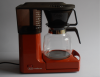 .
.This is my cute little 1976 Melitta "Comfort 140" Coffee machine. NOS, never used. I love it's 70s design... By the way: this was the very first coffee machine with warming plate!
Last edited:
IPADave
Turning a whiter shade of pale.
A quick coffee primer:
Understand that coffee is very chemically complex - it contains hundres of compounds and extractives
60% extraction is the sweet spot between weakness and bitterness
Do not confuse strong coffee with bitter coffee - with good time and temperature control backing off on the coffee amount increases bitterness (over extraction)
USE MORE COFFEE NOT LESS TO REDUCE BITTERNESS
If the coffee is too strong dilute it with hot water after brewing
Time and temperature are key - auto-drip machines under $300 do not get this right - too much time and too little heat = bitter coffee
Water should be filtered and just off the boil - about 200*
Most agree that the ideal beans to water ratio is between 1:15 and 1:18 by weight
For filtered coffee use the pour-over method and medium-fine grind beans (The Hario V60 is well regarded and not too expensive)
For heartier (increased mouth feel) use a french press with course grind beans and steep for 4 min (IKEA's presses are great and seriously cheap)
With the correct method well in-hand you'll have good control of time and temperature. From there you can explore different coffees and find what you like. In the simplest terms the coffee gamut runs from fruitier more acidic to earthier, nutty, lower acidity varieties. Fresher is definitely better so try to find a local coffee house that roasts their own in house. If pressed (pun intended) to make a specific recommendation, I'd say to start with Kenya AA for a good middle of the road choice.
One last caveat - avoid mass-produced dark roasts. When roasting coffee there is a point where the flavor profile of the bean is overshadowed by the roast. By and large inferior beans are often over-roasted to conceal the shortcomings of the beans. Over-roasting pulls the essential oils to the surface of the bean where oxygen can begin it's work of turning it rancid. Shiny beans are burnt beans.
Nice coffee primer. I learned something new about coffee beans.
-Dave
IPADave
Turning a whiter shade of pale.
It's a siphon. Fun to watch, but less mouth feel than I like.
Thanks, once I knew what it was called I was able to find a demonstration video. It was fun to watch.
-Dave

jgannon
Lunatic Member
That has often been one of the most enjoyable of earworms over the years for me. Thanks!
It's such a great tune! I know he also recorded it for Reprise years later. But when I heard this, it also sound a little different than how I remembered it. I'm going to have to look into whether there were a couple of different versions of this in the 40's.
There was a lengthy article on the chemical complexity of coffee in Scientific American circa 2002. I wish I had stolen that issue from the oral surgeon's office. They wan't $8 to download the pdfNice coffee primer. I learned something new about coffee beans.
-Dave

What was amazing is that they ran green beans through a spectrum analyzer and came up with 200ish identifiable chemicals and compounds. When roasted the water in the bean superheats and the steam blows the bean open (aka 1st crack). Essentially the bean is a little chemical reactor during this intense heat/pressure stage. After roasting the analyzer found something like 600 compounds and chemicals. 3,000 years ago the Ethiopians were definitely on to something great.



sKiZo
Hates received: 92644 43.20°N 85.50°W
Still hard to beat a simple French press for flavor ... even when camping in the boonies. This one doubles as an insulated sipper cup as well.
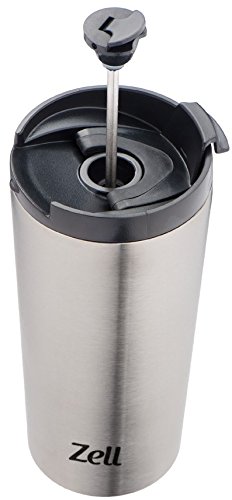
Also got one of these ... makes a fine cuppa, complete with froth, and even makes them cute little cappuccino noises that makes fellow campers do a double take.

Also got one of these ... makes a fine cuppa, complete with froth, and even makes them cute little cappuccino noises that makes fellow campers do a double take.

Quadman2
Lunatic Member
View attachment 860188.
This is my cute little 1976 Melitta "Comfort 140" Coffee machine. NOS, never used. I love it's 70s design... By the way: this was the very first coffee machine with warming plate!
Speaking of "warming plates", I've had some coffee makers in the past that really went overboard with the heat.. If you didn't remove the carafe almost after it had finished the drip, the coffee would end up with that burnt taste. I'll bet others have run into this as well?
Q
sKiZo
Hates received: 92644 43.20°N 85.50°W
It's such a great tune! I know he also recorded it for Reprise years later. But when I heard this, it also sound a little different than how I remembered it. I'm going to have to look into whether there were a couple of different versions of this in the 40's.
Originally recorded in 1946, and re-recorded in 1960 for the album Ring A Ding Ding ...
** Apparently old Pedro couldn't get by the PC censors for the later version ... get your own flashlight, and find the sugar yourself! <G>
Speaking of "warming plates", I've had some coffee makers in the past that really went overboard with the heat.. If you didn't remove the carafe almost after it had finished the drip, the coffee would end up with that burnt taste.
One thing I like about my Capresso ... no warming plate. It's got an insulated carafe that works well enough to keep the coffee hot for an hour anyway.


rxonmymind
Super Member
Awesome.Met my wife in a coffee/sandwich shop.
May you have e many, many years of smooth Latte's.

That's looks like a great way to start the morning. I've seen some pretty complex ones. That looks simple.
rxonmymind
Super Member
I used to hate coffee. But I wanted to like it. I liked the smell, I like hot drinks, I just couldn't get over the bitter (to my palate) taste. So I started with very sweet cappuccinos, and worked backwards getting stronger and less sweet until I could tolerate it, lol. I still can't handle a black coffee, but I'm getting there.
I was out with some friends and we went to a coffee shop, and I got some fancy hipster-style coffee. This was my first "coffee shop" coffee. I must say, it was VERY good.
I wish I could switch to coffee altogether (from soda). It's gotta be a healthier way to get my caffeine fix.
Everything in moderation.
I cut soda out as a deal to myself just before my daughter was born. Ten years now? Haven't missed it since. I like the idea of tinkering around with various brew strength, flavors, methods of brew and such. Where soda leaves little to the imagination. Just grab & gulp. Like you I started back in 88 with sweet instant coffee and moved my way up. I still don't drink black but I do like my South American coffee's with a hint of warm milk.
sKiZo
Hates received: 92644 43.20°N 85.50°W
I like my coffee strong ...

Black coffee only here. No sugar, no cream, no flavorings, no peanut butter, yogurt, or assorted sauces. Especially no beans that came out of a cat's butt.
Maybe some chicory, and with some blends, a dash of salt ...
Black coffee only here. No sugar, no cream, no flavorings, no peanut butter, yogurt, or assorted sauces. Especially no beans that came out of a cat's butt.
Maybe some chicory, and with some blends, a dash of salt ...
Last edited:

KLH9
A Double Pair Sounds OK
There was a lengthy article on the chemical complexity of coffee in Scientific American circa 2002.
What was amazing is that they ran green beans through a spectrum analyzer and came up with 200ish identifiable chemicals and compounds. .
Coffee is about the only flavor that does not have an "artificial" equivalent.
Wen you find something coffee flavored it uses coffee (dehydrated but coffee)
.