• The move to the new server is done. There are some software and database maintenance updates in process. This has us passing the hat around to help out. We appreciate any donations. Seriously, even a dollar helps. The payment page may be found here - https://www.audiokarma.org/support.html

Crossover Melt Down - Looking for an Explanation

CaseyWKC

Active Member
Hey all, hope I am posting this in the right place.

We've all had our fair share of speaker and amp mishaps I'm sure, but I'm trying to make sense of something that happened the other night.

I have a pair of Aerial Acoustic LR5 speakers. I had been driving them with a pair of mono blocked Crown PSA-2XH's. Which put me at around 900-1000 or so watts I believe per amp into 8 ohms. I needed the amps to be powerful and 2 ohm stable, as the speakers often dip below 2 ohms at louder volumes.

I had my eyes set on a Macrotech forever, finally two popped up owned by a church.

After watching them blow both up by powering them into a 240vac outlet when they were wired for standard 120 in front of me :rolleyes:, one is now repaired.

I hooked everything up, have my computer hooked up to a DAC, balanced XLR outs into the PIP modules in the back of the Crown, and I mounted that bad boy in the other room as it is loud as heck. I am only using one, I absolutely do not need two.


I started rocking out - probably two or three hours went by until I noticed a burning smell, then I lost my midrange or a tweeter.

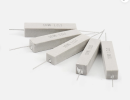
Powered everything off and opened up the crossovers to find the 10 watt emitters on one speaker XO looked as if it had melted out of it's solder joint and shorted across another joint.

Now I thought this was isolated to the one speaker but curiosity got the best of me and I opened up the other one to check it out as well. Sure enough, the same emitters were just burnt up, one was split in half but still testing okay, othervalues had changed (by an ohm or two, nothing crazy).

This whole ordeal also damaged my tweeter and I had order a replacement.


I admit I like listening to things LOUD, I'm a drummer. But I do my best to not push my system past it's limits and any hint of distortion at high volumes scares me so I am not afraid to back up that volume control quickly.

Here's where I'm thinking I messed up. The whole time I was just thinking things sounded too... harsh, too compressed - especially compared to the warmth I liked on the PSA-2s in the low end.

I had the input sensitivity set to the default 26db gain, and my balanced output delivers somewhere between 1.2-1.4v I believe. I guess the 26db gain sensitivity has a fixed sensitivity of 4.8 volts?

This was obviously my issue right?

The replacement tweeter came in today, I have adjusted the sensitivity to 1.4v and the harshness I experienced originally is COMPLETELY gone, I am very very happy with the amp now, my only concern is this happening again.

Thoughts anybody?

Thanks!
 
Last edited:
Register to hide this ad
Powered everything off and opened up the crossovers to find the 10 watt emitters on one speaker XO looked as if it had melted out of it's solder joint and shorted across another joint.

Now I thought this was isolated to the one speaker but curiosity got the best of me and I opened up the other one to check it out as well. Sure enough, the same emitters were just burnt up, one was split in half but still testing okay, others charged.

This whole ordeal also damaged my tweeter and I had order a replacement.

I said resistors. Big 10w resistors in the XO network

You know in the future maybe instead of coming off like an ass you could keep comments to yourself instead of contributing nothing to a thread.

Thanks.
You said "Emitters" which is typically a reference to a transistor circuit. Then again, Crossovers are generally passive networks without transistors in place,
so Gigantic was just asking what you referring to.
So just chill a bit and don't lash out at folks who are trying to figure out the situation.
 
You said "Emitters" which is typically a reference to a transistor circuit. Then again, Crossovers are generally passive networks without transistors in place,
so Gigantic was just asking what you referring to.
So just chill a bit and don't lash out at folks who are trying to figure out the situation.


Big 10 watt emitters in the crossover network were burned up by the binding posts.
 
Last edited by a moderator:
Big 10 watt emitters in the crossover network were burned up by the binding posts.

Asking for clarification is one thing.

Telling me to turn things down and calling me a frat boy is another.
Agreed - but call him on that.

That said, a number of us who have technical chops don't get why you keep calling Resistors "Emitters"

THESE are RESISTORS!
Screenshot 2026-02-18 at 09.31.49.png
 
You said "Emitters" which is typically a reference to a transistor circuit. Then again, Crossovers are generally passive networks without transistors in place,
so Gigantic was just asking what you referring to.
So just chill a bit and don't lash out at folks who are trying to figure out the situation.
I concede that point, I have a problem with using the wrong terminology at times, and even when I read over a post like this- I still sometimes manage to miss things or make something more confusing than it needs to be.

With that being said, I still don't think the tail end of the initial reply was appropriate or really taking the question into consideration - which is gain sensitivity and it's relation to clipping from an external source.
 
The input sensitivity of the amp itself would not cause an issue, but if the device driving it could not reach that voltage, it is plausible that the prior component (preamp, whatever) may have clipped, and you missed it, which would have tended to shift more energy to high freqs.

Generally, when running pro amps with home stuff, you want the amps gain set as high as you can. (which will typically be for -10db levels, or closer to it).

Looks like the amp proper is fixed gain as you note, but the balance input PIP module (you don't say which you have - PSA-2 perhaps?) comes set for unity gain, but can be adjusted for up to 10db more. I suggest that you do so, it that's what you have.

Of course, it's also possible that that isn't the issue, and you were just overdriving things, and experiencing power compression in the speakers.
 
The input sensitivity of the amp itself would not cause an issue, but if the device driving it could not reach that voltage, it is plausible that the prior component (preamp, whatever) may have clipped, and you missed it, which would have tended to shift more energy to high freqs.

Generally, when running pro amps with home stuff, you want the amps gain set as high as you can. (which will typically be for -10db levels, or closer to it).

Looks like the amp proper is fixed gain as you note, but the balance input PIP module (you don't say which you have - PSA-2 perhaps?) comes set for unity gain, but can be adjusted for up to 10db more. I suggest that you do so, it that's what you have.

Of course, it's also possible that that isn't the issue, and you were just overdriving things, and experiencing power compression in the speakers.
This makes sense to me and I'm more inclined to say this is what I was experiencing.

It's a PIP card with the balanced XLRs - it has three adjustable input sensitivities - .775v - fixed at 26db - and 1.4v.
I'm using the 3600vz now, it only has the switches, with the PSA-2's, the XLR cards just had a trim pot on the back where I would dial in the gain to a level I thought was nice.

I should have taken note at what it was set to initially - I believe it was .775v.

Sound was compressed, and harsh but my speakers were not clipping so I attributed to the amp.

Since adjusting it to 1.4v - sound is now clear, not compressed in the slightest, and I'm very happy overall.

I'm guessing it was a bit of a two-fer... part of it me driving them hard, part of it input sensitivity being too low?
 
me?

yes. i totally understand how a cement resistor can be confused with an emitter resistor. it's pretty simple to see.

why everyone is giving him a hard time is what i don't understand.
Yeah it’s different strokes, I’m no judge lol.
OP, too much power in, you’re frying your speakers, simple as.

Maybe your listening habits are more in line with a sensitive speaker, Altec/JBL/Klipsch that will give you the decibels you crave without requiring a kilowatt to do it. 200 Watts through a Model 19 or equivalent should give your house concert levels

That’s the road I’d take, but ymmv, as always.
 
The .775 would have been the choice for consumer -10db sources. Seems like 1.4v is working for you, and if it stays clean, should be good. If you can find the spec for the max output level of what is driving the Crown, that should confirm this.

Hard clipping definitely moves a lot of energy to high freqs, so probably line level clipping plus a appetite for *LOUD!* likely did this. Listen carefully, though . . . the specs I see for those speakers suggest an amp from, iirc, 200 to 700 watts . . . they make no representation of what the speaker will eat long term and survive though (the vendor seems to avoid that topic completely in what I have found).
 
Last edited:
I guess the 26db gain sensitivity has a fixed sensitivity of 4.8 volts?
That would depend on the rated power of the amp, by which that output voltage could be backed into the input voltage necessary to achieve it based on 26dB gain.

1120W = ~95Vrms @ 8 ohms.
26dB gain is 20x voltage so ~95/20=~4.8Vrms in to get full (8 ohms) rated power out.

My assessment is simply too much average power.

If you had not looked at the crossover parts before, it's possible the overheating started with the other amps and this was just the straw that broke the camel's back.
 
Last edited:
But I do my best to not push my system past it's limits and any hint of distortion at high volumes scares me so I am not afraid to back up that volume control quickly
This is something that worked back in the 80s. But now power is so cheap, your 900+ wpc in the PSA amps and over 1100 watts per channel in the Macrotech are well above the max for the speakers, stated to be 700 watts.

With lower power, hearing the amp strain, folks could respond with lowering the volume. With such high power, you are overdriving the speaker, heating the resistors and causing problems without hearing sonic degradation until something breaks as you found out. So you method of lowering volumes when things sound strained is not going to work to prevent damage in this situation.

I recommend getting more speaker if you want that volume as you have the power you need.
 
Last edited:
That said, a number of us who have technical chops don't get why you keep calling Resistors "Emitters"
It is possibly because those types of resistors are frequently used as emitter resistors and he hasn’t learned all the terms we use. I knew exactly what he meant reading his first post as I think you did, too.

why everyone is giving him a hard time is what i don't understand
I’m with you on this. Stated we knew what he meant. One comment about proper names would have been fine, no piling on needed.


Lots of alternative rock, some hard rock, maybe a couple of tracks with some nice low end, remember some Boz Scaggs for sure.

I'm not an EDM guy or anything. And my listening levels tend to peak at around 90-mid 90 db territory when I'm really into something. :D
I have a very hard time believing this volume level as the LS5 with an 86dB sensitivity would produce 100dB with about 32 watts going up 3dB for each doubling of power. Just starting to use the amp power, about 250 watts output would put the speaker at about 110dB. This assuming the sensitivity is for 1W input and an 8Ω speakers. Close enough to know using most of the 700 and 1100 watt amps are speaker damaging amounts and way louder than 90-95dB.

How large an area? How absorbent are the furnishings?
 
Last edited:
I have a pair of cement resistors in the crossover of my speakers and I frequently use them to listen from a different room. Well within amp’s ability, I’m smelling something getting hot and check on the system. Fortunately, the crossovers are externally mounted, unfortunately there is a wax coating on parts of it. Go in the sound room and see whiffs of smoke coming from the back of the speaker. Doesn’t happen when I use the subs and take the bottom end out of the mains or under normal listening even through the house, but I’ll upgrade to higher power resistors and heat sinks as I continue to improve these speakers.

I did IR temp check the resistors and they were within acceptable temperature operating range.
 
Last edited:
It is possibly because those types of resistors are frequently used as emitter resistors and he hasn’t learned all the terms we use. I knew exactly what he meant reading his first post as I think you did, too.


I’m with you on this. Stated we knew what he meant. One comment about proper names would have been fine, no piling on needed.


I have a very hard time believing this volume level as the LS5 with an 86dB sensitivity would produce 100dB with about 32 watts going up 3dB for each doubling of power. Just starting to use the amp power, about 250 watts output would put the speaker at about 110dB.

How large an area? How absorbent are the furnishings?
I was wondering the same thing as I knew these speakers are quite the opposite of sensitive, are 6 ohm nominal, and the recommended power per channel was 6 or 700 watts iirc.

I have a lot of furnishings in my listening room, large couch, and multiple acoustic panels and traps I built with cornings suspended from my walls.
 
I was wondering the same thing as I knew these speakers are quite the opposite of sensitive, are 6 ohm nominal, and the recommended power per channel was 6 or 700 watts iirc.

I have a lot of furnishings in my listening room, large couch, and multiple acoustic panels and traps I built with cornings suspended from my walls.

The Aerial info I looked at said 4 ohms nominal. Sensitivity 86dB/2.83V/m

Given 2.83V is actually 2W @ 4 ohms (nominal), the 1W sensitivity is 83dB/w/m.

And, recommended power they show is 100 to 700W. Doesn't need to be 700W.
 
Back
Top Bottom