
• The move to the new server is done. There are some software and database maintenance updates in process. This has us passing the hat around to help out. We appreciate any donations. Seriously, even a dollar helps. The payment page may be found here - https://www.audiokarma.org/support.html

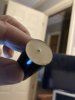
Dayton 8uf capacitor wire broken

Moonwatcher

Active Member
Just wondering if it's possible to use a cap with a lead that is broken, down to the quick. Maybe gouge out enough material around it to solder in a lead? This is for a KLH 17 crossover calling for 8uf caps, and I was excited to find this one in a drawer, an 8.2, which I figure should work--if I can somehow attach a wire to it.


Thanks! Dayton 8uf cap.jpg
 
Register to hide this ad
I have done this in the past in emergency situations. You can scrape some the the plastic surrounding the stub away and solder a new wire on. The trick is then soldering that new wire to something without melting the wire off the stub. As mentioned you will need to measure the capacitance when done.
 
Metallized film caps are very sensitive to heat. Soldering that close to the guts will allow lots of heat to flow where it is not wanted, potentially setting up the cap for failure. If you do solder a lead to the stub, use a long, tinned lead with a hot iron applying heat for a very short time.

I would not try it, but if you do, as suggested by alteclipsch, testing it before using is a very good idea.
 
Those Daytons are cheap, so I also would just replace it. As to heat, I always use a mosquito clamp (hemostat) as a heat sink on the cap wire where it enters the cap before soldering.
I use my roach clip for that same function.

Using a heat sink is a good practice. The best place to position the heat sink is between the heat source (soldering iron) and the heat sensitive component (the cap). But in this case, the stub is too short to have a heat sink between the cap and where the lead needs to be soldered.
 
It sucks though when you only need one part and shipping is going to cost as much or more than the part.
 
I have done this in the past in emergency situations. You can scrape some the the plastic surrounding the stub away and solder a new wire on. The trick is then soldering that new wire to something without melting the wire off the stub. As mentioned you will need to measure the capacitance when done.
Thanks, I will try this, and luckily I just bought a meter a couple months ago.
 
Back
Top Bottom