• Please note that Audiokarma will be offline briefly for updates early on Monday morning, September 28th.

dlucy's guide to Harman Kardon minimalist series 230A, 330, 330A, 330B B-1, 330B B-2, and 330C

dlucy

dlucy67 (Doug)
Staff member
Moderator
Subscriber
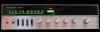
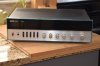
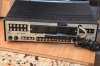
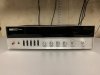
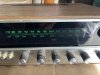
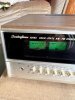
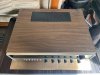
The third era of solid state stereo receivers from Harman Kardon centered around the 330A and 330B and the clones made by Roland and Soundcraftman:

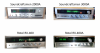
Harman Kardon 330abc or minialist series family.png Harman Kardon 330B clones.png

This thread is a guide to those models, their specs, and pointers to schematics and restoration threads for each. If you have additional information on any of these models, send me a private message and I'll get your info inserted into the right spot in the top posts.

I'm calling this era of HK stereo receivers the "minimalist" era... because that kinda fits their looks. If someone has a better name for this ear, let me know.

This era is identified by the change from the mostly-black, all-dark face plates of the prior "Nocturne" era to a very simple, silver-and-black, plain-lettering look.

Model numbers were numeric digits (e.g. 330) instead of the prior era's written-out numbers (e.g. “Three Thirty”).

I lump the models in the era in three waves of models:
  • Initial wave of follow-ons from the Nocturnes. This includes the 230A and the 330 (all numbers, no trailing letter). These were manufactured in the USA.
  • The second wave started with the 330A, continued with the 330B... and then the 330A's came back to life as 330B B-2 series. These were manufactured in Japan and Taiwan.
  • The final wave in this era is just the 330C.

The 330B was wildly popular and HK rebadged some 330A's as 330B's... which leads to a lot of confusion. There are also a good number of factory variants on the which-board-in-which-model category.


The 330C, the end of what I'm calling the "minimalist" era, is kind of a bridge to the follow-on Twin Powered era. It is more like a single-power-supply HK 430, but I've lumped the 330C in this grouping or era to keep search and model confusion to a minimum.

There are two models of "330", the 330i and the 330vi, which came much, much later and have nothing to do with the 330A, 330B or 330C... so the 330i and 330vi are not covered here.

Initial waves of models:

Second wave of models:

Final wave:

There are also a number of 330AB models re-badged by other brands:

Other Harman Kardon solid state receiver guides:
  • Stratophonic (SR-300, SR-300B, SR-400, SR-400B, SR-600, SR-600B, SR-900, SR-900B)
  • Nocturne (Seven Twenty 720, Two Ten 210, Two Hundred 200, Five Twenty 520, Five Thirty 530, Two Thirty 230, Three Thirty 330, Eight Twenty 820)
  • 330 minimalist (330, 330A, 330B, 330C)
  • Twin Powered (430, 530, 630, 730, 930)
 
Last edited:
Register to hide this ad
Harman Kardon 230A

230a 01.jpg
230a 02.jpg

  • Identical to the Harman Kardon 230 (Nocturne era) other than cosmetics
  • In the “minimalist” mostly-silver with black edges case like the 330A and 330B
  • Has separate AM and FM tuning panels (but they share the tuning knob)
  • Does NOT have pre-out / main-in jacks
  • From https://stereonomono.blogspot.com/2015/05/harman-kardon-230a.html :
    • The Harman-Kardon engineering team has completed a high performance stereo receiver which exceeds every specification ever established for medium priced stereo components. The new Model 230A combines the finest stereophonic sound with the industry's most distinctive styling to give high fidelity a new standard of excellence and performance at a price of less than $160.00.
    • Tuber sensitivity of the 230A is extraordinary. It pulls in distant stations without noise or fading. AM and FM performance neve deteriorates with age because the receiver produces no heat to change the value of component parts.
    • And when you tune the 230A to a station, it locks into place and never drifts.
    • The 230A adheres to the same philosophy of design that makes all Harman-Kardon receivers sound more transparent and lifelike. Frequency response, which is usually limited to the narrow range of 20-20,000 Hz in most receivers, is extended well beyond those parameters to give the sound you hear greater clarity and definition. All of the subtle nuances and shadings of music emerge with exciting realism.
  • Published specs
    • Power Output: 17 watts into 8 Ω, 20 watts into 4 Ω
    • Total Harmonic Distortion: less than 1%
    • Frequency Response : 20 Hz to 20,000 Hz
    • Power Bandwidth: 15 Hz to 70,000 Hz (at less than 0.3% THD into 8 Ω, both channels driven simultaneously at 8.5 watts per channel)
    • Frequency Bandwidth: 7 Hz to beyond 130 kHz
    • Frequency Response: 15 Hz to 70,000 Hz ±1.5 dB
    • Power Supply: AC, 110 - 240 Volt
    • Dimensions: 390 x 100 x 190 mm (15.4" x 3.9" x 7.5")
    • Weight: 6,5 (14 lbs 15,1 oz)
  • Features
    • From HK literature:
      • No deterioration with age because there's no damaging heat. You can expect the same high quality performance from 230A even after years of extensive use.
      • A special electronic circuit automatically switches FM tuner to stereo, the moment a stereo broadcasts received. Special light indicates FM stereo reception. Receiver switches to standard FM automatically when stereo broadcast ends.
      • High speaker damping controls excessive speaker excursions to avoid distortion during sharp bursts of sound. This results in clean, tight bass.
      • Contour for low-volume listening maintains full bass response even at levels where bass normally falls off.
      • Precise D'Arsonval movement tuning mater shows when you have tuned to strongest and clearest signal on AM and FM
      • Stereo in two rooms. Simple front panel switching eliminates the complexity and expense of external switching devices. Headphone receptacle permits personal listening.
      • Newly designed dial illumination shows AM or FM dial scale independently for maximum visibility.
      • Entire top section of receiver turns black when receiver is switched to phono mode of operation.
      • Illuminated push-button ON/OFF switch glows in red to indicate that receiver is on.
      • Continuously variable balance control lets you adjust stereo balance to suit acoustic requirements of your room. Permits you to sit far to one side of your room and still maintain perfect stereo.
      • Tape Monitor Switch for instant comparison of recorded material and original program.
      • Extended frequency response beyond the normal hearing range gives extra realism to the sounds you can hear. 230A sound is cleaner, more transparent, more sharply defined. You can actually feel the difference.
      • Separate illuminated power On/Off switch permits you to turn receiver on and off without upsetting other controls.
      • Heavy, counterweighted flywheel makes tuning smooth as silk
      • Two year warranty on parts and labor.
    • Variants
      • The earlier-era Nocturne 230 is identical except for the cosmetic changes from Nocturne to “silver-faced minimalist”
      • There is something called a 230E that is likely a variant or second sub-model
Useful links and more information:
 
Last edited:
Harman Kardon 330 (no letter)

330 numeric 02 DSC_0108.JPG

330 numeric 03 DSC_0110.JPG

330 numeric 01.jpeg

  • In the “minimalist” mostly-silver with black edges case like the 330A and 330B
  • Has split tone controls (each treble and bass knob can control each channel)
  • Capacitor coupled output
The preamp and power amp circuit design of the 330 (numeric digits and no trailing letter) is repeated from the Three Thirty Nocturne. They are a quasi-complementary, cap-coupled design. The output transistors are driven by a single stage of drivers. The Three Thirty and the 330 preamp + power amp circuits are very close copies of each other.
 
Last edited:
Harman Kardon 330A

330A 01 IMG_6154.JPEG 330A 02 IMG_6161.JPEG


330A 03 IMG_6174.JPEG


  • In the “minimalist” mostly-silver with black edges case
  • Some have split tone controls (each treble and bass knob can control each channel)
  • The Harman Kardon 330A was produced by Roland
  • Power output: 15 watts per channel into 8 ohms
  • Capacitor coupled output
After late 1973 or early 1974 when Consumer Reports gave the 330B a very favorable rating, H/K asked Roland to produce a batch upgraded 330As and label them as 330B, so one could say that the Roland-produced 330B B-2 series are also 330A, but in a modified or upgraded form. There is a service note covering this changes and some of the actual circuitry and component changes.

Internals:
  • The preamp and power amp circuit design of the 330A is repeated from the Three Thirty Nocturne. It's a quasi-complementary, cap-coupled design and the output transistors are driven by a single stage of drivers. The Three Thirty and the 330A/300B preamp + power amp circuits are very close copies of each other.
  • The 330A has pre-out and main-in rear panel jacks, so these must be jumped externally for the rest of the unit to feed the internal power amp. You can also use this feature to isolate the preamp or the power amp sections.
  • The 330A uses plastic TO-220 devices for output transistors and they are mounted inside the chassis on a multi-piece heatsink. That heatsink is then physically interfaced with the metal rear panel and the metal chassis which all the unit’s boards mount to.
  • The 330A has one set of varistors mounted to the internal heatsink.
  • The main power supply in the 330A produces 51 VDC from a double-diode rectifier.


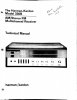
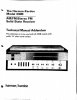
The correct service manual for the 330A looks like this:
(important note: some 330A boards have an error on the schematic. see links below for correction)

D779C9A7-CA04-46CA-8A14-9FC3D83E184B.jpeg

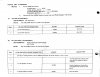
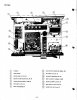
Adjusting the power amp board on the 330A is covered in the service manual:

D0C5B9D8-3490-4001-9B8C-A876288AD0CD.jpeg

51B49543-96D5-4FBA-8234-0676DEE1D574.jpeg

8AFC4741-C8B0-4987-8CE9-477D26BB68ED.jpeg

Useful links:
 
Last edited:
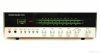
Harman Kardon 330B (also known as "B-1 series")

330B B-1 02 HK_330B_84198A_005.jpg
330B B-1 03 HK_330B_84198A_013.jpg
330B B-1 01 IMG_0277.JPG


  • In the “minimalist” mostly-silver with black edges case
  • There are several variants of the 330B, so be sure to identify which one you have before applying these notes (on the B-1 series) to your 330B.
  • There are several internal board and component variants within the B-1 series variant.
  • The first generation of the 330B was produced by Shin Shirasuna.
  • Power output: 20 watts per channel into 8 ohms
  • Capacitor coupled output
  • The 330B was a hugely popular receiver and there are a number of variants over multiple long production runs. These won’t make much difference when using a 330B, but they will make a difference if you go to repair, recap or restore one.
  • There are several internal board and component variants within the B-1 series variant.
  • The first generation of the 330B was produced by Shin Shirasuna. These are known as the 330B B-1 series. This is the first product Shin Shirasuna built for HK.
  • In late 1973 or early 1974 Consumer Reports gave the 330B a very favorable rating” and the 330B was suddenly in great demand and Shin Shirasuna could not produce the model fast enough for H/K's dealer orders, so H/K asked Roland to produce a batch of 330Bs (that were basically upgraded 330As) to fill the production shortage. These are known as 330B B-2 series.
  • The Roland 330B B-2 series were limited and Shin Shirasuna continued to produce the 330B model for a few more years.
  • Later runs of the 330B B-1 series featured ceramic strips in the FM tuner
  • Quasi-complementary 2SC1061 Silicon NPN TO-220 (plastic) output transistor


146D042E-17A1-45A9-8A3F-227F9CAC6BB4.jpeg
C2746272-5D46-4443-9963-C7A51550B22D.jpeg

6915F3F7-BB9E-46DA-BF16-FDB626CEC961.jpeg

16C8F046-C9A9-437E-8349-C8788CCD559F.jpeg


CF211D29-7229-4D3F-A6CE-4F0A6B0B1C9E.jpeg

Useful links:
 
Last edited:
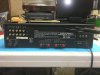
Harman Kardon 330B B-2 series (re-badged 330A)

330B B-2 01 IMG_6069.JPG 330B B-2 02 IMG_6070.JPG 330B B-2 03 IMG_6072.JPG


Due to the popularity of the Shin-Shirasuna-produced 330B, H/K asked Roland to produce a batch of 330Bs (that were basically upgraded 330As) to fill the production shortage. These are known as 330B B-2 series.

  • In the “minimalist” mostly-silver with black edges case
  • There are several variants of the 330B, so be sure to identify which one you have before applying these notes (on the B-2 series) to your 330B.
  • Capacitor coupled output
  • The 330B was a hugely popular receiver and there are a number of variants over multiple long production runs. These won’t make much difference when using a 330B, but they will make a difference if you go to repair, recap or restore one.
  • The 330B B-2 series is, fundamentally, a 330A with a few upgrades and re-branded as a 330B.
  • The first generation of the 330B was produced by Shin Shirasuna. These are known as the 330B B-1 series. This is the first product Shin Shirasuna built for HK.
  • In late 1973 or early 1974 Consumer Reports gave the 330B a very favorable rating” and the 330B was suddenly in great demand and Shin Shirasuna could not produce the model fast enough for H/K's dealer orders, so H/K asked Roland to produce a batch of 330Bs (that were basically upgraded 330As) to fill the production shortage. These are known as 330B B-2 series.
  • The Roland 330B B-2 series were limited and Shin Shirasuna continued to produce the 330B model for a few more years.
  • 20 watts per channel into 8 ohms
  • Quasi-complementary Silicon NPN TO-220 (plastic) output transistor

A39DE46D-24C7-4177-88BA-E43C3B57E2D2.jpeg
8E90DE32-DEB3-451C-9CF1-E6EFB7C69EDD.jpeg

1873E418-69FD-4C01-9E5F-FCA891A39F29.jpeg

214A5EA5-E9BA-4D36-AF29-556C153C738C.jpeg

B285EF98-BD9E-4F0D-B12B-393DA6BE18A4.jpeg

Useful links:
 
Last edited:
Harman Kardon 330C

330c harman_kardon_330c_am-fm_stereo_receiver.jpg
  • The second product produced for HK by Shin Shirasuna
  • In the “minimalist” mostly-silver with black edges case
  • Direct-coupled (neutral sounding) instead of capacitor-coupled (sweet or warm sounding) output
  • 23 watts per channel RMS ?
  • Has a Slow Start circuit(s) to reduce the "thump" at power on
  • Does not have pre-out and main-in jacks
  • The Harman Kardon 430 is fundamentally identical to the 330C… except the former has a twin power supply.
330C 02 IMG_4095.JPG

330C 03 IMG_4129.JPG

330C ad 01 Harman-Kardon-Components-Original-Ad-330C-Rec-HK-2000.jpg


Useful links:
 
Last edited:
Soundcraftsmen 3000A

As far as I can tell, the SC-3000A is a relabeled HK 330B, but I have not confirmed this yet by schematic or looking inside one.

There is also a Soundcraftsmen SC-3000 (no letter "A") which is similar, but not the same.

Soundcraftsman 3000A 01.jpg

Soundcraftsman SC-3000A specs from flyer.png

Specifications (from HiFiEngine):
  • Tuning range: FM, MW
  • Power output: 30 watts per channel into 8Ω (stereo)
  • Frequency response: 9Hz to 100kHz
  • Total harmonic distortion: 0.2%
  • Damping factor: 35
  • Input sensitivity: 2.5mV (MM), 160mV (ceramic), 130mV (line)
  • Signal to noise ratio: 67dB (MM), 80dB (line)
  • Speaker load impedance: 4Ω to 16Ω
  • Dimensions: 17-11/12 x 5 x 12-1/2 inches
  • Weight: 8.9kg
Useful links:
 

Attachments

  • Soundcraftsman 3000A 03.jpg
    Soundcraftsman 3000A 03.jpg
    99.9 KB · Views: 21
  • Soundcraftsman 3000A 02.jpg
    Soundcraftsman 3000A 02.jpg
    131.8 KB · Views: 15
  • Soundcraftsman 3000A 04.jpg
    Soundcraftsman 3000A 04.jpg
    123.6 KB · Views: 17
  • Soundcraftsman 3000A 07.jpg
    Soundcraftsman 3000A 07.jpg
    138.5 KB · Views: 20
  • Soundcraftsman 3000A 08.jpg
    Soundcraftsman 3000A 08.jpg
    133.8 KB · Views: 24
  • Soundcraftsman 3000A 10.jpg
    Soundcraftsman 3000A 10.jpg
    176.5 KB · Views: 23
Last edited:
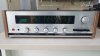
Hello. I have a question about the stereo lamp of my 330B B-2 series, if it's alright to post it here of course. I found the right service manual and in this manual, I see that the stereo light is as follows: 60 volt, 30 mA. To me that seems unlikely and I think it's not right. What is your thought about this?
Schermafdruk-van-2021-08-31-22-21-20.png
 
Hello. I have a question about the stereo lamp of my 330B B-2 series, if it's alright to post it here of course. I found the right service manual and in this manual, I see that the stereo light is as follows: 60 volt, 30 mA. To me that seems unlikely and I think it's not right. What is your thought about this?

They must mean 6.0V, not 60V. I use 8V lamps for these.
 
Great thread, super interesting and informative. Thanks Doug, for your considerable efforts. Yesterday I picked up a nice 330B in great cosmetic shape and is sonically great. Unfortunately, it has a transformer hum. Not terrible, but still bothersome. When I put my hand on the case, it reduces the hum by half or so.

Anyway, I'll need to try to get to the bottom of that. I suppose that I will start by seeing if it's not so much a case of the breakdown of the laminate structure of the tranformer, but, something faulty in the power supply putting strain on the transformer. Are all power transformers within the variants of the 330B series interchangeable? I've seen some that are all black whereas mine is black with brass coloured caps.
 
Last edited:
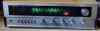
Are all power transformers within the variants of the 330B series interchangeable? I've seen some that are all black whereas mine is black with brass coloured caps.

Not really. They all have a ~6VAC secondary for the bulbs and a 45 to 50 vac secondary at 2-3 amp for everything else, but the 330A is low (45v or so) compared to the 330b B1 and B2 (50v or so).

you could swap them, sure, but you may have fewer volts output from the big secondary than you want.
 
Back
Top Bottom