• The move to the new server is done. There are some software and database maintenance updates in process. This has us passing the hat around to help out. We appreciate any donations. Seriously, even a dollar helps. The payment page may be found here - https://www.audiokarma.org/support.html

Do different vendor crossover caps really sound all that different?

Which speaker Crossover Capacitors do you prefer


  • Total voters
    78

Fred DuBuron

Active Member
This weekend I found a single orphaned AR-28S for an astoundingly low price of $8.99 at a local Thrift Store.
I almost cried...
so I am eager to hear this critter sing... and hopefully, find it a twin sibling at some point
New surrounds are on order...

index.php


As far as the cross-over is concerned...
index.php

For my usual speaker reconditioning projects... I would usually use the Dayton 1% caps (marked in green) and have been happy with the overall sound on my other projects. I am curious as to how the caps vary from vendor to vendor and would like to see if they have any effect on softening the sound stage a tad.

Here are the options to land on the 8.0uF crossover cap using two wired in parallel ...
Which do you prefer? (AUDYN, DAYTON, JANTZEN,or SOLEN)
I do not want to spend more than $12.00 per speaker so for this exercise I am avoiding the big $$$ Caps
index.php
 
Register to hide this ad
In my experience the differences are subtle but they're real. Now whether those differences are audible to everyone, that's the subject of endless argument. But each person's hearing acuity and each person's audio systems are different. Some can hear differences and some can reveal the differences, and some can't. Whatever the case, don't let it interfere with your listening enjoyment
 
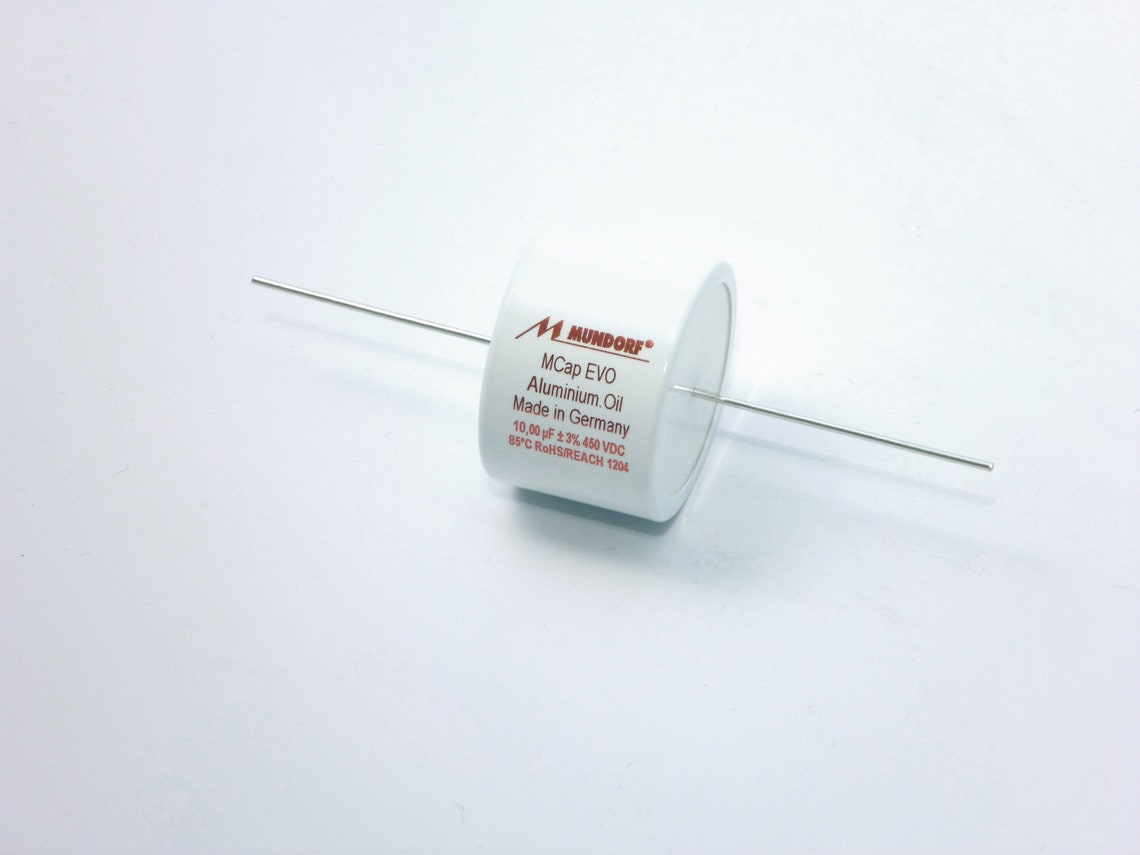
I've experimented with a number of different capacitor brands, and I agree 100% with @homebrew, capacitor differences are real and audible. Sometimes subtle, and other times very obvious, depending on the person or the system. Of the brands I've tried, I like Mundorf the best. Their EVO Oil caps are very transparent and open in sound, with an expansive soundstage.

Another capacitor brand I like is ClarityCap. They're much warmer in tone, with a broad soundstage too. A ClarityCap PX cap, in an 8.2uF value, would work well in your AR-28's, and be under budget.

Clarity PX 8.2
 
I have used the Solen Fast Caps, the Audyn Q4s, Aerovox, and the ClarityCaps and for the money (and size compared to the ClarityCaps), I like the Q4s and use them on the Mermans.
 
Every component in the signal chain affects the output ..
Caps are semiconductors ...
If their materials and construction aren't exactly the same then it shouldn't be surprising if they sound different ..

I've always noticed subtle and sometimes not so subtle differences between dissimilar caps.
 
I was originally skeptical of the idea that there was much difference in caps until I installed some that made a very good tweeter sound like some women singers were screeching. Then I read about how capacitors are manufactured. You can call me a convert; though I think a lot depends on the ability of the drivers to resolve the differences. For the record, those same caps that caused the screeching in one pair of speakers seem to work wonderfully in a pair of Teledyne/AR38s I recently refurbished.
 
I absolutely don't like mylar, polypropylene, dry caps for frequency filtering..This is the weak link sonically in many systems..Ditch those every chance I get..Telmec makes a excellent sounding polypropylene in oil AC run cap for under $25 for mids, A mix of Russian military surplus RMGO paper in oil with 10% value in copper foil or metallized polypropylene film to bring up the last value , depends on what design tweeter..horn, silk dome, ribbon, ect..There is no reason to suffer the horrible modern plastic cap sound..Solens is one of the worst.. Muldorf top line is one of the better mid Fi brands..Dearborn , Textronix, Juniper ect all US builders, some extinct now make many sonic superior caps and films but I prefer milspec for cost savings really depends on the network it's serving..
 
I also order an extra pair of 4.7 mfd caps that I am going to test on a pair of bookcase speakers I am rehabbing.
I have a pair of 4.7mfs caps from the following vendors

- Dayton Audio PMPC-4.7 250V Precision Audio Capacitor
- Mundorf M-CAP® EVO Oil Capacitor matched within 3%
- Audyn Cap Plus 4.7uF 800V Double Layer MKP Metalized Polypropylene Foil Crossover Capacitor
and the factory original 4.7mfd cap that was installed.
I plan to run each cap against the stock cap then pair off the winners against each other.
I fear the results may be motivation to recap some speakers I had been happy with as they were first modified.

More to come...
 
Don't forget the even MORE contentious idea of bypass caps. Using a smaller, usually film or foil, and 1:10 capacitance of the cap being bypassed, in parallel with a cheaper foil or electrolytic.
At one point I seem to remember people talking about JBL using bypass caps on bypass caps on caps!
 
Don't forget the even MORE contentious idea of bypass caps. Using a smaller, usually film or foil, and 1:10 capacitance of the cap being bypassed, in parallel with a cheaper foil or electrolytic.
At one point I seem to remember people talking about JBL using bypass caps on bypass caps on caps!

Somebody at JBL loved bypass caps and parallel resistors at one point.

57dbdbd8eb842_N250TiSchematic.jpg.d4e082f8e04b55e3980360fe2f67751f.jpg
 
If you really wanna do some research into the subtle differences in caps- http://www.humblehomemadehifi.com/Cap.html

I find his descriptions and all his comparisons are sighted tests, meaning he knows what cap is being used, and it seems to almost totally be based on pricing.
His "comparisons" would hold far more weight, if he compared not knowing what was being tested.

Some good information for sure, but I think we all must realize "sighted" comparisons are not all that meaningful to most of us, as they encompass the testers biases and likes and many other issues.
 
I also order an extra pair of 4.7 mfd caps that I am going to test on a pair of bookcase speakers I am rehabbing.
I have a pair of 4.7mfs caps from the following vendors
- Dayton Audio PMPC-4.7 250V Precision Audio Capacitor
- Mundorf M-CAP® EVO Oil Capacitor matched within 3%
- Audyn Cap Plus 4.7uF 800V Double Layer MKP Metalized Polypropylene Foil Crossover Capacitor
and the factory original 4.7mfd cap that was installed.
I plan to run each cap against the stock cap then pair off the winners against each other.
I fear the results may be motivation to recap some speakers I had been happy with as they were first modified.

More to come...

@Fred DuBuron I applaud your effort, and look forward to the results. I certainly drink the Kool-Aid when it comes to caps having an influence on sound. I would highly recommend building a capacitor break in station, to give all your caps a good "run in" before comparing. Depending on the cap construction and materials, it might take 100-200 hours or more to "settle in". This is much easier to accomplish with a cap break in station. I found the design for my station here on AK. A search should track it down. Once you have that done, I would recommend putting the crossover outside the cabinet, and adding alligator clips to each cap so you can quickly swap them back and forth. That way you can listen to a track, swap the cap, and immediately listen to it again. I've wanted to do this for a long time.

I find his descriptions and all his comparisons are sighted tests, meaning he knows what cap is being used, and it seems to almost totally be based on pricing.
His "comparisons" would hold far more weight, if he compared not knowing what was being tested.

Some good information for sure, but I think we all must realize "sighted" comparisons are not all that meaningful to most of us, as they encompass the testers biases and likes and many other issues.

@kevintomb I have spent way too much time combing through that list trying to find the "diamond in the rough" capacitor. I appreciate the effort put into that massive document, and I think it's a reasonable place to start your cap selection journey, but in the end synergy always wins. I can't even begin to imagine the effort it would take to break all those caps in, test them in a blind setting, and record all the sonic impressions.
 
I also order an extra pair of 4.7 mfd caps that I am going to test on a pair of bookcase speakers I am rehabbing.
I have a pair of 4.7mfs caps from the following vendors

- Dayton Audio PMPC-4.7 250V Precision Audio Capacitor
- Mundorf M-CAP® EVO Oil Capacitor matched within 3%
- Audyn Cap Plus 4.7uF 800V Double Layer MKP Metalized Polypropylene Foil Crossover Capacitor
and the factory original 4.7mfd cap that was installed.
I plan to run each cap against the stock cap then pair off the winners against each other.
I fear the results may be motivation to recap some speakers I had been happy with as they were first modified.

More to come...

I've recapped using Mundorf EVO Oils, Dayton PMPC's, ClarityCap CSA's and ESA's, and Audyn Q4's. I have some Jantzen Standard-Z's to try next. So, I look forward to your results of your cap tests.
 
Don't forget the even MORE contentious idea of bypass caps. Using a smaller, usually film or foil, and 1:10 capacitance of the cap being bypassed, in parallel with a cheaper foil or electrolytic.
At one point I seem to remember people talking about JBL using bypass caps on bypass caps on caps!

JBL, Thiel, Infinity, VMPS, and Snell all used bypass caps. Mainly in parallel with tweeter caps. I've used them on recaps, and heard improvements too.
 
JBL, Thiel, Infinity, VMPS, and Snell all used bypass caps. Mainly in parallel with tweeter caps. I've used them on recaps, and heard improvements too.
Oh so have I when designing crossovers from scratch. But there are those out there who figure a cap is a cap is a cap.
 
Back
Top Bottom