• The move to the new server is done. There are some software and database maintenance updates in process. This has us passing the hat around to help out. We appreciate any donations. Seriously, even a dollar helps. The payment page may be found here - https://www.audiokarma.org/support.html

Dunlavy Audio Labs Archive - From the mind of a "Legend"!

SimplySound

Kent Engineering & Fondry
I noticed that we didn't have a central site for discussion and archiving of information about what, I believe most would agree, was a legendary speaker line from a "Legendary" designer. I think we also would all agree that it takes some special capabilities and insight to become recognized in this hobby as a Legend!

Taking a seat next to names like Sir Raymond Cook, John Wright, Arnie Nudell, Jim Thiel, Henry Kloss and many others who hold the title of Legendary Speaker Designer is not trivial. I believe John Dunlavy deserves such a seat because of his commitment to his ideals and his approach to the reproduction of music. Accuracy was John's tenet and it was his painstaking approach to accurate musical reproduction that staked his position in the pantheon of audio!

So let us go forth and present for all to appreciate the legacy of John Dunlavy, Duntech, and the Dunlavy Audio Labs!

HISTORY TIMELINE:
  • John Dunlavy - Born 1929
  • 1963 - John started Duntech International in the United States, where it established itself as a world leader in antenna systems.
  • Between 1963 and 1972, Duntech designed and made almost all of the National Aeronautics and Space Administration's ground-based communications and telemetry antenna systems for such projects as the Mercury, Gemini and Apollo spacecraft and for satellites.
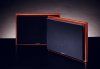
  • 1982 - Duntech's first loudspeaker, which resembled a picture in a frame (PCL-3), went into production, and Duntech claimed it as the world's first, full-range, audiophile-quality, wall-mounted loudspeaker.
  • 1986 - Breakthroughs in measurement technology made possible the design of Duntech's flagship loudspeaker, the Sovereign 2001, retailing in the United States at $15,000 a pair.
  • 1992 - John Dunlavy leaves Duntech Corp.
  • 1993 - Dunlavy Audio Labs starts business operations.
  • December, 2001 - Dunlavy Audio Labs sold to Wybron, Inc.
  • November 7, 2002 - Dunlavy Audio Labs, LLC ceased operations.
  • January 4, 2007 - John Dunlavy passed away of natural causes.
 
Last edited:
Register to hide this ad
For posterity from Stereophile on the closure of DAL. This provides some history, but is there more....

"Earlier this month, an unambiguous and simple message went up on the Dunlavy Audio Labs web site: "As of November 7, 2002, Dunlavy Audio Labs, LLC has ceased operations." A phone call to the company confirms that it is indeed out of business, although Dunlavy president Keny Whitright did not return calls seeking comment.

The company had been founded in 1992 by loudspeaker designer John Dunlavy and had changed hands at the end of 2001 when it was sold by John and Joan Dunlavy to Wybron, Inc., a professional lighting manufacturing firm. Wybron had been founded by music-industry veteran Keny Whitright to produce a "scrolling color changer," a box to change the color of stage lights automatically. Wybron was located adjacent to the Dunlavy Audio Labs facility in Colorado Springs, so it had seemed a good idea to Whitright to purchase the loudspeaker company when his neighbor John Dunlavy had expressed interest in retiring.

Whitright had seemed bullish about Dunlavy's future when John Atkinson spoke with him at the 2002 CEDIA conference in Minneapolis, and the company had introduced an impressive MLS-based turn-key room-acoustics analyzer to help dealers get the best sound from the speakers they sold. The company had also announced a pair of new products at the 2002 Consumer Electronics show.

Dunlavy's loudspeaker have always been highly regarded by the Stereophile staff, having garnered an award as "Product of the Year" in 1994 for the SC-IV loudspeaker, and again in 1996 when the Signature SC-VI shared the loudspeaker categeory with the Aerial Acoustics 10T.

Steven Stone favorably reviewed the Dunlavy Audio Labs Signature SC-VI in August 1996, and Robert Deutsch liked what he heard when he reviewed the Dunlavy Audio Labs SC-IV/A loudspeaker in November, 1998. John Atkinson also interviewed company founder and loudspeaker designer John Dunlavy for the August 1996 issue."


Read more at http://www.stereophile.com/news/11492/index.html#o5FlWjki1x7MKylC.99
 
I pulled this from another forum (Thanks Audioguy @ What's Best Forum):

A little more background might be of interest.

John Dunlavy originated Duntech in Texas (Dallas in the late 1970s I believe) with a 3-way, large box speaker (but not 6' tall like later models) which was adopted as a reference speaker by Big Bert Whyte at Audio Magazine. The Duntech line was next expanded to include one or two wall mounted models (but fairly shallow, looking not unlike a picture frame - PCL-3) supplemented with a floor mounted woofer box.

By the mid 1980s, Mr. Dunlavy had moved his company to Australia and began developing the Sovereigns, Princesses and smaller models in the line up. Due to their size and weight, most of Duntech speakers were very expensive to ship, particularly to a major potential market like the US.

So in the early 1990s Mr. Dunlavy returned to the US to supervise construction of a new, lower priced model in Utah, the Black Knight. After roughly a year, and for reasons I'm not privy to, he decided to separate from Duntech Audio which remains in Australia, and form a new company Dunlavy Audio Labs (DAL) in Colorado.

With DAL he initiated the SC series which eventually numbered from I to VI. Like his floor standing Duntechs, the SC speakers were tall D'Appolito (SS: Technically a Symmetrical Driver Array - SDA) array, time and phase coherent designs. This suggests why there is such a similarity in sound between the two speaker lines. He went on to develop several additional speakers, not all of which made it to the market place. One of those was self-powered, tri-amped, with digitally compensating crossovers. While not inexpensive, in my opinion the DAL speakers were built more to a price point.

Unfortunately after age and health forced him sell DAL, it failed within a year under new ownership.

PCL-3 Image

jade.jpg
 
Last edited:
Nice idea, SS. We should highly encourage anyone who has XO schematics and or tips/help for ongoing maintenance of their Dunlavys or Duntechs to chime in!
 
I had the chance to have a good listen session with a pair of SC-IV and
those are the best i've seen yet. You have to be in the sweet spot tho,
as they are very directive (beaming) but, oh-boy!!!.
 
i heard a pair of Duntechs in an optimum room at a mastering studio once. they sounded like live music, which was the goal in mastering, not always achieved but one could not have blamed those speakers.:D
 
This is great to see that others also go deep into some of the great audio creators history, Almost like a favorite sports team my favorite designers seem like at times. I love trying to understand the thoughts of a great speaker designer like Dunlavy, along with many others.
 
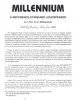
This is an excerpt from an article on the SC-III from SoundStage! Equipment magazine that I believe gives a good background overview of who John Dunlavy was. I'll post the PDF later in this thread:

John Dunlavy has recently become widely known, largely due to his comments in the internet newsgroups. After more than 25 years involved in High-End audio design and manufacture, the last several have seen his design philosophies widely circulated and hotly debated. Not that those in the know have been unaware of him before the Net, it’s just that his recent comments have introduced John to those not in the industry. Many of his ideas have been used in speaker design for many years. For example, every time you look at a tweeter surrounded by felt to control cabinet diffraction you are looking at and hearing a John Dunlavy idea and patent (and more than likely you’re listening to a patent violation as well, but that’s a story for another day). Still, in many ways it is unfortunate that his recent prominence has come by way of his firm and frank comments in the newsgroups rather than as a result of his speakers, since the proof of his design philosophy is readily available.

To understand that design philosophy, you must have some understanding of John Dunlavy himself. Like many audio designers, he did not start out in audio. But unlike the garage electrician, John started out in pure science. Back in the 40's and 50's he studied wave theory, and then graduated to antenna research and design. This expertise was put to much use by the US government in top secret military design. John’s accomplishments led to a prominent standing in the international science community. The recognition led to his co-chairing several UN panels with leading Soviet, American and European Scientists. With this background and hard science approach, he has developed a design approach that solves known problems with elegance and precision. Yet his love of music, he played acoustic bass for years in a pick-up jazz band and records his local symphony orchestra for radio broadcasts, infuses his approach with an understanding of the magic of music.

In the late 60's and early 70's, while affiliated with Corpus Christi State University, he had the opportunity to conduct research on acoustics and music reproduction. Using students as subjects he ran repeated tests on aural memory, phase sensitivity and acuity, room interaction and other topics. Taking the results of these experiments and coupling them with his background in antenna and wave theory, John began to design speakers that focused on elimination of audible and measurable distortions, with a high priority given to phase and time alignment. The result of these experiments was a company called Duntech. The Sovereign, Black Knight and others were among the justifiably famous speakers of the line. After nine years in Australia, when an opportunity came to expand production facilities to the US, John and his wife Joan returned home. Changes in the Duntech business and business relations led to his departure from that firm in 1992 (many of the details of these events can be found in Manufacturers Comments in Stereophile from several years ago). In 1993 he then founded Dunlavy Audio Labs in Colorado Springs. Building a state of the art design and production facility led to the latest statements of his design philosophy, the Signature Collection line of speakers.

The SC line, consisting of the SC-I, II, III, IV, V, VI and the recently added SC-I A/V, all feature Dunlavy's symmetrical driver array or SDA. Often confused for the D'Appolito alignment, Dunlavy's SDA deals with several speaker design goals at once. To achieve a point source radiation pattern, all drivers, with the exception of the tweeter, are paired. Using the SC-III as an example, this means that each loudspeaker has a pair of bass drivers and a pair of mid-range drivers with the bass drivers mounted at the top and the bottom of the cabinet, the tweet in the middle, and the mids between the bass and the tweeter. To achieve time alignment, each driver is mounted so that its acoustical center is on a vertical line with each of the other drivers. Thus, the bass drivers are on mountings that move them out a bit, as compared to the mid-range drivers, which are mounted flush on the cabinet. The tweeter is recessed and surrounded by felt to control diffraction.

To ensure phase accuracy, 1st order crossover slopes are the only types used throughout the speaker. A major problem with first order slopes is that each driver must be able to perform with great linearity well out of its passband. To achieve this type of driver quality, Dunlavy tests every driver, rejecting the majority and storing the specs for those that pass. Once the specs are stored, drivers are selected to build pairs of speakers. Sets of four woofers, four mids and pair of tweeters are computer selected within a response deviation of less than .25 dB. This accomplishes one more of John’s production goals, precisely re-creating the sound of the design master. This tight production tolerance is one of, if not the tightest in the industry. It is also tighter, as inflammatory as this sounds it is no exaggeration, by an order of magnitude than several other high end speaker companies.
 
Last edited:
I've had a few opportunities to here the SC-V & SC-VI along with the sub tower (don't know the name, but it's at LEAST as large as the SC-VI's) Each speaker had it's own McIntosh amp. All sorts of gear in there.
I listened in dedicated room that probably cost more than my home. They had a presence that I could not describe. Amazing speakers. That sound of high efficient, very large speakers in a near perfect room is just...awesome.
 
Nice idea, SS. We should highly encourage anyone who has XO schematics and or tips/help for ongoing maintenance of their Dunlavys or Duntechs to chime in!

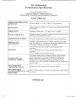
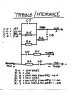
Hi Tom... this is a good article on "upgrading" the SC-IV/a Crossovers (if ever a thing was possible)... here is something to bear in mind from that author!

"I read everything I could find about Dunlavy speaker modifications at many different Internet forums. I searched in vane for schematics that could help direct me, but I was told by many that no such thing was available, and in fact if it was, it would not have values listed because Dunlavy designed each crossover circuit to match the drivers it was associated with."

So please view these as reference only... your crossover will vary! ;)

1164385997.jpg 1164386000.jpg
 
A few years ago, the Dunlavy family sold off the remainder of the stock of completed speakers and drivers on craigslist. I tried for some time to negotiate but prices were firm and discussions bordering on rude. But regardless, Colorado Springs is home to two greats, Dunlavy and Rowland...
 
I've never heard Dunlavys but a bit over 20 years ago I heard a pair of Duntechs at a HiFi Show here in Australia. I still vividly recall how lifelike the speakers sounded on the CD The Fairfield Four - Standing In The Safety Zone. I was quite stunned by how much the voices sounded like they were actually coming from right in front of me. As if four men were standing there singing.

Some sonic memories stay with one forever.

Another was the time I heard the KEF Reference 104/2 speakers partnered with some excellent Electrocompaniet electronics. I've listened to a few really excellent combinations over the years. There is no better education in HiFi than getting off one's arse and going to hear as many systems as possible.
 
I tried some Duntechs, can't recall the model name (a tall 3way with 5 drivers - Black Knight?, Royal Dutchess?, Earl of Beef?, I dunno, something like that) back in the late eighties. It was during my exploration into an improvement over the AR9s that ultimately lead me to KEF 107/2s a couple years later. Anyway, they were impressive in many ways, dynamics, imaging, mid range cohesiveness... all the usual audiophile stuff. The reason I returned them was my room. My issue was that they needed too much distance to allow the drivers to really sound right. At least 8-10 ft, but ideally 12-15 ft between me & the front of the speakers, and at least 3-4 ft behind the speakers... that meant they barely fit in my 20+ft long room with me sitting against the opposite wall, and this was NOT their "big" model, the Sovereign, but a smaller version.

If I had a really large room, I could see myself going for a pair, they were really great speakers, but as with so many things, it's often a matter of "the right horse for the course".
 
Cool post. I was lucky enough to hear just about all the bigger models years ago at Soundex.

What struck me was in the pic in post #5. The Aletha looks almost identical to my Clearfield Continentals made by von Schwiekert around the same time. Only visible difference is the placement of the tweeter, and of course all the drivers. But the shape of the cabinets are the same.
 
I tried some Duntechs, can't recall the model name....
If I had a really large room, I could see myself going for a pair, they were really great speakers, but as with so many things, it's often a matter of "the right horse for the course".

I've never heard Dunlavys but a bit over 20 years ago I heard a pair of Duntechs at a HiFi Show here in Australia....
Some sonic memories stay with one forever... There is no better education in HiFi than getting off one's arse and going to hear as many systems as possible.

Good to hear from you Cliff & Theo... always love engaging with you two in "audio banter".... I've been off the board for a bit, but that doesn't mean my "Audio Journey" has ended. Glad to be back!

Yes Cliff, you related to my journey to the KEF R107 and helped lead me to the wonder of Acoustat and here I am in the splendor of Dunlavy! I had to emphasize Theo's comment above... how true! Take up friends to hear their systems, go to a high end shop to take a listen and if at all possible go to the CES or RMAF!

As for Dunlavy... I am really into "accuracy" as you two know and the aspect of phase alignment and coherence is what I loved about the R107's... for my room size I needed something with a little more "presence" than the Big KEF's and the SC-IV's really fit the bill, complimenting the R107's really well. Good stuff!
 
Last edited:
Back
Top Bottom