• The move to the new server is done. There are some software and database maintenance updates in process. This has us passing the hat around to help out. We appreciate any donations. Seriously, even a dollar helps. The payment page may be found here - https://www.audiokarma.org/support.html

Dunlavy Audio Labs Archive - From the mind of a "Legend"!

And finally, here is the seventh and final part in the series of articles John Dunlavy wrote for Widescreen Review. This was from August 2007 after his passing. This is entitled:

Loudspeaker Accuracy
How To Know You Bought An Accurate
Loudspeaker— Part 7
 

Attachments

Should be interesting when I 'pop the hoods' here in the near future.... will both crossovers match? Did they spend even more time storing 'finished' speakers waiting for a mate or match 10 drivers then hope they all perform similarly in the chamber with little or no variation in crossover between the two? My biggest hesitation on even starting this process is that I feel the deep internal push towards recapping speakers now 25+ years old. Will I do them more harm than good, even if I just exchange part for part at the same listed value?

My understanding is that each and every

Speaker was voiced by john, to sound the

way that he wanted it to sound.

By ear,

To like sound live music.


I have a pair, and will not change anything...
 
My understanding is that each and every

Speaker was voiced by john, to sound the

way that he wanted it to sound.

By ear,

To like sound live music.


I have a pair, and will not change anything...

I have no plans to 'change' anything but, again, at the age they are getting to be the capacitors may easily have shifted out of spec. I have no compunctions about swapping deteriorated caps out for fresh caps with the same specs; I would have some if I started dicking around with the circuit. I would and will change them out the same way I would an oil filter or spark plug... I want my SC-IVs to sing for the long run, not enter and begin a downhill slide
 
Thank you for posting these - it is great reading them.
I am fortunate to have two pair of Duntech speakers (Marquis and Princess) and I don't think that I could ever afford to upgrade them
The princess especially are way ahead of any other speakers I have owned. I'm also not tempted to look inside them anytime soon - if it aint broke and all that!
 
Hello, I have a pair of Dunlavy audio lab sc-iv.
I was wondering if anyone knew of any upgrades I can do to these myself ?
Thank you
 
I’m referring to the very first post with the history timeline. It seems that you guys in the USA are either not interested or do not know about the Duntech history in Australia. Duntech speakers were at the peak of anything being made in Australia and were highly respected. Any Duntech speakers that you might see in the USA were most likely built in Adelaide in Australia. They were and still are excellent speakers. I owned a pair of Black Knights and wish now that I still had them. Duntech still operates in South Australia and as far as I know will service and repair any early Duntech models.
 
Good friend of mine has Dunlavy SC-VI's. I've been very fortunate to have the opportunity to listen to them extensively. The big Dunlavy's have an effortless quality about them, and they reproduce the dimensions and dynamics of music like few other speakers I've heard. I've heard other speakers of similar size that had problems with driver integration until you were well back from the speakers, but that is not an issue with the SC-VI's.
 
It would be great to somehow get schematics for as many of the different
models as possible. Perhaps if I sell some speakers, I'll buy a pair to reverse
engineer.
 
I'd never gotten to hear a pair of Dunlavy's until earlier this summer. I bought a pair of SC-IIIs about 100 miles away from me for a really good price and instantly fell in love with them. Then about a month ago a really nice pair of SC-IVs were posted on Audiogon about 300 miles away in Fenton, MO and I decided I had to have them. They are very different than the 802s that I've owned since 2001, and I wish I could have had the SC-IVs years ago! The SC-IIIs are extremely similar to the IVs, just less bass, but both really benefit from stereo subs.

Thanks to those who posted all of the good info, I appreciate it as a new Dunlavy owner.
 
I just came across this thread want to make some comments.


I first became aware of John Dunlavy in the mid 80's from an article in Audio Magazine reviewing the Sovereign 2001's by Bert Whyte. I had a pair of B&W 801's in a dedicated 18'x23'x8.5' audio room in the basement of my home in Denver. Bert had also written an article about LEDE room design using a mix of absorption and diffusion. I bought a copy of 'Sound System Engineering' by Don and Caroline Davis and proceeded to treat my room with Sonex, RPG diffusors, and Owens Corning ceiling panels. The 801's sounded a bit anemic but imaged amazingly well with the treatment so I decided to find a Duntech dealer and listen to the Sovereign's since the review raved about their accuracy and power.


I called Warren Weingrad of W&W Audio in North Carolina, the US distributor for Duntech, and he told me Listen Up was the local dealer in Denver. I went to Listen Up for a demo and information but the salesman I spoke with didn't know they were a Duntech dealer and they had no speakers or literature in the store and told me if I wanted they would place an order for me but wouldn't take them back if I was displeased. I called Warren back and told him of the situation. It was close to CES and he invited me to meet him in Las Vegas where he had a demo room at the Golden Nugget and expected John to be there. I went and met Warren and had a fantastic demo of the Sovereigns along with the rest of the Duntech line. After talking about the situation with Listen Up, Warren offered to sell me Duntech speakers at dealers cost and if I wasn't happy I could return them and he would cover shipping. Well that was akin to throwing heroin in front of an addict. I ordered a pair and subsequently a pair of PCL-5's and a pair of IB20 (Thor) subwoofers. Unfortunately I had to leave before John arrived. BTW, John's first company was Audio Standards Corp. in Austin, Texas. The first loudspeakers he designed and built were sold through a local Austin audio shop and sold well enough that John decided to go into production full time. The IB20's and PCL-5's I received were in Audio Standards boxes.


When John and Joan decided to move to Australia the Australian government was offering incentives for companies to relocate there. They went to Adelaide and started Duntech where John was able to fully realize his design vision. Time and phase alignment were very important goals to achieve and the use of 1st order crossovers, symmetrical driver configurations, and staggered alignment of drivers was deployed across the line (PCL stands for phase coherent loudspeaker). To this day I don't know of any other loudspeaker that measures as accurate as his designs in an anechoic environment.


Why John and Joan decided to return to the US I don't know, but they did intend to set up a co-production facility in Utah where they were going to start producing the Duntech Black Knight. According to John some of the lenders or investors pulled a coup and tried to take control of the company. That's when they made the move to Colorado Springs and I got to know them.


When they first started Dunlavy Audio Labs I was doing acoustical correction work for Cambridge Signal Technologies (i.e. SigTech). Being an admirer of John's designs, I wanted to get to know the man and pick his brain. They were just getting started in their first Dunlavy facility and I managed to get contact information, called, talked to John, and got an invitation to visit. John was a true gentleman and I spent several hours with him including a factory tour, we went to lunch and then spent the afternoon in his listening room. That was the start of a great friendship. John talked me into selling my Duntech speakers and replacing them with Dunlavy's which he felt were better designs. He personally felt that the SCV was the best speaker he ever designed. Since I was a part of the industry I received manufacturer accommodation pricing which once again was like throwing heroin in front of an addict. I subsequently acquired a pair of SCI's, SCIII's, SCIV's, and SCV's all of which I still have. I spent many days with John at the List Drive facility measuring loudspeakers, going over designs, and talking about where SigTech's technology could be incorporated into a co-production project. We would travel to CES together and we would use Dunlavy speakers in the SigTech demo's.


My ex-wife and I became personal friends of John and Joan and we would go out to dinner together, hiked in the mountains along the front range and visit each others homes. I miss John and wish he were still with us. With the advances in materials, drivers, and measurement technology, I'm sure he would be producing speakers that would be blowing our minds.

P.S. John had two anechoic chambers at the List Drive facility, a small one for individual driver measurement and a large one for completed loudspeaker measurement. Any driver that didn't meet specs was rejected and any loudspeaker that didn't was tweaked until it did. Then the the drivers and loudspeakers were pair matched. John personally checked all measurements and nothing left the building until he sign off on it. All measurements were archived for future reference. Unfortunately, many of the drivers used are no longer available. Madisound has a driver replacement list that follows:

Dunlavy Speaker Replacements
To match the drivers in your SC- or other model Dunlavy speaker, you would have to remove the drivers from the cabinet and inspect them for size and model number. Then call us at 608-831-3433 or refer to our Dunlavy equivalency found below. We don't have a stock or pre built crossover or schematic for Dunlavy speakers. Most of these replacement drivers are now discontinued. Buy your replacements now!

Dunlavy 1001

12" Woofer Vifa M30WO-49*.

Dunlavy 1003

5" Mid-Bass Vifa P13WG00-08* or Scan-Speak Discovery P13WH00-08*.

Dunlavy 1004

7" Mid-Bass M18WO08* but try the Scan-Speak Discovery 18W/8434G.

Dunlavy 1008

6.5" Mid-Bass Scan-Speak Discovery P17WJ00-08

Dunlavy 1012

1" Dome Tweeter D27TG35-06* which is now the Scan-Speak Discovery D2606/9220.

Dunlavy 1014

6.5" Shielded Mid-Bass P17SJ00-08*. Replace with the unshielded Scan-Speak Discovery P17WJ00-08 is available.

Dunlavy 1029

4" Cone Midrange M10MD39-08*. Replace with the Scan-Speak Discovery 10F/8424G.

Dunlavy 1033

5.5" Shielded Mid-Bass M13SG09-08* or Scan-Speak Classic P13WH00-08*.

Dunlavy 1035

8" Woofer P21WN20-08*. Replace with Scan-Speak Discovery P21WO20-08.

Dunlavy 1036

1" Shielded Dome Tweeter D27SG05-06*. Can be repaired with 600058 voice coil.

Dunlavy 1045

10" Woofer Scan-Speak Classic 25W/8565

 
Pete, the schematics for the SC-IV's were reverse engineered already on this DIYAudio thread.

Here's a link to the diagram!

724151d1545611881-dunlavy-sc-iv-schematics-dunlavy-sc-iv-jpg
 
Last edited:
Hi Doyle, thanks for telling us your story about John. It has filled in a lot of gaps for me. Duntech owners in Australia were seriously saddened by John's return to the USA. Duntech in Australia was no longer the company it had been and the new owners appear to have tried to turn the company into a high end mass producer selling lots of small boxes. They almost manufactured themselves out of existence a one point but seem to have realigned with the values espoused by JD and are now producing a half reasonable product and as I mentioned in an earlier post, still service all of the older Duntech products.
 
A little more trivia about John. He had a secured area in the List Drive facility that her referred to as his skunk works. He was constantly working on new inventions and technology. His specialty was antenna theory and wave propagation. According to John, when Sputnik was launched in 1957 he had an antenna array in his back yard that picked up the first signals transmitted from it. His was the first reported detection of it. He also had a bug detector built into a low profile circular cabinet in the oval office of the White House which he had pictures of. He also had developed a method of recording a reference signal on one of the blank tracks of a CD which when detected by a circuit in a player would allow perfect reproduction of the audio track. He was also working on a method of using radio waves to target cancerous cells and eradicate them without harming the benign tissue around them. He could go on for hours about the ideas he had for a multitude of inventions.

Around 1998 John wanted to develop a loudspeaker with internal digital time alignment of drivers and digital xovers. He worked with Don Moses, one of the founders of Wadia, to provide the digital electronics. The speaker went through several iterations and with each John would invite me down for a critical listen. Unfortunately, there was always something not quite right with the reproduction and eventually that project was scrapped. I have no idea what happened to that speaker.

In 1969 I lived in Long Beach, CA and went to the HI FI Show at the Ambassador Hotel in Los Angeles. Infinity was there showing the first Servo Static I and several other products, One that I found fascinating was the Swamp. The Swamp was a class D digital switching amplifier designed by John Ulrich. This was the first I had heard of a switching amp which ran cool, was super efficient, and produced tons of power. Later, after leaving Infinity, John Ulrich started Spectron and manufactured class D amp modules for commercial use and the Musicain stereo amps. John D. and I were shooting the sh*t one day and came up with the idea of resurrecting his vision of a speaker based on the IVa using individual class D modules to power each driver separately again with digital time delay to align the propagation wave and digital crossovers to eliminate phase shift. Optionally, SigTech would supply a digital acoustic environment correction unit. We managed to get John Ulrich on board and the two Johns proceeded to develop the parameter needed for the digital circuitry. This should have been a walk in the park. We were going to debut the speaker at the Winter CES 2000 in Las Vegas at a suite in the Amerisuites Hotel.

Instead of driving to Vegas I flew since I only needed my measurement equipment, a laptop, and a SigTech unit. When I arrived, the day before opening day, I met John and John in the suite where the new speaker was going to be demoed. Joan Dunlavy and Toni Decker, John Ulrich's wife, were there along with a couple of John D.'s employees that drove the hardware over. What I found was kind of shocking. Neither of the speakers had been assembled before bringing them from Colorado. The speaker boxes, drivers, and electronics were lying on the floor. John and John started assembly which took several hours and fairly late that night it looked like we had two untested finished loudspeakers. What ensued turned into a real sh*t show.

When a signal was applied to the inputs of the speakers the sound was totally incoherent. After a lot of head scratching we decided the only way to determine what was wrong was to attempt some measurements. The only equipment available was my SigTech unit and laptop with the SigTech software which is normally used to analyze an acoustic environment but is very similar to MLSSA measurements for impulse response, frequency response, and decay and buildup waterfalls. Normally I would measure the first 50 msec. of returns but narrowed the window to 5 msec. to see what was going on. It was immediately apparent the parameters programmed into the digital xovers were way off. The time delays were far off enough that multiple primary spikes were seen at the different frequencies of he drivers and phase shift was also a pronounced. At that point a discussion ensued where John and John started to look for someone to blame. Did John D. provide the correct differences in time correction necessary or did John Ulrich's programmer input the correct values to the algorithms? John U. called his staff in California to see if it would be possible to reprogram the systems at the show, but it was decided that wouldn't work. They then wanted me to do a correction to see if the SigTech unit could correct the input signal enough to make the speakers listenable enough to demo at the show. Our system wasn't designed to correct for such gross anomalies, the silk purse, sow ear situation. Eventually, the speakers were put back on the truck and a normal display of Dunlavy speakers and Spectron amps was set up. With no real reason to remain I packed up my equipment, checked out and flew home. That was my last CES.

John D's health was diminishing. Although it was never confirmed to me I believe he had Alzheimer's. Joan was always in charge of day to day business and kept the business going, but local banks were unwilling to extend credit to what they considered risky businesses. During the last year John would ask me if I knew any of my client that would be interest in buying out his interest in the company. Eventually, Keny Whitright, the owner of Wybron Electric and the building Dunlavy was occupying bought out the business and John and Joan retired. Whitright had no idea how to run an audio company and shut down operations shortly after acquiring Dunlavy. All of the existing stock was sold off and the archived records lost. I have a picture of John D., myself and John U. at the 2000 CES. I'll try to post it later.
 
Hey Doyle, it sounds like you might know the answer to this question;
  • What amplification did John use to reference his speakers? Was it the Spectrons you mention above?
I've read he recommended SS Amps for his speakers, but I believe he would say something like that due to the accuracy he wanted to maintain. Tubes do add color that he might not appreciate, given the focus he had on accurate reproduction. Do you know what he really thought about Tube amplification beyond that?

It's interesting, because so many folks drive Dunlavy's with tubes, just because they really let the character of the amp shine through!

I'm really curious about this!
 
I found some tidbits out on the web attributed to John. Not sure how real theses are, but maybe Doyle can attest as well;
  • In my conversations with John Dunlavy he recommended amps from Spectron, Rowland and Edge. He was very enthusiastic about switching amps (Class D) and not very enthusiastic about tube amps.
  • As I recall at various CES shows John used Spectron, Bel Canto (likely the SET 40), or Audio Research, depending on the year.
  • If I recall correctly John Dunlavy recommended 40-150 Watts per channel.
  • I once visited John Dunlavy at their shop in Colorado Springs and he domo-ed his speakers with Spectral amps and a passive pre-amp (don't recall the brand).
At first I thought "Spectral" was a typo of Spectron, but then I did a search and found the DMA-180.... wow!
 
Last edited:
John didn't believe in exotic, expensive electronics and used designs he felt performed well and weren't marketed based on bs. He liked Adcom and John Ulrich's Spectron amps and used both in his demo room and at CES. The boys from Edge bought a pair of speakers from him at accommodation pricing but I don't remember him ever using their electronics. Joan heard that they were trying to sell the speaker for a profit and was pretty upset and thought that she been duped. She wondered if I knew them but I didn't. Also John used a couple of amps from engineers he knew. One was designed and built by an Air Force Colonel that taught at the Air Force Academy and another from an instructor at Colorado College. At one CES I attended, Krell was demoing with Dunlavy speakers. I had several Krell amps, the last which I still have, an FPB-600, which makes a very synergistic match. I never saw tubed electronics in John's system.

Jeff Rowland's facility was only about a 10 minute drive from DAL and at one time Jeff had a pair of John's speakers in his demo room. For some reason they didn't really associate with one another very much. One time the three of us went up to Steven Stone's home outside of Boulder when he was reviewing the SC-VI's and had a pair of Jeff's amps and a SigTech unit for review, and another when we all took a hike up to Devil's Head Lookout Fire Tower. I think they respected each other professionally but didn't have a social relationship.
 
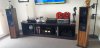
I've recently acquired some duntech statesman and am very happy with them,been on the hunt for some duntech for a few years after being blown away hearing some marquis in a record store here in Adelaide.
20200220_171516.jpg
 
Nice looking speakers SoulJay, thanks for posting from the Duntech Line!

Doyle, thanks for giving us some insight into John's thoughts on amplification!
 
Last edited:
Back
Top Bottom