• The move to the new server is done. There are some software and database maintenance updates in process. This has us passing the hat around to help out. We appreciate any donations. Seriously, even a dollar helps. The payment page may be found here - https://www.audiokarma.org/support.html

Electro-voice crossover question for EV-4

I don't find mine to be terribly directional either. I will say that replacing the old caps in the crossover made a dramatic difference. I would start there before moving the drivers to the front of the baffle. I love my EV-4's--they're really sweet when paired with tube amplification, although I've never tried with SS (so can't weigh in there). Good luck!
 
I don't find mine to be terribly directional either. I will say that replacing the old caps in the crossover made a dramatic difference. I would start there before moving the drivers to the front of the baffle. I love my EV-4's--they're really sweet when paired with tube amplification, although I've never tried with SS (so can't weigh in there). Good luck!

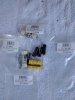
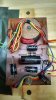
Thanks for the advice everyone. I just finished recapping the EV-4s. What an improvement. I suspect someone must have recapped these before, because their were two very different looking styles of caps used in the two speakers. The values were identical, but one speaker had yellow mylar style caps, the other had much older looking caps (larger, white tubes with black ends). Replaced with some Dayton audio caps from Parts-express. Nothing high end, but the improvement in sound was obvious. My tweeter issue seems much resolved, and the speakers are sounding great. Also replaced the gasket material on the back panel. Now the woofer has some tight air behind it, while before, the boxes must have been leaking air like crazy.

I do have another question about the tweeter. From the literature I've read, the 5" tweeter cone is suspended on some kind of foam substrate. This makes sense since the edge of the paper cone is not in contact with the speaker frame. I am wondering after so many years, if the foam has become brittle / dried out after all these years; similar to how foam surrounds deteriorate.
 

Attachments

  • IMG_20171015_164508.jpg
    IMG_20171015_164508.jpg
    67.2 KB · Views: 135
  • IMG_20171015_163407.jpg
    IMG_20171015_163407.jpg
    63.9 KB · Views: 130
  • IMG_20171015_164131.jpg
    IMG_20171015_164131.jpg
    117 KB · Views: 129
  • IMG_20171015_164136.jpg
    IMG_20171015_164136.jpg
    61.6 KB · Views: 129
  • IMG_20171015_163542.jpg
    IMG_20171015_163542.jpg
    56.5 KB · Views: 144
I just finished recapping the EV-4s.
Hey, thanks for sharing the great pics and happy to hear the re-cap is a success. Crossover work looks good - - just curious why you replaced one resistor but not the other?

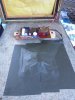
Your pic of the speaker without grille is the first time I've seen this model from the front with drivers exposed. Your comments have now got me curious about that tweeter and its "polyurethane foam suspension", as stated in the product literature. Usually this refers to a foam surround, but the pic in post #11 seems to show a pleated paper or cloth surround. With your speakers all buttoned up, it's a little late now, but you could've just removed the four tweeter screws in order to inspect it when they were open. My pair of EV-4's is still awaiting restoration but maybe I can sometime pull a tweeter to take a look will report back if/when I get around to it.

Anyone know why this speaker model uses so little interior stuffing?
 
I recently purchased a NOS TC-35 in the original E-V box off FleaBay just to play with out of curiosity. The idea of a fixed outer edge 5 inch paper cone tweeter from E-V was just too unusual to pass up. Large paper cone tweeters of this style were widely used in jukeboxes in the 1950's since they could play loudly but were not typically used in home speaker designs.

I don't know if any of these TC-35 tweeters still sound anything like what they way the did when new due to an unusual design feature. According to the engineering data sheet the paper cone is "suspended on a piece of polyurethane foam" which would have been soft and supple when new but is now stiff and "crunchy" due to decades of aging. If you put slight pressure on the cone surface and run your finger in a circular motion on the cone the crunchy noises generated are truly unnerving! (lol) Originally the soft polyurethane backing would have absorbed the back wave and provided cone damping to minimize ringing resonances, but who knows what impact the stiff, crunchy foam is doing to the sound output these days. Also on my TC-35 the glue holding the outer edge of the cone to the metal frame had disintegrated so I used acid free rubber cement to hold the outer edge down and provide a bit of damping at the cone's outer edge.

Since the cone diameter is 4" the beaminess of this tweeter is to be expected and the convex cone shape in the center doesn't help matters either. Overall I find the sound presentation to be unique and mid-fi in a 50's/60's vintage kind of way which is exactly what I was hoping for! (lol)
 
The TC-35 cone tweeter has no surround as the outer edge of the paper cone is glued directly to the metal frame. Also, the TC-35 has a sealed/closed back to the frame so the only way to ever see the backing polyurethane foam would be to poke a hole in the cone or lift an outer edge and neither course of action is recommended! (lol).

Typically the usual 5" E-V driver with the orange colored pleated treated cloth surround is the TC-8 midrange driver which has an open back. I also have one of these drivers and although the treble response is well extended for a midrange driver they were specifically designed to cover the midrange frequencies while the TC-35 claims a response curve from 1500 to 18,000 Hz with a recommended 6 db/octave cross-over frequency of 3,500 Hz.

I rank the TC-8 midrange as a high fidelity driver while the TC-35 ranks as a mid-fi driver when being used in its role as a tweeter as designed by E-V.
 
I don't know but it looks like Velcro squares in the picture above (last pic in post 22). :dunno:

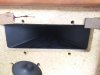
The small rectangles are actually wood shims. They are (were) glued on both sides between the grill and speaker face. As such, the grill covers are not intended to be removed. It took a lot of slow and careful prying to get mine off. I plan on replacing with Velcro.
 
I replaced the 5.6 ohm resistor because it is in parallel with the tweeter when the level switch is set to normal. The original resistor was maybe a 2 watt, which seems insufficient if you drive the high end hard. I left the 47 ohm resistor because at that high a resistance, not much power will drop across it, so a 2 watt rating should be sufficient.

From the TC-35 literature, the tweeter is incredibly efficient, something like 98 dB @1w @1m. I think that's why they put the 5.6 ohm in series, and some schematics show a 10 ohm in parallel to the tweeter, to help bring its output down.

Hey, thanks for sharing the great pics and happy to hear the re-cap is a success. Crossover work looks good - - just curious why you replaced one resistor but not the other?

Your pic of the speaker without grille is the first time I've seen this model from the front with drivers exposed. Your comments have now got me curious about that tweeter and its "polyurethane foam suspension", as stated in the product literature. Usually this refers to a foam surround, but the pic in post #11 seems to show a pleated paper or cloth surround. With your speakers all buttoned up, it's a little late now, but you could've just removed the four tweeter screws in order to inspect it when they were open. My pair of EV-4's is still awaiting restoration but maybe I can sometime pull a tweeter to take a look will report back if/when I get around to it.

Anyone know why this speaker model uses so little interior stuffing?
 
Last edited:
Here is another couple of driver photos. The tweeter cone is not attached to the frame, and there is no "surround". This goes allong with the literature describing the paper cone essentially floating on the polyurethane foam substrate.

After reading about the crunching sound when pressing on the paper cone, I did a little light pressing myself. My cone also made rough crunchy sounds and I had powder coming out the bottom edge of the cone.
I suspect the foam is completely dried out, and the tweeter performance is much different than when manufactured.
Now, this might be far fetched, but EV provided a Lifetime Warranty on the speaker drivers. Yes its been decades, but I wonder if they would still honor it? Might be with inquiring.
Otherwise, finding a tweeter replacement is going to be difficult simply due to the opening size.

Hey, thanks for sharing the great pics and happy to hear the re-cap is a success. Crossover work looks good - - just curious why you replaced one resistor but not the other?

Your pic of the speaker without grille is the first time I've seen this model from the front with drivers exposed. Your comments have now got me curious about that tweeter and its "polyurethane foam suspension", as stated in the product literature. Usually this refers to a foam surround, but the pic in post #11 seems to show a pleated paper or cloth surround. With your speakers all buttoned up, it's a little late now, but you could've just removed the four tweeter screws in order to inspect it when they were open. My pair of EV-4's is still awaiting restoration but maybe I can sometime pull a tweeter to take a look will report back if/when I get around to it.

Anyone know why this speaker model uses so little interior stuffing?
 

Attachments

  • IMG_20171015_163549.jpg
    IMG_20171015_163549.jpg
    53.7 KB · Views: 77
  • IMG_20171015_163524.jpg
    IMG_20171015_163524.jpg
    51.7 KB · Views: 76
  • IMG_20171015_163601.jpg
    IMG_20171015_163601.jpg
    65 KB · Views: 76
Oops, when I ran my finger around the cone I didn't turn it up sideways to let any disintegrated foam powder come out from under the edge, so my powder is still behind the cone where it can possibly wreak havoc in the voice coil gap! (lol)

Because of the internal foam deterioration my TC-35 had some distortion when I first got it. I put multiple thin layers of acid free Elmer's Rubber Cement around the outer edge of the cone to seal it up and it seems to have properly centered the cone/voice coil as the distortion is now gone. I'm guessing that this outer edge sealing process rolled off the tweeter's upper end response, but since I can't hear much above 10 khz that's not as issue with me. It definitely has what I describe as "that vintage paper cone tweeter sound" common to US made paper cone tweeters of 3.5 inch cone diameter and larger from the 1960's and earlier, but I expected that. It was the 4 inch cone diameter and heavy duty quality construction that intrigued me.
 
Thanks for the advice everyone. I just finished recapping the EV-4s. What an improvement. I suspect someone must have recapped these before, because their were two very different looking styles of caps used in the two speakers. The values were identical, but one speaker had yellow mylar style caps, the other had much older looking caps (larger, white tubes with black ends). Replaced with some Dayton audio caps from Parts-express. Nothing high end, but the improvement in sound was obvious. My tweeter issue seems much resolved, and the speakers are sounding great. Also replaced the gasket material on the back panel. Now the woofer has some tight air behind it, while before, the boxes must have been leaking air like crazy.

I do have another question about the tweeter. From the literature I've read, the 5" tweeter cone is suspended on some kind of foam substrate. This makes sense since the edge of the paper cone is not in contact with the speaker frame. I am wondering after so many years, if the foam has become brittle / dried out after all these years; similar to how foam surrounds deteriorate.


Is that front driver board a new DIY made replacement?
I thought from memory, mine had a Plywood front baffle.
 
Reviving a dead thread on the EV Fours. This is a pair I picked up several years ago. They just never sounded quite right but being 55 years old, probably way past time for a recap. This is my first attempt at a recap - following advice from others who have done these. Sound is much improved. No muddyness anymore. All in all a very pleasant speaker - but do keep them on their sides, it does help. I know in some of these old threads most aren't that impressed with the Fours, but I am now - they do reveal a lot in a recording, aren't shrilly, the bass to me is solid and I don't notice that sense of distance they had before. They're not hard rock speakers for sure - no CVs here - but throw in some Stan Getz, Steely Dan or Dire Straits and they are very capable and enjoyable speakers. Would love to hear them with a proper tube amp but using my Yamaha AS-5000 amp, I'm happy. Prior to the recap, they only sounded decent with my Dual CV-40 amp - I'll dig that out and see if there's any improvement.

IMG_20190913_063520559.jpg EV Four Xover Recap.jpg
 
After a week of the new caps on my EV Fours, I set them up with the Dual CV 40 amp and an old, cheap Sharp CD player - with the setup detailed below.

The age of these speakers seems to put them into the tube category but since I don't have a tube amp, I tried them with my main amp, Yamaha AS-500 and they sound very nice - as posted earlier. However I think that's way too much power for these speakers. They must be pretty efficient as the combo will blow out the man cave without turning the dial close to halfway.

The Dual is around 18 wpc. To me it has a warm almost tube-like sound (from what little I've experienced with tube amps). This is the combination. Before the recap, I found the Fours hollow, distant and somewhat muddled. Not so now. The detail really comes through, in a great way. I've read some of the reviews of these speakers about being mediocre, uninteresting and overall good but blah, especially in the mid ranges. I'm now finding none of this. I'm finding detail: subtle cymbals come through, voices sound alive. I've thrown a variety at this combination, from Diana Krall, Sade, Van Morrison, to some disco era Bee Gees, Jack Bruce and even some 80s pop. I say to all, impressive. Complicated music shines, vocals suck you in and the overall quality is non-fatiguing and quite enjoyable.

They've become what I thought they could be knowing EV (and owning a few different models over the years). My only complaint is on some recordings the bass can tend to overtake all other noises, but a slight adjustment of the bass knob takes care of that. I've kept them on their sides, as they were designed to be and I've turned them so each woofer is on the inside, hence the different logo badge locations.

The Dual amp is probably somewhat obscure in the states - I found mine laying in a trash bin likely because it takes unique connectors. It's one of the better amps that's come through my hands (at any power rating) and this combo, even with the cheap CD player, is one I look forward to powering up and listening to.

If you find the Dual or the EV Fours, get them. Recap the speakers and forget the blah comments.



Dual CV 40 and Sharp CD.jpg

Dual and EV Four.jpg
 
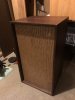
EEC4E766-B321-497E-8CB0-D78203BEA7C8.jpeg 6A264B88-D2B2-4D19-B172-69CB4B6C0D9F.jpeg D88744A1-D7B6-43C4-BE28-D0329387E3C7.jpeg Just picked up a pair. Absolutely stunning!

ordered some clarity caps to replace the capacitors. I might replace the resistors eventually.

questions:

1. Is the horn actually a midrange?

2. Anything else to do to the cabinets, maybe an extra brace?

looking forward to hearing them after recap...
 
Last edited:
Back
Top Bottom