• Please note that Audiokarma will be offline briefly for updates early on Monday morning, September 28th.

Electrohome Console Florentine Mk 1 DIY Project

Sam1980

New Member
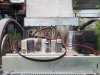
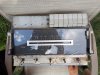
I have a Electrohome Florentine Mk 1, and I'd like to see if I can turn it into a nice tube amp I'm coming to your board for advice and guidance on the project. What are my options?
Thanks
Sam
 

Attachments

  • 20190728_181251_resized.jpg
    20190728_181251_resized.jpg
    121.3 KB · Views: 84
  • 20190728_181303_resized.jpg
    20190728_181303_resized.jpg
    103.6 KB · Views: 75
  • 20190728_181749_resized.jpg
    20190728_181749_resized.jpg
    126.7 KB · Views: 76
  • Edit.jpg
    Edit.jpg
    133.9 KB · Views: 76
Register to hide this ad
Are you considering wanting to use just the amp section or retain the tuner as well? The tuner does look to be on a separate sub-chassis within the main unit, so separating that out might not be too much trouble. The amp is set up as an integrated with level & tone controls - are you OK with that or were you intending just a power amp?

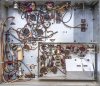
It looks to be single-ended stereo with possibly 6BQ5 or 6AQ5 output tubes for probably somewhere in the 4.5 -5.5W output
 
I haven't decided 100 percent yet. I wanted your feedback for options. What would the advantages be of these two options; keeping amp with integrated controls or turning it into a power amp. For the time being, was thinking of replacing some of the capacitors and playing it as is for now and tackle bigger conversion after deciding its worth keeping. I m considering recommendations or mods once I know its running well.
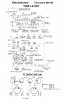
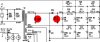
Here’s the closest schematic I could find.
 

Attachments

  • Florentine MK1  Schem.jpg
    Florentine MK1 Schem.jpg
    113.4 KB · Views: 16
  • Florentine MK1-1.jpg
    Florentine MK1-1.jpg
    50.2 KB · Views: 15
Keeping it together is easier, and you can modify it to sound as good as possible. I wouldn't bother rebuilding it on a new chassis, it's just more effort than it is worth. I sold one of those earlier this year, where are you located?
 
I'm in Toronto. I'm looking at replacing the power capacitors, the coupling capacitors and the selenium diodes.
 
Those are silicon diodes, not selenium - they should be fine. Coupling caps are ceramic, again they aren't likely to be bad.

Replacing electrolytic capacitors however is a good idea.
 
Thanks. I'm a real beginner at this. I'm aware that the ceramic caps are durable and don t usually need replacement. I'm just starting to learn about the different types of caps that replace these. I'm

currently looking into replacing the electrolytic caps with modern ones.
 
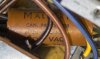
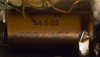
I'm looking to replace these caps (there are 2 in total) and I'm not able to find a matching replacement online. Any suggestions? The values are 50 UFD 10 VAC
 

Attachments

  • IMG_2823.JPG
    IMG_2823.JPG
    64.5 KB · Views: 21
  • IMG_2815.JPG
    IMG_2815.JPG
    58.4 KB · Views: 20
Last edited:
Also would these caps be ac or dc?

Those look like 1000pf -- probably ceramic disk. If the are in fact ceramic disk, they are non-polarized, which is what I think you are asking.

If they are ceramic disk, they are probably fine. Don't panic about what you read here on these forums about ceramic disk as coupling caps. These are not coupling caps, and they are not in the signal path. Unless they are visually damaged, I'd probably leave them. They are there to remove any high frequency stuff that made it through the power transformer from the AC input. Essentially the same as the intended function of a "Death Cap", but on the other side of the transformer.

Since those 2 caps are after the transformer, something else would happen if they shorted, probably blowing the fuse. For this reason, they don't have to be safety caps, but if you do replace them, there's no reason not to use safety caps of the appropriate ratings.

Ceramic disk capacitors of that value are pretty easy to find with high voltage rating, 1 KV should be easy to source.

The other point is that if they were not even there, you probably would never know the difference.

Speaking of Death Caps, note that your amplifier has one (C25) -- just on the other side of the transformer from the 2 caps you highlighted. This should definately be replaced with a safety cap of appropriate ratings. (or just removed.)

I'm looking to replace these caps (there are 2 in total) and I'm not able to find a matching replacement online. Any suggestions? The values are 50 UFD 10 VAC

If I am seeing these in the schematic correctly, they are crossover caps near the speaker switches. Any non-polarized cap of the right value (50uF) will work. You may be having problems locating them because you are looking for that exact voltage. A higher voltage rating will be fine (better).

A quick google search found some 50uF 100V non-polarized electrolytics for $1.18 each. Those would be fine.

 
Last edited:
Is there a standard or rule regarding voltage, if the farad rating is the same on the replacement cap? for example on the paper cap rated at 50 uf 10 vac. Can I replace it with 50 uf 12 vac cap without problems? Or 20/40/100/200 vac?
 
Anything up to 50v, I use a 50v cap. Mostly thats for stocking reasons, but the low voltage ones don't seem to hold up as well for whatever reason. When in doubt though, just don't go with a lower voltage than what was originally there. You won't hurt anything keeping to the same or higher ratings.

One exception though, the "death caps" are typically rated in DC volts, often 1000-1600v. Those you can replace with a 250vac rated safety cap.

and caps are usually rated in DC volts, not AC. Usually.
 
Good point about the "Death Caps". One case were the modern replacement may be rated at a far lower voltage than the original part.

Obviously, that cap only ever sees the AC line voltage (including transients), so a 250vac rated part is fine. In again, a quick search, I found parts with all sorts of voltage ratings. Probably still smaller than the original, and still inexpensive so basically just buy whatever you come across, but I would not go below 250vac.

Same for the 50uF crossover cap. I do the same as gadget. Just buy a bag of whatever you find, with an eye to future projects. Again, modern parts with far higher voltage ratings will often be smaller than the original part, and not expensive, so why not? De-rate for Chinese parts, up-rate for that 100W speaker system you are going to restore next, and a bag of 50uF 50 to 100V non-po's are what you want.

For "normal" capacitors -- Except in the big, HV filter caps -- I would always recommend at least twice the absolute maximum working voltage -- including transients. Double again for unknown brand/Chinese/possibly counterfeit parts.

For the HV filters, you often can't get (at any reasonable price/size) twice the actual B+ voltage, so any quality cap at or over the original voltage is fine.

Today, 630V seems to be a popular value for HV chicklet or Polystyrene caps, so that is what I always buy for coupling caps. That way I don't even have to think about the voltage rating -- Grab from the bag, and solder in.

Obviously there are other circumstances where we have to be more "scientific" about capacitor voltage ratings -- exact originality restorations -- places where there is not room for a possibly larger part -- etc. The above are informal "rules of thumb" meant to safely get sound coming out in most cases.

Saftey caps, Motor start caps (appliance caps), and a few others are usually rated in VAC, all others cap are generally rated in DC. Non-po electrolytics are (AFAIK) rated in DC of either polarity, not AC -- at least that is how I have always thought of it.
 
Coupling caps I usually use all 630v, filter caps I typically use 450v unless that is lower than the original rating. 500v is about as big as you can commonly find in filter cap values.
 
Back
Top Bottom