acres
automojo, I'll admit I got a chuckle out of toddalin's post w/Jack Nicholson ... bet you did, too.

You tweak for sound quality, I get that and that's cool. I and others go after the frequency response anomalies. If you worked that into your mod's ... well, look out. I know these diaphragms can be a mixed bag when it comes to frequency response. For me, flattening that out makes integrating them with other drivers that much simpler.
I've gone so far as to tweak the diaphragms themselves to help improve the response eg. taking off the veils, adding silicone @ tops/bottoms of the frames and lucky for me this has helped tame a couple of "wild" responses. The silicone application was touch and go. At first I thought I wrecked the sensitivity. I did the mod and after a couple hours put the diaphragm back measured the response and it was down 6-8db SPL. Thought I pooched it. Brought the amp level for that driver back up and let it play a few hours resigning myself to having to order another pair. Came back the next day and after firing up the system that diaphragm sounded real bright. Dragged out the gear and sure enough, 8db to hot. Looked like the silicone needed to fully cure to not effect the sensitivity but in the process it also flattened out a 7khz peak by 3db and another @2.5khz by 1-2db. I've said this before, I think a little more attention to detail on the assembly (
@FACTORY) could improve diaphragm to diaphragm response. That could make the integration for the end user so much more comparable, as well as factory crossover work. They aren't there yet so, we adjust with EQ or other means.
Just like your mods ... it's just about overall sound quality. Not a waste of time as far as I'm concerned. My arrangement takes the rear wave out of the equation. Tweeter/room interaction is minimal as it's now more constant directivity, like a horn. Others will want to block the back wave output, adjust the response flat and then treat the room to tame the back wave reflections. The end results should be quite similar then. Try it out.
Rock on brother!
Yes-of course I did too-life is way to short to wear your emotions and self worth on your sleeve.
Come on-we aren't teen agers that need tippy toes now are we?
Talk about childish behavior- he might want to rethink his position on that one...read his own post in realistic context...most actual adults have the ability of self reflection. and delineate responses and bits of information in context to their responses and the subject matter.....whatever..
I get it... the current flavor of the day....dish it out....but play wounded when the recipient..in a nutshell...
So with that in mind/hindsight, I was a bit too harsh..and can do the kids gloves when needed in the future...whatever..
Puppet, I appreciate your contributions to the Heil forums, and keep them in the memory banks.
There is a huge difference between challenging, and discounting observations and opinions.
Yep I agree on the vibrations as well-good stuff.
Not to mention controlling noise, which not only includes clean power but the aforementioned vibrations.
Any of these in combination or by themselves can certainly emphasize certain frequencies, particularly in the higher octaves.
You may be correcting something that could be corrected by a better means!
The first gen housings are obviously resonate. I've applied foam and putty to the "V" voids with good success-seems to tame the audible issues I was having. And use a different rubber composition base.
I also use the Amazon cork bases Stereophile used on their review of the new Klipsch Forte's-since I now have a wood floor listening room.
https://www.amazon.com/BXI-Vibratio...ild=1&keywords=bxi+cork&qid=1597367180&sr=8-1
Nothing like sealed bass and the Great Heil!!
I didn't have much luck with the triangle lens on the old housings-just wasn't a good mix
At some point I will log some video measurements to confirm the strange dispersion characteristics, and the increase in db right of the housing.
Moving them out simply blocked the detail.
Same with the time alignment-wasn't audible in two completely different listening rooms. One well dampened-the other fairly reflective.
I agree on the value of flattening response curves-as a general rule-that's pretty much a given-but as a point of emphasis-end all be all-that certainly depends on if you truly understand in a auditory sense the pluses and minus of what your doing. And not simply looking at a ruler flat response cure-and saying "thats it!".
Other simply cross it 2000hz on up-but IMHO you loose a lot of the Heil magic coming from a single source in the critical midrange.
Again I bring up the stock AMT3..even with the low crossover point...HF found it had at the time one of the flatter response curves.
The stock speaker sounds very good-I have zero issues mids on up-one of the best I have heard. The exception was the stock woofers.
What ever the peak/dips-it doesn't seem to be much a issue with the AMT3-I can't recall anyone ever mentioning it-just the lack of deep clan bass with the stock woofers.
Pretty simple.
Ethel Mermans be damned!!

We must all have lying' ears...

I didn't bother with measurements-preferred my families and audio buddies ears.
All are extremely familiar with this system-it's used easily 6-10 hours daily-better half works at home.
A working mans/family audio system so to speak....plenty of baseline to go on.
And lets face it-most people modding their AMT3's-don't have the equipment anyway.
My mods were set up for the average Joe Audio wanted to improve his AMT3's
That's the essence of the Mojo Modded AMT3's.
Seems to have benefited more then a few, from what I can tell...
Again-thanks for the clarification-much appreciated!!
I only have experience with the 2 new diaphragms-I may get a second pair when I get the Mojo 3.1's up and running.
I certainly have zero problem with this first set
We are all seeking the same thing-just a bit different routes-but if you analyze it carefully-they are more similar then different.
Thanks cool cat.....much appreciated.....and catch ya on side "b"!......



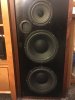





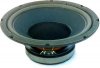
 i have also decided to improve the pc audio system Even with ridiculously cheap speakers i have been impressed by the good soundstage that can be obtained listening nearfield. I have seen pics of recording engineers listening pretty close to the speakers for i guess editing their masters ... maybe the solution is in eq the FR and listening in the nearfield ?
 but the feeling that is very good indeed is strong in me