• The move to the new server is done. There are some software and database maintenance updates in process. This has us passing the hat around to help out. We appreciate any donations. Seriously, even a dollar helps. The payment page may be found here - https://www.audiokarma.org/support.html

ESS AMT-3 replacement woofer candidates

kwingylee

Well-Known Member
After discussions with automojo in a recent ESS AMT-3 thread, I decided to take on the challenge of identifying new woofers that can replace the now discontinued Dayton ST255 and Eminence 1040SF woofers. I will need help from all of the ESS AMT-3 Rock Monitor fans on this forum to identify the best candidate(s).

To start with, I began searching various forums that have proven history of high skill DIYers and serious hobbyists. This include audioholics. DIYaudio, Audio Asylum and of course here on Audiokarma. My criteria is from the many posts from automojo and porkloin and have limited my search 10" paper cone woofers rated 8 ohms that have a following from the various forums. This include the following:

Beyma 10BR60V2
Ciare HS251 DVC
Dayton DC250-8
Dayton SD270A-8
Dayton DS270-8
Dayton DSA270-8 (aluminum cone but the only one on this list)
Dayton RS270P-8A
Eminence B102-8
Eminence KAPPA Pro-10LF
Goldwood GW-10PC-8
Peerless SLS P830668
Peerless SDF250F75PR01-06
Peerless NE265W-08
Scanspeak 25W/8565-00
Seas A26RE4 H1411
Seas H1305-08 CA26RFX
Tang Band WT-644F DVC
Visaton W250S

For the AMT-3 cabinet having outer dimension of:

39 1/4" High x 15 5/8" x 15 7/8"
internal volume of approximate 3 cubic feet
Freq Response from ESS = 40-24KHz
Crossover Points of 250/700Hx 3 way.
3 coil crossover supporting parallel 8 ohm woofers

I am attaching a spreadsheet showing these drivers, the TS parameters, simple mechanical specs and recommended alignments with expected F3 etc.. Since automojo suggests strongly sealed alignments and the limitation of my own AMT-3 cabinets (equipped with 2.5-3" diameter port of pretty short length and cannot support a tube of bigger diameter than this), I concur with this being the best approach. From the published data, the strongest candidates to me are the following from Parts Express

Dayton RS270P-8A
Peerless SLS P830668

Both have Sealed F3 of around 55Hz with internal volume of 1.4 x 2. At this point, I lean towards the Peerless with its greater Xmax (hence greater displacement volume for the same Sd) and costs.

Other potential candidates include the Dayton DC270-8 and DS270-8, as well as the Goldwood GW10PC-8. I have Goldwoods in one of my AMT 3 cabinets now and found them to be a huge mismatch with the Alpha 6As that I have...but I did not add the LPAD to the Alpha.

My thoughts are without consideration of the Re and Le of the original ESS drivers, so don't really understand how the original crossovers will interact with them. I assume that there will be some tweaking of the crossovers when one goes down this path. I am not sure I like the 750Hz crossover for the Heil as I dont think they sound good at the low a crossover point but YMMV. In my main rig, I crossover the Heils at 6KHz....

All relevant inputs are welcome. For the record, I have three sets of ESS speakers, none of which are working or work well: 1 set of AMT 3, 1 set of AMT 1A and 1 set of AMT 1. I will get to them some day.

Kwing Lee
Chicago Horn Guy
 

Attachments

Register to hide this ad
New file uploaded. Including the Eminence 1040SF and Dayton ST255 parameters for comparison as well as adding a few more drivers in landscape format for easier read. Many Dayton drivers look good as sealed box candidates....
 

Attachments

New file updated V2, adding Misco, Mavin, Eminence 1040SF and Dayton ST255 II drivers for comparison. Eminence 1040SF and Dayton ST255 are the old benchmarks per automojo's work and the Misco and Mavens ar ehis most recent recommendations. The Dayton DS270-8 appears to be the best candidate, at least on paper..for a sealed cabinet (2.5cf with 55Hz F3). Someone from another forum has reported great results with the DC250-8, which seems ideal because its very inexpensive driver. If someone can provide box size recommendations for specific drivers, even for drivers not on this list, you can provide it here and I can update the table. I am probably going to pull the trigger in a few months as a winter project.
 

Attachments

Want to add the PEERLESS SLS 830668 as good candidates for the twin 10 inch woofers used in the AMT-3 cabinet. Seems to be an excellent competitor to the DAYTON DS270-8. The DAYTON is 3 dB more efficient but has 0.45 CM XMAX versus the 0.84cm XMAX of the Peerless. The Dayton also handles more power. The prices for the Dayton and the Peerless is less than $1.00...About $230 for 4 unites
 
It is important to use the DCR of the crossover inductor to compute a new effective Qts
in order to get the correct Qtc in the box. Many drivers end up with too low Qtc which
results in a drooping response and a high F 3dB. Some simulators allow you to input
the source resistance to make this adjustment.

Goldwoods have weak motors and I would not use them.

It would be good if you could find a spec for Fc and Qtc with the original woofers in system.
Do you have the T&S parameters for the original woofers?
Do you have the crossover schematic?

You really want an Fc in the low 40s as was done in the LA and AR-3 to get that nice deep
low end punch. I'm looking for something similar to the LA woofer but built on a 10" frame.
 
Last edited:
PeteB: I doubt that the type of specifications you are looking for the AMT3 OE woofers were ever published. They got the product from some unknown supplier. Most but not all of the early woofers in the AMT3 had alnico magnets. ESS did publish schematics of their early crossovers, but I am not certain they do that anymore. Several AK members probably have these schematics downloaded and may be able to provide.
Are you building up a pair of AMT3's?
 
It is important to use the DCR of the crossover inductor to compute a new effective Qts
in order to get the correct Qtc in the box. Many drivers end up with too low Qtc which
results in a drooping response and a high F 3dB. Some simulators allow you to input
the source resistance to make this adjustment.

Goldwoods have weak motors and I would not use them.

It would be good if you could find a spec for Fc and Qtc with the original woofers in system.
Do you have the T&S parameters for the original woofers?
Do you have the crossover schematic?

You really want an Fc in the low 40s as was done in the LA and AR-3 to get that nice deep
low end punch. I'm looking for something similar to the LA woofer but built on a 10" frame.

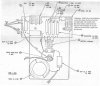
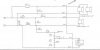
Attaching a drawing of the 3 coil crossover and schematics that I found in other audiokarma threads. The coil for the woofer appears to be 2.4mH with a 51.5uF shunt. If someone can provide the T&S parameters for the original AMT 3 woofers I will add it to the table. If someone wants to add the same for the 4 coil crossover, feel free to do so.

For those interested Dayton has a sale on the RS270A woofers now for 49% off. It was not on my radar before due to price, but it seems like an improvement from the DS270....and is cheap now.
 

Attachments

  • ESS AMT 3 three Coil CrossoverDrawing.jpg
    ESS AMT 3 three Coil CrossoverDrawing.jpg
    83.7 KB · Views: 39
  • AMT3_Schematic.jpg
    AMT3_Schematic.jpg
    35.1 KB · Views: 38
Last edited:
If you were to plug the TS parameters into something like Bassbox to determine the volume needed for a given 10" woofer, you'd find that almost everything out there wants more cubic feet than an ESS monitor enclosure has to give. It's kind of hard to think of those behemoths as lacking in volume, but TWO woofers demand that you halve the volume (per woofer) and 1.25 cubic feet isn't all that much breathing room. Eliminating 3/4 of your list may be a good starting point in your quest. I really lucked out with the 255's as they were a great fit for the enclosure volume-wise.
I've heard a lot of talk about the legendary 4-coil crossover, but apparently, no one has had the gumption to chart one and post the numbers.
 
Hi P
If you were to plug the TS parameters into something like Bassbox to determine the volume needed for a given 10" woofer, you'd find that almost everything out there wants more cubic feet than an ESS monitor enclosure has to give. It's kind of hard to think of those behemoths as lacking in volume, but TWO woofers demand that you halve the volume (per woofer) and 1.25 cubic feet isn't all that much breathing room. Eliminating 3/4 of your list may be a good starting point in your quest. I really lucked out with the 255's as they were a great fit for the enclosure volume-wise.
I've heard a lot of talk about the legendary 4-coil crossover, but apparently, no one has had the gumption to chart one and post the numbers.
Porkloin, welcome.
If you look at page 2 of my attachment, the last 5 columns show the expected F3 per internal volume for sealed and BR cabinets. Most of the drivers on the list can do bass to the mid 50s for <1.5cf per driver....
 
Today I ordered 4 Dayton RS270P-8 paper cone drivers for my AMT 3 cabinets. The $43 each price was too good to pass up. I will try to make it my winter project... balancing these with the Eminence Alpha 6As. Wish me luck.
 
Hi P

Porkloin, welcome.
If you look at page 2 of my attachment, the last 5 columns show the expected F3 per internal volume for sealed and BR cabinets. Most of the drivers on the list can do bass to the mid 50s for <1.5cf per driver....
That's what I get for not reading further. It sounds like we're kindred spirits in that we don't lay awake at night worrying if a loudspeaker gets down to 19 Hz. On paper, mine get to an unglamorous 45, which sounds fantastic to me. They've blown other speakers rated lower right out of the living room.
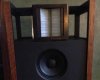
If you haven't already thought of it, you may want to throw an L-Pad on that Alpha 6A. My vocals sounded a bit TOO throaty without the Alphas turned down, about half-way in my case. It could also be a product of me shrinking the transition driver enclosure down to Eminence specs per the PDF on the Parts Express page for it.
Are you going to go sealed or ported?
And what's with this "WINTER PROJECT" stuff" I was hoping for a review on those Dayton woofers before Halloween.:lurk:

HeilANDAlpha.jpg IMG_0303.JPG
 
I like the way you implemented the LPAD for the Alpha 6A. Very professional looking and the cabinet looks great! I am going to do the same. I expect the Dayton RS270P-8 woofers to arrive this week, I will let everyone know of my initial impressions using unmodified crossovers.
 
Last edited:
If you were to plug the TS parameters into something like Bassbox to determine the volume needed for a given 10" woofer, you'd find that almost everything out there wants more cubic feet than an ESS monitor enclosure has to give. It's kind of hard to think of those behemoths as lacking in volume, but TWO woofers demand that you halve the volume (per woofer) and 1.25 cubic feet isn't all that much breathing room. Eliminating 3/4 of your list may be a good starting point in your quest. I really lucked out with the 255's as they were a great fit for the enclosure volume-wise.
I've heard a lot of talk about the legendary 4-coil crossover, but apparently, no one has had the gumption to chart one and post the numbers.
Yes, that's why ESS chose to either run a sealed cabinet, or a "resistive" cabinet.
Because if the woofer is capable of running in a sealed configuration, the volume requirements of that woofer usually drop.
Looking at the ESS service manual, it appears the 4lbs of stuffing per speaker, were in large part a attempt to reduce cabinet resonance.
It would be interesting to see how the stock woofers respond to a AMT3 cabinet foam lined, braced, etc.
The resistive nature of a fully stuffed cabinet has a great effect on how the woofers respond/sound.
My current configuration is no stuffing/fiberglass/poly in the cabinet.
Just the foam lined walls, surface treatment/bracing, and a piece of 1 1/2" eggcrate foam, with a 'topper' of 2" Auralux foam on the real wall.
This flattened the response of the 1040SF, to were it blends better with the stock transition driver., and Heil, as they have, for the most part a very flat response.
The response of the damping checker is clearly now 2 click, make or break.
You still get very audible response down to 25hz, with out any midbass rise.
The 1040SF's clearly like being able to breath, and not over stuffed.
I think if your running any replacement woofer that look compatible with 2x10" in a 2.7 cu ft enclosure, this would be a good start for internal damping.
I would also seriously consider bracing the front baffle with braces between the woofer openings. And a brace between the upper woofer and mid tube.
Unless your are replacing the entire front baffle of course-which if you have the ability is the best course IMHO. The rear too.
In my opinion, sealed bass is a much better match for the Heil, because of the superior transient response, but this can be a matter of taste.
The Dayton 255-8 was unique in a vented enclosure, the bass is tight for a vented design.
But some prefer a "fatter" bass, most vented designs give you.
It's a chore getting that tuning right in my experience, because the Great Heil is such a transparent driver, it has to be spot on. A slightly over dampened bass in other words.
Otherwise, as was my case, and a few others, the sound will literally start giving you a headache because of the mismatch.
As mentioned the TS parameters and design of the Dayton 255-8 let you cheat a bit, with the exception of rear vent issues/noise/compression issues I encountered, after some time at loud volumes.
IMHO they need bigger vents-unfortunately there isn't enough space, with a midtube crossover etc.
If you removed the crossover from the interior, and added braces around the vent holes, you could get those needed 3" x 2 vents.
Sealed bass also frees you from the chore of fine tuning a BR cabinet.
Much easier to add or remove damping then dealing with vents IMHO.
FIY-the 'legendary' 4 coil crossover would not be a good choice unless your dealing with a stock speaker-the inefficiency of 8x 1ohm resistors per woofer-not the most efficient use of power. This drawback was discussed years ago.
I can ship you one of mine if you would like-and you can have at it, and post the specs here.
The fact is you can build a crossover ground up crossover any woofer, midbass, and Heil. Madisound @$90.
You also have to add room gain in looking at bass response.
 
Last edited:
FIY
I see there are 8 1040SF's available.
Looking at the Daytons, seems to me the DS270-8 would be a better fit in a sealed configuration 1.38 per woofer. Vented they need a bigger box. With the exception of their unique frame mounting, they seem like they should work with the stock cabinet volume, you could easily plug the stock port, if your cabs have one.
Or even the DS270-8 would be a interesting choice, one I thought about years ago. An attractive price as well.
Looking at the RS270P-8, they look like they probably like being run ported. As you would be doubling the recommended volume if your run them sealed in the AMT3 cab-Which will drop your output, and reduce power handling. Luckily running 2 in parallel nets you the added 3db, but it's not a good practice to double your recommended sealed volume, sealed or vented.
You could add items to the interior to reduce overall volume, or make split bass chambers.
Unfortunately my computer that had bass box pro died, can seem to find the cd-other wise I would plug in the values. P.E. will do for you.
However, it looks like someone already asked about a similar set up, roughly a 3cuft (it's actually 2.7) enclosure. A 4 inch port 13.45 inches will be tough in the AMT3 enclosure.
From what I gather that would be for 2 ports, one port that large should be much shorter, around 5 1/4 inches or so.
As mentioned-the same issue I had with the Dayton ST255-8, the 2 smaller ports created a restriction that caused response issues/port noise and compressions issues at high power- in the end, I just didn't like, even though it was minor-it was one of those things I just wanted to improve-hence going the sealed route with the 1040SF's.
That's the beauty of sealed bass IMHO, when you get it right it's very natural sounding, goes deep and tuneful when needed, but lets the music shine because everything is well balanced.
obviously some of that has to due with your supporting equipment.
Recently, changing out my preamp for a Proton AP1000-driving a H/K PA2400-driving the 3's-really has shown me how smooth and natural the 3's can sound with the right equipment.
I also raise them off my new wood floor with 4 per speaker with these. It also has the advantage of raising the vertical sweet spot of the Heil to a more favorable height. And improves the bass definition nicely. About 14 inches from the back wall.
https://www.amazon.com/BXI-Vibratio...sr_1_1?keywords=bxi+6x2&qid=1569200971&sr=8-1
 
Last edited:
Thanks automojo, I went with the RS270P-8A because they are treated paper cones and not aluminum and slightly greater XMAX than the other Dayton offerings. I paid $46 each for 4 of them and the price is good.
The following are internal measurements of my AMT 3s:

29"H x 12.25"W x 13.75" D
Midrange tube = 6" OD"
Port = 3"OD x 3"L

Effective internal volume = 2.4 cf

I will add internal bracing to reduce the internal volume further. I will add 3 shelves using 2x6" around the woofers to reinforce the flimsy baffles.
Using UNIBOX408 by Kristian Ougaard for my simulations, it is recommending sealed box configuration of 48 liters Vb at Qtc = .707. At 54 Liters with both drivers in parallel and some filling, the predicted F3 is around 52Hz at Qtc = .7, which is slightly overdamped.
Anyway I have the RS270P-8A drivers already and they look nice. I will need to modify the cabinets to fit them. This will take awhile at my current pace, at least a month.
I do intend to recap the crossovers. I have had good luck with Jantzen Z series. I have found them to be better than run of the mill polyprops for not much more...

BTW, my second choice would have been the DS270-8. A lot of people seem to like that driver. Some have use it for Transmission lines. If I don't like the RS270p-8 as sealed boxes, I can try them as T-Lines as the Qts is low enough that I can try that. We will see how far this goes.

The third choice would be the Peerless SLS 830668. Maybe getting their 6.5" midrange instead of the Alpha 6A.

BTW, I found out I have one of the original AMT 3 midranges but there is a wrinkle in the paper cone. Anyway, I like the idea of using modern drivers to bring the speakers up to current standards without going overboard.
 
Last edited:
Yes, that's why ESS chose to either run a sealed cabinet, or a "resistive" cabinet.
Because if the woofer is capable of running in a sealed configuration, the volume requirements of that woofer usually drop.
Looking at the ESS service manual, it appears the 4lbs of stuffing per speaker, were in large part a attempt to reduce cabinet resonance.
It would be interesting to see how the stock woofers respond to a AMT3 cabinet foam lined, braced, etc.
The resistive nature of a fully stuffed cabinet has a great effect on how the woofers respond/sound.
My current configuration is no stuffing/fiberglass/poly in the cabinet.
Just the foam lined walls, surface treatment/bracing, and a piece of 1 1/2" eggcrate foam, with a 'topper' of 2" Auralux foam on the real wall.
This flattened the response of the 1040SF, to were it blends better with the stock transition driver., and Heil, as they have, for the most part a very flat response.
The response of the damping checker is clearly now 2 click, make or break.
You still get very audible response down to 25hz, with out any midbass rise.
The 1040SF's clearly like being able to breath, and not over stuffed.
I think if your running any replacement woofer that look compatible with 2x10" in a 2.7 cu ft enclosure, this would be a good start for internal damping.
I would also seriously consider bracing the front baffle with braces between the woofer openings. And a brace between the upper woofer and mid tube.
Unless your are replacing the entire front baffle of course-which if you have the ability is the best course IMHO. The rear too.
In my opinion, sealed bass is a much better match for the Heil, because of the superior transient response, but this can be a matter of taste.
The Dayton 255-8 was unique in a vented enclosure, the bass is tight for a vented design.
But some prefer a "fatter" bass, most vented designs give you.
It's a chore getting that tuning right in my experience, because the Great Heil is such a transparent driver, it has to be spot on. A slightly over dampened bass in other words.
Otherwise, as was my case, and a few others, the sound will literally start giving you a headache because of the mismatch.
As mentioned the TS parameters and design of the Dayton 255-8 let you cheat a bit, with the exception of rear vent issues/noise/compression issues I encountered, after some time at loud volumes.
IMHO they need bigger vents-unfortunately there isn't enough space, with a midtube crossover etc.
If you removed the crossover from the interior, and added braces around the vent holes, you could get those needed 3" x 2 vents.
Sealed bass also frees you from the chore of fine tuning a BR cabinet.
Much easier to add or remove damping then dealing with vents IMHO.
FIY-the 'legendary' 4 coil crossover would not be a good choice unless your dealing with a stock speaker-the inefficiency of 8x 1ohm resistors per woofer-not the most efficient use of power. This drawback was discussed years ago.
I can ship you one of mine if you would like-and you can have at it, and post the specs here.
The fact is you can build a crossover ground up crossover any woofer, midbass, and Heil. Madisound @$90.
You also have to add room gain in looking at bass response.

Automojo:
I am committed to the seal box implementation on my AMT3s. The 3" tube is poorly glued to the front baffle and I intend to remove it and seal it up. You are absolutely right about the lack of space for big front ports. If someone wants to go this route I would cut hole/slots in the back panel. After looking at the cabinet construction in detail, ESS stapled the panels together it seems. I will go ahead and reinforce the corners and front baffle.
Thanks for the offer on the 4 coil xo. I am not there yet..... maybe in the future. After I have properly ascertained the imaging performance of these speakers.
As you recalled awhile back that I wanted to confirm the crossover points of the great heil... at 750Hz, its very low and its smack in the midrange. I was thinking 3200 Hz might be a better choice as I cross mine at 7000 Hz in my main rig. I have enough active crossovers lying a around that I am going to try to play around with that. 250Hz seemed good for the mid to bass crossover.
 
Last edited:
Automojo:
I am committed to the seal box implementation on my AMT3s. The 3" tube is poorly glued to the front baffle and I intend to remove it and seal it up. You are absolutely right about the lack of space for big front ports. If someone wants to go this route I would cut hole/slots in the back panel. After looking at the cabinet construction in detail, ESS stapled the panels together it seems. I will go ahead and reinforce the corners and front baffle.
Thanks for the offer on the 4 coil xo. I am not there yet..... maybe in the future. After I have properly ascertained the imaging performance of these speakers.
As you recalled awhile back that I wanted to confirm the crossover points of the great heil... at 750Hz, its very low and its smack in the midrange. I was thinking 3200 Hz might be a better choice as I cross mine at 7000 Hz in my main rig. I have enough active crossovers lying a around that I am going to try to play around with that. 250Hz seemed good for the mid to bass crossover.
 
Sure, it's anywhere for 800-1k.
IMHO the Great Heil does just fine in that range.
Finding a smooth compatible transition driver that goes both high and low enough with a flat response might be challenging.
I went back to the stock midbass.
With all the drivers I tried, its the one that blends seamlessly.
And, that's what I have found with the AMT3 that's most important, vs specs, etc. That they blend together enough that you aren't listening to the Heil, the midbass, the woofers, but the music.
Same issue with any speaker.
But with the AMT3, seems that many (including myself) trying to improve on the stock drivers have tired drivers based on their specs, vs how they will blend with the other drivers.
Some of that has to do with output @ the listening position, along with flat response, etc.
That's why IMHO if you stick with the stock midbass, you only have to tackle the woofer blending.
I think Midwest Speaker can recone these, or perhaps Neils Speakers.
Frankly the main issue with the AMT3 is it needs a bit more true bass extension, IMHO, and the ability to play louder in this region without compression, IMHO,but that's it.
That's why I mention if I had the stock woofers, I would try using different internal damping methods to improve the bass first before replacing the woofers.
I know, in your case you started with non stock woofers.
 
Just my 2 cents , dont ever under estimate the power of running 2 4ohm woffers in series ., with what ever crossover points you deside...or no crossover at all , with the right woffers...it gives a very interersting roar to the lower midrange...sealed box is good with steel frame woffers.. simply requires a larger amp...probably goes without saying...to simple things up ,you got the ported cab leave it ported , one port OK .
 
Last edited:
Also very soft bouncy woffer surrounds (is key with sealed box) 3in ported and rockmontir cabs is also fine ,,reinforce the port area AND port tube (if ported id go short 2 3 4 or inch) in my experience sealed gets stronger 30hz ///ported gets you stronger 50hz bass///THIS might be the best 60 dollar woffer in the world (faitalPRO 10fe200 4ohm) pardon the drama.
 
Last edited:
Back
Top Bottom