• The move to the new server is done. There are some software and database maintenance updates in process. This has us passing the hat around to help out. We appreciate any donations. Seriously, even a dollar helps. The payment page may be found here - https://www.audiokarma.org/support.html

ESS AMT-3 Rock Monitors - Yet Another Automojification!

Will, don't forget all the cabinet improvement work that you engineered into the rebuild.
With the bracing, absorptive materials and new baffle your new-rebuilt cabinet is a large part of the improvement you've noted.
Let's be fair, the materials of the time period could definitely be improved upon.
Nice work!
ENJOY!
Thanks EssNeff, but I think you promote my hyper-tinkering beyond the ancillary details that they actually are. The question at hand is the fixed volume of the Rock Monitors and a suitable driver to make the most of that volume. I suppose a secondary, overly broad question would be, "At what point does pursuing lower frequencies impact the material directly above it?"
I suppose a worthy project would be a variable volume box with a breadboard, a pile of capacitors, coils and resistors and some decent test equipment. If only time and money were in greater supply.
 
I didn't intend to come off as a "fanboy" of your build.
I was merely pointing out the tangible improvements made to a cabinet that could definitely use the help.
After all, ESS needed to make a profit on their products and cutting a few corners in production show up in the cabinets and elsewhere..
Cheap particle board wherever and whenever possible.
The most "God-awful" binding posts.
24awg internal wiring etc.,etc.,etc.
Crap. All I ever wanted out of life was a "fanboy".
I wonder what the difference in cost to ESS would've been to at least use gaskets instead of silicone? I can understand the particle board issue as MDF wasn't as cheap and plentiful back then, but the cost difference between applying a gasket and applying silicone probably couldn't even be measured. Fortunately, the financial impact on the DIY hobbyist is offset by the joy of doing the work and marveling at the results.
 
I agree, speakers and sound are a matter of taste.
You have to follow the best course. Why wouldn't you.
I don't blame you for not wanting to take risks.
I would disagree that they are "prosound"-what ever that is supposed to mean (vs audiophile?)-especially without actually hearing them.
Typical mistake is putting too much weight into one part of the equation.
I was aware of the higher output with these woofers-but that was factored into to my personal needs, and could work with it.
There are easy ways of adjusting output with internal damping ,and slight port adjustments
Plus, the crossover/slope its self hasn't even been taken into account, and room gain allows for a lower response. They have usable output past 34hz if tuned below FS, and taking into account room gain, and used within reason.
By the way-the PS1220 you mentioned earlier was a 3-way.
Had them for years
They also had poly woofers, with paper mid.
They never had the tactile bass feel like a paper cone woofer, and I never thought were a great match for the Great Heil.
I think part of the attraction of the AMT3 besides the transition driver is the fact they are paper cones. And have a similar response time to the Heil diaphragm.
But ESS did use poly and Bextrine cones-Legacy -but that doesn't mean they integrate well with a Heil.
Looks like you have it handle pretty well-god luck on you venture.........
I would be a bit wary of Ricky @ ESS....he really has a limited knowledge of ESS history and speaker design.
Most work is farmed out.
Besides, a engineer ought to be able to whip out a crossover rebuild in his sleep.
Hell if a MBA/PA cat with ProsoundEars can do it-should be a breeze.......
First mid looks like a Heppners-not really familiar with that one.
Second is a Peerless, should be 4 ohm.
So you have a mixed bag
I would test the impedance of all the drivers, you could have a mix as well.
Can't imagine them sounded very integrated with the different trans drivers, as they are crtical to imagining as well
 
Last edited:
I didn't intend to come off as a "fanboy" of your build.
I was merely pointing out the tangible improvements made to a cabinet that could definitely use the help.
After all, ESS needed to make a profit on their products and cutting a few corners in production show up in the cabinets and elsewhere..
Cheap particle board wherever and whenever possible.
The most "God-awful" binding posts.
24awg internal wiring etc.,etc.,etc.
"fanboy" def:rube
yep-surprising how good they still sounded.
but fairly typical 70's build-look @ Magnepan-DLK internals-other decent House Brands.
You also have to remember the economy/inflation creeping during those days, and the basic state of American manufacturing, marketing etc. It all fits together.
Good new is it leaves a lot of room for improvement.
 
Last edited:
True, PS-1220's are 3 ways... Maybe he didn't consider those "real ESS" without the Great Heil (mine have the little face mounted heil). I'm not sure I was speaking to Ricky this time, though I've talked to him before (when restoring the PS-1220's). I do like them, but they're not as airy as the AMT3s at all. Bass is lower, and yes, probably less defined than it should be. Great speakers, no doubt, even really loud, but they do start to distort if pushed too hard. They have the passive radiator in the back.

"Pro-Sound" to me is the sound of really efficient speakers. They can get really loud, and still be pretty clear, but typically don't have low end grunt and don't push as much air. Good for an auditorium, but aren't going to ruffle your pant legs with bass either, and usually less refined as a category than audiophile. Lack of bass sounds artificial to me. I'm not saying yours are in that class, but I'm cautious about the high SPL of the mid-bass from the woofers, and high Fs which will probably make deep lows near flat all but impossible. But as you mention, if you want low end grunt, you're not going to be able to drive them to very high SPL levels without distortion typically, which is just what the charts say. AMT3s were made to be the former, really loud, efficient speakers, I think... So my design goals might not be doable. The Heil is very efficient. The mid is too, and with 2x10" drivers, at probably 92dB each, (and maybe even originals were that efficient, I don't know), they're not going to reach low either. You can't have both it seems. Most woofers that have a low Fs will also be less efficient. If you want Fs to drop an octave, it seems you're going to give up 2 to 5dB everywhere. And tune everything else to fit (which may be OK on the AMT3 already, not sure). And then to drive them at high SPL is going to typically exceed xmax one way or another and introduce distortion, so maybe trying to match the original design goals and improve on them like you've done is the best course. I'm still trying to find a compromise that can get me some deeper low end than the ST-255-8 specs would indicate, but in the end maybe I should follow your advice and if I want 20Hz bass I should put a giant sonotube sub in the basement! That might be an interesting idea... Talk about group delay then, as the floor timbers come up to speed... I do think low bass is key, and I really like that octave, but getting that out of these cabinets may cause more trouble than it's worth, which is just what you're telling me (and the bass isn't lacking much anyway). And when the speakers were tested and charted, they probably weren't broken in either, and so maybe have lower frequency response than the chart would indicate.

Just gut feel, how would you rate the response of the Automojo version, as a guess, in dB at these frequencies (zero being flat):

25-50
50-100
100-200
200-400
400-800
This might be a big help. Is that with room gain?

Some reviews I've read also like the AMT1 towers a lot so I've been toying with the idea of seeing what would happen with one woofer, properly ported, that would be happy in a 75 liter box, and block the other hole. Those are TLs, so I wouldn't expect identical results, but it might be a good combination too, because the problem I'm seeing with using two low Fs woofers is that I'm very close to needing a sealed cabinet, which might be OK but quieter still. With two, there's just too much going on in too little space and driver choices are very limited. I'm also running into the issue that it's hard to predict what will happen because the different software I have gives different results (your bass box pro gives yet another answer!). The excel one has the formulas hidden so I can't even see why. One other issue is that mine is a first order for the woofers, while yours is a second order, so I may get breakup you don't hear, though it would be down probably 12dB or more... Wouldn't be a big deal to put a cap in parallel I suppose if that happens, I suspect it might.

They actually did sound really good with the mixed drivers but lacked bass. I didn't get to position them correctly or listen very loud because of the blown woofer. But the imaging blew me away which is why I want to be careful with the crossover.

 
Sure.
I thought about just doing one woofer, and blocking the other hole, and as mentioned open up your choices.
However I wanted to work within the existing driver configuration, but it makes things more complicated.
As some point when I get everything wrapped up, will get some measurements.
I'm all for deep bass as well, but that's only part of the equation as I found out with these speakers.
The stock enclosure is really a limiting factor, as your seeing.
After a month plus, I finally got a answer back from Eminence concerning the St255- X-Mech. (actually this is probably the 3rd time I tried).
They were not really willing to divulge since it's a OEM-but now discontinued they did so after a lot of prodding.
"Xmech happens in a linear fashion up to .325 inch"-so 8.25mm, basically fairly close to the Eminence 1040SF, and former Eclipse (now Minsco). The larger, stiffer spider and heavier surround may have something to do with it.
When I used the 1040SF in the stock enclosure/ stuffed, it still wasn't very damped, and after a long break in I just wasn't happy with it.
I agree on the crossover. Not sure how your drivers would work with the more modern 3 coil setup.
Wondering if your woofers aren't 4 ohm.
The Alniocs can also loose their charge when driven with high power.
Recharging is also a mixed bag.
IMHO the woofers were marginal even back then-too colored for my taste.
But that's what they used.
My early 4 coil speaker (with Peerless drivers) had a woofer Zobel with a total of 16 resistors-crazy. It did have more bass then the later version, but was not clean by any means, a little loose.
Too bad, I had a nice matched set of those Peerless 4 ohms I sold 3-4 years ago.
The PS1220's were and are great speakers. I like the bass back in the 80's, but it was a bit soft and rounded. I blew a few woofers back then, along with a few melted diaphragm's...
They aren't AMT3's as you have discovered.
As mentioned, you can use additional stuffing to help smooth out the impedance peaks-which should drop, and smooth the output, or use a electrical Zobel with any of these woofers if need be.
The Eclipse and 1040SF are essentially the same woofer frame/motor, with different cones and suspensions.
The Dayton has a much heavier frame (no ringing here), and uses a 'cup" to house the larger Kapton voice coil and flat spider. The cone material is denser then the 1040sf and has a treatment applied, and uses a much larger dust cap, and thick rubber suspension. To "offset" the increased damping they up the magnet another pound.
I think part of the reason Dayton was conservative on some of the specs, is that this was used in a lot of high power applications-and it kept people out of trouble.
Bass box prefers tuning this woofer below FS to achieve the flattest response, (37.93hz- 2 3"x6" ports) and extension.
Down 14.5 @ 30hz, without room gain.
Xmax(not mech) is reached @ 30.6hz @ 200 watts
The main reason I was initially attracted to this woofer was the Vas spec, implying it's tendency towards smaller enclosure (term loosely applied) and the impedance peak out of the pass band.
The drawback is not much response below 30hz ( or power handling), but usable between 30-34hz, which seemed a workable compromise when implementing the stock enclosure volume.
A t-line would be interesting. Difficult to get right, and the bass can be a matter of taste as well.
Sure if you could find the cabs.
However at that point, might as well go ground up IMHO.
 
Last edited:
Looking at your other thread posting-you may just want to have your stock woofers reconed, and redo the crossover, and maybe find a matching Peerless mid.
P.E. can recone them, Neils Speakers and Simply speakers are good with ESS.
They may also be able to recharge the magnets, but again exposure to high power will make them weaker again over time.
You can always sell them later if you don't like them and recover most, if not all the reconing cost.
Ess is just farming them out, probably to OCS.
The only problem I have with you current crossover is the mids and Heil aren't fused-but you can just fuse each by themselves, with the values I mentioned earlier.
http://www.speakerrepair.com/page/SROFF.html
 
Last edited:
The PS1220's were ESS, mid to late 80's performance series, when they were located in Long Beach CA. Great value for the money-bought mine new for around $500-$600 ($299ea?) as I recall (bought in a package-with renters insurance money).
Again, if you want the magnets recharged-give them to OCS-as looking at the pricing- I bet he doesn't get them recharged.
In fact one reader here, as I recall, had to send his back to OCS, as they charged him for the recharge-but didn't do it.
So it's about $100 per woofer.
IMHO that's a lot to sink into these woofers-but this may be the answer for needs.
I know what your going through regarding the upgrades, and their limitations.
From my experience-the Dayton was clearly 1/2+ full.
Not perfect, but the best match at a fairly reasonable cost.
Missing some of that sub bass on paper seems like a major drawback, but in practice it's not much of one at all.
And the excellent transient response, detail and tight bass are a excellent match for the Great Heil.
But their are other options, and it would be interesting to see them explored as well.
Risks for sure, but that's part of the hobby-and you should budget for it.
That's why I don't sweat it at all-all in my yearly budget, so it's a no brainer.....
 
Last edited:
Would you mind taking a screenshot of that bassbox pro result with the tuning below Fs, Keith? I'd like to get maybe -3dB at 40Hz, which probably isn't doable, but maybe if it's only -6db at 40, that's only a few Hz of low end I'd be missing and not enough to worry about. FYI - I use a program called "greenshot" for this, it's fantastic. I also found another woofer I thought was interesting, the Dayton DA270-8. It looks like it would be happy with a single 4" port, about 10" long. Lower output, but low distortion and lightweight aluminum cone. It gets very good reviews and is very flat to 2kHz, no ringing in the range I would be using it at all. Very flat on the low end too. I'd have to router the flanges a little too like the other 270. Flat (-3dB) to 41Hz. In reading more on the paper vs plastic vs metal, woofers seem to do fine with metal as long as you don't go too high.
 
The only problem I have with you current crossover is the mids and Heil aren't fused-but you can just fuse each by themselves, with the values I mentioned earlier.
The fuses are both there on both boxes. One mid had been bypassed, one hadn't. I have a better picture now of the crossover diagram (easier to read - attached below)

I gave up on the other woofers at first but then later I was thinking I should get the boxes done and re-mount them. I had pushed the cones up with paper towels (carefully) to bond the cone part to the surround, and have since taken that out and allowed them to relax. I'm hoping that might have caused the low dB I heard, but who knows. I was having trouble finding a non-noisy position too. I think now I would like to finish the surrounds and try again and at least take some measurements with Speaker Workshop to try to understand the various drivers and their levels. Maybe I can measure the inductors too that way. Unfortunately the only PCs I have with line-in to measure the reaction are desktop units. So I might have to work with lonnng test leads.
 

Attachments

The PS1220's were ESS, mid to late 80's performance series, when they were located in Long Beach CA. Great value for the money-bought mine new for around $500-$600 ($299ea?) as I recall...
I paid $250 for my PS1220s and maybe another $75 in parts just 2 years ago... Woofer had come unglued from coil enough to rattle. Easy fix. Well worth it.
 
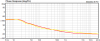
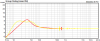
I plotted the ST255-8 in Red
The Dayton DA270-8 in yellow
Bass Box suggested a tuning of 33.05hz
1x 4" port 7.21"l
 

Attachments

  • upload_2015-10-29_20-13-22.png
    upload_2015-10-29_20-13-22.png
    10.8 KB · Views: 6
  • upload_2015-10-29_20-13-59.png
    upload_2015-10-29_20-13-59.png
    11.7 KB · Views: 6
  • upload_2015-10-29_20-14-50.png
    upload_2015-10-29_20-14-50.png
    10.3 KB · Views: 6
  • upload_2015-10-29_20-15-11.png
    upload_2015-10-29_20-15-11.png
    9.8 KB · Views: 5
  • upload_2015-10-29_20-15-28.png
    upload_2015-10-29_20-15-28.png
    9.9 KB · Views: 4
  • upload_2015-10-29_20-16-8.png
    upload_2015-10-29_20-16-8.png
    11 KB · Views: 5
  • upload_2015-10-29_20-16-54.png
    upload_2015-10-29_20-16-54.png
    10 KB · Views: 4
  • upload_2015-10-29_20-17-17.png
    upload_2015-10-29_20-17-17.png
    10.1 KB · Views: 4
  • upload_2015-10-29_21-48-39.png
    upload_2015-10-29_21-48-39.png
    11.6 KB · Views: 4
Last edited:
The CAR Response is made on axis only @1 meter.
None of these take into account your listening room etc.
No did I enter any crossover information/slopes HP etc.
Also I used the typical damping feature for both.
I also looked at these woofers in the past (I have probably look at most 10" woofers out there in the last 7 years).
I like the low impedance rise and flat response on "paper", just wasn't sure if I like the sound, so never took the plunge.
(The St255.8 impedance rise is cured with additional damping behind the woofers).
Clean sounding doesn't mean much to me, as that could mean a number of things.
How they integrate with the paper mid and Heil is another thing.
I tried some Carbon Fiber woofers, after using the 1040SF's and they sounded horrible, (looked good on paper and simulations) so I decided to keep my search focused on paper cones, or something close to that, and stay away from the "exotics".
You see a lot of newer speakers going back to paper as well, especially in the mids, or midbass.
Perhaps because it's a well known material, and has little surprises as far as tonality, transient response etc.
Who knows-they could sound awesome, so so, or somewhere in between.
If I had the time, I might play around with them sometime in the future, but for now I need to wrap up my current projects.
I'd need a extra cab though (don't want to route mine) I have 2 extra pairs of AMT3 crossovers and mids, and Heils.
Might be worth a gamble, it's only $200 or so.
Once you have great bass-the biggest difference IMHO has to do with the transition driver, and the critical crossover region to the Heil in the lower mids and midbass region.
Perhaps these sounded so much better then you PS1220's because of the Great Heil, but I have found a huge difference in the size and positioning of the speaker imaging by swaping in different midbass drivers.
Hard to believe those different mid integrated very well-maybe you got lucky?
I know playing my earlier stock 4 coil speaker, with a stock 3 coil 3's where clearly unbalanced in this lower mid/midbass region. In other words a terrible match
When looking at these response curves-you can't get too hung up with the rise of the 255-8, as this is a 1 meter measurement, and doesn't take into account any crossover or room response, or any additional damping.
Same goes for a few db down.
What matters more (IMHO) is how the drivers integrate together, rather then their minor individual responses issues, as on paper they usually look worse then they are in practice.
Kind of like a lot of graphs-they have to be taken into context.
But I realize each has their goals and expectations, so you just have to find that out on your own-which works best through some trail and error.
Part of the fun IMHO.
Why not buy a set of each, and gives us a good review between the 2?
 
Last edited:
Will, don't forget all the cabinet improvement work that you engineered into the rebuild.
With the bracing, absorptive materials and new baffle your new-rebuilt cabinet is a large part of the improvement you've noted.
Let's be fair, the materials of the time period could definitely be improved upon.
Nice work!
ENJOY!
Yep.
Unbelievable work!
 
Wow, thanks for that. The surprising thing I see is that they're the same SPL at around 100Hz on the CAR plot when one is rated at 92.7dB and the other 88.3 or something. And they're both essentially the same SPL all the way up except for the 270 being quieter in the middle. Interesting that they both go up in slope. I don't get that from my box calculators so maybe I don't know what I'm looking at here. Very unusual compared to what I've been using so I'm sure I'm missing something (I'm not looking at the standardized one either). And the other obvious one is how much louder the 255s will go at rated power. 10dB! A combination of efficiency and much higher rated power. Though most speakers can be pushed pretty hard as long as the average stays under the limit. Heat-wise, not necessarily sound-wise. Here is what the excel one shows (can only plot one at a time):
VB Response Dayton DA270-8.gif
Yeah, "Paper" is so much more than just paper too... Different pulp ingredients, stiffeners, dampeners, coatings, all sorts of stuff probably. We make paper at work... Friction material for Automatic Transmissions... It's anything but paper, I'm sure the speaker material is just as complex, and probably varies as much too.

Do you understand why they both make about the same SPL with such different ratings? Seems odd.
 
Both driver were entered from the database in Bass Box.
I'm using the specs with my enclosure that takes into account the shape and size of the added bracing, as well as the midtube, port tubes and the physical dimensions of the driver them selves.
The realized volume is 2.634 cu ft.
I did realize one mistake-I clicked the "heavy damping" on the Dayton by mistake.
upload_2015-10-29_22-15-27.png
upload_2015-10-29_22-16-11.png
upload_2015-10-29_22-16-38.pngupload_2015-10-29_22-16-56.png


upload_2015-10-29_22-17-17.png

upload_2015-10-29_22-17-40.png
upload_2015-10-29_22-18-1.png
upload_2015-10-29_22-18-19.png
upload_2015-10-29_22-18-36.png
 
Back
Top Bottom