• The move to the new server is done. There are some software and database maintenance updates in process. This has us passing the hat around to help out. We appreciate any donations. Seriously, even a dollar helps. The payment page may be found here - https://www.audiokarma.org/support.html

ESS AMT-3 Rock Monitors - Yet Another Automojification!

Sorry, still getting used to the new format.
I clicked on the heavy damping on the St255-8.
I will do some investigating, and re-read (skim) the large book that comes with it, and pass on what there doing.
I know this is a excellent program, basically the same Eminence and Misco use.
I have also noticed a difference between BassBox and a lot of the "free calculators".
The reasoning in me purchasing it, was I wasn't too confident in them.
P.E has used it for years as well, and MattP @ P.E> say's it's the best and most accurate IHHO, so I went for it. Got a used/new copy for $40. Awesome book.
Also the Speaker Cookbook is a good read- and I highly recommend each of them.
I think it also shows these programs are just a starting point.
You really have to have the drivers, cabs and network in hand and playing music to get a good idea how they work together.
How the sound waves are transmitted from the drivers out into our listening environment and get to our ears/body etc is a tricky thing to plot on paper, and translate into how it actually sounds to the listener.
Not to mention the amp speaker relationship, especially at different levels.
 
Last edited:
"Both driver were entered from the database in Bass Box."
Maybe the database has the actual SPL output traces from each driver, and combines it with the box, which my stuff won't do since I don't have any traces digitized to use. But going against that theory is the fact that none of the traces show any breakup even though they reach to 20kHz. Not sure, but that would explain traces sloping up, but wouldn't explain them staying up there... Thanks again for all your help.
 
Well if you look closely the trace have a jog, which is the breakup mode.
I should have shrunk the graph to 2000hz.
I'm sure there is a explanation why, I will just have to look further.
 
I see I had the range setting set too broad-so that takes care of it, just changes the high end, low end response still the same.
Still learning the program.
Regardless, I'm more then happy with the results with the ST255-8's, and they met the goals I set out when I began the project years ago.
Again, they are far from Prosound, and correct some of the imaging issues the stock speaker has, as Will has mentioned the sound stage being a little too far back behind the speakers, along with being much more stable. The stability is more in the crossover upgrade themselves.
All in all, the drivers all work beautifully together.
"Nuff said.........
 
I see I had the range setting set too broad-so that takes care of it, just changes the high end, low end response still the same.
Still learning the program.
Regardless, I'm more then happy with the results with the ST255-8's, and they met the goals I set out when I began the project years ago.
Again, they are far from Prosound, and correct some of the imaging issues the stock speaker has, as Will has mentioned the sound stage being a little too far back behind the speakers, along with being much more stable. The stability is more in the crossover upgrade themselves.
All in all, the drivers all work beautifully together.
"Nuff said.........
I'm not sure how they (255-8's) got the "pro-sound" moniker in this thread. I suppose it could the big, tough utilitarian look, but Parts Express has put them in their "Hi-Fi" classification. I believe the Alpha 6a is in the pro section.
I really wish I could speak from more experience with different drivers on this, but I can only compare my originals, which looked pretty freshly refoamed, and the Daytons. There is no comparison. From a detail standpoint, the individual notes of a given bass solo have gained a greater separation - they're not (comparatively) slurred together. The punch of a bass drum or floor tom is a big step closer to the drum actually being in the room. The overall level of the bass with the Daytons has become higher after breaking in, which is what I had hoped for. It's a little overbearing with the speakers in the corner of my room on occasion, but I'll use the time between now and when the drivers come back out for cabinet refinishing to either come up with a simple external solution or come to a decision on cutting the ports/installing the C-Mojo™ panel-ettes.
 
I'm not sure how they (255-8's) got the "pro-sound" moniker in this thread. I suppose it could the big, tough utilitarian look, but Parts Express has put them in their "Hi-Fi" classification. I believe the Alpha 6a is in the pro section.
I really wish I could speak from more experience with different drivers on this, but I can only compare my originals, which looked pretty freshly refoamed, and the Daytons. There is no comparison. From a detail standpoint, the individual notes of a given bass solo have gained a greater separation - they're not (comparatively) slurred together. The punch of a bass drum or floor tom is a big step closer to the drum actually being in the room. The overall level of the bass with the Daytons has become higher after breaking in, which is what I had hoped for. It's a little overbearing with the speakers in the corner of my room on occasion, but I'll use the time between now and when the drivers come back out for cabinet refinishing to either come up with a simple external solution or come to a decision on cutting the ports/installing the C-Mojo™ panel-ettes.
After some more listening-I would try the2 1/2 foam first before cutting the ports. Leaning back towards the 6".
I think too many pain killers in the last week was killing my hearing.
Any speaker with good bass in a corner like that will sound this way.
My KG 5.5 were like that too.
My mentioning the "prosound" was the OP's description of what he thought the speaker with the ST255's would sound like, without even hearing them-a mistake IMHO
Same with the Alpha 6a. For the money, one of the finest midrange/midbass drivers out there.
Clean clear low distortion sound that compliments the Heil. Talk about wanting to hear what's in your music...
I tried more then a few drivers here, hands down the best for the money.
I also think this Tymphany will be a great upgrade for those who have the smaller midtube, as it has similar specs. And what a bargain right now $20 ea!
http://www.parts-express.com/tympha...-5-1-4-midrange-woofer-driver-8-ohm--264-1400
Graphs make deficiencies seems worse then they are in many cases ,(as they fail to take into account everything that's happening in the listening room).....and a hands on approach IMHO is the best course of action.
Not a knock here, but sweating out a db or 2 of sub bass extension, vs realizing what best integrates with the Great Heil (given the constraints of the stock enclosure) is a mistake many people here in the past have gone down, and usually end up scraping them.
Tight bass, excellent midbass detail, and excellent transient response is key IMHO. The compromise is ultimate bass extension, but a small price to pay IMHO when compared to the stock configuration.
If you have spent enough time listening to the stock AMT3 and really get a handle on it's sound, and how it reacts with room surroundings, placements etc, music types, levels etc you would understand more.
"Pro-sound" speakers doesn't mean they are capable of high fidelity sound. Unless you have been living in the dark ages for 30 years there are some very fine drivers out there that are equally comfortable in a home, or live/professional setting.
And that's part of the 'Mojo" upgrade, combining modern methods, material and thinking, with a classic, and timeless flagship speaker.
Well........'how bout them Sea Chickens?
 
Last edited:
Back at it finally... I went ahead and got an RLC meter so now I have the specs on the hand built variety of 3 inductor crossovers... The combination Mojo recommends looks really good if I use 94dB as the reference Heil AMT output and the "soft" or "normal" brightness setting... This doesn't include any box response, just crossover and 2x woofers. I only had response curves on the woofers but the others are pretty flat. The combo is pretty flat and shows -3dB at 37Hz. Cool!
2015-11-07 17_17_58-Clipboard.png
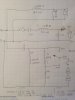
Here is the updated crossover for this vintage of ESS AMT-3 with the inductors included. I'll measure the other one and see how they compare.
Crossover updated with Inductor Measurements.jpg

I did notice on the 2nd speaker that the 10 ohm bypass resistor for the Heil got VERY hot. So I'm replacing that with at 20 watt 8 ohm, which will give me just a little more attenuation. I'm surprised that one saw so much heat given that there isn't much power up that high, but the wires near it had the insulation almost burned off and polyfill melted to it. It might even be open now for all I know, I'll be replacing it tomorrow now that I know the small rating difference between 8 and 10 ohms does almost nothing to the response.

The "Pro-Sound" moniker was due to my apparent understanding of "Hoffman's Iron Law" which states that you can have any two of high efficiency, low end extension, or small cabinet size, although I didn't know the term at the time. Pro-sound is very efficient, and sometimes good sounding too, but never (in my experience) with deep bass in the same cabinet. It is very apparent from the various parameters and combinations I checked that Hoffman's law is very true. Especially when you try to stuff 2 woofers in there. Mojo himself describes the ST255-8 as "Pro-sound" yet high fidelity in this review (though I didn't see that until today)... http://bit.ly/1lcw3vs. It does look like a good match an paper too, and, since you guys like them so much, I think I will be using the Mojo formula, including 2 3x6.?" ports, new foam, and closing the front port. It does look really good on paper too, so I'm ready to pull the trigger.

I tried to do all of the crossover math in Excel the hard way, which was extremely difficult while trying to maintain phase information, and finally learned about its complex math functions (like IMPRODUCT(), IMSUM(), etc. Very cool but still time consuming to build the model. But now at least I can see the effects of various tweaks in the circuit. It looks legit in its current form.

So, are there any other mods I should try, areas of the curve to adjust now while I have it apart? For example, in looking at the responses, I'm thinking I won't order the L-pads for the mid, for example. It looks like it will already be on the subdued side... At least on paper. It does have a 2 ohm resistor in series already. If you tell me I need to attenuate it anyway, I'll order the L-pads now. What port tuning should I use? Just a shade under 44 Hz Fs? Maybe 41? Should I use 3" PVC pipe or buy the flared ones? Any recommended exact length? Etc...

Thanks!
 
UPDATE:
I needed to measure the parallel tweeter inductor disconnected... Here is the updated crossover measured correctly (not much impact)

Crossover updated with Inductor Measurements.jpg
 
I always wonder about the method to the madness from speaker manufacturers. If you do a bit of reverse calculating with one of the online calculators, the crossover points are never where the advertising literature says they are. That's dramatized to a greater extent on my generation of AMT3's - the Heil is crossed over considerably higher. Other than to screw up potential DIY'rs that can't open the box, take some measurements and draw out a schematic, what is the point?
 
I always wonder about the method to the madness from speaker manufacturers. If you do a bit of reverse calculating with one of the online calculators, the crossover points are never where the advertising literature says they are. That's dramatized to a greater extent on my generation of AMT3's - the Heil is crossed over considerably higher. Other than to screw up potential DIY'rs that can't open the box, take some measurements and draw out a schematic, what is the point?

I also notice that the online calculators usually give you the theoretical 2nd or 3rd order values, but that is never what the manufacturers go with. They must always tweak them until they get the actual response they want. First order here, with a little 2nd order there, and just a smidge of 3rd order for good measure. Kind of whacked. But one thing I notice is that when changing values, at least on this model, small changes don't do a whole lot anyway. On mine, they clearly used whatever they had laying around (4x3.5 for 14uF on one, 2x7.5 on the other) like they didn't anticipate they might be making 5000 units a week a few days in advance?) - "Hey Carl, run over to Radio Shack and get us some more caps, eh?... yeah, whatever they have"... I haven't seen manufacturing run like that before. But they did move to their own coil winders between my 2 serial numbers, and then went to the circuit board style crossover some time after that, which probably greatly reduced labor.
 
I also notice that the online calculators usually give you the theoretical 2nd or 3rd order values, but that is never what the manufacturers go with. They must always tweak them until they get the actual response they want. First order here, with a little 2nd order there, and just a smidge of 3rd order for good measure. Kind of whacked. But one thing I notice is that when changing values, at least on this model, small changes don't do a whole lot anyway. On mine, they clearly used whatever they had laying around (4x3.5 for 14uF on one, 2x7.5 on the other) like they didn't anticipate they might be making 5000 units a week a few days in advance?) - "Hey Carl, run over to Radio Shack and get us some more caps, eh?... yeah, whatever they have"... I haven't seen manufacturing run like that before. But they did move to their own coil winders between my 2 serial numbers, and then went to the circuit board style crossover some time after that, which probably greatly reduced labor.
How much of your combined value capacitor scenario do you figure is stock -vs- replacement years later? I can't imagine (2) 10 uF caps paralleled to make a 20 costing less than 175% the cost of just buying the 20 alone.
I only wish I had the ambition to put one of the modern full range drivers in place of the transition speaker and convert the whole crossover to a first order arrangement and never look back at that hybrid 2nd order/third order hybrid monstrosity schematic again.
 
I figure it must have been all stock except where they replaced the 51.5 with 3x16uF in series. Because that's a mistake (6.3uF), and it's a different brand. All of the others appear to be the exact same brand as the ones found pictured on eBay, though the eBay crossovers used only single caps. I figure with the high number of manufacturers out there, it's pretty unlikely a DIYer would have sourced the same brand if recapping, besides, if anyone goes to the trouble in the last 10 years, they would probably do PP caps anyway, like I did.
 
Well you must have missed the joke @ Prosound-it was more how one can look at a graph and seemingly describe how a speaker sounds.......unless your dealing with slight variations on a model you are very familiar with.
If high def speaker that is highly efficient is "Prosound"-then I can dig it.
What I did say-is that the best woofers in my experience for the AMT3 are ones that would work equally well in a "prosound" environment as well as home listeing one-do to their efficiency and high def. If you haven't noticed lately-there has been a crossover going on here for awhile-many high output/high power cap drivers are not so peaky and much smoother sounding, and excellent dispersion.
A lot also depends on the range your using them in. The woofers and Alpha's cover a fairly narrow range.
No worries I'm thick skinned, and don't take anything personal-but I'm going to have fun with it at times.....
Those cast resistors get old, and where probably over driven in the past, become corroded/melted effecting how they carry current . A 20 watt is fine.
Why I always recommend a complete rebuild including resistors and redoing all the connections-and keeping the mids and Heils fused.
If you blow a diaphragm, sometimes you end up needing to replace both to keep them balanced-as the O.E. AMT3's had a slightly higher output, and different dispersion.
If you have the original diaphragms in your AMT3's they were a higher pleat unique to the AMT3.
Luckily both pairs of mine have the originals.
ESS had some variation on the crossovers-the silver and back red caps were used.
Yours was probably a interm shift between the 4 coil 4 ohm driver crossover and the later the coil 8 driver ohm crossover (not including the Heil).
I'm suspecting your mids are 4 ohm-not sure on the woofers-but that would be important if your planning on using different woofers.
Changing the drivers LE from stock will shift your crossover points, as you probably know.
 
Last edited:
I also did some research on ports today and made a calculator. One thing that jumps out is that the original box is tuned to something like 32Hz (something low, i don't remember), but the port speed is high, and with such a small port, it's not going to add a whole lot... Given that the original woofers must have been really efficient to be flat given the Heil, (which also implies high Fs), this tuning is VERY low, but again, it's almost sealed with such a small port, and the small port probably also gave the woofers a really nice suspension, and they probably reached lower than they otherwise would have. Or they must have been lacking in bass by 3dB or more if not efficient, but indeed reached lower with a lower Fs / lower efficiency (Iron law). Don't know. But you can tune the box lower and lower, and make the port diameter smaller and smaller, and the length can stay about the same, and less and less air moves, and eventually you converge to a sealed box and lower output, which it pretty much is already, especially with all the stuffing. So the effect of tuning lower must also decrease efficiency a lot too since so little air moves.

I also read another article today that showed using experimental results that the actual port length required to achieve a certain tuning was actually considerably shorter than the specs would indicate. It's here... http://www.troelsgravesen.dk/vent_tuning.htm Bottom line is that even going to a 4" port (or even the 4-5/16 adjustable ones from PE), I might get away with a short enough single port to tune in a place with some range to adjust. Need to revisit that idea.

I am finishing the old ESS woofers just because they were at 80% anyway and I figured why not? I had them moving quite happily at 20Hz in free air, which I guess isn't that hard to do. I'd guess >6mm xmax, and much more than that before you hit anything. One definitely is intermittent on occasion, and the same one seems to rub ever so slightly at very high volume even after doing everything I could to align it. I think the dB did come back up some after I got it aligned better and glued it. Maybe that coil just got slammed too hard to survive. It did come out better than I thought it would, but it's still broken so I'm buying the new ones.

Another thing I read about today was phase... With the port in the front, the woofer and port are in phase at Fb. Presumably this makes them out of phase (different directions, but air moving out the port at the same time in either case, creating an input to the atmosphere, pretty close together compared to wavelength) with the port out the back. I'm not sure that would make a whole lot of difference either way, I don't see why it would considering they're both pressure waves... Anyone heard pros or cons to port placement?

The mids are 8 ohms... 6.5 Re.
 
Another thing I read about today was phase... With the port in the front, the woofer and port are in phase at Fb. Presumably this makes them out of phase (different directions, but air moving out the port at the same time in either case, creating an input to the atmosphere, pretty close together compared to wavelength) with the port out the back. I'm not sure that would make a whole lot of difference either way, I don't see why it would considering they're both pressure waves... Anyone heard pros or cons to port placement?

The mids are 8 ohms... 6.5 Re.
Conventional wisdom says that port location is relatively inconsequential. The slim real-estate on the front baffle means you'd have to use 2" ports, which is in contradiction of two consequential rules - too small port diameter and an overly skeletonized baffle. You can't win.
There's always the top, but that would rule out a router for cutting the holes, and again, a bit of skeletonizing would occur. The cool thing about it would be that you could get a smaller version of one of those big inflatable nylon flop around things you always see at tire shop grand openings and call him "Little Oscar".
 
Ess used both sealed and ported versions, using the same drivers/crossovers.
Form what I have researched porting was a 2 fold attempt at reducing internal pressure in the box, and smoothing out the impedance curve-so it was a leaky sealed box-that was used from time to time back then. Basically a compromise. Speaker modeling has come along way since then.
The O.E. Heppners woofers were long throw-so the could be used sealed, or ported.
 
That wouldn't be the first time I've seen it referred to as a subwoofer. Some of the reviews at PE have guys applying it as a subwoofer, Hopefully, the treatment on the paper is enough to make it withstand the automotive environment.
 
That wouldn't be the first time I've seen it referred to as a subwoofer. Some of the reviews at PE have guys applying it as a subwoofer, Hopefully, the treatment on the paper is enough to make it withstand the automotive environment.
Sure-more or less it's a sub in the AMT3 as well-this woofer you not work well in a 2-way-it optimized for bass, efficiency and high power.
I think even the auto guys realize paper sounds better, then poly-especially in lower cost drivers.
Eminence has a coated version on the Alpha that's popular in automotive use, because it's leagues above most "auto" speakers.
You can see guy's reaction to the Alpha and Dayton who haven't heard them before-in the reviews, most are blown away by how well they really perform at the price point.
Too bad the Dayton is gone.......someone will have to find the new "Super AMT3" woofer upgrade-maybe the OP.
A modified version of the Delta 10-used in the Enzo might be nice. Problem is you need at least 50 made.
 
Back
Top Bottom