

You are using an out of date browser. It may not display this or other websites correctly.
You should upgrade or use an alternative browser.
You should upgrade or use an alternative browser.
Explain to a young guy why reel to reel was the thing in 70s and 80s
- Thread starter Alkeys
- Start date

if MCI ever used isoloop, I never heard about it. See second pic.

terra1
Addicted Member
My first LP I purchased was a Herb Alpert TJB, so that gives you a picture of my history.Classical and "easy listening" were much more commonly issued on RtR, as they appealed to the more well-heeled audiences who could afford the deck and the tapes. Popular music was less common, and therefore quite a bit more expensive today.
Pre-recorded RtR tapes seem to have been pretty much finished as normal-stock items by the mid 70s, though some albums were issued through the mid 80s. I've even seen a few Michael Jackson RtR tapes for sale on eBay. I'm not exactly in the richest part of the world, and I've built a pretty solid collection of pre-recorded RtR tapes. I can only conclude that there was a decent volume of them produced and sold, but they don't make it to market as often as the more-common and much more mass-market LPs.
Before that my parents had a small record player that played 78s. We did eventually get a 2nd hand reel to reel given to us by a family friend but it was not a famous brand and cheap as it gets. Our friend supplied the tapes he recorded and we seldom bought any recorded tapes. Only people in movies could afford a fancy Reel to Reel.
I recorded my type of music placing a microphone from the R2R up against the speaker of a portable radio or my mono record player (not a turntable/receiver).
We could not afford a real turntable or a receiver. But most anybody could at least afford a record player.
So economy was a big factor too.
So economy was a big factor too.
To give people a sense of scale, my Ampex AG-440B cost $3250 in 1968. In 1969, Car and Driver's top rated Sports sedan under $3000 was a BMW 2002.
Some R2R's cost more than a beamer!
if MCI ever used isoloop, I never heard about it. See second pic.
hmmmm, didn't see that second pic the first time ( Reload)
The extra thing at the front is an isoloop ?
So what do you make it then, 3M ?
Last edited:

steerpike2
Super Member
I do believe 1/4" R2R is the best still-affordable and fairly easily available recording medium, but most people don't have access to anything to record that shows off its capabilities. Copying a CD or LP is as adventrous as they get, and you cannot exceed the fidelity of the source. So you end up with a really good copy of a CD - with its limitations well preserved.
Even if they have access to a live band, technique and good microphones are often lacking.
Commercial pre-recorded tapes may have been good, but would not have been the best possible recording - always made with a budget in mind.
Also, while great R2R machines were VERY good, there were a lot of really trashy cheap ones, that would not impress anyone. If that's all you had ever heard, you'd not think cassette was any step down. That's probably why most people dumped them & didn't regret it.
Even if they have access to a live band, technique and good microphones are often lacking.
Commercial pre-recorded tapes may have been good, but would not have been the best possible recording - always made with a budget in mind.
Also, while great R2R machines were VERY good, there were a lot of really trashy cheap ones, that would not impress anyone. If that's all you had ever heard, you'd not think cassette was any step down. That's probably why most people dumped them & didn't regret it.

Naptown Rob
Ponographer
It's funny how differently people will use/think of a given format.
When I was using tape, 7.5 ips/2 track was our "slow" speed. We'd think of it like I think of mp3's today: OK for speech, but no way I'm using it for music!
When I was using tape, 7.5 ips/2 track was our "slow" speed. We'd think of it like I think of mp3's today: OK for speech, but no way I'm using it for music!

Naptown Rob
Ponographer
It's been said in this thread that an RtR deck can play for hours, how long do you get on an average reel?
If I recall correctly, at 7.5 IPS you'll get 1 hour-ish of good tape on a 10 inch reel.
On the other hand, I could be remembering 15ips figures?...
"Reel-to-reel" does cover a large range of audio quality. All other things being equal, the larger the track width and the faster the speed, the better the quality. The best "standard" format is 15-IPS, 2-track on 1/4" tape. This was the format of the master tape used to make LP's from. Almost all "home" stereo recorders were 4-track (half the track width), and generally the smaller 7" reel machines went to 7 1/2 IPS at the fastest speed.
In the last decade the big makers of reel audio tape have quit the business (I'm thinking specifically of Quantegy, formerly Ampex), and the main maker I've heard of is ATR, a relatively recent startup making recorders and tape for studios. Google ATR tape and you'll find a page that'll give you sticker shock.
I understood the Philips Compact Cassette was originally a mono format intended only for voice dictation (even though the article below doesn't say so), and only after it was originally introduced was it made a stereo format and used for music. It's a small track width and slow tape speed, so the increase in sound quality from the '60's through the '80's is quite amazing.
http://en.wikipedia.org/wiki/Compact_cassette
In the last decade the big makers of reel audio tape have quit the business (I'm thinking specifically of Quantegy, formerly Ampex), and the main maker I've heard of is ATR, a relatively recent startup making recorders and tape for studios. Google ATR tape and you'll find a page that'll give you sticker shock.
I understood the Philips Compact Cassette was originally a mono format intended only for voice dictation (even though the article below doesn't say so), and only after it was originally introduced was it made a stereo format and used for music. It's a small track width and slow tape speed, so the increase in sound quality from the '60's through the '80's is quite amazing.
http://en.wikipedia.org/wiki/Compact_cassette

BinaryMike
Pelagic EE
I've serviced R2R tape decks that were used long ago for background music in department stores. With 10" reels, 1-7/8 IPS, and auto-reverse, the playing time is over 17 hours. I'm guessing, but the same technology was probably used for recording in 911 call centers and cop shops.

Caminokid
Pioneer and Realistic
I wouldnt say the 80's....maybe at least in the area I grew up. I was the only one in my area that had a reel to reel. I had the Pioneer RT901. Made all tape sound great. I liked the neat value of it. The nice about it was you could record alot of music on it and play for hours.

I've serviced R2R tape decks that were used long ago for background music in department stores. With 10" reels, 1-7/8 IPS, and auto-reverse, the playing time is over 17 hours. I'm guessing, but the same technology was probably used for recording in 911 call centers and cop shops.
Hey Mike - Have you ever worked on or run across one of those big reddish-orange DuKane players that were once used for background music in some department stores? I remember seeing one playing in our local K-Mart in the early 1970's. It was rumored (and actually I think it was a legitimate news story) that they had attempted to use subliminal messages on those tapes to curtail shoplifters. Supposedly there were buried messages like "I will not steal" and "Stealing is wrong" and stuff like that.
EDIT: The big reddish-orange tape deck I saw way back when was a "Tape-Athon" auto-reverse playback unit, not a DuKane. They were commonly used in department stores in the early 70's.
Last edited:


It's been said in this thread that an RtR deck can play for hours, how long do you get on an average reel?
According to one of my Realistic Low Noise blank tape boxes, the time was as follows for a 3600 ft reel...
3600ft at 7 1/2 in/s 96 minutes.
3600ft at 3 3/4 in/s 192 minutes
and
3600ft at 1 7/8 in/s 384 minutes
3 3/4 in/s sounds good for music, 7 1/2 sound better IMHO

My first LP I purchased was a Herb Alpert TJB, so that gives you a picture of my history.
I actually have "Whipped Cream" on a factory-recorded 7.5ips tape. Sounds great.

Before that my parents had a small record player that played 78s. We did eventually get a 2nd hand reel to reel given to us by a family friend but it was not a famous brand and cheap as it gets. Our friend supplied the tapes he recorded and we seldom bought any recorded tapes. Only people in movies could afford a fancy Reel to Reel.
One of my dad's best friends has a Pioneer RT-909 he bought new. Pretty sure he's never been in the movies.
We could not afford a real turntable or a receiver. But most anybody could at least afford a record player.
So economy was a big factor too.
While there were "cheap and nasty" reel decks out there (I've run across plenty of them), the expense of the tapes was a major economic factor.
It's funny how differently people will use/think of a given format.
When I was using tape, 7.5 ips/2 track was our "slow" speed. We'd think of it like I think of mp3's today: OK for speech, but no way I'm using it for music!
For studio recording, especially when mixing and re-recording, of course you'd have to run at a higher speed, or you'd start getting significant artifacts several generations down the road.

MichaelJ
Super Member
I bought my first reel to reel in 1977. I've had one ever since. New tape isn't cheap but it's available. I still play 30 year old tapes and have had no problems to date. In my group of friends I was always the only on who had a reel to reel. My wife doesn't understand why I love open reel so much but it's simple: It's fun, I like it, it's a hobby.

Compensation.
There simply was nothing cooler in audio than a nice R2R...
There simply was nothing cooler in audio than a nice R2R...
Last edited:

Turbota
Active Member
Reel to reel sounds more real than cassette
Yup ... When cassettes came out after reel to reel, many people still liked reel-to reel for at-home use because it sounded better than cassette ... Why? ... Because the tape speed is faster on reel to reel (better sound without all the tape "hiss" that the slow moving cassette tape made).
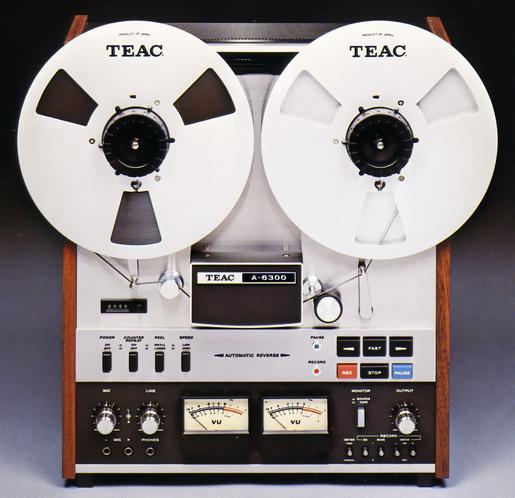
And as someone else mentioned ... WoW factor of a big ol' reel to reel tape deck with 10 1/2" aluminum reels!


Numistrek09
Super Member
It's been said in this thread that an RtR deck can play for hours, how long do you get on an average reel?
Standard stereo recording on a 1/4 track R2R at 3 3/4 IPS, using all of side 1, flipping and using all of side 2 on a 10.5" 3,600 tape, about 6 hours. 12 hours if you recorded in Mono. Time was either doubled at the next slowest speed, or halved at the next fastest.
For instance,
1,800 7" reel at 3/3/4 ips both sides: 3 hrs
1,800 7" reel at 7 1/2 ips both sides: 1 1/2 hrs
1,800 7" reel at 15 ips both sides: 45 mins
And yes, these machines and tapes are around. My local record store always has a box or 2 full of pre-recorded 7" reels. But then again, he has everything. 8tracks, cassettes, LPs, 45s, 78s, CDs, VHS, DVDs. Haven't seen any wax cylinders or wire reels though. He must be slackin.
In 3 years i have found or been given 4 of these machine. Two in the trash, one given, one bought for a dollar at a yard sale. Just got to look for them i guess. Right now i'm talking to a fellow who has around 100 reels of tape from his brother's collection. We'll see how it goes.