• The move to the new server is done. There are some software and database maintenance updates in process. This has us passing the hat around to help out. We appreciate any donations. Seriously, even a dollar helps. The payment page may be found here - https://www.audiokarma.org/support.html

Fisher TA-600 vs. 400 - which to restore?

discoroboto

Member
I recently acquired a non-working TA-600 from a console—it powers up, but all I get is scratchy noise from the volume pot. I also have a 400 that I use daily, but it has a few issues that prevent it from running optimally. I've never heard either running at their full capacity. Essentially, I'm looking for advice as to which would be the better receiver to restore based on long-term reliability and sound quality.

First, is there a noticeable sonic difference between the 400 and TA-600? The TA-600 was built in June of 1959. I think the 400 was most likely built within 5 years of the TA-600. 5 years is a good amount of time for Fisher to develop and modify their designs, so I would think that there will be noticeable differences in how the receivers sound. If it matters, I rarely listen to FM radio, so the sound quality of the FM section doesn't matter that much to me. I mostly listen to vinyl and CDs.

Second, is one restored unit more reliable over the other restored unit? I know the TA-600s are rare compared to the 400, so getting parts is a concern of mine. If I sink a bunch of money into restoring a unit, I want to make sure it's going to last a long, long time before it's going to need servicing again.

Any thoughts? Thanks
Travis
 
Register to hide this ad
Fisher was making amplifiers long before the TA600 came out, so things were pretty mature already. I had a chance to A-B a 400 and a 600 when I had my 600 restored, and both my tech and I much preferred the 600 for warmth and dynamics, but as always that's subjective. The 600 uses EL84's which gives you a lot of options on the output tubes. I've kept the 600 over Eico, Scott and Stromberg EL84 amps. You'd be getting a mono tuner, though I have used a number of MPX adapters with mine to good effect including the proper Fisher MPX100.
 
Parts aren't a problem for either one, other than the occasional transformer or Tuning coils, or variable caps, which for either one will have to come from a door.

The TA-600 will be a bit more complicated (I have the 600 now and still do 400's)to rebuild due to the way it's laid out and additional circuitry for AM/FM simulcast. The 400 is about the easiest receiver to rebuild that FISHER made. Once rebuilt, both will be reliable, but the 600 will require a outboard Multiplexer, which is built in to the 400.

The sound from them will be somewhat different due to the circuitry and the output tubes. The 600 uses the 7189 tube which is good for about 15 -20 watts in push-pull, and the 400 uses the 7868 which is basically a 7591 in a different package, and is good for about 25-30 watts push-pull. The overall designs are similar, albeit with different tubes. The 400 is more refined in this regard.

If you are looking for absolute longevity, go with the 400. Me? I'd do both. They can and are commanding ever higher prices, and the market for restored units is is growing daily. You could sell the 600 and make enough to restore the 400 if you do it yourself and take care about what parts you get. However the output's on the 600 right now are cheaper than the current stock of 7868's for the 400, and the EH7868 has the slightly larger pins which preclude going back to old stock tubes.

A bit of De-Oxit in the pots and switches goes a long way to getting rid of the scratchiness in the controls and possibly will get the 600 working or working better. The 600's controls are funky if you've never run up against them.
It can be fussy about certain combinations, but once you learn the controls, it's 2nd nature.

Again if it were me, I'd restore both and keep them. The 600 looks too good to risk to the Clowns in Brown(UPS, FEDEX, USPS).

Owners Manual Here.....http://www.fisherconsoles.com/non console manuals/Fisher 600 OM.pdf
 
Last edited:
Thanks for the link to Owner's manual! I'm registering mine to take advantage of the 90 day warranty!
How do you figure that between equally restored units the 400 would have a longer life?
 
There are many ways to look at it, but I'll present one most rarely consider: Component quality.

As Fisher entered the '60s, there were management shuffles and market shifts. One of the end results of that turmoil was that component quality went up considerably. That would favor the 400 except for one caveat.
While component quality went up, and therefore reliability and predictability in restoration, design limitations also crept in, such as built-in low cut filtering to combat turntable rumble, reducing sound quality a bit.

Fortunately, if you go through some of the threads on 400 restorations, particularly dcgillespie's thread on a late # 400 restoration, he's identified those design changes and described how to circumvent them, making the choice about even.

I'd look at one more thing though:
How many line level inputs are there on the TA-600? The 400 has only one unless you do some modifications.
As I see it, it comes out about even.
 
Fisher tube guru Sony6060 claims that the phase inverter section of the TA-600 and TA-800 produce superior fidelity over the 400/500/800 series. I personally prefer the 7189 sound, and it also seems like the TA's are less common than the 400/500/800 adding to the cool factor - for these reasons Id be prioritizing the TA600.
 
A few more thoughts... the 7189, 6BQ5, El84 family can be great sounding tubes. I love them, and use them daily in my Fisher mono amps. But, if the 600 was designed specifically to take 7189's, then remember that true 7189's are no longer easy to come by. You have the Sovtek EL84M and the Russian Military 7189, and that's about it for current production. Some of us don't like the sound of that Russian military tube either. The 7189 was designed to run at higher voltages than the El84 and using El84's in there place is done all the time, but may result in premature failure. I'm only getting 18 or so months out of a set of the Gold Lion reissue El84's in my amps. NOS US and Euro EL84's hold up a lot longer, sound great, but come at much higher cost. Now, I'm sure you could modify the circuitry to be kinder to output tubes, but I never went that way (yet). In my amps, Fisher ran those tubes right up to their limits and when you factor in modern 120 volts or more from the wall, things get even worse. This didn't matter so much back in the day when you just went down to the drug store and picked up a new set of tubes for a few bucks. I remember going down with my father many times for the TV set or Magnavox console.
All that being said, I'd do them both, but do the 600 first. But I'm partial to the EL84. And besides, everyone has a 400. I don't mean to add fear into the equation, I use EL84's in my amps all the time, but I do know they run them hard and I wouldn't be surprised if the 600 did also. What the word really needs is a Gold Lion built to 7189 specs!
 
Harv -- what factors are you using to determine that you are only getting 18 mos out of the Gold Lion reissues?

Dave
 
Any restoration should take today's higher line voltage into account and mitigate it.
I have a cache of NOS Bugle Boy 7189's but I also have and do run early 80's 6P14P-EV's in these amps and they impress me greatly.
 
Thanks for the link to Owner's manual! I'm registering mine to take advantage of the 90 day warranty!
How do you figure that between equally restored units the 400 would have a longer life?

Less parts = less heat. plus there is more open real estate on/inside the 400 chassis. Adjustments are more variable on the 400. There are tubes on the TA-600 in the tuner section that are less available than the 6BA6/6AU6 setup in the 400. More interconnects for FM Multiplex. Also the controls on the 600 can be confusing to someone who has never worked a unit with FM/AM simulcast Stereo and an outboard MPX. I've had mine a year and I still have to look at the manual to set it up.

Like Don says parts quality went up between the 600 and the 400. Mine is a late 59xxx serial (one of the last 1000 built) and the amount of brown "dog turd" caps in it was unreal. Most were marked WIMA, and almost all had cracks in the outer epoxy casing. Everyone got replaced. Also the 50001 and up had 7247 vs 7199 driver tubes and the circuits got changed drastically. You've got to have the right service manual or you get lost. With the 400, changes were minor(comparatively) from the 1st to the last so you can get away with most repairs using any 400 manual.
 
Thanks for the feedback everyone. It's been very helpful! My original plan was to restore both then sell one. But after everything that's been said, I'm reconsidering keeping both.

The 400 is showing its age—the right channel is noticeably weaker than the left and the phono section is producing an audible high-pitched whine. On top of that the speaker on/off switch doesn't work even though I've thoroughly hit it with DeOxit. That leads me to believe there is something wrong with the switch or the wiring to the switch. Cosmetically, it's in great shape. It's very clean inside and out without a spot of corrosion anywhere. Same with the 600. It looks fabulous for being 65 years old. It took me a long time to find a 600 let alone one in great condition.

I'm a guitar geek and have modded my effects pedals and guitars, so using a soldering iron isn't new to me. I've built my own effects pedals as well, but I've had step-by-step instructions in front of me to follow. With that said, I'd like to take on restoring at least one of these on my own. The problem is I don't even know where to begin. When I look at the schematic against the electronics inside the receiver, I just get lost. It looks like a big jumbled mess to me! The thing that concerns me is knowing which components to replace, buying the appropriate replacements, and installing them properly.

I will say that reading many of the restoration threads on AK has been extremely helpful and that I'm glad I have this wonderful resource to refer to. Thanks again for everyone's input!
 
Disco -- you will get all the support you need here in any refurbishing work you decide to take on. This site collectively has the best group of Fisher affectionados of any Fisher site around bar none!

Regarding your speaker switch: Make sure your speakers are correctly connected to the designated speaker terminals on the rear of the unit. When done correctly, it will require the used of the little impedance pig-tale connectors for the speakers to operate -- and when connected in this fashion, your speaker switch should work.

On the other hand, if you have connected your speakers directly to the impedance terminals and omit using the pigtails, then neither the speaker switch, nor the headphone jack will work on your unit.

Good luck with your decision, and your restoration!

Dave
 
Dave, when I say 18 months, I mean that after that time, at least one in the set will start red plating. Not exactly running away, I wouldn't let it go on that long. Just glowing more than I am comfortable with. I can't now remember how they measured, I just mark the box of the red plating ones and stay away from them. I'm on my 3rd set now, but have put the the 3rd aside since I am enjoying a set of old RCA 7189's instead. First set went 2 years, second went 18 mos. Out of the 2 tube sets, I will combine the good pairs from each set to get maximum milage out of all of them. I am stuck though keeping matched pairs together since my tester does not do gm. I'm using the tubes almost daily. Even when working on a pair of amps I swap the same tube set into the ones I am playing. When I evaluate my work, I like to use the same tubes for a fair comparison. As you might know, I have 3 pairs of 30A's and a pair of 20A's as well. I should mention, that when these tube "glitches" ocurred, it was before I re-did the power supplies in the amps. They were running on the orig. can caps and resistors. It is what finally got me to go ahead and re do the amps. I thought they were eating up the tubes as the voltages were high. All the 30's now have new power supplies, etc. but since then I have only been using the RCA's and some Old mullards so I can't say if the Gold Lions will now last longer. Please if you think I'm off base on this or my assumptions are misguided, then let me know, I'm all ears. I don't want to pass along misinformation or generalities about the Gold Lions. I will say that when I got that last set from Jim McShane, he advised me to make some resistor changes to make the amps kinder to current production EL84's or he could not honor their guarantee. You and I discussed this before by PM and I never did make the changes. I'm not sure though why just changing the dropping resistor wouldn't be a good idea. Feel free to comment on that if you like. Hope I am telling you what you needed to know, thanks.
 
HIFI -- I appreciate your comments. The reason I was wondering was because I've been running a matched quad set of the EL84 Gold Lion reissues in my SA-100 clone now for 2 years, and they still test nearly as strong as the day I bought them. Like you, I got them from Jim as well. Granted, that design includes EFB operation of the output stage which does lighten the load on the tubes considerably. But still at that, the tubes get near daily use, with about 2000 hours of use closing in on them now, which still speaks favorably of their performance.

If you've got one tube that starts red plating within a matched pair, in designs like the 30A, if it is a tube related event, it is often the NON red-plating tube that is the cause for the tube that is red-plating.

You might check out my thread on the Eico HF-81 over on the Tube forum, that uses power amplifier sections that are very similar to the 30As. In that thread, I add DC balancing controls to be able to equalize the current flow between the output tubes in each channel, so that as they age, one tube won't become a current hog and cause the red-plating events. The modification involved would be very applicable to your 30As, a be a very worthwhile benefit to them.

Dave
 
Yes Dave, right, it is the other tube at fault, not the red plating one. I forgot about that. I still have to eliminate both as a pair though since I can't match them. I really do think the Gold Lions are the best sounding new tube out there, though I have not heard those TAD (tube amp Doctor) EL84's. You mentioned EFB to me before as the best way to improve the 30A's and I checked out the thread on that. It's certainly up in my head as a future project. I am starting in on a 101R tuner now and then of course all those changes to do to the 400C pre. I will check out your Eico thread as well, thanks. I still remember pouring over the Eico catalog as a kid.
 
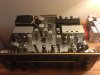
I sat down with the TA-600 tonight and am positively convinced to restore that one first. :thmbsp: When I first powered it on a few weeks ago, it produced nothing but silence, well, except for the noise from the scratchy pots and switches. And the noise came from only one channel. I hit all of the pots and switches with deoxit a few days ago and put in all new tubes (some new and some NOS) tonight. I'm now getting stereo sound from the FM section and the auxiliary input. AM is dead but that could be because I don't have the ferrite rod hooked up. I have yet to test the phono input.

There's an imbalance between channels—the right is weaker than the left—but at this point it's better than no sound at all. It's doing this weird thing when I turn the balance knob to the left channel. The left channel actually gets louder, like REALLY loud, and the right never goes completely silent. I suspect these and other issues I'm sure to find will go away as I replace the components.
 

Attachments

  • 2014-09-14-07.16.58.jpg
    2014-09-14-07.16.58.jpg
    71.4 KB · Views: 40
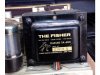
Thanks for the link, but I'm not sure if mine is on the list. The serial number for my TA-600 is 21810. I see two PDFs for the TA-600 and a bunch for the 600. The only service manual for TA-600 covers S/N's 40001-49999.
 

Attachments

  • TA-600 SN.jpg
    TA-600 SN.jpg
    49.2 KB · Views: 28
Use this SERVICE Manual. It's for the 600 (Which is the other designation for it.) 20001-29999 The OFFICIAL DESIGNATION for the Unit is TA-600 (Tuner Amplifier - 600) but as the term "RECEIVER" was popularized, FISHER dropped the TA part in later models. So it's known under both names.

The OWNERS MANUAL covers all models
 
Last edited:
Back
Top Bottom